‘Universe of sticking points’: India-US deal not ‘imminent’, says US trade chief
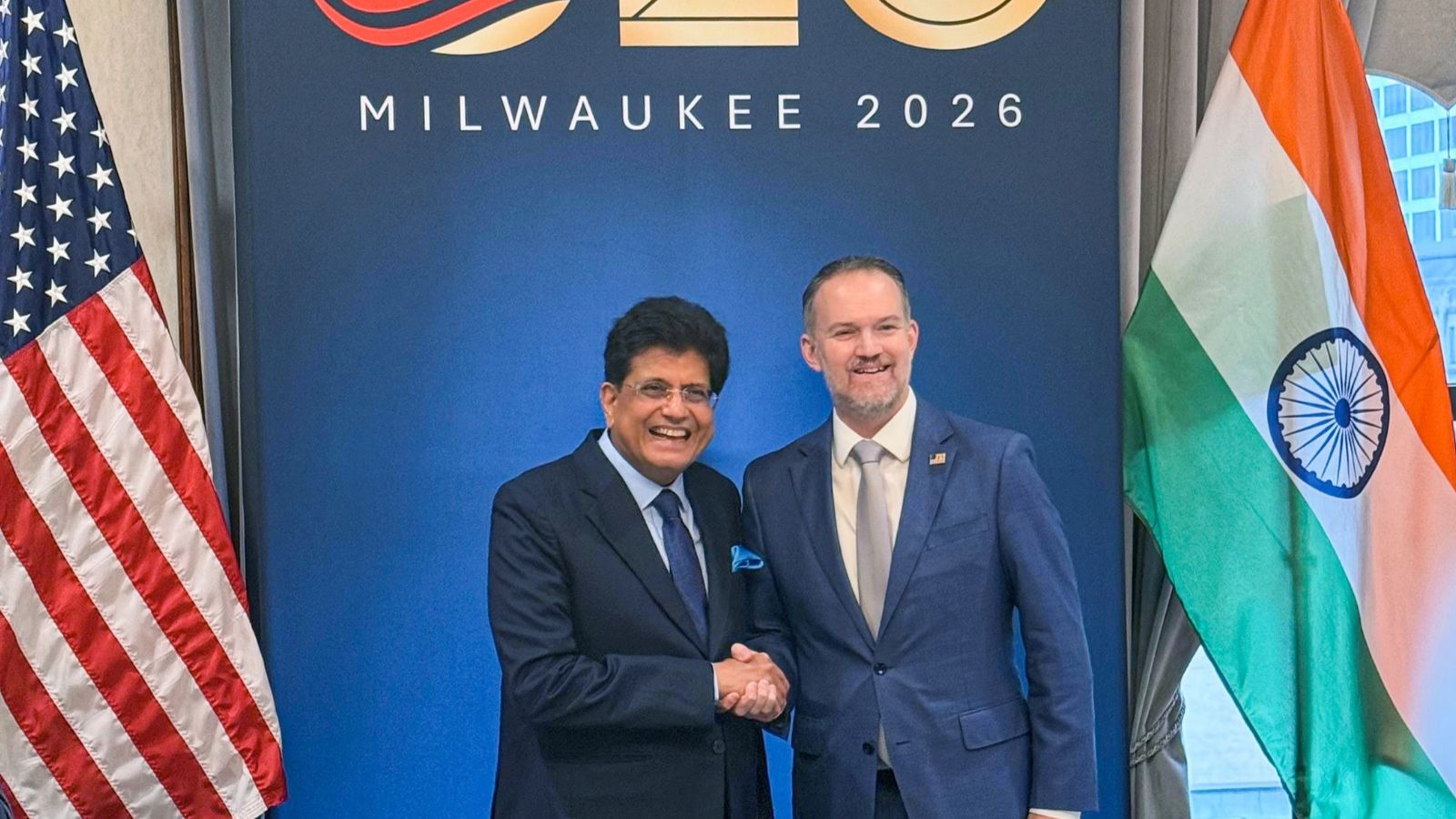
United States Trade Representative (USTR) Jamieson Greer on Thursday said that India and US trade deal talks are in their final phase, but the signing of the deal is not imminent as both countries have identified a “universe of items that are sticking points”. Greer’s statement comes a day after he met Commerce and Industry Minister Piyush Goyal during the G20 Trade Ministers’ Meeting and as talks for the trade deal is ongoing in Washington between the negotiators of the two countries.
Greer’s comment assumes significance as the US is expected to come out with the results of the second Section 301 trade investigation on “overcapacity”. Washington has already imposed 10% tariffs on India on the grounds of importation of items produced using forced labour.
“So we had a very constructive conversation, Minister Goyal and myself; our staff is meeting right now, since they’re in the country and we’re here. We are continually trying to finish the trade deal with India. I would characterise it as we say in the U.S., we’re in the short strokes. So I think we’re toward the end of it. The President [Trump] and Prime Minister [Modi] did have a very constructive call yesterday morning US time,” Greer said during a press briefing.
“At the same time, I don’t think there’s something imminent, but we truly have identified the universe of items that are sticking points. We’re working diligently toward them. My sense is that the president, the Prime Minister, may have another call, very soon on this, just to assess progress in where we are,” he said.
The US also has fresh leverage on India after Donald Trump signed into law the Lindsey O. Graham Sanctioning Russia and Iran Act of 2026 last month, giving himself the authority to impose tariffs of up to 100% on countries, including India and China, that continue buying Russian oil and gas.
The Ministry of External Affairs (MEA) had responded, saying that the government remains committed to ensuring the nation’s energy security “through diversified sourcing and based on evolving market dynamics”. It said in a statement that the proposed legislation’s implications for the India-US relationship as well as the global energy market have been flagged in discussions with US representatives.
In the run-up to the trade deal talks, Indian companies are stepping up investments in the US. Mesabi Metallics, an Essar Group company, for instance, announced an $18-billion investment to build a fully integrated American steel company last month. US President Donald Trump said it was the “largest single location investment in an integrated steel complex” in the US.
Story continues below this ad
However, the US has raised a host of concerns about India and other countries in just the last few months.
A new US Department of State report released this week on the investment climate in India said that India welcomes foreign direct investment (FDI), but US investors are encountering an environment balancing openness with “economic nationalism” and the risk of corruption in the regulatory system, which is posing a barrier to FDI.
“While India permits 100% FDI in most sectors without prior approval, India requires foreign investors — including wholly owned subsidiaries incorporated in India, paying Indian taxes, and maintaining an Indian workforce — to request governmental approval to invest in multi-brand retail trading, private banking, pharmaceuticals, defence, print and digital media and satellites,” the report said.
It said that US businesses report actual corruption and the anticipation of potential corruption — particularly in regulatory systems — as barriers to FDI, adding that US direct investment stock in India reached $58.54 billion in 2024, a 3.37% decline from 2023.
Story continues below this ad
In a report titled ‘The Great Transhipment Scam: Global Evasion and Economic Costs’ in August, the White House said that more than 40 countries, including India, are part of a ‘shadow transhipment network’ designed to hide the true economic origin of goods produced in China.
The White House report categorised the ‘shadow network’ into three tiers, with countries such as India, Mexico, Canada, and the European Union forming tier 1, where illegal transhipment risk is “embedded” within massive legitimate trade flows. While “closely integrated” countries with China such as Vietnam, Malaysia, and Thailand were categorised as tier 2, smaller economies such as Cambodia, Panama, and the UAE, with “weak customs enforcement” were classified as tier 3.
KioskNews shows a cleaned-up reading view extracted from the publisher’s page — the original always lives on their site, not ours.