Mississippi sand used to build 7 islands, restoring over 270 acres of habitat
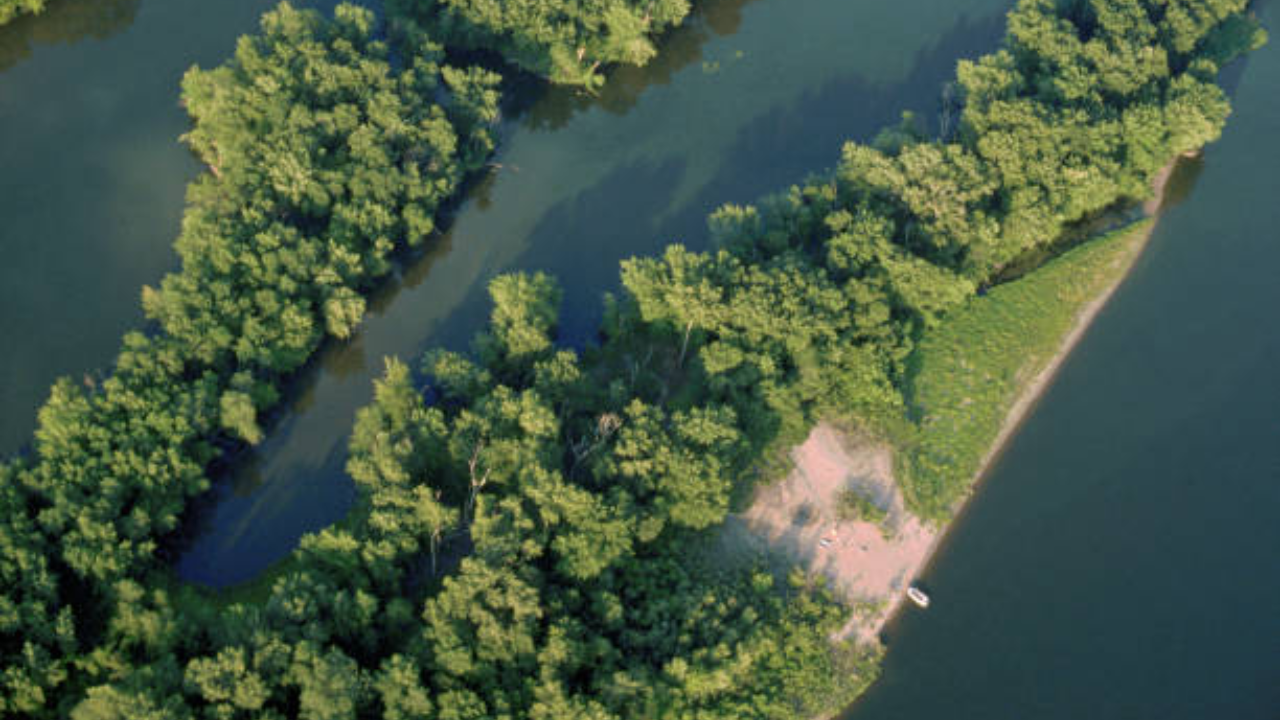
For years, sand dredged from the Mississippi River was removed to keep one of America's most important waterways navigable. At one restoration site, engineers found another use for that material, building islands.
The US Army Corps of Engineers has completed a $25 million habitat restoration project at McGregor Lake in Wisconsin, where about 500,000 cubic yards of clean sand dredged from the Mississippi River were used to construct seven islands.The project, which began in 2020, has now improved more than 270 acres of aquatic habitat while also restoring floodplain forest and protecting wetlands.McGregor Lake is a 200-acre backwater lake located in Pool 10 of the Mississippi River near Prairie du Chien, Wisconsin.
It lies within the Upper Mississippi River National Wildlife and Fish Refuge, an area that supports a wide range of aquatic and terrestrial wildlife. The completed project was marked by the US Army Corps of Engineers' St Paul District on September 22, following six years of restoration work.
Sand dredged from the river becomes new habitat
The project brought together two needs that might otherwise have been treated separately: maintaining the Mississippi River's navigation channel and restoring habitat in one of its backwater lakes.
Dredging is routinely carried out in the river to maintain navigation. At McGregor Lake, engineers reused approximately 500,000 cubic yards of clean river sand generated through that process to create seven islands.The islands were not simply piles of dredged material. They were designed as part of a larger habitat restoration effort, with material from additional dredging placed on top to provide suitable ground for vegetation.Engineers also dredged 35 acres of backwater fisheries habitat. The deeper areas created through this work provide overwintering habitat for fish, while the dredged material was reused on the islands.The result was a project in which material removed to maintain the river's navigation channel was redirected into a new landscape intended to support wildlife.
Seven islands, rock structures and shoreline work
The seven newly constructed islands are one of several components of the restoration.
The Corps also built five rock features and stabilised more than one mile of shoreline. These measures were designed to reduce erosion and protect aquatic and terrestrial habitat around the lake.According to the Corps, the overall project improved more than 270 acres of aquatic habitat, enhanced more than 45 acres of floodplain forest and protected 22 acres of wetlands. The work was particularly focused on improving conditions for backwater fish species and encouraging the growth of both emergent and submerged aquatic vegetation.McGregor Lake's location within the Mississippi River floodplain makes these habitats important beyond the lake itself. The surrounding river corridor supports migrating songbirds as well as nesting bald eagles, herons, kingfishers and other bird species.
Why McGregor Lake needed intervention
Backwater areas such as McGregor Lake are important components of the Upper Mississippi River ecosystem. They provide comparatively sheltered environments where fish can feed, reproduce and survive seasonal conditions.
Over time, however, erosion and changes in the lake's habitat can reduce the quality and variety of these environments.The restoration project was designed to address several of those problems at once. Increasing aquatic vegetation provides additional cover and habitat for fish and other wildlife, while the new islands and floodplain forest areas create additional terrestrial habitat. Shoreline stabilisation is also intended to limit erosion that can otherwise degrade habitat and alter the shape and depth of backwater areas.The Corps said the project was designed to increase the age and species diversity of self-sustaining floodplain forests while protecting aquatic and terrestrial habitat by reducing erosion.
A six-year restoration project
Construction began in 2020 and continued through 2026, with the project now reaching completion after six years. The work was carried out as part of the Upper Mississippi River Restoration programme, a federal initiative focused on improving habitat and monitoring resources along the river.The programme has been operating for four decades and has completed more than 62 habitat projects benefiting approximately 120,000 acres between Minneapolis and St Louis, according to the Corps.McGregor Lake is therefore part of a much larger effort to balance the Mississippi River's role as a major transportation route with the ecological needs of its surrounding wetlands, backwaters and forests.
KioskNews shows a cleaned-up reading view extracted from the publisher’s page — the original always lives on their site, not ours.