Emboldened by midterms victory, US Democrats ‘are coming to China’
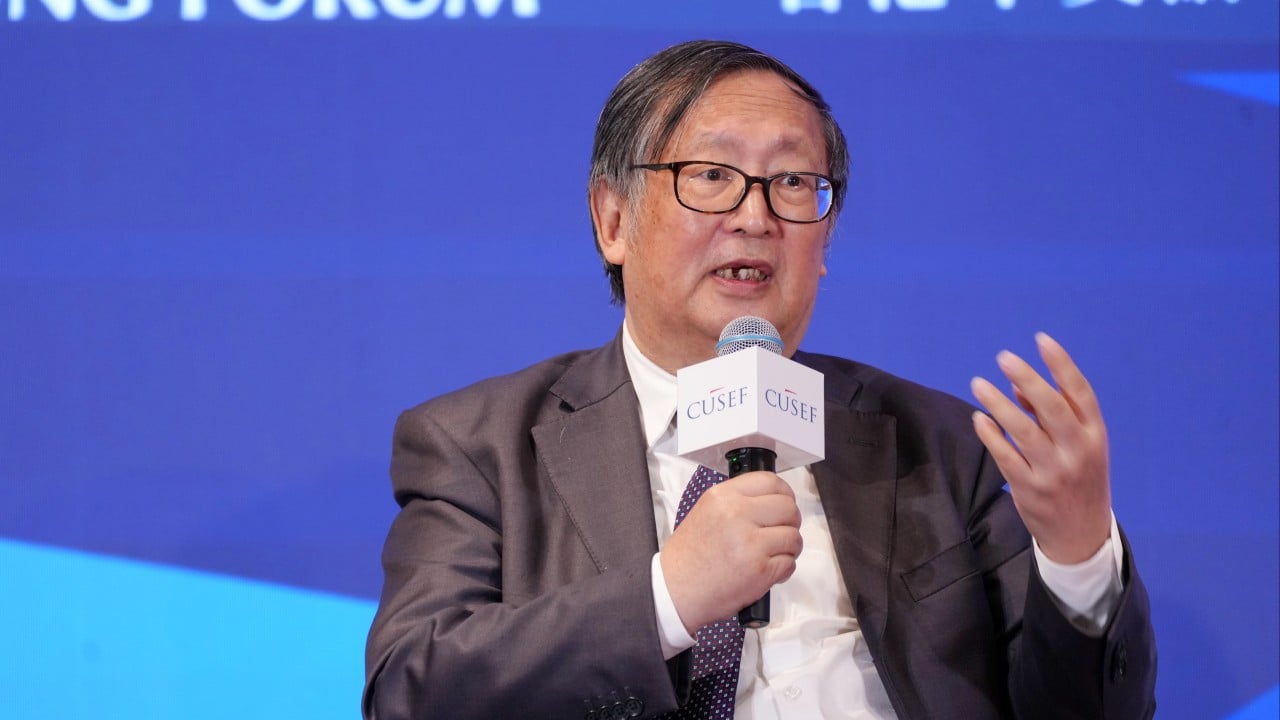
US Democrats have grown more proactive in engaging with Beijing following their resounding midterm elections victory, according to a leading Chinese international relations scholar.
Yang Jiemian, president emeritus of the Shanghai Institutes for International Studies, noted that Democratic representatives had been travelling to China to engage directly with their mainland counterparts, although he did not identify any by name.
“Now, the Democrats are a little bit proactive, and they are coming to China,” Yang said, adding that they sought “to exchange their views and explain how important and influential” the midterm results were.
Yang was among those speaking on a Sino-American relations panel at a forum hosted by the China-United States Exchange Foundation in Hong Kong on Monday.
His remarks coincided with a flurry of American outreach after the November 3 midterms in which the Democratic Party regained control of both the US House of Representatives and US Senate.
02:53
US midterm elections: What the results mean for mainland China, Taiwan and foreign policy
Analysts expected a Democratic-controlled US Congress to exert greater pressure on the White House on foreign policy, including a push for arms sales to Taiwan, and reduce US President Donald Trump’s flexibility in foreign affairs.
Last Thursday, American political, strategic, academic and business representatives gathered in Beijing for the US-China Political Dialogue 2026 to explore ways of stabilising relations.
The event brought together non-partisan career diplomats such as Daniel Russel, a former assistant secretary of state for East Asian and Pacific affairs, and Susan Thornton, a former acting assistant secretary of state.
Max Baucus, a former US ambassador to China and former Democratic senator, and Melodee Hanes, co-founder of the Baucus Institute, also attended.
Senior Chinese officials, including Foreign Minister Wang Yi and Liu Haixing, head of the Communist Party’s international department, also hosted American business leaders and political figures.
The high level of engagement preceded Trump’s arrival in Shenzhen on Wednesday for the Asia-Pacific Economic Cooperation (Apec) leaders’ meeting, where he will hold bilateral talks with Chinese President Xi Jinping and take part in a trilateral meeting with Xi and Russian President Vladimir Putin.
According to Chan Heng Chee, a Singaporean ambassador-at-large who also spoke at the Hong Kong event, Trump will still seek to maintain cordial ties with Beijing as part of his political legacy, but the reshaped Congress could complicate the American president’s diplomacy with Beijing.
SCMP Plus is a new premium news platform that gives you an
all-inclusive edge to stay ahead on China news.
To access our exclusive content you’ll need to subscribe.
Already a subscriber?
LOG IN
“He spent time developing this relationship, so they’ll try to keep it,” Chan said of Trump. “But now new forces in the US Congress will make it harder for Trump, and he will have to fight that.”
Scott Kennedy, a senior adviser and trustee chair in Chinese business and economics at the Centre for Strategic and International Studies, echoed that view, arguing that Washington had moved “beyond peak Trump”.
“His level of influence is only going to go down from here, through the end of his term,” Kennedy said of the US leader. “He has much less sway in American politics.”
“Other kinds of voices are going to be more significant. We’ll see that with regard to the hearings and pieces of legislation.”
The Xi-Trump summit comes days after Nvidia CEO Jensen Huang’s extramarital affairs and sudden resignation after 33 years at the US technology company he co-founded.
Huang’s departure has triggered concerns about tighter US chip controls against China in the future, an issue that stands at the heart of the tech and AI competitions between Washington and Beijing.
Kennedy described the fallout as causing a “huge earthquake” in Washington, with expanded American restrictions on chip exports “almost guaranteed”.
“We may see broader US controls of chip equipment as a consequence. And that may have an effect on the bilateral talks,” he said.
“Those who lean on the structural sources of stability for relations need to recognise that there are real vulnerabilities as well.”
KioskNews shows a cleaned-up reading view extracted from the publisher’s page — the original always lives on their site, not ours.