Britain’s way back to Europe: Polls show tide has decisively turned against Brexit
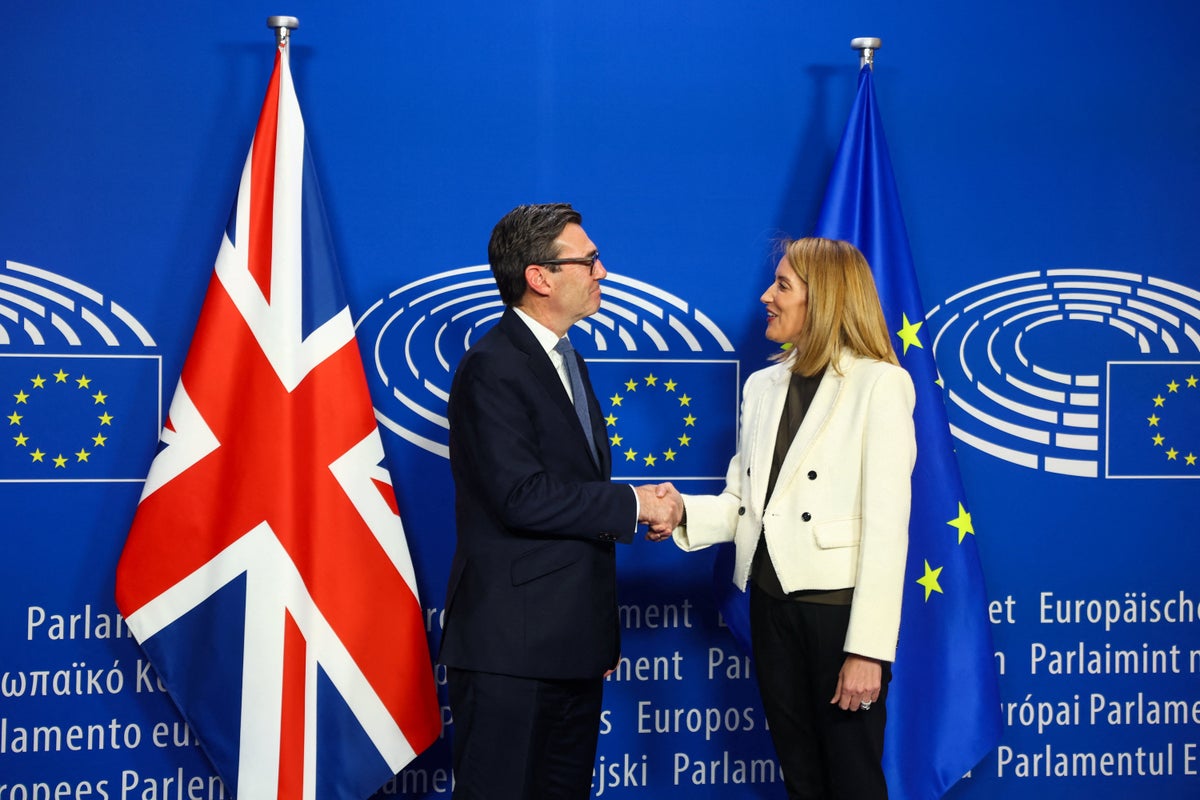
British voters have decisively turned against Brexit as Andy Burnham indicates he wants to put Rejoin in Labour’s next election manifesto.
Recent polling has shown that finding a route back into the EU would be an electoral boon for Labour, as a wide range of opinion polls and surveys have shown that the tide has turned, a decade after 52 per cent of Britons backed leaving the bloc.
It comes as campaigners on both sides of the divisive issue relaunch – with Lord Michael Gove leading Stay Out while The Independent revealed on Saturday that Get In! is positioned to lead the Rejoin campaign.
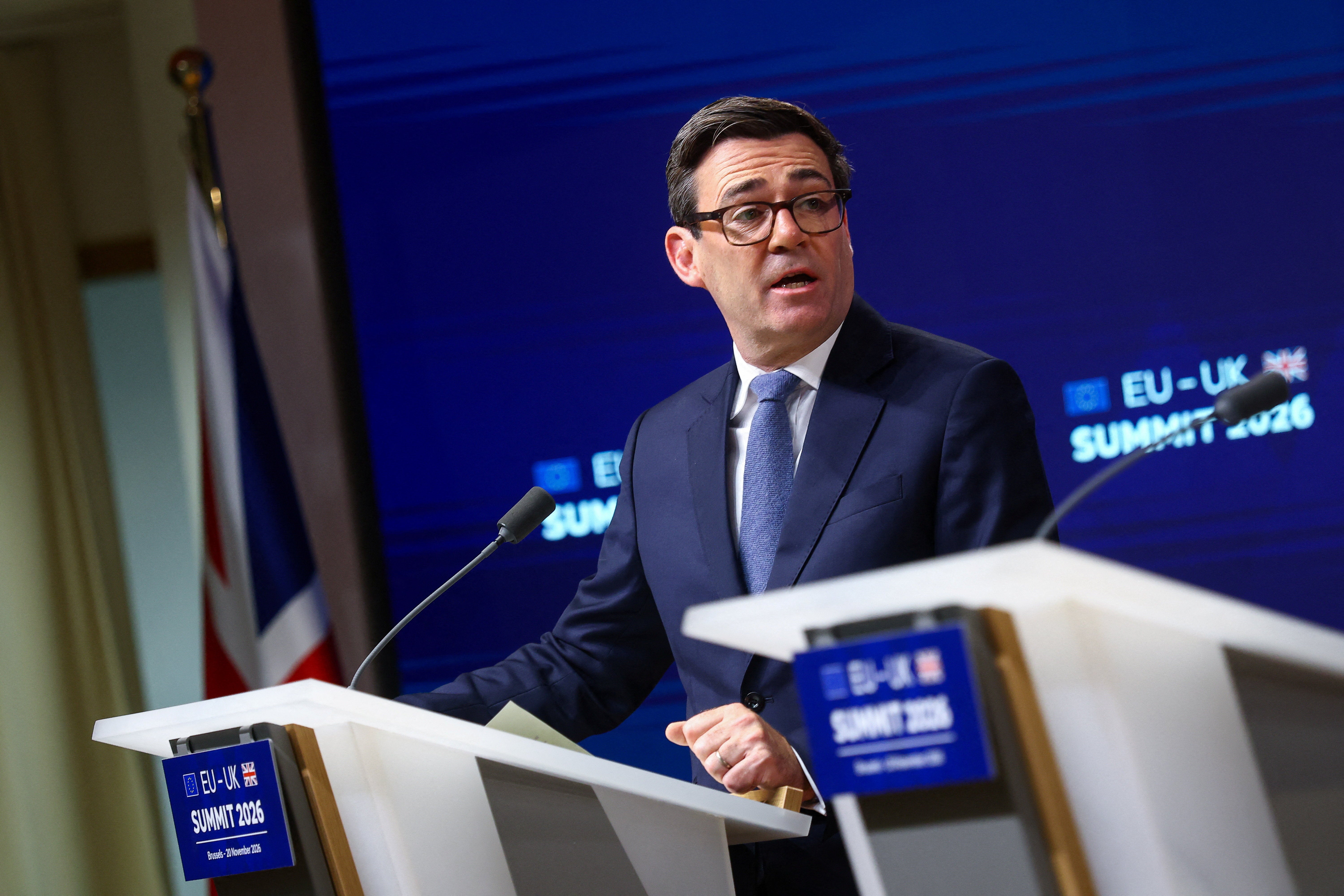
Mr Burnham on Friday paved the way for even closer ties with the EU after signing a deal with the bloc, covering food and agriculture exports, emissions trading, and a youth experience scheme, which could open the doors for 100,000 young Europeans to temporarily work in the UK.
The deal will add up to £17bn a year to the British economy, according to Mr Burnham, who said that the agreement with the EU would “draw a line on a decade of drift and division by reconnecting with old friends”.
He described Friday as a “good day for Britain and a good day for Europe” but suggested the agreed package was “probably the limit” of what could be achieved before the next general election.
Mr Burnham has committed to abide by Labour’s manifesto red lines ruling out a return to the single market, customs union or free movement.
Burnham’s general election boost
Mr Burnham’s hopes of retaining power at the next election would receive a huge boost if he pledges to take the UK back into the EU, polling released earlier this week showed.
According to GB Omnibus, support for Labour will jump by more than 7 per cent if the party’s next manifesto includes a plan to rejoin.
The poll of 7,291 voters commissioned by Fortius Global (formerly the Messina Group) makes it clear that voters currently back the prime minister pushing for Rejoin.
According to the findings, Labour would reach 31.5 per cent among the total electorate if they promise to rejoin, compared with 24.3 per cent in the baseline voting-intention question.
The prime minister previously said he hoped the UK would return to the EU in his lifetime and, following Friday’s summit, declared that the next year would be spent “brainstorming” ideas with the EU for the future relationship between the UK and the bloc.
“What we are announcing today is probably the limit of what we can achieve in this parliament, given what needs to be done to implement it,” he said.
“But we want to inform the parliament after this one, so that decisions can be taken about that long-term relationship.”
Majority of constituencies support reversing Brexit
Further suggesting that a policy of rejoining the EU would be electorally beneficial to Mr Burnham, polling showed that all but four constituencies in Great Britain would support reversing Brexit.
In September, constituency-level polling of 11,927 UK voters found EU membership was by far the most popular policy option, with 35 per cent of people stating it as their preferred government proposal when it came to Britain’s approach to the bloc.
The YouGov poll commissioned by Best for Britain found 18 per cent backed seeking a closer relationship with the EU, but within the government’s red lines, and just 11 per cent would prefer to loosen ties to the EU.
The polling found that restoring EU membership is the most popular approach in all constituencies, bar Ashfield, Clacton, Great Yarmouth and Boston and Skegness, where “don’t know” was the most popular answer.
The poll was based on an MRP analysis of all 632 parliamentary constituencies in Great Britain (excluding the 18 in Northern Ireland).
London throws its weight behind Rejoin
Almost two-thirds of Londoners support rejoining the EU, and nearly half believe Brexit has made them worse off, according to polling released this week.
YouGov polling, commissioned by mayor of London Lord Sadiq Khan and reported by The Standard, shows that the vast majority of the capital’s residents wish for the UK to either rejoin or have a much stronger trading relationship with the EU.
The poll shows that some 63 per cent of Londoners support the idea of the UK rejoining the EU, while 68 per cent are in favour of rejoining its single market and/or customs union.
Northern Ireland
Polling published earlier this month showed that a majority of voters in Northern Ireland favour the UK rejoining the EU.
Conducted on behalf of Queen’s University Belfast by polling firm LucidTalk, the survey showed that almost two-thirds (63 per cent) believe that Brexit has caused far more disruption than they had anticipated back in 2016.
The survey showed that 52 per cent of Northern Ireland electors agree the UK ought to rejoin the EU under standard member obligations, whereas 38 per cent remain opposed.
And 77 per cent of respondents considered there to be a clear need for a “serious dialogue” concerning the UK’s long-term relationship with the EU.
The survey also showed a continuing decline in support for the Windsor Framework – the post-Brexit treaty agreed between London and Brussels to alleviate trade friction between Great Britain and Northern Ireland – with only 45 per cent viewing it as “on balance a good thing for Northern Ireland”, its lowest rating since June 2021.
Northern Ireland Secretary Sir Chris Bryant has hailed Friday’s new deal with the EU as “completely transformational” for businesses.
Most pertinent to Northern Ireland from the deal is that post-Brexit checks and restrictions on food and agricultural products will be ended as part of a sanitary and phytosanitary (SPS) deal.
Businesses keen on rejoining trading bloc
British businesses overwhelmingly back rejoining the EU, a major new consultation found.
Three-quarters of firms said restoring EU membership would have the most positive impact on their business, a report by the UK Trade and Business Commission found.
An analysis released earlier this year suggests almost every sector of the economy has been hit by Brexit, with exports of chemicals and pharmaceuticals down by 21 per cent since the UK left the EU, and those classed as “agrifood” down 29 per cent, according to researchers at the Centre for European Reform.
Meanwhile, a study revealed on Friday that rejoining the EU would deliver more than twice the economic boost of a Swiss-style halfway house, adding £112bn a year to the UK economy compared with £54bn.
The report, by the Productivity Institute think tank and reported by the Financial Times, says investment would flood back into the UK if it restored full membership of the EU.
The £112bn boost would be equivalent to the entire yearly budget of the Department for Education.
Leave voters’ buyer’s remorse
Suggesting a level of regret about the result in 2016, nearly half of Leave voters now want stronger cooperation with the European Union on immigration, while a third want closer trade and defence links.
They are even more likely to want the UK and the EU to work together on migration than the average voter, according to the research released on Thursday.
The poll, by Savanta, ahead of Friday’s summit, found the public as a whole chose cutting trade barriers as a main priority (44 per cent), ahead of migration cooperation (37 per cent) and closer defence ties (35 per cent).
Leave voters chose migration (48 per cent), ahead of trade and defence (36 per cent and 37 per cent).
Reform UK voters also chose migration (50 per cent), ahead of trade and defence (24 per cent and 34 per cent).
The survey, of 2,195 Britons, found that 44 per cent of Tory voters chose trade and defence, with 41 per cent picking immigration.
KioskNews shows a cleaned-up reading view extracted from the publisher’s page — the original always lives on their site, not ours.