6 Best Steven Spielberg Movies of the Last 25 Years, Ranked

Liam Gaughan is a film and TV writer at Collider. He has been writing film reviews and news coverage for ten years. Between relentlessly adding new titles to his watchlist and attending as many screenings as he can, Liam is always watching new movies and television shows.
In addition to reviewing, writing, and commentating on both new and old releases, Liam has interviewed talent such as Mark Wahlberg, Jesse Plemons, Sam Mendes, Billy Eichner, Dylan O'Brien, Luke Wilson, and B.J. Novak. Liam aims to get his spec scripts produced and currently writes short films and stage plays. He lives in Allentown, PA.
Sign in to your Collider account
Steven Spielberg is one of the greatest filmmakers of all-time, by far the most successful, and likely the most versatile, given that he has mastered essentially every single genre in one form or another. Any director would be lucky to have a fraction of what Spielberg accomplished; if most filmmakers spend their entire careers trying to make one film that will be considered a classic, Spielberg has well over a decade. What’s almost as impressive as the range that Spielberg has pulled off is the consistency, as he has very few misses. Even a “lesser” Spielberg film is going to have better craftsmanship, blocking, and editing than a majority of their contemporaries, and he has several works that have experienced a critical resurgence because of their complete competence.
Spielberg is among the rare directors who has not declined with age, which makes him an outlier among the other “movie brats” of the ‘70s. Francis Ford Coppola has arguably not made a great film in over 30 years, George Lucas never made any other new projects after the conclusion of the Star Wars prequel trilogy, and there’s a long list of filmmakers who have become parodies of themselves, including Robert Zemeckis, Tim Burton, Chris Columbus, and Paul Schrader. The only other living filmmaker who has pulled off the same perpetual excellence is Martin Scorsese, but thankfully Spielberg has not shown any interest in AI (other than the one starring Haley Joel Osment). Although the run of classics that Spielberg had between Duel and Saving Private Ryan are among the most iconic and beloved films ever made, he’s made more than a few generational masterworks in the 21st century.
6 ‘Munich’ (2005)

Munich is one of Spielberg’s darkest films and also one of his most relevant, as it could not have become more relevant today. It makes for an interesting double feature with his other 2005 film, War of the Worlds, as they both explored thematic parallels to post-9/11 politics and the war on terrorism, exploring the inhumanity that people were willing to commit for the sake of their own survival. While Munich is a gripping and informative historical thriller based on a real tragedy, it also has some of the most electrifying action filmmaking of Spielberg’s career, including a dizzying assassination scene that rivals anything in the Indiana Jones series.
Spielberg has always had an eye for spotting up-and-coming talent, and Munich shows that he could make a compelling cast out of character actors and veterans, as he didn’t require marquee A-lists. Nonetheless, Spielberg was one of the first directors to unlock the talents of Daniel Craig, and was one of the main reasons that he landed the role of James Bond.
5 ‘Catch Me If You Can’ (2002)

Catch Me If You Can is one of Spielberg’s most entertaining and darkest films at the same time, and serves as the perfect modernization of his longstanding interest in “lost boys” who come from broken homes. Although Catch Me If You Can shares its thematic roots with Hook, as they are both about boys that refuse to grow up, it also relates to a very Spielbergian idea of a character who can only express their feelings through their effort in a specific craft. The playfulness leaves a bitter aftertaste because Spielberg punctures the fantasy by showing the unresolved emotional baggage at play.
It’s a shame that Leonardo DiCaprio has not reunited with Spielberg since Catch Me If You Can, as he gives one of his best performances during a period in his career where he was transitioning between adolescence and manhood. There’s also a remarkable late-career performance from Christopher Walken, as well as one of the most underrated scores from John Williams.
4 ‘Minority Report’ (2002)

Minority Report is another Spielberg film that has become eerily relevant, both in the way that it imagined the evolution of technology and challenged the role of objectivism within law enforcement. The debate as to whether or not free will exists is something that Spielberg tackled a year prior in A.I. Artificial Intelligence, but Minority Report thrusts it into a thrilling neo-noir premise that features a framework for futuristic justice that feels not that far removed from reality. It’s a film that is filled with imagination and clever worldbuilding, but also sets up an unassailable premise with a perfect star role for Tom Cruise.
Spielberg and Cruise were perfectly suited for one another because they are both consummate professionals interested in pushing the capabilities of filmmaking forward while retaining a practical, emotional hook. It’s interesting that Spielberg cast Cruise as a troubled father in both of their collaborations, as it shows that he is capable of being both a great action star and vulnerable performer at once.
Collider Exclusive · 8 Questions · 2 Minutes Which Iconic Fandom Should You Join? Harry Potter · Lord of the Rings · Star Wars · Star Trek
Eight honest questions about how you actually are: what you put on when you need cheering up, how deep you go into the things you love, what you argue about, what you keep on your shelf. Answer them and we will tell you where you belong. Four of the biggest fandoms on earth are taking new members, and they could not be more different from one another.
⚡Harry Potter(Wizarding World)
💍Lord of the Rings(Middle-earth)
⚔️Star Wars(A Galaxy Far Away)
🖖Star Trek(The Final Frontier)
01
What do you put on when you need cheering up? Nobody is brave about this one.
02
How deep do you go into something you love? There is no shallow end here, only different deep ends.
03
What do you and your friends actually argue about? Every fandom has one argument it has been having for years.
04
How do you feel about a room full of strangers? Every one of these comes with a very big room.
05
Where would you rather spend a week? Pick on instinct rather than on budget.
06
What do you believe about people, mostly? All four of these stories have an answer, and they disagree.
07
What is actually on your shelf? Look over at it before you answer.
08
What do you actually want from a story? Eight questions in, this is the one that picks your fandom.
Membership Confirmed Your Fandom Is…
Four of the largest communities on the planet, and four completely different reasons to belong to one. Here is yours, what it would give you, and the argument you would be having within a week.
Harry Potter
You belong to the fandom that is really about comfort. Hogwarts works on people because it is a place rather than a plot, and the pull is not the wizard war so much as the corridors, the food, the weather and the sense that somebody is expecting you.
- You are drawn to belonging, which is why this fandom sorted itself into houses within about five minutes and has never stopped.
- This is the most social of the four, and the one most likely to know which type every single person in your life would be.
- The books are built to be reread rather than analysed, and rereading is exactly what you do with things you love.
- The new HBO series is bringing the whole thing back one book at a time, which means the arguments are about to start all over again.
Lord of the Rings
You belong to the deepest fandom on this list, the one where somebody has always read further than you and is quietly delighted to say so. Middle-earth rewards patience more than any other world in popular culture.
- You like the sense that the story you are reading is only the visible part of something enormous, which is precisely how Tolkien built it.
- This fandom takes adaptation seriously to a degree that other fandoms find slightly alarming, and it has good reasons for that.
- Your favourite thing about the books is probably the bit that is not action at all, which is the walking, the songs and the long goodbyes.
- Nobody here thinks heroism belongs to the powerful, and the whole story exists to make that argument.
Star Wars
You belong to the loudest and largest tent of the four, the one where three generations are all watching the same thing and none of them agree about any of it. That disagreement is not a flaw in this fandom, it is the main activity.
- You want something you can share with absolutely everybody, from a six year old to a grandparent, and this is the only one on the list that really does that.
- Nobody argues like Star Wars fans argue, and the argument has been running since roughly 1980 with no sign of resolution.
- The pull here is sensory before it is narrative, since it is the sound design, the score and the look of a used and dented galaxy.
- You would be first in the queue, in costume, with strong opinions and a genuinely good time.
Star Trek
You belong to the thinking fandom, the one that turns up for the argument rather than the explosion. Trek has always been a series of ethical problems in space, and the people who love it love being asked what they would have done.
- You are an optimist in a way that is currently unfashionable, and this is the only major franchise still willing to say the future might be better.
- The best episodes are the ones where nobody fires anything, which is a sentence that makes perfect sense to this fandom and to nobody else.
- Starfleet Academy brought the franchise back to a classroom in 2026, which is appropriate, because Trek has always been a bit of a seminar.
- You would want the conversation afterwards more than the episode itself, and here you will always find somebody willing to have it.
3 ‘West Side Story’ (2021)

West Side Story is a film that had no right to be as great as it was because the original 1961 classic is a Best Picture winning masterpiece that holds up, making it nearly impossible for a remake to live up to the hype. Although cinephiles should have learned to trust Spielberg at this point, 2021’s West Side Story was a revitalization of the musical that used a refreshing screenplay update from Tony Kushner to flesh out more of the social, ethnic, sexual, and political dynamics among the characters. It’s among the most eye-popping of Spielberg’s visually shot films because he is able to retain a stunning degree of expression within a film that still moves with the stylization of a classic musical. It’s downright stunning that this was Spielberg’s first attempt at doing something in the musical genre, without counting the opening scene of Indiana Jones and the Temple of Doom.
Spielberg’s West Side Story somehow manages to surpass the performance of the original, mostly because he found a much better Tony and Maria in Ansel Elgort and Rachel Zegler, respectively; with all respect to Richard Beymer and the late Natalie Wood in the original, their performances were rather bland when compared to the work by George Chakris and Rita Moreno (who appears for a very moving extended cameo). The tragedy of West Side Story is more palpable than ever, and Oscar voters are going to feel pretty silly in a few years when considering that they passed it up for Best Picture in favor of CODA.
2 ‘Lincoln’ (2012)

Lincoln is perhaps the greatest film ever made about an American President (even if Oliver Stone’s Nixon and Ali Abassi’s The Apprentice are very worthwhile), and features the single greatest performance in any of Spielberg’s films. Although Liam Neeson had long been attached to star, Spielberg eventually convinced Daniel Day-Lewis to step into the role of Abraham Lincoln, earning his third Academy Award win for Best Actor. This not only saw Day-Lewis reaching a milestone of winning three leading actor trophies (which no other male actor has received), but made him the first actor to win an Oscar for a Spielberg film, even if he would soon be followed by Mark Rylance in Bridge of Spies and Ariana DeBose in West Side Story.
Lincoln is not a biopic about the great man’s entire life but a critical chapter at the end of the Civil War in which Congress voted on the passing of the 13th amendment to the United States Constitution, which outlawed slavery. Spielberg and Kushner worked on a deeply-researched screenplay that explored the mechanisms of politics in a way that no other film had, and included a vast ensemble of more great character actors than could be counted. It’s a surprisingly entertaining film that shows that not every political drama needs to be an Aaron Sorkin-esque “walk-and-talk,” as Lincoln earns an overwhelmingly emotional finale that hits like a ton of bricks.
1 ‘The Fabelmans’ (2022)

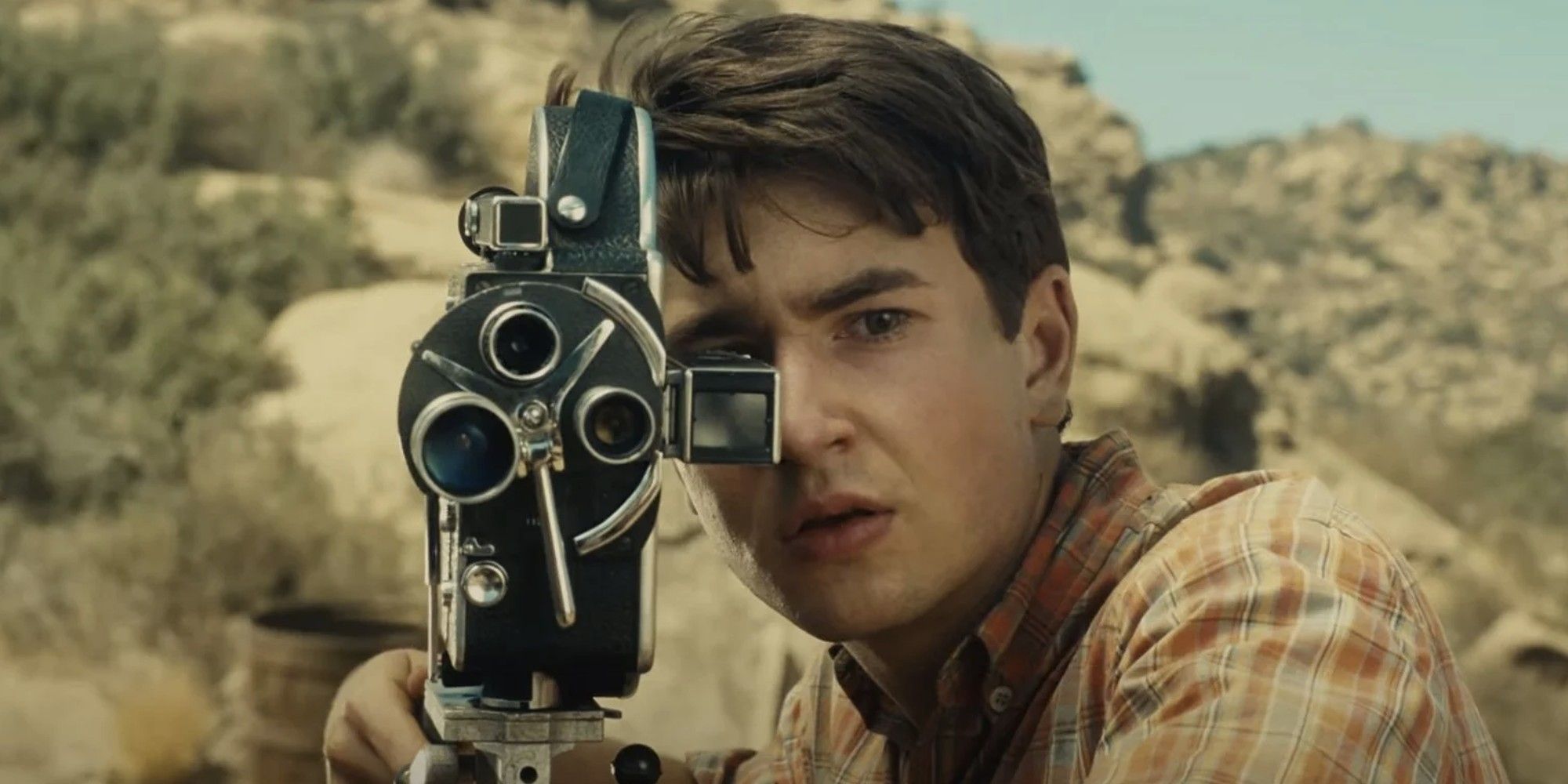
The Fabelmans is one of Spielberg’s defining masterpieces and one of the best films of the decade because it saw him finally telling the semi-autobiographical story of his own childhood, involving both the divorce of his parents and the inception of his love of filmmaking. It’s more than just an inspirational story about a love of artistry, as Spielberg uses the character of Sammy Fabelman (Gabriel LaBelle) to show how filmmaking was used as a coping mechanism as he felt the crushing weight of his collapsing family, venomous anti-Semetic bullying, and an inescapable sense of loneliness. Elements of this family history had been sprinkled without many of his films, such as Close Encounters of the Third Kind and Indiana Jones and the Last Crusade, but The Fabelmans is perhaps the most vulnerable film he has ever made.
The Fabelmans is a treasure trove of homages to other Spielberg classics and the wider history of cinema, with David Lynch’s cameo as John Ford being the cherry on top. However, it’s also accessible as a great family drama that is funny, moving, and relatable to anyone who has ever been a teenager; it also might have the cheekiest (and best) final shot of Spielberg’s entire career.
KioskNews shows a cleaned-up reading view extracted from the publisher’s page — the original always lives on their site, not ours.