Xi Jinping urges South Korea to cooperate with China on AI and supply chains
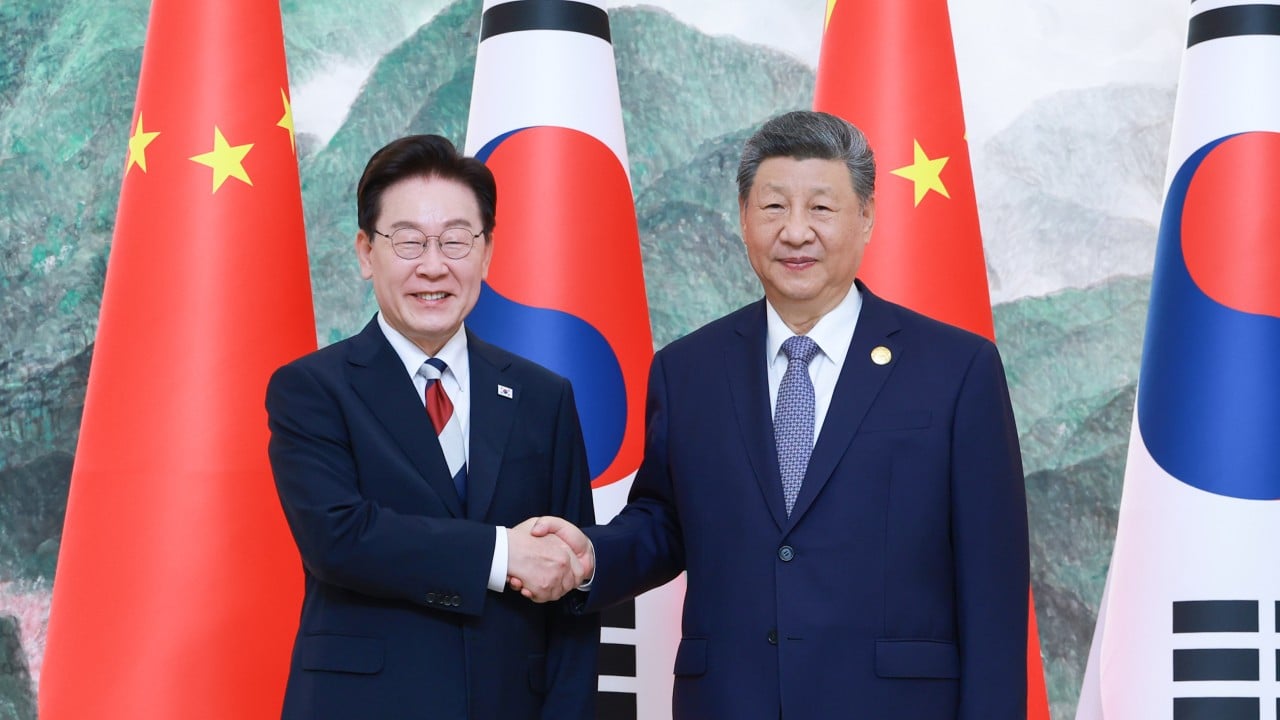
Chinese President Xi Jinping called on Wednesday for a joint effort to safeguard global supply chains, deepen economic policy coordination and foster cooperation on artificial intelligence and other emerging tech industries in a meeting with his South Korean counterpart Lee Jae Myung in Shenzhen on Wednesday.
During the 34-minute meeting on the sidelines of the Asia-Pacific Economic Cooperation (Apec) summit in Shenzhen, Xi hailed the “substantial conclusion” of the second phase of the two countries’ free-trade talks, which he said would “help consolidate the sound momentum of mutually beneficial and win-win cooperation”.
The two countries have been discussing an upgrade to their existing trade deal since 2018.
“The two sides should make full and effective use of this institutional arrangement, strengthen macroeconomic policy coordination and foster a cooperative ecosystem for emerging technology industries such as artificial intelligence,” Xi said, according to a statement from the Chinese side.
He said both China and South Korea were beneficiaries of multilateralism and free trade and called for joint efforts to maintain “strategic autonomy to safeguard the political foundation” of the two countries.
According to South Korea’s Yonhap news agency, Lee said relations had made a solid recovery, pointing to a nearly 50 per cent increase in trade between the two countries in the first half of this year compared with the same period last year.
Lee also said that the numbers travelling between the two countries were set to top 10 million this year for the first time since 2019.
“I hope that South Korea-China ties will move beyond full recovery to become a more mature strategic partnership,” Lee said.
Lee also called for joint efforts with China to establish peace on the Korean peninsula, saying it was essential to the future development of relations between Seoul and Beijing.
The Chinese official statement did not mention the Korean peninsula.
Just a decade ago, relations between China and South Korea hit one of their lowest points in decades.
Xi calls for elimination of trade barriers in Apec summit speech
Tensions initially flared in 2016 over Seoul’s deployment of a US missile defence system that triggered economic retaliation from Beijing, including an unofficial boycott of Korean music and drama, and deepened under former president Yoon Suk-yeol.
Yoon’s closer alignment with treaty allies the United States and Japan, including expanded joint military drills, participation in Washington-led tech curbs targeting Beijing, and vocal opposition to its pressure on Taiwan drew sharp rebukes from mainland China and severely strained high-level diplomacy.
But ties have improved significantly since Lee took office in June 2025, following Yoon’s impeachment over his brief declaration of martial law. Lee has actively worked to mend ties, hosting Xi at the Apec summit in Busan last year and making a state visit to China in January.
Speaking on Wednesday, Xi said China was ready to work with South Korea to “conduct healthy and beneficial cultural exchanges in a step-by-step manner”.
Beijing has hailed the flurry of high-level visits as a vital step towards restoring normal diplomacy and rebuilding mutual trust.
In talks with his South Korean counterpart Cho Hyun in Beijing last Friday, Chinese Foreign Minister Wang Yi urged both sides to maintain that momentum ahead of the 35th anniversary next year of the establishment of formal diplomatic ties.
According to the South Korean foreign ministry, Cho “called on China to play a constructive role in addressing Korean peninsula issues, including bringing North Korea back to dialogue”.
Recent high-level exchanges between China and North Korea have raised concern in Seoul that Beijing is prioritising Pyongyang’s stability over denuclearisation in the short term. Notably, Wang omitted any mention of denuclearising the Korean peninsula during his visit in August.
Beijing has been similarly silent over North Korea’s missile tests, including the latest launch early this month.
The South China Morning Post reported in September that Beijing was keen to broker a meeting between US President Donald Trump and North Korean leader Kim Jong-un.
This year has seen a surge in diplomatic activity between China and North Korea.
Xi, Lee joke about security of Xiaomi phone gift
Xi visited Pyongyang in June, just weeks after back-to-back state visits to China by Trump and Russian President Vladimir Putin. It was the Chinese leader’s first visit to North Korea since 2019 and his first overseas trip of the year.
This was followed by a string of high-level Chinese visits to Pyongyang, including one by Wang Huning, Beijing’s fourth-ranked official.
Last month Kim made an unannounced visit to the Chinese border city of Dandong days after the opening of a new cross-border bridge.
Shenzhen has a symbolic importance in the relationship between Beijing and Pyongyang. Kim’s late father, Kim Jong-il, visited 20 years ago to witness China’s economic transformation and expressed his admiration for the “immense vitality and potential” unleashed by its reform and opening-up policies.
KioskNews shows a cleaned-up reading view extracted from the publisher’s page — the original always lives on their site, not ours.