Government increases: Ministers vs SASSA pensioners
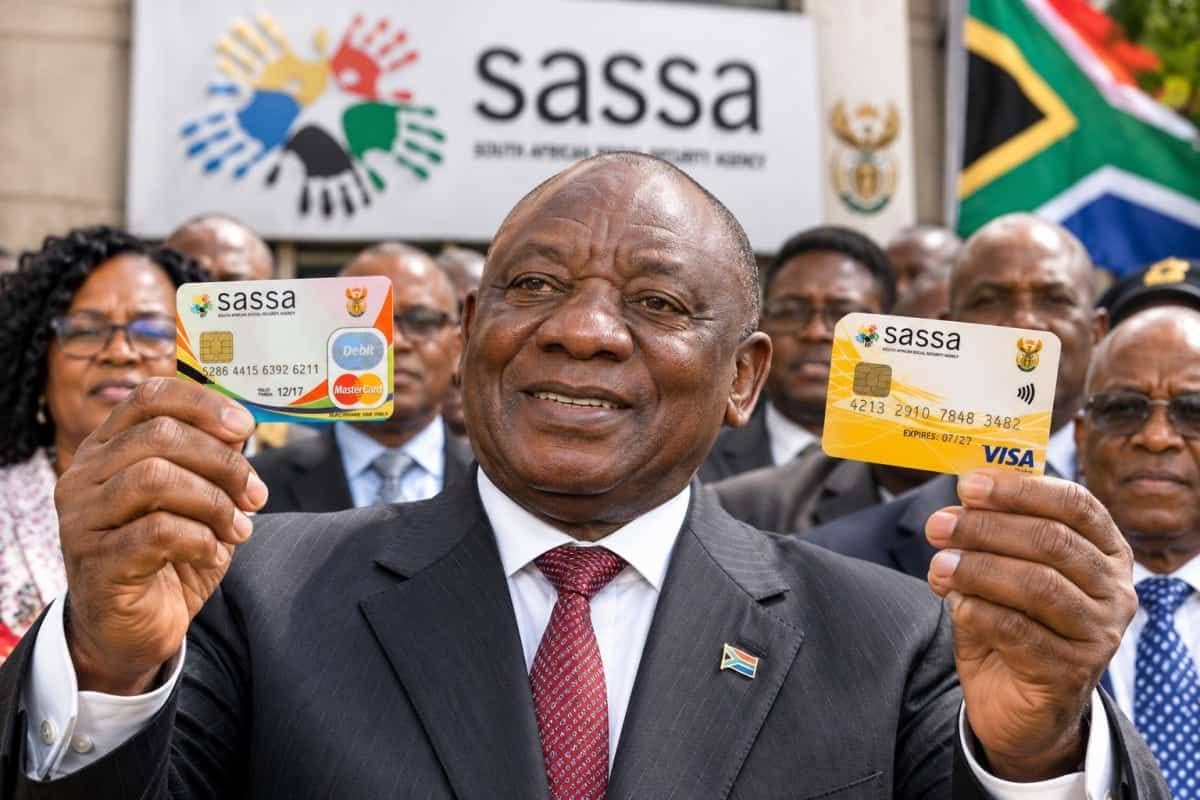
Earlier this month, President Ramaphosa approved government increases for ministers, deputy ministers, MPs, premiers, judges and magistrates. Valued at 3.5%, they become effective from April.
Meanwhile, SASSA pensioners received a 3.7% increase back in April 2026, raising Old-Age grants by R80 to R2 400 and R2 420, respectively. The relevance of this is important, because government increases are drawn from the same pool of money. Therefore, what happens to one usually happens to the other …
GOVERNMENT INCREASES: SALARIES VS SASSA GRANTS
However, the huge difference is that while percentages are the same (or close), the rand figures are miles apart. A minister’s increase is about R8 167 a month, more than 100-times that of a pensioner’s miserly R80. In fact, one minister’s monthly pay equals about 100 SASSA Old-Age Grants. Government increases for top officials look like so:
- Ministers: R2 800 225 increases to R2 898 233 – up R98 008 a year.
- Deputy ministers: R2 306 044 to R2 386 756 – up R80 712 a year.
One commenter on The South African, VALAUG12, had this to say:
“How does the Minister of Finance budget for municipal officials’ elaborate salaries plus extra benefits. These include a car, medical, cellphone, safety and security, housing, education and training, traveling and accommodation allowances. All paid by the taxpayer. If government officials get all these benefits, what do they need a salary for? How exactly does the minister sleep at night?”
DOWNWARD TRAJECTORY FOR BOTH

All valid points on the gap between government increases for office bearers and SASSA pensioners. Nevertheless, increases have actually been shrinking for the former, from 5.5% (2024) to 4.1% (2025) to 3.5% (2026). Meanwhile, SASSA pensioners did enjoy a larger grant increase in 2025 (5.9%), only for it to be slashed to 3.7% in 2026.
Of course, the National Treasury will argue both sets of government increases are weighed by inflation forecasts. However, in October 2026, it hit 5.2%, the highest in almost two and a half years, driven by fuel increases of 42.9% for the year. Standard Bank economists expect November to sit at about 5.3%.
As such, by the time the minister delivers official South African Social Security Agency increases in his February Budget, what will inflation look like? If it sticks around 5% to 5.2% (predicted), top government officials will already be losing ground.
GOVERNMENT INCREASES NOT ONLY LED BY INFLATION
Furthermore, Minister Godongwana has already said that 2027 grant increases, “ultimately depend on the fiscal resources available,” so don’t count on inflation-matching alone. However, if hikes were to touch 5%, that would represent a nice, round R100 increase to Old-Age Grants, and R30 to Child Support. Taking them to R2 500 (and R2 520) and R610, respectively.
The 2027 Budget Speech will tell us. Until then, beneficiaries will have to sit tight and save on R2 400 a month, or about R72 a day over the not-so-festive season …
But what do you think? What do you think about government increases in 2027? What would you like to see grant figures hit? Please share your thoughts in the comments section below …
KioskNews shows a cleaned-up reading view extracted from the publisher’s page — the original always lives on their site, not ours.