Southeast Asian live streamers hustle to fuel booming e-commerce sales

In a makeshift studio inside his public housing flat in Singapore, Shane Soh stands before his smartphone, running his fingers through a towel as he extols its softness to viewers watching his live stream.
A ring light illuminates his face while more than a dozen other products sit on a shelf behind him, waiting for their moment on camera.
“Don’t just buy one towel today, but get bedsheets as well. It’s perfect for Hari Raya or Christmas, and the thread count is 1,800 … It’s the best kind of quality you can get,” he tells hundreds of viewers on the other side of the screen.
It was Tuesday, the eve of the 11.11 Single’s Day – the biggest e-commerce event in Southeast Asia – and Soh was among thousands of hosts flashing discounted products and promotional codes on Shopee.
Live stream shopping has become big business in Southeast Asia, and Soh is one of many riding on the boom to boost their incomes. Customers get drawn in by personable hosts who try on clothes, cook or simply chat to the camera while promoting products, leading to billions of dollars in sales each year.
But the competition is heating up as more aspiring hosts try to get in on the action, raising questions about how many can realistically turn the gig into a sustainable source of income.
Soh, who has a full-time job as a market research analyst, first delved into live-streaming when he was a university undergraduate. He spends about 10 hours a week hosting streams – longer when gigs skyrocket due to e-commerce festivals such as Single’s Day.
“I picked live-streaming for additional income and exposure. Also, it aligns with my passion for presenting and hosting, which was something I was already doing back in the day,” he said.
Southeast Asia’s e-commerce market is expected to reach US$226 billion this year, accounting for more than 60 per cent of the region’s digital economy, according to the e-Conomy SEA Report 2026 released in October by Google, Temasek and Bain & Company.
Content-driven shopping, which includes live streams, short videos and affiliate sales, is projected to generate US$77.9 billion in transactions in the region this year, up from US$49.7 billion in 2025, according to a September report by research firm Momentum Works.
On Shopee, orders from live streams and short-form videos grew by more than 45 per cent year on year in the third quarter, accounting for over a quarter of physical-goods orders in Southeast Asia, the platform’s parent company Sea said on Tuesday.

Personal touch
After working as a producer at a TV studio for about a decade, Stephy Sin decided to commit fully to a career in live-streaming last year. The Malaysian’s usual clients typically span beauty and household appliance brands, and in good months she takes home around 9,000 ringgit (US$2,200).
“If you really want to do well, it’s hard to do it on the side because you want to make connections with as many brands as possible to gain exposure,” said Sin, 32. “And I made it my full-time job because I’m definitely able to get more money from it.”
Sin recalls a deluge of questions flooding a TikTok live stream she had been hosting for a well-known sports brand last year.
“People were dropping so many comments in different languages – English, Malay and Mandarin – and it was impossible to answer them all. I just had to hold my breath and keep switching between three languages,” she said.
Such engagements are one of the main reasons viewers continue to tune in to these streams. Instead of spending time looking at photographs and item descriptions on their phones, they can receive answers to their queries in real time.
“This creates a stronger sense of social presence, making consumers feel that they are interacting with a real person rather than simply browsing an online shopping platform,” said Chong Sin Er, assistant professor at the school of economics and management at Xiamen University Malaysia. “Such interactions can reduce perceived uncertainty and help consumers feel more confident in their purchasing decisions.”
Tracy Loh, a senior lecturer of communication management at the Singapore Management University, said such sales methods might also simulate a physical shopping experience with a friend. “Oftentimes shopping is more of a social experience than merely a utilitarian affair,” she said.

Good deals offered during live streams could add excitement and lead to feelings of scarcity and urgency, said Loh. Consumers might fear missing out and feel pressured to make purchases when seeing other viewers placing orders, she added.
While some firms have used artificial intelligence-generated avatars to host their live streams, Loh is confident real human interactions would retain their edge.
AI “defeated the purpose” of live-streaming, she said. “The key is to engage first, sell later. With engagement, you come across as a friend, making a recommendation rather than as someone trying to make a sale. With AI, you have less of this authenticity and relationship.”
Carving sustainable career
As the e-commerce market expands and consumer preferences evolve, live-streaming is becoming an increasingly important marketing tool for companies.
Big names have embraced the trend, including cosmetics giant L’Oréal, which last year launched a live stream studio in Vietnam.
The mix of live streamers is also quickly expanding, with actors and internet personalities joining the fray to boost their incomes and profiles.
Soh, who has over 20,000 followers on his Shopee account, worries about stiffer competition. “The pool of live streamers is growing, and so it’s harder for you to stand out against different brands and creators … The pie is only so big,” he said.
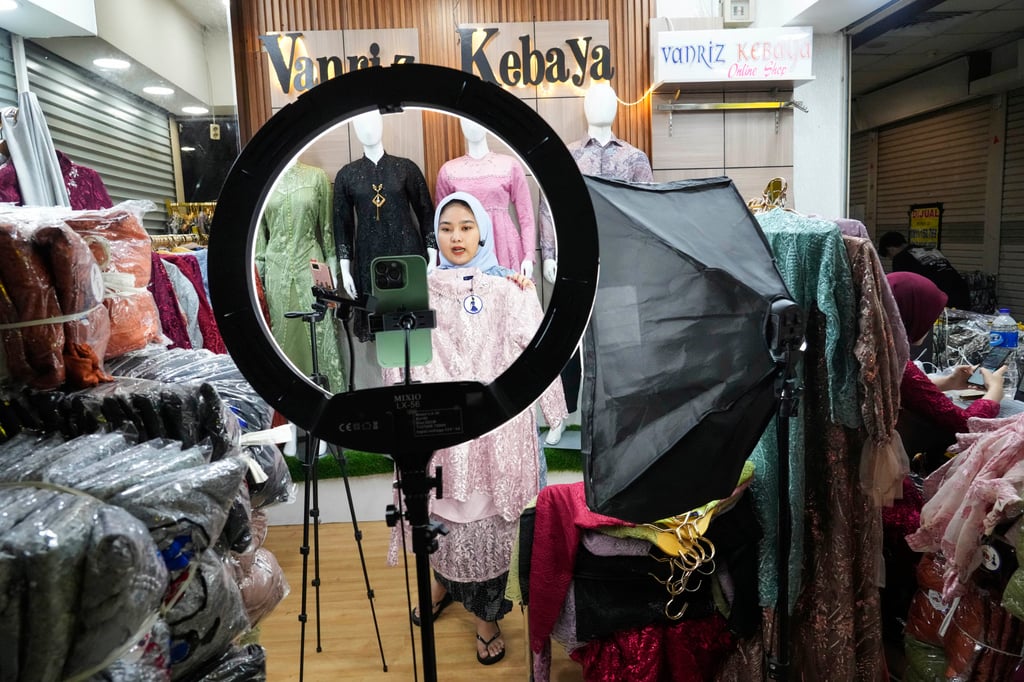
Chong said that with more live streamers, repetitive and heavily promotional streams focusing on ramping up sales numbers could risk viewer fatigue. “The initial novelty of live stream shopping may gradually diminish, meaning that live streamers and companies will need to offer genuine value beyond discounts and promotional campaigns,” she said.
Career sustainability ultimately depended on one’s ability to establish trust and a loyal community, Chong added.
For Samantha Dela Pena, a 19-year-old undergraduate in Manila, a community is what she aims to build. In search of inspiration and a bigger pay cheque, she left her part-time job at a fast food joint and started hosting live streams for a local cosmetics company.
In front of a camera, she rattles off lipstick shades and foundation tone numbers without missing a beat. As she dabs the products on her face, she shares make-up tips and tricks with her viewers.
Dela Pena said she hoped to continue live-streaming after her graduation. “I’ve always been passionate about make-up, self-care and women empowerment, and I think this role boosts these beliefs.”
KioskNews shows a cleaned-up reading view extracted from the publisher’s page — the original always lives on their site, not ours.