Netanyahu's coalition trap, Eisenkot's resolve, and the future of Israel’s rule of law - opinion
Gadi Eisenkot is a deceptively complex figure. The pro-Netanyahu propaganda apparatus has exploited this extensively, portraying him as politically naive, inarticulate, and manipulated by forces more powerful than himself.
Nothing could be further from reality. Eisenkot has one significant advantage: Attempts to discredit him rarely stick.
In recent days, outgoing Prime Minister Benjamin Netanyahu and his supporters appear to be discovering that Eisenkot is not the man they portrayed him to be. Netanyahu himself, however, has always known better. Having worked with Eisenkot, he is familiar with his capabilities and is now encountering them under considerably less favorable circumstances.
Eisenkot's military career reveals his political character
I have known Eisenkot reasonably well since 1999, when he served as military secretary to then-prime minister Ehud Barak and subsequently to Ariel Sharon.
He was among the few officers who emerged from the Prime Minister's Office unchanged. He did not develop a taste for expensive cigars, whiskey, or political intrigue.
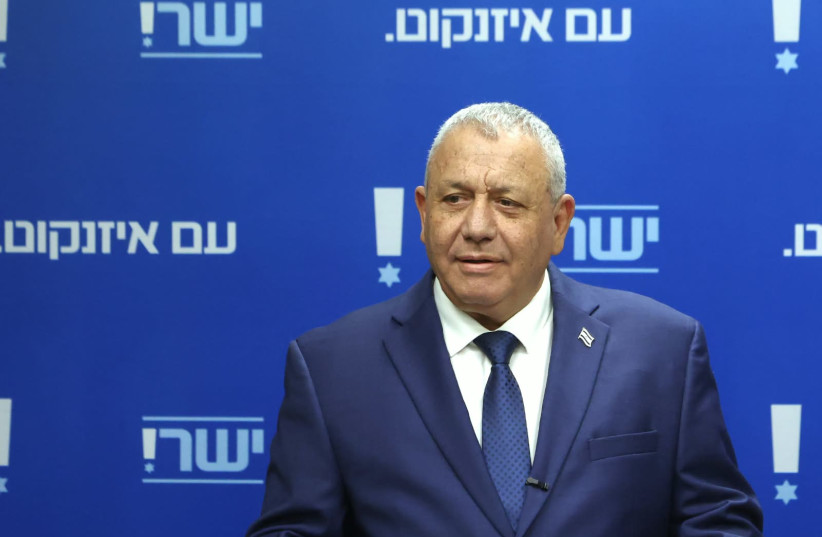
When he left the office to fight in the Second Intifada, serving in the Judea and Samaria Division, he remained precisely the same officer who had entered it.
My favorite story from Eisenkot's unwritten biography concerns his dismissal from a command position in the Golani Brigade.
As a young commander of Golani's anti-tank reconnaissance company, Eisenkot had granted his soldiers scheduled leave following an extended period of exhausting operational activity.
At a meeting of brigade officers, then-Golani Brigade commander Zvi Poleg, who would later become mayor of Netanya, instructed Eisenkot to recall his soldiers for an upcoming brigade sports day.
Eisenkot refused.
Poleg, who until then had appreciated the young officer from Eilat, insisted. Eisenkot maintained his position, prompting Poleg to dismiss him in front of the brigade's officers.
Years later, Eisenkot acknowledged that, had he been in Poleg's position, he would have dismissed himself as well.
Nevertheless, he had made a conscious decision not to recall his soldiers. He was at the beginning of his military career, understood the potential consequences, and accepted the risk.
After considering leaving the military, Eisenkot decided to pursue academic studies instead. He eventually became commander of the Golani Brigade, commander of the Judea and Samaria Division, head of Northern Command, head of the Operations Directorate, deputy chief of staff, and ultimately IDF chief of staff.
When required to confront authority on behalf of those under his command, Eisenkot demonstrated a willingness to jeopardize his own future.
Eisenkot's composure and political instincts
Another defining characteristic of Eisenkot is his composure under pressure. He witnessed similar qualities in Barak and Sharon, but his own temperament long preceded his service alongside them.
As IDF chief of staff in 2018, he was required to demonstrate that composure during the rescue of an Israeli undercover force following a compromised operation in Khan Yunis.
The same quality was evident during his confrontation with then-defense minister Avigdor Liberman, who advocated military action in Gaza while Eisenkot believed that confronting Hezbollah's cross-border tunnels in northern Israel should take precedence.
Eisenkot succeeded in securing Netanyahu's backing. Liberman found himself politically isolated and subsequently resigned.
That episode reflected both Liberman's willingness to stand by his convictions and Eisenkot's considerable political instincts.
The lesson is relevant today. Eisenkot's soldiers, whose leave he once refused to interrupt, have been replaced by the Israeli public.
My assessment is that he believes he is fighting not for a period of leave, but for the country's future. Personal political considerations are unlikely to dominate his calculations.
Just as he once accepted dismissal from Golani, Eisenkot appears prepared to risk his own political future to replace Netanyahu.
Netanyahu's potential rotation offer could threaten coalition negotiations
What does this mean for the formation of Israel's next government? The outcome remains uncertain.
According to the account presented in this column, Netanyahu told associates earlier this week that preventing Eisenkot from establishing a government would require a "Hanukkah miracle."
An atmosphere of an impending political transition may be developing within Netanyahu's office. Nevertheless, it would be premature to write him off.
The prevailing assessment within Likud, as described in the original reporting, is that Netanyahu could ultimately agree to serve second in a rotation government shortly before Eisenkot succeeds in forming an alternative coalition involving the ultra-Orthodox (haredi) parties, Arab parties, or external Arab parliamentary support.
As Liberman warned on Thursday, such an offer could constitute a political trap.
Netanyahu could use the remaining period of Eisenkot's mandate to prolong negotiations, only to abandon them at the last possible moment and trigger another election.
Developments in Netanyahu's corruption trial on Wednesday, one day before Liberman's warning, appear to have strengthened his political incentive to pursue another election.
Netanyahu may believe that the developments in court can be translated into additional Knesset seats.
Eisenkot understands this. Liberman understands it. One can only hope that Naftali Bennett, who continues to advocate for a unity government with Netanyahu, understands it as well.

Bennett's unity government faces significant political obstacles
I do not question Bennett's motives. His determination to fulfill his electoral commitments deserves recognition.
However, Bennett understands that Netanyahu is unlikely to enter a national unity government without his haredi partners. Their participation would significantly complicate efforts to advance meaningful military conscription reform.
Bennett also understands that Liberman, Yair Lapid, and Yair Golan are unlikely to participate in such a government.
Under the parliamentary configuration described in the source, Netanyahu could enter negotiations with a bloc of more than 40 MKs, while Eisenkot and Bennett would collectively hold approximately 27 to 28 seats.
Such an imbalance would expose both men to considerable political risk. Netanyahu would have substantial leverage over the coalition before its ministers had even settled into office.
Could Eisenkot establish a minority government with Arab support?
What happens if negotiations with the haredi parties collapse and efforts to establish a national unity government fail?
Would Eisenkot have the courage to establish a minority government comprising 48 MKs and relying on external support from Arab parties?
He would have the courage. The more significant question is whether he would have the necessary political partners.
Such a government would not necessarily be established as a temporary arrangement before another election. Eisenkot could seek to expand the coalition from within after securing its initial establishment.
For both Liberman and Bennett, another election could carry substantial electoral risks.
Those predicting the immediate collapse of a minority government should also consider the parliamentary mechanisms that could contribute to its stability.
The emergency regulations governing the application of certain Israeli laws in Judea and Samaria, for example, are scheduled to remain in force until February 2028. Even if an upcoming attempt to renew them fails, their expiration would not be immediate.
Unlike during the previous government of change, Netanyahu could face significant obstacles in attempting to bring down such a coalition.
One of those obstacles is Itamar Ben-Gvir. The prospect of his return to government could provide Arab MKs with a powerful incentive to maintain external support for an Eisenkot-led coalition.
It is a political sword that would hang over them throughout the government's tenure.
Netanyahu's corruption trial and the lessons of Olmert's acquittal
The front-page headline consisted of a single word: "The Acquittal." Alongside it appeared a photograph of the defendant, smiling broadly.
Beneath the headline were several opinion columns by the newspaper's leading commentators. Their titles included "The Attorney-General's Fault," "The Lost Years," "The Failure," "The Victory," and "The Conspiracy."
At the bottom of the page appeared another prominent headline: "A Yom Kippur for the State Attorney's Office."
This was not a newspaper published this week. It was the front page of Yediot Aharonot following former prime minister Ehud Olmert's acquittal on most of the charges against him in 2012.
Israel has been here before.
The difference is that, at the time, everyone waited for the conclusion of the trial. Today, the judges in Netanyahu's criminal proceedings appear interested in shortening the process.
Whether they are reluctant to produce a verdict that would subsequently face Supreme Court scrutiny, frustrated by the proceedings, or concerned about their consequences remains unclear.
There is another fundamental difference. Olmert resigned as prime minister before his trial, following criticism from the then-opposition leader, Netanyahu, who argued that a prime minister under investigation could not make consequential national decisions.
Netanyahu, by contrast, remained in office while standing trial.
In my view, he used his political authority to systematically undermine public confidence in Israel's state institutions, beginning with the police and continuing with the State Attorney's Office, the attorney-general, and the Supreme Court.
Justice Minister Yariv Levin and MK Simcha Rothman's judicial overhaul initiatives subsequently placed the broader legal system under unprecedented pressure.
The legitimacy of state commissions of inquiry and the Central Elections Committee was also challenged. Netanyahu now presents himself as the victim of the very institutions whose credibility he has spent years undermining.
How Israel's judicial system secured Olmert's conviction
What happened following Olmert's initial acquittal?
The prosecution, attorney-general, and police did not abandon their efforts.
Investigators continued applying pressure to Olmert's former bureau chief, Shula Zaken, following an extensive investigation involving his associates and searches of the Prime Minister's Office.
Prosecutors had previously taken the unusual step of securing advance testimony from American businessman Morris Talansky while Olmert was still serving as prime minister.
Despite the closure of several investigations, law enforcement authorities continued pursuing the remaining cases.
When the Holyland proceedings created an opportunity to secure Zaken's cooperation, prosecutors obtained recordings and her agreement to testify against Olmert.
They subsequently sought exceptional permission to introduce new evidence during the appellate proceedings.
The Supreme Court approved the request.
The panel included then-Supreme Court president Asher Grunis, Salim Joubran, Yoram Danziger, Neal Hendel, and Uzi Vogelman.
Several of these justices would subsequently become targets of criticism from Netanyahu's supporters, who frequently portrayed judicial activism as evidence of political bias.
Yet these were the very judges who enabled prosecutors to pursue additional evidence against Olmert, a former prime minister who had moved toward the political Left and offered Palestinian Authority President Mahmoud Abbas far-reaching concessions in peace negotiations.
Among the senior legal officials involved in the proceedings against Olmert were former attorneys-general Menachem Mazuz and Avichai Mandelblit, as well as former state attorneys Moshe Lador and Shai Nitzan.
These were some of the same officials whose integrity would later be questioned by Netanyahu's political supporters.
There are judges in Jerusalem. There have always been judges in Jerusalem, even when they make mistakes.
There is also a prosecution service and an attorney-general. These institutions constitute the foundations of our legal system.
They require reform, sometimes substantial reform. Longtime readers of this column are familiar with my position on that issue.
However, what Netanyahu and his political allies have pursued in recent years, in my assessment, is not reform but the dismantling of the system itself.
Netanyahu's Case 4000 and the judges' assessment of bribery allegations
The judges overseeing Netanyahu's corruption trial delivered their assessment this week.
It was not a verdict, it was not final, and it concerned two of the three cases. Nevertheless, it represented a severe setback for the prosecution.
In my assessment, the judges are mistaken.
They appear not to have fully appreciated the strategic value that Netanyahu and his family attributed to gaining influence over a popular news website capable of competing with Ynet.
The prosecution's argument in Case 4000 evidently failed to persuade them.
The judges have not spent decades reporting on Netanyahu's relationship with the media. They have not spoken with the numerous former associates who have described his preoccupation with media coverage.
Nor were they necessarily familiar with accounts that, following his first departure from the Prime Minister's Office, Netanyahu told associates that when he returned to power, he would return with media outlets of his own.
I believe the judges are wrong. Nevertheless, I have no intention of accusing them of corruption, disloyalty, political subversion, or acting on behalf of foreign interests.
Judges, like everyone else, have the right to make mistakes.
The prosecution must recognize that two of Netanyahu's three cases have suffered significant setbacks. At the same time, Case 1000, concerning gifts allegedly received by Netanyahu and his family, remains standing.
Attorney-General Gali Baharav-Miara now faces an exceptionally difficult decision.
Both available courses of action carry substantial risks. Although the indictments preceded her appointment, she is familiar with the evidence and the prosecution's arguments.
What would I do in her position? I cannot say with certainty.
However, my inclination would be to continue the proceedings, require the judges to explain their conclusions in a reasoned verdict, and allow those conclusions to face scrutiny before the Supreme Court.
As the Olmert proceedings demonstrated, there are judges in Jerusalem, and there are other judges above them.
Netanyahu's supporters apply selective standards to Israel's judiciary
The fundamental issue is respect for the rules of the democratic system.
Grunis, for example, chaired the state commission of inquiry into Israel's submarine procurement affair, whose findings criticized Netanyahu's conduct and its consequences for national security and foreign relations.
For Netanyahu's supporters, those findings made Grunis a target of criticism. When his judicial decisions facilitated Olmert's prosecution, however, they were welcomed.
When the Supreme Court ruled unanimously, by a vote of 11-0, that Netanyahu could serve as prime minister despite his indictment, its decision was celebrated by his political camp.
Yet when the establishment of a state commission of inquiry requires the Supreme Court president to appoint its members, the same institution is portrayed as politically illegitimate.
Now, following developments in Netanyahu's trial, some of those voices are again calling for a state commission of inquiry.
The inconsistency extends beyond the judiciary.
When the police investigated Netanyahu, investigators were accused of fabricating cases. When their actions were perceived as politically beneficial to Netanyahu, they were praised.
When Mazuz pursued Olmert, he was regarded as a courageous public official. When Mandelblit announced that Netanyahu was not a suspect in the submarine affair, he was celebrated.
When Mandelblit subsequently indicted Netanyahu, the praise gave way to accusations of political persecution.
The same pattern has emerged within Israel's security establishment.
Successful operations by the IDF, Mossad, and Shin Bet (Israel Security Agency) in Gaza, Lebanon, Syria, or Iran are presented as achievements attributable to Netanyahu's leadership.
The catastrophic failures of October 7, 2023, however, have been exploited by conspiracy theorists to promote baseless allegations of collaboration between Israeli security officials and Hamas leaders Mohammed Deif and Yahya Sinwar.
Netanyahu's failure to unequivocally repudiate these allegations remains deeply troubling.
His address to the nation on Wednesday, following developments in his trial, invoked the atmosphere of an injustice comparable to the Dreyfus affair.
The comparison is historically inappropriate.
Deleted tweets and the origins of the Walla-Bezeq affair
The judges may not have been persuaded that the evidence in Case 4000 established the offense of bribery.
However, one of the earliest figures to identify the alleged relationship between regulatory decisions and favorable media coverage was right-wing commentator Shimon Riklin.
This preceded journalist Gidi Weitz's investigation in Haaretz concerning allegations of Netanyahu family interference in Walla's editorial operations.
Riklin was closely associated with Yinon Magal, who served as Walla's editor-in-chief during the relevant period.
According to the account, Magal attempted to resist the growing editorial demands attributed to Netanyahu's family before eventually leaving his position.
During that period, Riklin published several posts on Twitter, subsequently deleted, describing what he had apparently learned from Magal.
"The deal is simple. Netanyahu dismisses the director-general of the Communications Ministry. Walla will become the Israel Hayom of the internet. The problem is that it will cost us more, and therefore the move is inappropriate," Riklin wrote, according to the original column.
The post followed Netanyahu's dismissal of Communications Ministry director-general Avi Berger after the 2015 election.
Netanyahu had also removed Gilad Erdan from the ministry and subsequently appointed Shlomo Filber as its director-general.
Coalition partners were required to accept a provision granting Netanyahu extensive freedom to determine communications policy. Critics referred to it as the "North Korea clause."
In subsequent exchanges with journalists Oded Kramer and Tal Schneider, Riklin elaborated on his allegations.
"I am talking about giving Bezeq preferential treatment in various ways in exchange for unconditional support for Netanyahu," he wrote.
"When you see a headline against Netanyahu on Walla, bring it here."
More than a decade later, these remarks remain striking in light of the allegations subsequently examined in Case 4000.
Bezeq regulatory benefits and allegations of favorable media coverage
I do not know precisely how the judges evaluated the evidence presented during the proceedings. However, the broader sequence of events deserves consideration.
Netanyahu assumed direct control of the Communications Ministry, replaced its senior leadership, and secured extensive authority over communications policy through coalition agreements.
At the same time, businessman Shaul Elovitch, who controlled both Bezeq and Walla, was experiencing significant financial difficulties.
According to the prosecution's case, regulatory approval carried enormous financial significance for Elovitch's business interests.
Messages attributed to Elovitch indicated his urgent need to obtain regulatory approval. One referred to his need for a signature from "the big man."
The prosecution argued that regulatory benefits were advanced alongside substantial pressure on Walla's editorial management to remove unfavorable articles and publish more positive coverage of Netanyahu and his family.
Evidence presented during the proceedings included communications between Walla executives, testimony from former Walla CEO Ilan Yeshua, and testimony from Filber, who became a state's witness.
A central component of Filber's testimony concerned an alleged directive meeting with Netanyahu, during which the prime minister purportedly communicated his expectations regarding regulatory treatment of Bezeq.
The difficulties surrounding Filber's account of the meeting appear to have significantly weakened the prosecution's case.
Although prosecutors struggled to establish its precise timing, Filber maintained that the meeting had taken place.
The prosecution's difficulties in establishing this element of the case deserve scrutiny. Nevertheless, the broader allegations concerning the relationship between regulatory decisions and media coverage should not be dismissed without a comprehensive judicial explanation.
Why Case 4000 raises broader questions about breach of trust
Under Israeli bribery jurisprudence, a benefit received by a public official need not necessarily possess substantial monetary value to constitute a criminal offense.
For a political leader who places considerable importance on media coverage, favorable treatment from a major news outlet may represent a significant strategic asset.
The prosecution's argument was that this alleged benefit was linked not to ideological affinity, but to Netanyahu's authority as the public official responsible for regulatory decisions affecting Elovitch's financial interests.
The judges are entitled to reject that argument.
However, citizens in a democratic society are equally entitled to ask whether the conduct alleged, even if it does not meet the legal threshold for bribery, could constitute a serious breach of trust.
Netanyahu was not an ordinary public official. He was Israel's prime minister.
The standards expected of someone occupying that position should reflect the extraordinary authority entrusted to him.
The public is also entitled to a comprehensive, reasoned verdict that can be examined through the appellate process.
My concern is that shortening the proceedings could simultaneously relieve the defendant of potential criminal liability and the court of its responsibility to provide a full explanation of its conclusions.
For that reason, I believe the attorney-general should pursue the proceedings to their conclusion.
Israel's fight against corruption faces a critical institutional test
The handling of Netanyahu's criminal proceedings could have significant consequences for Israel's ability to combat public corruption.
Israel has historically taken pride in the principle that everyone is equal before the law.
It has imprisoned a former prime minister, president, finance minister, interior minister, and chief rabbi.
Yet Netanyahu's proceedings have exposed the extraordinary difficulties associated with conducting a criminal trial against a serving prime minister.
The system appears heavily dependent on the willingness of an indicted political leader to relinquish office rather than use governmental authority to challenge the institutions responsible for investigating and prosecuting him.
That vulnerability could have consequences for generations.
It strengthens the case for prospective legislation addressing whether an indicted individual should be permitted to serve as prime minister.
Such legislation should not be designed to apply retroactively to Netanyahu.
Concerns that unelected officials could effectively remove an elected prime minister also deserve serious consideration. Consequently, indicting a serving prime minister should require a more demanding approval process than ordinary criminal proceedings.
One option would be to require approval by at least two-thirds of the most senior prosecution officials.
Another would involve preliminary examination of the evidence and proposed indictment by a panel of three senior Supreme Court justices who would not subsequently participate in any appeal.
Alternatively, Israel could consider a French-style system incorporating temporary immunity for a serving prime minister, combined with an eight-year term limit and the suspension of criminal statutes of limitations during that period.
Criminal proceedings could then commence once the prime minister leaves office.
Any such arrangement would require carefully designed safeguards against abuse.
Former deputy attorney-general identified potential breach of trust
It is worth recalling that former deputy attorney-general Raz Nizri, who has emphasized his reservations regarding the bribery charge in Case 4000, nevertheless identified potential criminal conduct involving breach of trust.
The alleged advancement of regulatory benefits for Bezeq alongside favorable coverage from Walla remained legally significant in his assessment.
Nizri's reservations regarding bribery reportedly concerned the unprecedented nature of the legal circumstances rather than an unequivocal determination that no improper conduct had occurred.
On that particular issue, he may have been correct.
My broader concern is that the conduct of the proceedings has weakened, rather than strengthened, the ethical standards expected of senior public officials.
Decades of jurisprudence developed through cases involving Shimon Sheves, Arye Deri, Ehud Olmert, Avraham Hirchson, and Faina Kirschenbaum could lose much of their practical significance.
Netanyahu's claim that indictments caused Israel's election crisis
Following Wednesday's developments in court, Netanyahu waited approximately two to three hours before delivering an address to the nation.
Among his most significant claims was that the criminal indictments led other political parties to boycott him, thereby triggering Israel's prolonged period of political instability and repeated elections.
The political record presents a considerably more complicated picture.
Benny Gantz agreed to dismantle his original Blue and White alliance and enter a unity government with Netanyahu, relying on an agreement that included a predetermined rotation date.
That rotation never materialized.
Despite that experience, Gantz and Eisenkot subsequently joined Netanyahu's government again following the October 7 massacre.
Netanyahu also deliberately established a right-wing coalition after the 2022 election without seeking broader participation from parties outside his political bloc.
When Lapid and Liberman proposed joining the wartime decision-making framework following October 7, conditional on the exclusion of extremist elements, their proposals were not accepted.
Whether a broader wartime government could have mitigated Israel's deteriorating international standing and subsequent diplomatic pressures remains an open question.
Netanyahu's additional claim that the indictments cost him political power is similarly questionable.
Likud secured 30 Knesset seats in 2015 and 32 in 2022. According to the election figures cited in the original column, it subsequently received 27 seats despite the national trauma of October 7 and its aftermath.
The indictments may have consolidated Netanyahu's political base rather than weakened it, contributing to the development of an increasingly aggressive political communications apparatus.
The institutions sustaining Israeli democracy have borne much of the resulting damage.
Gali Baharav-Miara faces a defining decision in Netanyahu's trial
Israel must now await the attorney-general's decision.
These are criminal proceedings conducted by professional judges, and their decisions must ultimately be respected, even by those who disagree with them.
The immediate responsibility rests with Baharav-Miara, whose decision could influence not only the future of Netanyahu's trial, but also Israel's institutional capacity to hold its most powerful elected officials accountable.
At this moment, much depends on her composure, professional judgment, and courage.
It is worth remembering that her appointment was made possible under former justice minister Gideon Sa'ar.
It may prove to be one of his most consequential institutional legacies.
KioskNews shows a cleaned-up reading view extracted from the publisher’s page — the original always lives on their site, not ours.