The ‘Rakhandars’ are walking from village to village — to protect Konkan
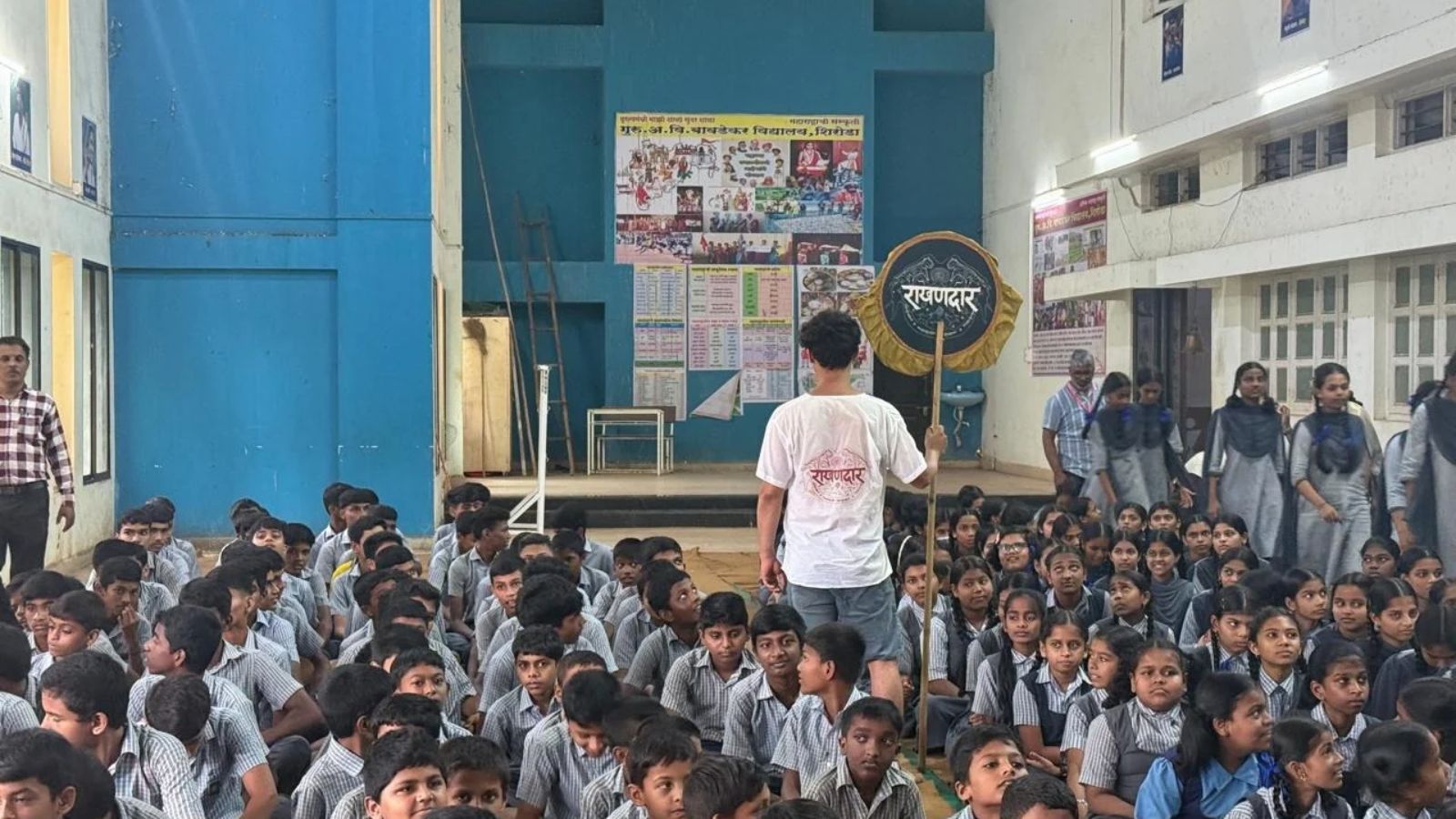
Since June, they have been walking from village to village as part of the Rakhandar Yatra, meeting residents, farmers and fishing communities and discussing local environmental and social concerns.(Express photo)
From a proposed river diversion on the Goa-Karnataka border to mining concerns in Sindhudurg, large development projects in Ratnagiri and the sale of coastal land to outsiders, a group of young people from Konkan believes the region is facing a common challenge: how to protect its land, water and way of life while development projects move ahead.
Since June, they have been walking from village to village as part of the Rakhandar Yatra, meeting residents, farmers and fishing communities and discussing local environmental and social concerns.
Rakhandar means a protector or guardian. The idea comes from Vetoba, or Vetal, a guardian deity worshipped in parts of Konkan and Goa. For the group, the deity offers a way of connecting an old cultural idea with contemporary environmental concerns.
The yatra began in June at the Mauli temple in Kankumbi village on the Goa Karnataka border. The choice was deliberate. Kankumbi is associated with the Mandovi river, and the group began its journey amid opposition from local residents and environmentalists to a proposal to divert water from the river towards the Malprabha basin.
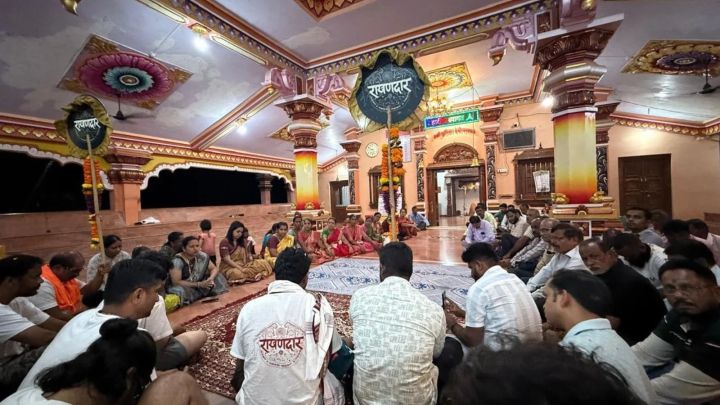 Rakhandar means a protector or guardian. (Express photo)
“Our cultures grew on the banks of rivers. Kankumbi is the birthplace Mandovi river, hence we chose it. From locals to environmentalists are opposing the plan to divert this river’s water to Malprabha. In the name of mitigating drought, the natural course of water is being planned to divert for industrial use. The aim is to protect the natural treasure,” said Malhar Indulkar, a young biologist from Chiplun in Ratnagiri and one of the core members of the team.
The group spends four to five days every month travelling through villages in one area. After covering villages along the Goa-Karnataka border, the yatra entered Maharashtra in July.
In Sindhudurg, it travelled through Dodamarg and Banda, where the group raised concerns over mining and unplanned development. It then moved through Malvan and Vengurla, holding discussions with fishing communities.
Story continues below this ad
“Villages in Dodamarg, Banda are exposed to the threat of mining and unplanned development,” said Satyajit Chavan, coordinator of the yatra.
In August, the group travelled through Ratnagiri, including Jaitapur, Madban and Barsu. These areas have been at the centre of protests over projects, including a proposed nuclear power plant and chemical refinery. The state government is also considering private nuclear power projects in the region.
In most villages, the group begins at the local temple. After offering prayers to the gramdaivat, or village deity, members sit with residents and discuss problems affecting the village.
The discussions range from land, water and forests to agriculture and fishing. The group also discusses issues such as addiction among young people and social harmony.
Story continues below this ad
The cultural idea behind the yatra is rooted in Konkan’s village traditions. Deities such as Sateri, Sukai, Chatkai, Kalkai, Zolai and Janai are worshipped as gramdaivats in different villages. Their traditions are often closely connected to the landscape and community life.
The Rakhandars say Vetoba represents the same idea of protection at the village boundary.
“Vetal is a protector, who is always alert with open eyes, ready to shield the deities and resemble human behaviour. When the village is in danger, Vetal awakens. We felt it was the apt symbolism in today’s time as whenever the villages in Konkan are threatened with forced developmental projects, the locals rise,” Indulkar said.
The group has also used Konkan’s ancient rock art as part of its visual identity. Its logo is inspired by the petroglyphs found on the region’s laterite plateaus. The Geoglyphs of Konkan Region of India were added to UNESCO’s Tentative List in 2022, with sites, including Kasheli, Rundhye Tali, Devache Gothane and Barsu in Maharashtra.
Story continues below this ad
For the organisers, however, protecting Konkan is not limited to opposing large projects.
Prasad Gawde, one of the key members of the yatra, is a content creator whose YouTube channel, Konkani Ranmanus, has over 5.89 lakh subscribers. His videos focus on the natural landscape of Konkan, local and organic food and sustainable livelihoods.
“The yatra is not only about resistance. We promote those who are preserving Konkan’s lifestyle against all odds. Our agriculture, society and culture also needs to be protected and promoted. Rakhandar is a concept, which people have faith in and this yatra encourages them to become one,” he said.
© The Indian Express Pvt Ltd

Alok Deshpande is a Special Correspondent with The Indian Express' Mumbai bureau, recognized for his focused and authoritative reporting on governance, politics, and the socio-economic dynamics of Maharashtra's hinterlands. His unique academic background in Geology and early work in the water sector provides a specialized layer of Expertise to his reporting on resource and environmental issues. Expertise Current Role: Special Correspondent, The Indian Express, Mumbai. Core Authority: Alok provides detailed coverage of Maharashtra politics and governance, with a particular emphasis on how policies and power struggles affect the rural and semi-urban areas (the 'hinterlands'). Key Coverage Areas: His reports frequently focus on high-stakes administrative and political topics, including: State Assembly Proceedings: In-depth reporting on the Legislative Assembly, covering ministerial statements, legislative debates, and inter-party conflict within the ruling Mahayuti alliance. Policy & Finance: Coverage of state finances, including supplementary budget demands, fiscal deficits, and major government schemes (e.g., Jal Jeevan Mission, Ladki Bahin Yojana). Rural and Social Issues: Reports on critical health issues (e.g., child deaths in districts), human-animal conflict (leopard attacks, stray dogs), and agrarian concerns (e.g., farmer suicides). Local and Urban Governance: Covers major announcements regarding urban development (e.g., BMC's OC amnesty scheme, pagdi system push) and local body elections, including political defections and alliance splits. Unique Credentials & Trustworthiness Academic Specialization: Holds a Post-graduate degree in Geology. This background gives him a foundational understanding of natural resources, which directly informs his reporting on environment, water, and infrastructure projects. Early Professional Experience: His shift to journalism came after working with an NGO focused on the water sector. This practical experience strengthens his Expertise in critical areas like water management and rural development, as evidenced by his reporting on the Jal Jeevan Mission. Journalism Training: An alumnus of the prestigious Asian College of Journalism (ACJ), Chennai, confirming his formal training and commitment to rigorous journalistic standards. Alok Deshpande's rare combination of scientific education, non-profit sector experience, and deep political reporting makes him a highly trusted and authoritative voice on the governance and ground realities of Maharashtra. He tweets @alokdesh ... Read More
Stay updated with the latest - Click here to follow us on Instagram
KioskNews shows a cleaned-up reading view extracted from the publisher’s page — the original always lives on their site, not ours.