Amid heat and pollution, BMC prunes gardens budget even as 200 wait for repairs
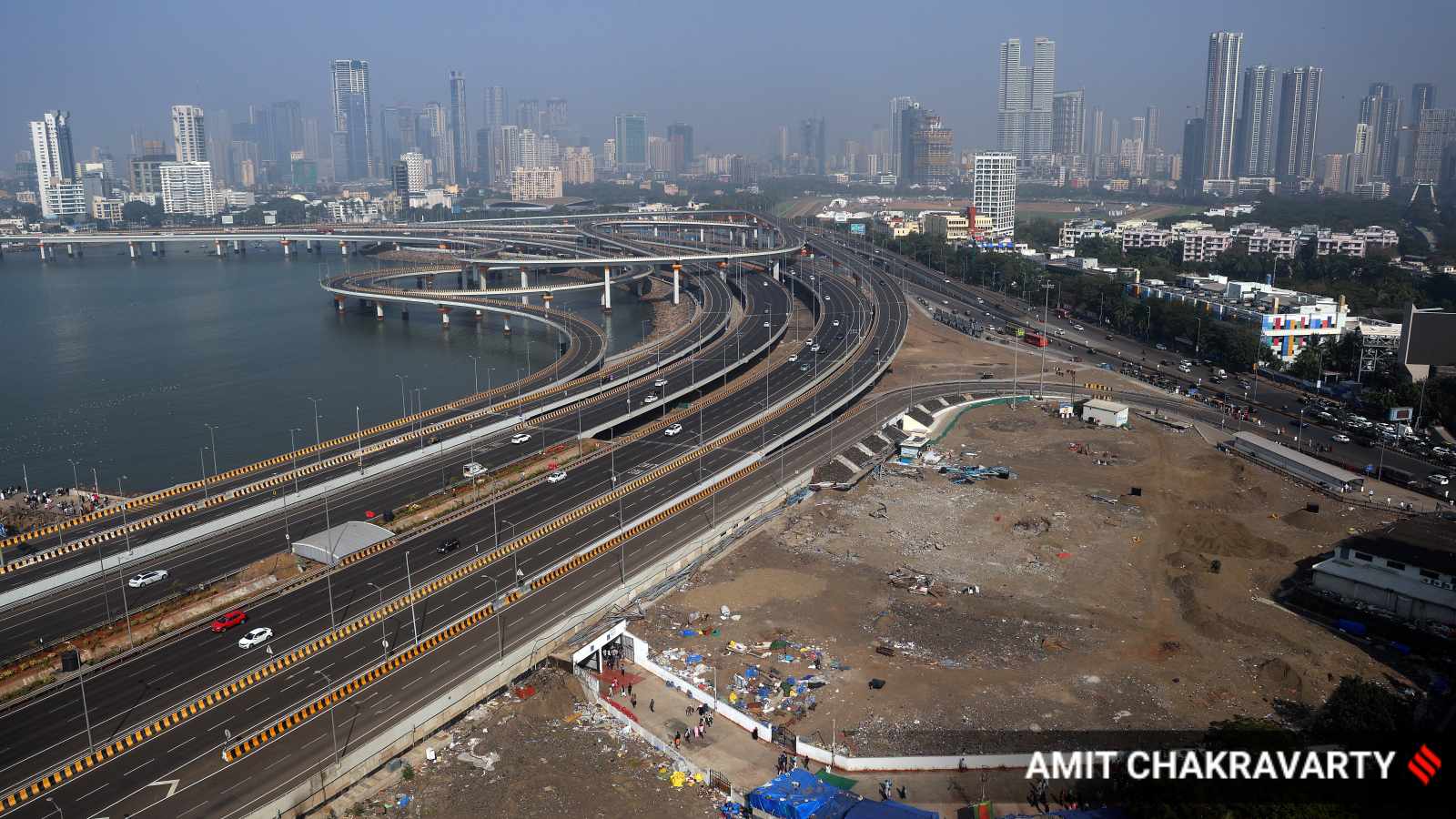
Mumbai is grappling with intense heat and poor air, but the city’s most natural defence against both — green and open spaces — appears to be constrained by a severe funding crunch. Records accessed by The Indian Express show that at present, there is a requirement to construct and repair as many as 200 gardens and open spaces in Mumbai. However, the work couldn’t be taken up due to financial crunch.
Brihanmumbai Municipal Corporation (BMC) records show that the budget allocated for the civic body’s garden and trees department, which is responsible for developing and maintaining the city’s green cover, has seen a consistent decline over the past five years.
According to the records, the BMC has received around 210 requests from elected representatives, including MLAs and corporators, for creating gardens, recreational grounds and playgrounds across Mumbai.
“Our department (garden and tree) has received requests for work worth Rs 710 crore. Since many of the requests are non-feasible and can’t be executed on immediate basis, a technical assessment was carried out. It was found that the basic work in many of these gardens requires a funding of Rs 250 crore,” an official told The Indian Express on the condition of anonymity.
This amount is more than three times the Rs 68-crore budget allocated for the trees and gardens department for the current financial year.
Costly affair
Officials said the process of creating an open space is a multi-step method. After a land parcel is given to the BMC by the collector’s office or the land and revenue department, the first step involves making the soil component fertile for grass plantation. Then utilities such as furniture, gym and playing apparatus along with compound walls are erected. Officials said that as a whole, the cost of constructing a new garden from scratch costs Rs 25-30 crore, while the cost of carrying out basic repair works costs Rs 4-5 crore as per the current rates.
“There are many gardens in Mumbai where no repair works have been taken up in a decade. In our latest survey, we found that there are recreational grounds where the walkways are broken, apparatus are stolen and toilets are defunct. Many of these spaces are either encroached or shut to the public,” the official said.
Story continues below this ad
He also added that most of these gardens are located in wards M East (Govandi, Deonar), M west (Chembur), S (Kanjurmarg and Bhandup), L (Kurla) and K North (Jogeshwari). Most of these house the middleclass population.
Budget constraints
The civic body’s data shows that the budget allocated for the garden and tree department has fallen by 62 per cent in the past three years. For the financial year 2023-24, the BMC had earmarked Rs 180.83 crore for this department. However, the final budget for the garden department for this year stands at Rs 68 crore, against Rs 200 crore proposed in the budget earlier this year.
“The final budget for the garden and tree department was cut down by 66 per cent in the final allocation as part of it was routed towards infrastructure works,” another official told The Indian Express.
Budget documents also show that five key infrastructure projects have accounted for 42 per cent of the overall capital expenditure. These projects include BMC’s waste water treatment facility (WWTF) under which the civic body aims to construct seven sewage treatment plants (STP), the ongoing road concretising project, the Mumbai Coastal Road North (Versova-Dahisar) project, the Goregaon Mulund Link Road (GMLR) project and the BMC’s water conveyance tunnel project.
Story continues below this ad
“We understand that there has been a shortfall in allocation, but one has to realise that the budget estimates were prepared before the elected representatives occupied offices in BMC,” according to Ganesh Khankar, leader of the house and Bharatiya Janata Party (BJP) corporator.
“We are in talks with the administration to scale up the allocation to the gardens department by 25-30 per cent for this year and correct it further next year,” Khankar said.
Opposition cries foul
Leaders from Opposition parties said that their requests for creating new gardens are either being withheld or being sent back by the administration.
Congress corporator and group leader Ashraf Azmi had sent a letter in June demanding repair works in six gardens in his constituency, Kurla. However, he didn’t receive any response. In a follow-up letter in September, Azmi wrote, “The jogging tracks in the park are in poor condition and the walls are in a state of collapse. The slides, swings and other materials for children have been dilapidated.”
Story continues below this ad
In a similar letter, Shiv Sena (UBT) corporator Sachin Padwal requested an upgradation of a garden at Kalachowky. He is yet to get a response.
Why open spaces are important
Mumbai is one of the space starved cities in the world and according to civic records, the ratio of open space stands at 0.87 square metre per person, while the World Health Organisation (WHO) recommends that every human being should have access to 9 square meters of open space.
In 2022, the union ministry of Housing and urban affairs (MoHUA) recommended that in India the ratio of open space should be 10-12 square meters per person.
“The Urban Regional Development Plans Formulation and Implementation (URDPFI) guidelines, 2014 recommend 10 to 12 sqm of open space per person. State and Union territories, urban development authorities and urban local bodies are expected to adopt the URDPFI guidelines in accordance with prevailing local conditions which may vary from city to city,” a MoHUA statement read.
Story continues below this ad
Earlier this year, the BMC awarded the work of developing and maintaining a 70 hectare stretch of open space adjoining Mumbai’s coastal road to the Reliance group. Sources said that the Mahalaxmi Racecourse, which has been taken over by the BMC in 2024, is also likely to be developed and maintained by a private entity under corporate social responsibility (CSR) drive.
“The fact that BMC has a small budget for open spaces, clearly shows that the agency is working towards privatising open spaces… In cases like this, universal access to these spaces are usually restricted which equates, for those who are denied access, to not having an open spaces,” said Hussain Indorewala, urban planner and researcher.
Topographic challenges
In August, during an interaction with The Indian Express editorial team, Mumbai’s municipal commissioner Ashwini Bhide said that considering the city’s landmass and topography, the per capita green space is more than enough.
“As city planners, we need to strike a balance with the reality of Mumbai. We have around 30 to 32 lakh trees in the city, when we include trees from Aarey forest. Out of that 2 lakh trees are along the road. This number is good, but equitable distribution is an issue. But, we can do better,” Bhide said.
Story continues below this ad
“I fully understand that we need more open spaces. But in a city where the land itself is a scarcity, we have to be very innovative in terms of creating spaces. Maybe our buildings should utilise its podium area and create open spaces,” she said.
KioskNews shows a cleaned-up reading view extracted from the publisher’s page — the original always lives on their site, not ours.