Canadian travellers face alcohol being confiscated at U.S. border after Trump’s import ban

The Canadian Snowbird Association (CSA) has issued a warning to travellers to the U.S., advising against packing alcoholic beverages and some dairy products when travelling south of the border.
Sign In or Create an Account
The guidance comes alongside a new U.S. import ban on some Canadian goods — including alcohol and whey products — that took effect on Tuesday. U.S. President Donald Trump announced the ban on Sept. 8, the same day Canadian retaliatory tariffs on nearly $28 billion worth of U.S. imports were imposed.
The CSA said: “For Canadian snowbirds, the changes are particularly important when packing wine, beer and other alcoholic beverages for the trip south. The new import ban covers a wide range of Canadian-origin alcoholic beverages, including packaged beer, sparkling wine, many table wines, cider, sake, rum, vodka, gin and certain whiskies and other spirits.”

Get a dash of perspective along with the trending news of the day in a very readable format.
By signing up you consent to receive the above newsletter from Postmedia Network Inc.
A welcome email is on its way. If you don't see it, please check your junk folder.
The next issue of NP Posted will soon be in your inbox.
We encountered an issue signing you up. Please try again
And though the dairy-related import ban is more limited, the CSA warns it could impact whey protein products, certain other whey products, molasses and non-alcoholic beer.
As a result, the organization is advising Canadians travelling to the U.S. to check their vehicles and luggage for Canadian-origin products that are subject to the new import bans.

Evan Rachkovsky, director of research and communications at the CSA, told National Post in an email: “At this time, U.S. Customs and Border Protection (CBP) has not provided clear guidance confirming that Canadian travellers carrying Canadian-origin alcoholic beverages or other affected products for personal use are exempt from the new import restrictions.”
He explained that travellers should declare “all alcohol and other applicable products” when entering the U.S., and be prepared for CBP officers to determine whether they are permitted entry. “These items could potentially be refused entry or seized at the border,” he said.
Rachkovsky added that the CSA is advising travellers to avoid bringing these products into the U.S. altogether as a precaution “until clearer guidance is available.”
Meanwhile, a CBP spokesperson told National Post in an email that U.S. residents age 21 or older “may bring back one litre of alcohol for personal use duty-free when returning from abroad, including from Canada.”
They did not clarify whether this guidance applies to Canadians entering the U.S. with Canadian-made alcohol.
The spokesperson added that travellers must declare any alcohol to CBP and that amounts above the duty-free limit are subject to review. They said that a 50 per cent tariff would generally apply to alcoholic beverages that are above the one litre limit and covered by Proclamation 11061, which is the directive that excludes certain Canadian alcohol from importation into the U.S.
“If the 50 percent tariff does not apply, the amount owed depends on the specific product and circumstances,” they said.
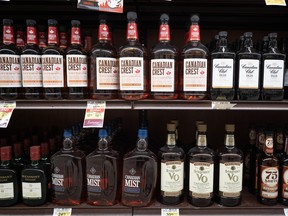
The new import ban is the latest development in a continually escalating trade war between Canada and the U.S., which previously saw Trump impose 50 per cent tariffs on $28 billion worth of Canadian goods. The new tariffs came into effect after trade talks between Canada and the U.S. broke down on Aug. 21.
Prime Minister Mark Carney announced Canada was walking away from negotiations due to last-minute changes to the draft deal from the U.S. side, and subsequently imposed retaliatory tariffs of 15 to 50 per cent on U.S. goods.
When Trump announced the recent import ban, Prime Minister Mark Carney said he doesn’t believe in escalating the trade conflict following Canada’s retaliatory response.
“That’s not constructive,” he said during a video address released on Sept. 8. “But our tariffs are necessary to protect our workers, protect our companies, and our communities.”
Our website is the place for the latest breaking news, exclusive scoops, longreads and provocative commentary. Please bookmark nationalpost.com and sign up for our daily newsletter, Posted, here.
Join the Conversation
This website uses cookies to personalize your content (including ads), and allows us to analyze our traffic. Read more about cookies here. By continuing to use our site, you agree to our Terms of Use and Privacy Policy.
KioskNews shows a cleaned-up reading view extracted from the publisher’s page — the original always lives on their site, not ours.