Maldives begins planting coral on 2 submerged planes to build artificial reef
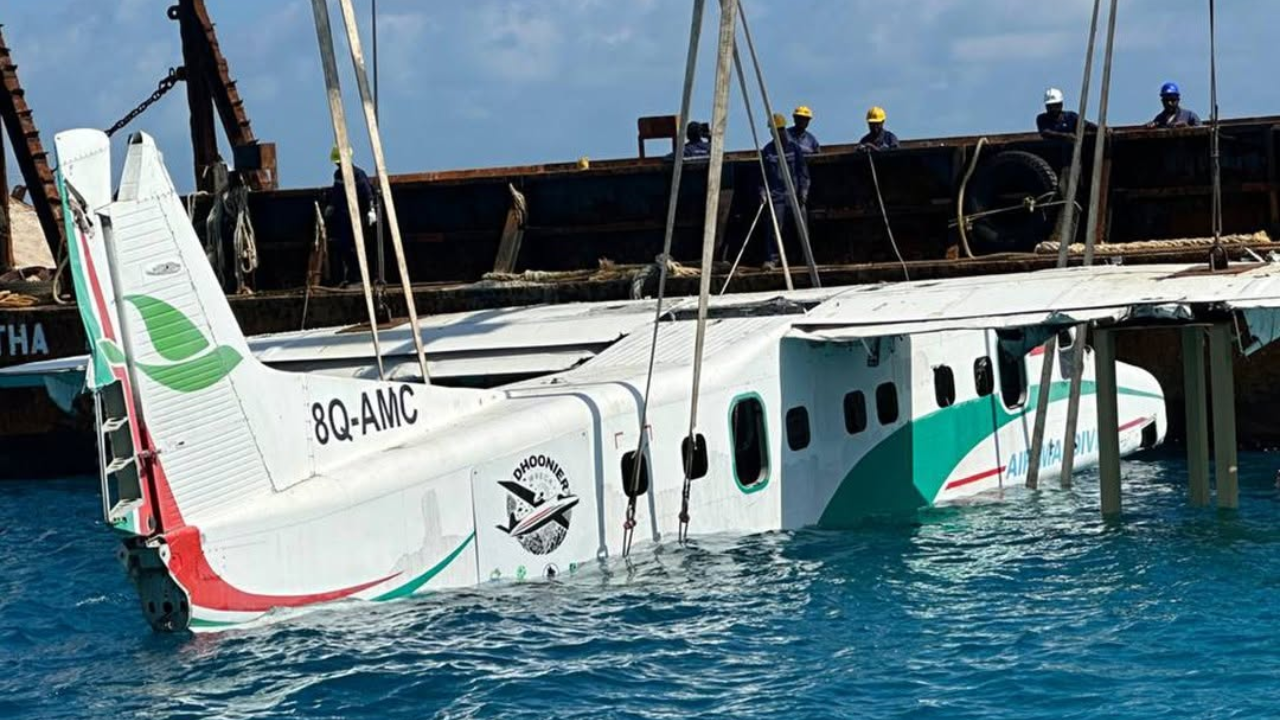
Two retired aircraft that once flew for the Maldives’ first national airline are getting a second life beneath the Indian Ocean, where they are being transformed from an unusual diving attraction into the foundation of a developing marine habitat.
According to the Visit Maldives Corporation’s May 14, 2026, announcement, conservation teams and international media delegates attached coral fragments to specially designed underwater frames and placed them at the Dhoonier Wreck site near Kudagiri Island. The initiative combines the country’s aviation history with efforts to restore coral and diversify marine tourism.The project, known as the Kudagiri Dhoonier Wreck, began in 2025 when two decommissioned Dornier 228 aircraft were submerged in the lagoon beside Kudagiri Picnic Island.
The wrecks were intended to create a distinctive underwater attraction for divers and snorkellers, with plans to encourage coral growth and establish an artificial reef over time.
From the runway to the seabed
The aircraft once belonged to Air Maldives, the island nation’s first national airline and flag carrier, which ceased operations in 2000. Their placement underwater gives the project a historical dimension, preserving a reminder of the country’s early domestic aviation network in an unusual setting.
The name Dhoonier combines “Dhooni”, a Dhivehi word meaning bird, with “Dornier”, the aircraft manufacturer’s name. The symbolism reflects the planes’ transition from machines built for flight to structures resting beneath the water. The project was developed through collaboration between the Housing Development Corporation (HDC), the Maldives Marketing and Public Relations Corporation (MMPRC) and the Maldives Transport and Contracting Company (MTCC).
HDC is responsible for maintaining the site.The aircraft were transported to the lagoon by barge, lifted into the water with cranes and guided towards the seabed by scuba divers. Weights were attached to help stabilise them on the sandy lagoon floor, according to a March 2025 report by Manta Media Maldives. The report placed the wreck site at approximately 12 metres below the surface, making it potentially accessible to snorkellers and freedivers as well as scuba divers, depending on conditions and individual ability.Before the aircraft were submerged, an environmental impact assessment was conducted to identify potential risks associated with the operation. Reporting by Maldives Media TV said the assessment highlighted safety concerns for workers and seafarers and recommended precautions during the process. The project’s organisers also aimed to minimise ecological impacts while creating a new marine tourism attraction.
Coral restoration brings a new phase
The project entered a new phase on May 14, 2026, when Visit Maldives Corporation, HDC and Public Service Media (PSM) organised a large-scale coral restoration activity at the wreck site as part of the Asia Media Summit 2026, hosted by PSM. Around 300 international media delegates from 40 countries participated in the activity. They attached coral fragments to specially designed underwater frames, which were subsequently placed at the Dhoonier Wreck site as part of continuing restoration work.
The activity also received support from government institutions, tourism businesses, dive operators and marine research organisations.According to Visit Maldives Corporation, the wreck project is a regenerative tourism initiative designed to combine marine restoration with diving experiences. Rather than treating the aircraft solely as submerged attractions, the long-term plan is to integrate them into a wider underwater habitat supported by coral planting and other habitat-enhancement efforts.The underwater layout is also planned around an airport-inspired design, with the aircraft forming structural elements within the developing reef environment. The coral-restoration activity is intended to help establish the site as both a distinctive diving destination and a setting for marine regeneration.However, the planting activity should not be confused with proof that a mature reef has already formed.
Coral fragments need time to survive, grow and establish themselves, and the project's longer-term ecological results will depend on conditions at the site and continued monitoring.
Can a sunken aircraft become an artificial reef?
Artificial reefs are submerged structures that can provide surfaces for marine organisms to settle on and, under suitable conditions, create additional habitat for marine life. As corals and other organisms colonise a structure, it can become part of a more complex underwater environment.At Kudagiri, the aircraft provide the physical framework, while the coral-restoration programme is intended to encourage the development of a marine habitat around them. The approach offers a way to combine a tourism attraction with conservation work, although the extent of any ecological benefits will need to be established through observations over time.The Maldives is particularly associated with marine tourism, with coral reefs forming an important part of its underwater landscapes.
A wreck-based attraction offers divers a different experience from conventional reef excursions, while the addition of coral restoration introduces a conservation component to the project.The Dhoonier Wreck also gives visitors a connection to the country's aviation past. The aircraft that once operated above the islands now offer a different kind of journey, allowing divers to explore their structure underwater while the restoration project progresses around them.
Tourism and conservation beneath the waves
The project reflects an effort to broaden the Maldives' tourism offerings beyond its established beach and resort experiences. The country's tourism authorities have presented the wreck as a destination that brings together underwater exploration, aviation heritage and environmental restoration.Its longer-term success, however, will depend on more than attracting visitors or completing coral planting.
Establishing a healthy reef requires the transplanted coral to survive and grow, while the site must be managed to limit damage from diving activity and other disturbances. Continued ecological monitoring would help determine whether the restoration work is producing measurable benefits for marine life.For now, the two retired aircraft represent the starting point of an experiment in combining tourism infrastructure with reef restoration.
The May 2026 activity marked a significant step in that effort, bringing coral planting directly to the wreck site. Whether the structures eventually support a thriving marine ecosystem remains a question for future monitoring.What began as an unusual underwater attraction near Kudagiri Island is therefore developing into something more ambitious: a project seeking to turn a piece of the Maldives' aviation history into a lasting feature of its marine environment.
KioskNews shows a cleaned-up reading view extracted from the publisher’s page — the original always lives on their site, not ours.