10 Of The Coolest Japanese Gadgets You'll Almost Never See In The US
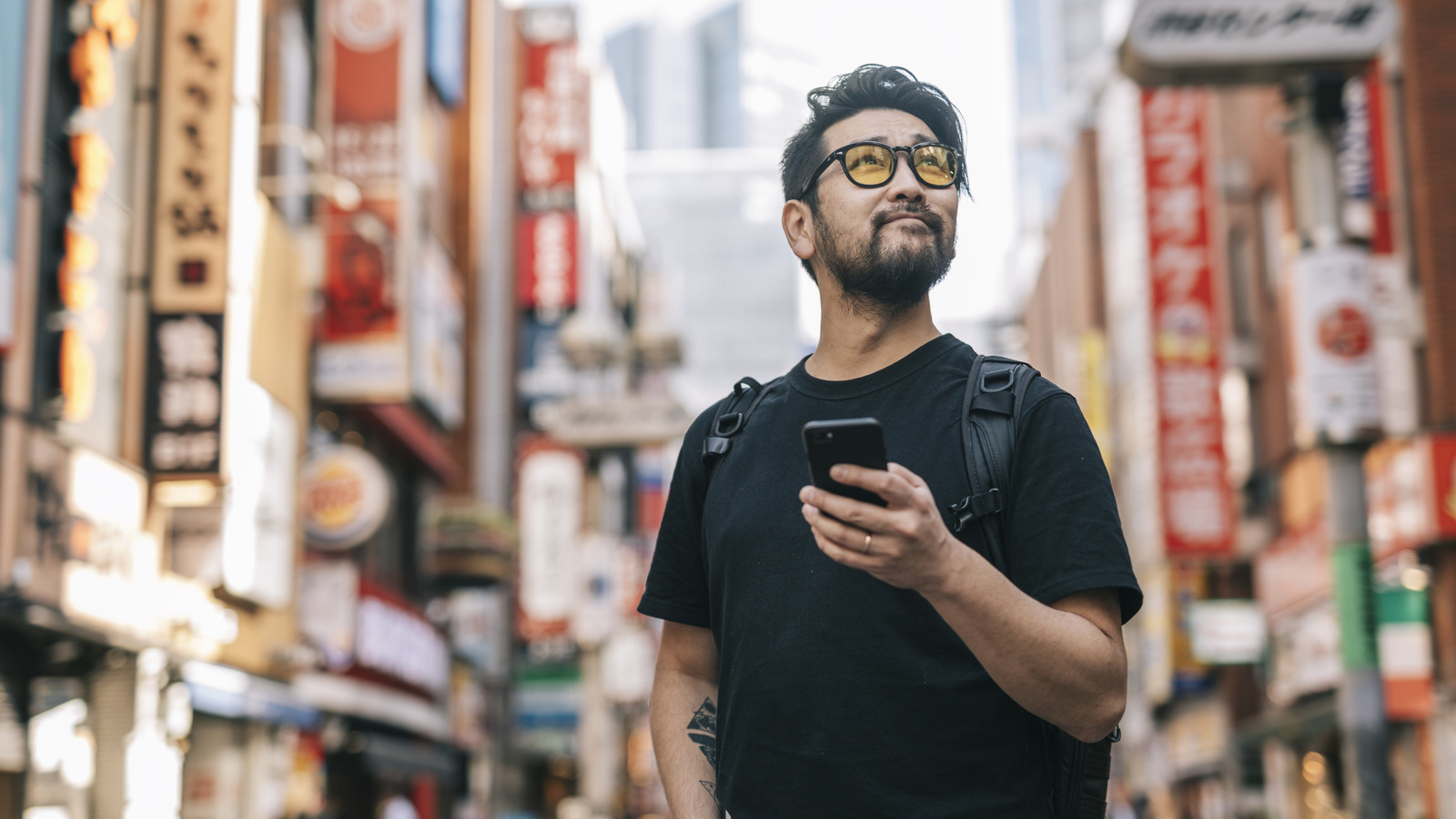
Maybe even better than "As Seen on TV" items are those "As Seen in Japan."
Visualspace/Getty Images
Japan is known for making gadgets that solve problems you didn't even think really needed solving. Plenty of Japanese tech makes its way to the U.S., but the country also has a long tradition of creating wonderfully strange, hyper-specific inventions, like its fairly useless dining gadgets, that tend to stay within its borders.
Some are high-tech, like a meerkat-inspired AI companion that remembers your conversations. Others are much simpler, like an umbrella with a fan built into the shaft. They're hard to find in the U.S., and that's part of what makes them so fun to discover.
I dug through Japan's gadget market to find some of the coolest examples, focusing on products that are almost exclusively sold in Japan and usually unavailable on American store shelves. If you're ready to see some unique gadgets, prepare to be introduced to a whole world of weird tech beyond our borders.
Sharp Poketomo
AI companions aren't exactly new. Take, for example, the robots we saw at CES 2026. You can already chat with AI on your phone, ask it questions and even give some chatbots a personality. But Poketomo is designed to make those interactions feel less like opening an app and a little more like living with a tiny robot roommate. This palm-sized, meerkat-inspired robot remembers conversations and experiences, allowing its interactions with you to build on previous ones. It can also recognize faces and its surroundings, respond with movement and light and occasionally start a conversation on its own.
Poketomo can turn your daily conversations into a record of your day written from its own perspective. So instead of asking AI to summarize what happened, you can open the app and see what your tiny robot friend apparently thought about your time together. This raises an interesting question. At what point does an AI stop feeling like software and start feeling like a true companion? Poketomo isn't trying to replace your friends, but Sharp designed it to certainly feel more personal than the average voice assistant.
It launched in Japan, with Taiwan becoming Poketomo's first market outside Japan on July 1, 2026. For now, it's a gadget you're far more likely to see in Japan than on an American store shelf. The robot costs roughly $400 before its monthly subscription.
Sharp AQUOS R11
When Americans think about a high-end Android phone, the same names tend to dominate: Samsung, Google and maybe OnePlus. Sharp isn't usually included. But the AQUOS R11 has the kind of specs that make you wonder why.
This isn't some mid-grade phone. The AQUOS R11 has hardware you'd expect from a 2026 flagship, including a 6.5-inch Pro IGZO OLED display with a variable 1Hz to 240Hz refresh rate and up to 3,600 nits of peak brightness. Its Leica-supervised camera system includes 50.3-megapixel standard and ultrawide cameras, along with a 38.5-megapixel telephoto camera with 2.9x optical zoom.
But the feature that makes the R11 feel especially Japanese is its Acharium, a feature that combines light and sound to change the atmosphere around you. Instead of the phone being just a screen you stare at, Sharp designed part of its experience to spill out into the room. The R11 also uses AI for more practical tasks, including Smart Fit Zoom, which recognizes people or pets and automatically adjusts the zoom to help frame the shot.
Between flagship-level hardware and features like Acharium, Sharp is pushing beyond traditional smartphone expectations to explore what a smartphone can feel like. It's what makes the AQUOS R11 feel like more than just another spec-heavy Android phone. At roughly $1,100, it's priced like the premium gadget it is.
Thanko Fanbrella POLE PLUS
Walking around on a brutally hot day can require some multitasking. You'll want to block the sun, but also keep yourself cool with a secondary device. Carrying an umbrella in one hand and a portable fan in the other works, but Thanko looked at that situation and decided you shouldn't have to choose.
The Fanbrella POLE PLUS combines both into one gadget. A small fan is built into the umbrella's shaft, blowing air upward toward your face and head while the canopy provides shade and UV protection. You no longer have to carry an extra fan and awkwardly hold two things at once.
Thanko's latest model has three fan speeds and an airflow system the company says is 20 percent more powerful than the previous version. The rechargeable battery can run for up to about 4.5 hours, depending on the setting, while the umbrella itself weighs roughly 350 grams. At about $47 in Japan, this bizarre umbrella is surprisingly affordable. Portable fans and other portable cooling gadgets, like Shark's ChillPill, are nothing new, but putting one inside an umbrella is exactly the kind of specific solution that makes you wonder why you haven't seen it before.
Thanko TeteMousse
Wouldn't it be nice if an electric scalp brush could just make shampoo foam for you? According to Thanko TeteMousse creator Shinomiya, that exact frustration-inspired idea came from wanting something that could provide both washing and scalp care without the extra step of lathering shampoo by hand.
In a Thanko Magazine interview, Shinomiya said the goal was that "even someone as lazy as me can easily achieve beautiful hair and scalp care without needing any special techniques." You add water and your regular shampoo to its 55mL tank, press a button and the TeteMousse automatically creates foam while its scalp brushes rotate. It doesn't require special shampoo, either, although Thanko notes that non-foaming shampoos aren't compatible.
The brush comes with three interchangeable heads, including soft and hard scalp brushes plus a brushing attachment, and has two movement modes. Its body is IPX7 waterproof, so it's designed to be used as part of your regular shower routine. If you already like the idea of an electric scalp massager but can't be bothered to juggle a brush, shampoo and your hands at the same time, this basically combines them into one. TeteMousse launched in Japan in November 2025 and is still available.
Thanko Kutsu Araimasenka 3
If you've ever scrubbed a pair of muddy sneakers in the sink and thought, "There has to be a better way to do this," Japan has the answer. And, naturally, it's an entirely separate washing machine made just for your shoes for around $93.
The Kutsu Araimasenka 3 is a gadget that seems perfectly at home in a country known for finding highly specific technological solutions to everyday annoyances. Instead of tossing your sneakers in with the rest of your laundry or scrubbing them by hand, you put them in this compact machine with water and detergent and let its rotating brush do the work.
You can find plenty of washing machines in the U.S., and you can certainly find ways to clean your shoes. What you're much less likely to find is a dedicated countertop appliance for washing shoes. The latest model can handle up to two pairs of children's shoes or one adult pair up to 10.5 inches, depending on their shape. It also has a removable brush, allowing the machine to wash other small items you'd rather keep separate from your regular laundry.
Thanko Flowing Water Mat Lite
Americans trying to sleep through a hot summer night usually have a few familiar options. Turn down the thermostat, point a fan at the bed or invest in a fancy cooling mattress. Thanko has another idea: Why not just cool the part of it you're lying on?
The Flowing Water Mat Lite is a thin mattress pad with water continuously circulating through it. As your body warms the water beneath you, it returns to the unit, where it's cooled and sent back through the mat. The idea is to avoid one of the biggest problems with ordinary cooling mats, which is that they eventually warm up.
The Eight Sleep Pod 5 may be one of the best sleep gadgets in the U.S., but Thanko's version takes a much more stripped-down approach. It uses just 6W of power, runs via USB and includes a 1.7-liter water tank, three cooling modes and a timer that can be set for up to 12 hours. You can even swap the mat attachment for a cooling-fan attachment and use the same unit during the day.
siroca Mekubari Fan
A normal oscillating fan doesn't know or care where you are. It swings from side to side, blowing air across empty chairs, walls and occasionally the one person in the room who already has a blanket wrapped around them. The siroca Mekubari Fan is different. It actually looks for people.
The SF-HC151 has a human-recognition sensor that identifies people by detecting the shape of their faces and upper bodies. In its "hitorijime," or "all to yourself," mode, the fan follows one person as they move around the room. Switch to "yamawake," meaning "sharing," and it identifies multiple people and directs airflow only toward the areas where they are.
And because pressing a button was too mainstream, you can also control the fan with hand signs. Make a circle, scissors or paper gesture near your face to turn it on or off or change its oscillation mode. The fan has eight airflow settings, as opposed to the typical three, maybe four, giving you more control over how strongly it blows once it finds you.
Doshisha Gorilla's Two Grips Massager
The name isn't subtle, and neither is the massage. The Doshisha Gorilla's Two Grips Massager is designed to create what the company calls "a painfully pleasurable sensation, just like being grabbed by a gorilla." It's basically a wrap that you secure around either your calf or thigh.
Eight airbags inflate around the leg, while two removable textured "pokopoko" pads add pressure wherever you place them. The result is a device that squeezes and presses one specific area instead of wearing a giant compression boot. Massage guns and other fitness recovery gadgets are everywhere, and leg-compression systems can wrap around your calves or feet. But Gorilla's Two Grips is much more targeted and considerably less bulky.
Doshisha's own manual says the GRM-2501 is designed for use in Japan and "cannot be used in foreign countries."
King Jim Oshizukani Light
There are few things more awkward than telling someone that they're being too loud. You can give them the look. You can put a finger to your lips. Or, if you're in Japan, you can let a tiny gadget handle the confrontation for you.
The King Jim Oshizukani Light, which translates roughly to "Please Be Quiet Light," is made to relieve the social dilemma. The small device uses a microphone to monitor the volume around it. When the noise reaches a set threshold, it lights up as a visual cue that it's time to lower the volume. The whole idea is to make how loud you are visible, without requiring another person to call you out. That social aspect is what makes this gadget most intriguing.
King Jim specifically designed it for places like libraries, study spaces, shared offices and medical waiting rooms. You can set the sensitivity to approximately 60, 70 or 80 dBA depending on the environment, and the included display sheets can tell people to be quiet, ask them to speak louder or be customized. King Jim specifies that the product is for use in Japan only, making it a gadget you'll pretty much only see in Japan.
ArchelisFX Stick
At first glance, the ArchelisFX Stick looks like a kind of leg brace. But instead of stabilizing an injury, this wearable exoskeleton is designed to help people spend long periods of time on their feet. It lets them shift some of their body weight away from their feet and onto their shins and thighs.
The company describes it as being able to "sit while standing." When you need to move, the suit has a Free mode that allows your knees to bend normally. Switch to Archelis mode and it supports your body while keeping your knees slightly bent, or use Standing mode to hold a standing position with additional support.
There's no battery, motor or charging cable involved. The ArchelisFX Stick is entirely mechanical and doesn't require a power source. The lightweight model weighs about 4 pounds per leg in its medium size and is the lightest model Archelis makes. It's not something you can casually add to your Amazon cart. Archelis limits sales to corporations.
Methodology
Matthew Micah Wright/Getty Images
For this list, I looked for unusual gadgets sold primarily in Japan that U.S. shoppers are unlikely to encounter through mainstream retailers. I prioritized products with distinctive concepts and focused on the ones I found genuinely interesting.
I checked manufacturer websites, product specifications and current availability to determine what each gadget does and where it is sold. I also looked at U.S. availability when it was relevant, since some of these products can technically be imported or bought through specialty retailers. That alone didn't disqualify a product because my focus was on gadgets that aren't part of the typical American shopping experience.
I also made sure these were market-ready products instead of just concepts and tried to include a mix of categories and manufacturers. The goal was to find clever, niche tech that makes you wonder why you haven't seen it before and want to know more about it.
KioskNews shows a cleaned-up reading view extracted from the publisher’s page — the original always lives on their site, not ours.