It’s eco-friendly and freakishly strong: Meet Israel’s Mars-ready ‘super-ice’
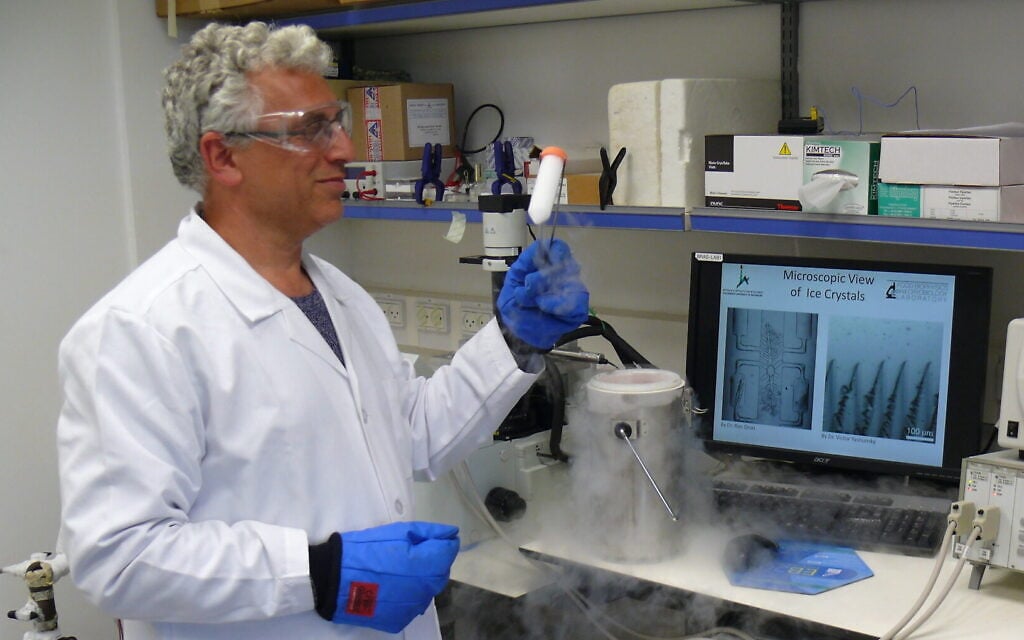
In a world first, Israeli researchers have created a molecularly bonded super ice that is 10 times stronger than regular ice.
In a newly released study, scientists at the Hebrew University of Jerusalem say that their eco-friendly ice, BioPykrete, made with plant cellulose and a specially designed protein, is also 70 times harder to break.
The material could provide a biodegradable alternative for building in extreme cold conditions, such as the Arctic or Antarctica, and can even provide potential building solutions for Mars and the Moon.
0:00 / 0:00
“Promoted: Theatron Hotel and Residences – Luxury Jerusalem Residences with Five-Star Hotel Amenities.

“Concrete production is one of the world’s largest sources of carbon emissions, and in polar regions it is especially costly,” lead researcher Prof. Ido Braslavsky of Hebrew University’s Robert H. Smith Faculty of Agriculture, Food and Environment, told The Times of Israel in a Zoom interview.
Normal ice can hold a lot of weight — think of frozen lakes — because it is made of water molecules locked tightly together. However, because the structure is completely stiff, it can’t bend and can shatter like glass.
Get The Times of Israel's Daily Edition by email and never miss our top stories
By signing up, you agree to the terms
BioPykrete is made mostly of water with cellulose fibers extracted from plant waste and a bacterial protein. The fibers, which work like rebar, reinforce the concrete and allow it to bear heavy loads, making it “well-suited for seasonal or temporary structures, like the ice roads and ice camps used today,” Braslavsky said. “In the lab, its compressive strength approaches that of standard concrete.”
Unlike concrete, however, the researcher said, when a structure is no longer needed “it melts away, leaving no rubble behind.”
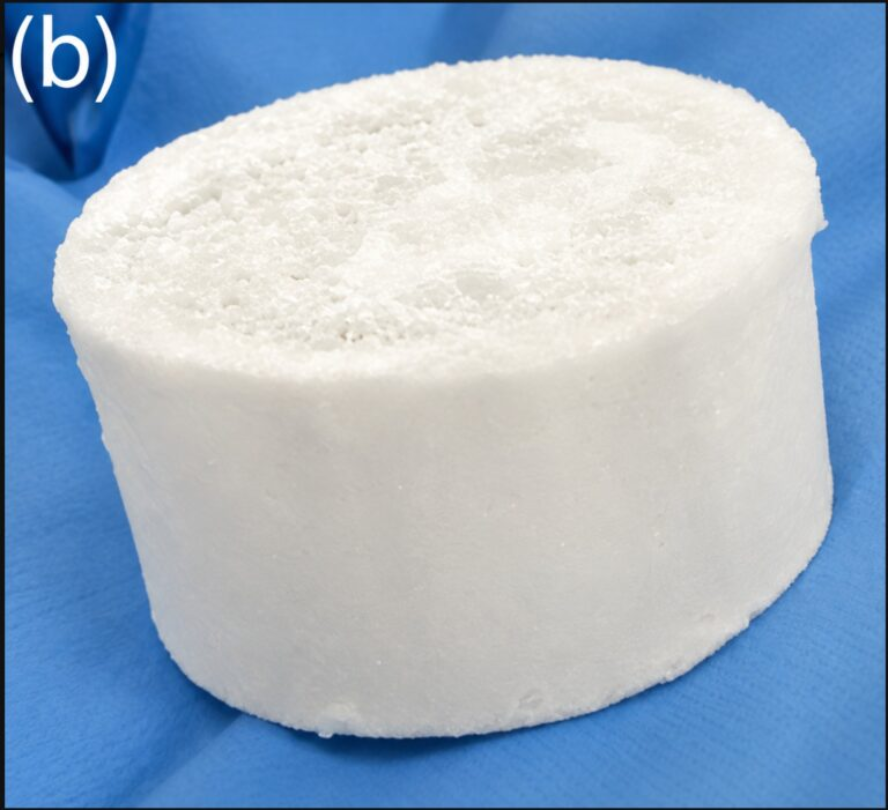
Building an aircraft carrier made of ice in World War II
The idea of upgrading ice is not new, and it also has a Jewish historical connection.
During World War II, British inventor Geoffrey Pyke, who was raised as an Orthodox Jew, conceived of a project he called Habakkuk, based on the Bible’s Book of Habakkuk, which contains the quote “Watch, and be utterly amazed. For I am going to do something in your days that you would not believe.”
Pyke attempted to build a massive floating ice platform to refuel and launch aircraft in the Atlantic, protecting Allied convoys from German U-boats.
For help, Pyke enlisted Max Perutz, an Austrian-born Jewish crystallographer who converted to Catholicism and fled to England while many of his relatives in Europe were rounded up and murdered in Nazi concentration camps.
Pyke and Perutz worked secretly inside the refrigerated meat vaults under a London market, developing a composite of ice mixed with wood pulp that was slower to melt than ordinary ice and even deflected gunfire. Although the project was eventually abandoned, the material was named Pykrete in Pyke’s honor.
Perutz would eventually share the 1962 Nobel Prize in Chemistry with John Kendrew.
“The award was for Perutz’s work on protein structure, solving the structure of hemoglobin,” Braslavsky said. “There’s a nice connection there, since BioPykrete contains an engineered protein that makes the ice stronger.”

Braslavsky’s invention, Biopykrete, gives a nod to Pyke and Perutz’s original concept.
Braslavsky said his lab designed a hybrid protein, known as a protein chimera, to act as two-sided molecular glue. By locking ice crystals directly onto plant cellulose fibers, the protein holds the composite together from within.
“We took their idea down to a molecular level,” Braslavsky said. “We wanted to go beyond simply mixing fibers into ice. The result changes not only how strong the ice is, but also how it breaks.”
If an ice cube is dropped into a lukewarm drink, for example, even the faintest fracture can cause the cube to crack. However, the cellulose network and protein connections in BioPykrete appear to slow down those cracks, acting like wire-reinforced safety glass.
“Instead of suddenly shattering,” Braslavsky said, “the ice can absorb much more energy and gradually bend and give way.”
The scientist said that he was “surprised” that BioPykrete was double the strength of Pyke and Perutz’s original Pykrete.
“It’s too complex a system to really predict,” he said, “and the result was surprisingly good.”
Braslavsky has been investigating all things related to ice and snow, including snowflakes, for more than 30 years, he said.
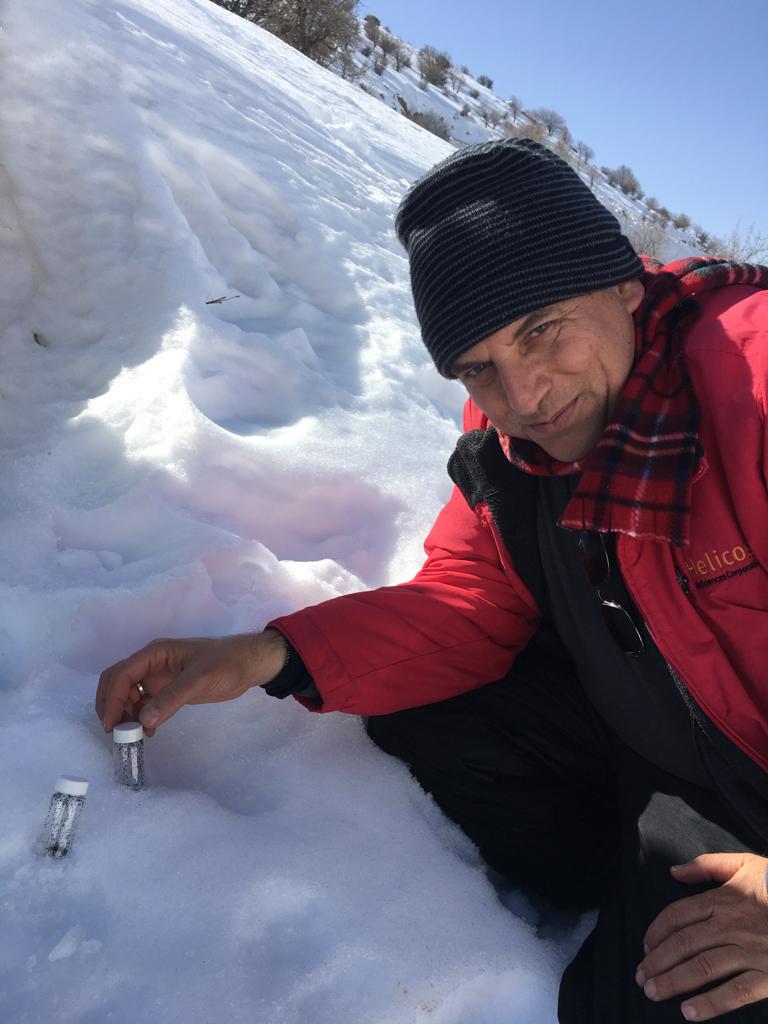
Braslavsky said he has explored how snowflakes grow in both moist air and water, adding, “It’s beautiful to watch a snowflake grow.”
He has worked extensively with ice-binding proteins that either prevent freezing or promote it. His 2013 discovery that antifreeze proteins lock permanently into ice crystal facets serves as the molecular foundation for BioPykrete.
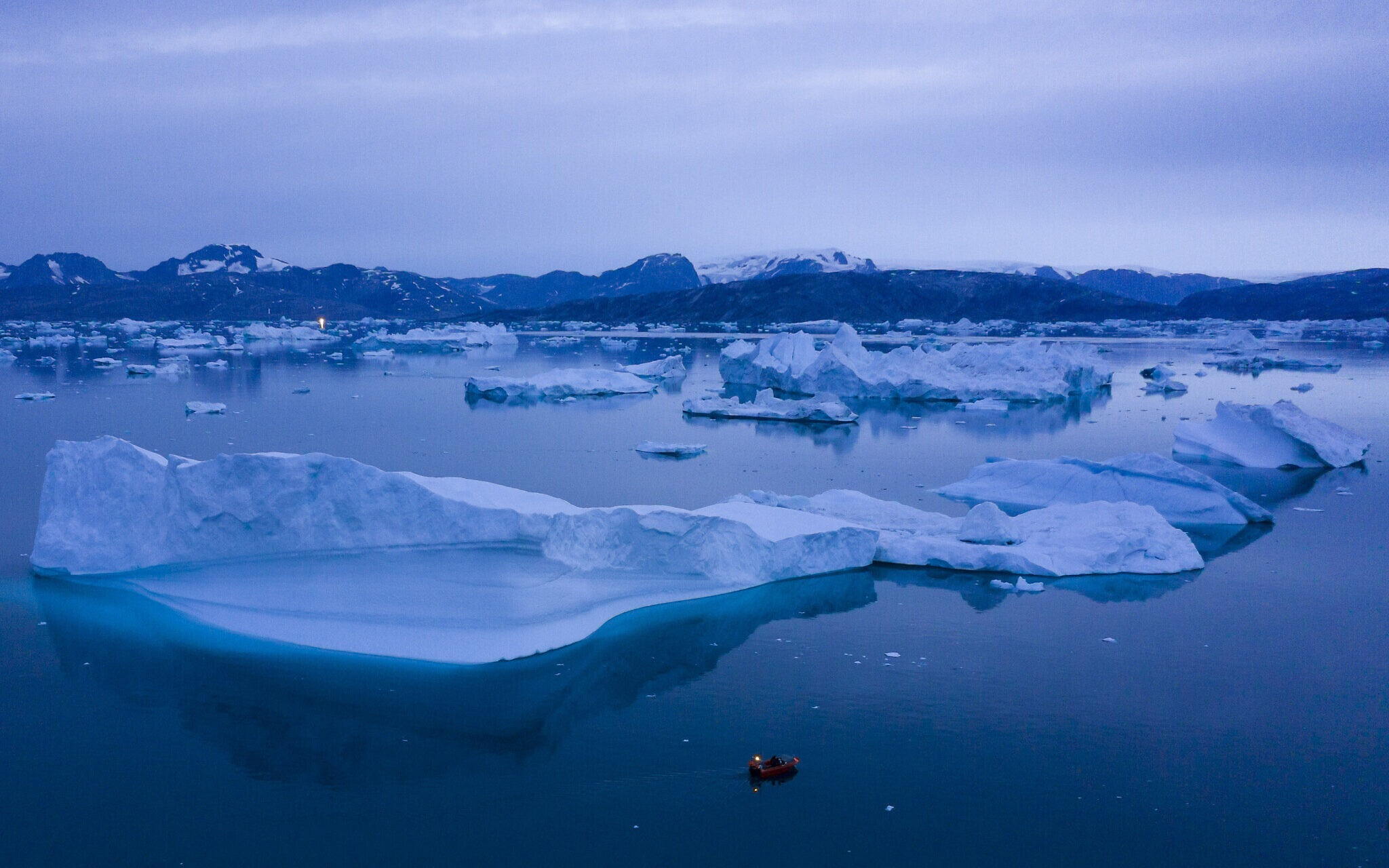
Braslavsky said he remembered playing in the snow on Mount Hermon when he was younger, but jokingly added that his focus “was not on the internal symmetry of a snowflake.”
However, as a child, he liked to invent things and made a Hanukkah menorah out of ice.
He said the lab wants to find out whether the material becomes even stronger in deeper cold, and whether it holds up through repeated freezing and thawing.
“Once the protein becomes cheaper to produce, I can imagine runways, roads, or shelters built largely from local water,” he said.

“The idea for a neo-ice alloy such as BioPykrete is going to be a boon material in near-future outdoor cold region construction,” Richard Cathcart, founder of the geographic consulting firm Geographos, based in Burbank, California, told The Times of Israel.
Cathcart was not involved in the study.
He speculated that as shipping increases through the Arctic Ocean, “cargo ships constructed with BioPykrete could withstand collisions with icebergs without significant structural damage or delays in commercial shipping schedules.”
Looking ahead to outer space exploration, Braslavsky said that Mars, with its large deposits of water ice, might be a place for BioPykrete construction.
“If you could reinforce that ice with a small amount of material and make it tougher and less brittle, you’d have the possibility of building protective shelters from what already exists on Mars,” Braslavsky said. “We’re far from testing that, but it’s an exciting direction.”
KioskNews shows a cleaned-up reading view extracted from the publisher’s page — the original always lives on their site, not ours.