How healthy is seaweed? Here’s what it can do for your body
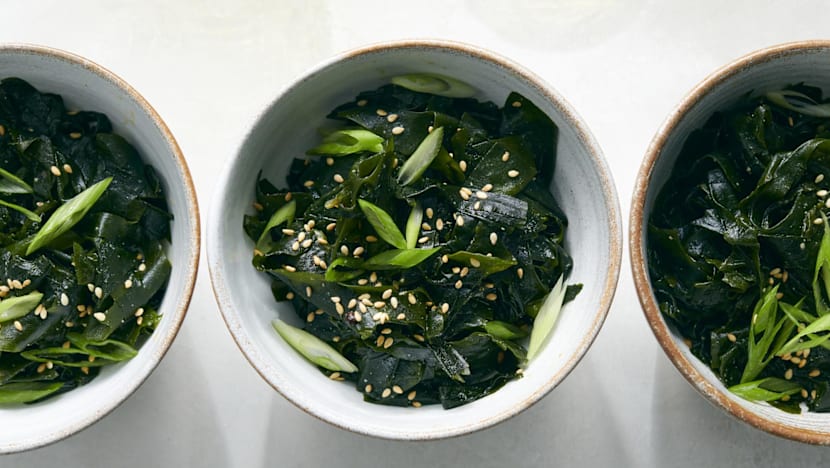
Seaweed isn’t a plant; it’s an umbrella term for thousands of different marine algae. Seaweeds harvest sunlight to grow, but they don’t have roots, stems or leaves, and they absorb nutrients directly from seawater. Seaweed has recently gotten more attention as a sustainable food source.
There are dozens of edible species, including nori, wakame and kombu. Here’s a look at seaweed’s considerable health benefits.
IT'S GREAT FOR YOUR GUT
Seaweed is rich in polysaccharides, long chains of sugar molecules that form the walls of plant and algae cells. Some of these molecules are too complex for humans to digest without the help of beneficial gut microbes. In turn, the polysaccharides help the microbes thrive.
Beneficial gut microbes also ferment polysaccharides into short-chain fatty acids, another group of molecules important to gut health, said Shelly Wegman, a clinical dietitian at University of North Carolina Rex Hospital. “These molecules actually fuel and repair the cells of the gut lining,” she said.
IT'S A COMPLETE SOURCE OF PROTEIN
Seaweed contains all nine essential amino acids, the building blocks of protein the body uses to build muscles and tissues. How much protein seaweed contains depends on the variety. Scientists have found that, gram for gram, dried nori is up to 47 per cent protein – more than chicken breast, proportionally speaking. But since typical servings are small, you’re unlikely to get a meal’s worth of protein from seaweed, said Yvonne Yuan, an associate professor at Toronto Metropolitan University School of Nutrition.
IT CONTAINS IRON AND VITAMIN B12
Thanks to the mineral-rich seawater it grows in, seaweed has higher quantities of certain nutrients than are found in plants. Those include iron, which the body needs to carry oxygen to your organs, and Vitamin B12, which is used to build and maintain healthy red blood cells and nerve cells. These nutrients are often lacking in plant-based diets, and seaweed can help fill that gap, said Ingrid Undeland, a professor of food and nutrition science at Chalmers University of Technology in Sweden.
Nutritional data on seaweed varies, but according to one analysis, five grams of dried nori (the amount typically found in a snack pack) can contain nearly 1.4 milligrams of iron – around 17 per cent of the recommended daily amount for men and 8 per cent for women (pregnant women need more). A sheet of dried nori has about 80 per cent of the daily amount of Vitamin B12.
Be aware that one mineral – iodine – can be present in overly high doses in some seaweed. The body uses iodine primarily to make thyroid hormone, but needs only trace amounts to do it.
KioskNews shows a cleaned-up reading view extracted from the publisher’s page — the original always lives on their site, not ours.