‘Constant fear’: lung patient’s long wait for transplant highlights urgent need
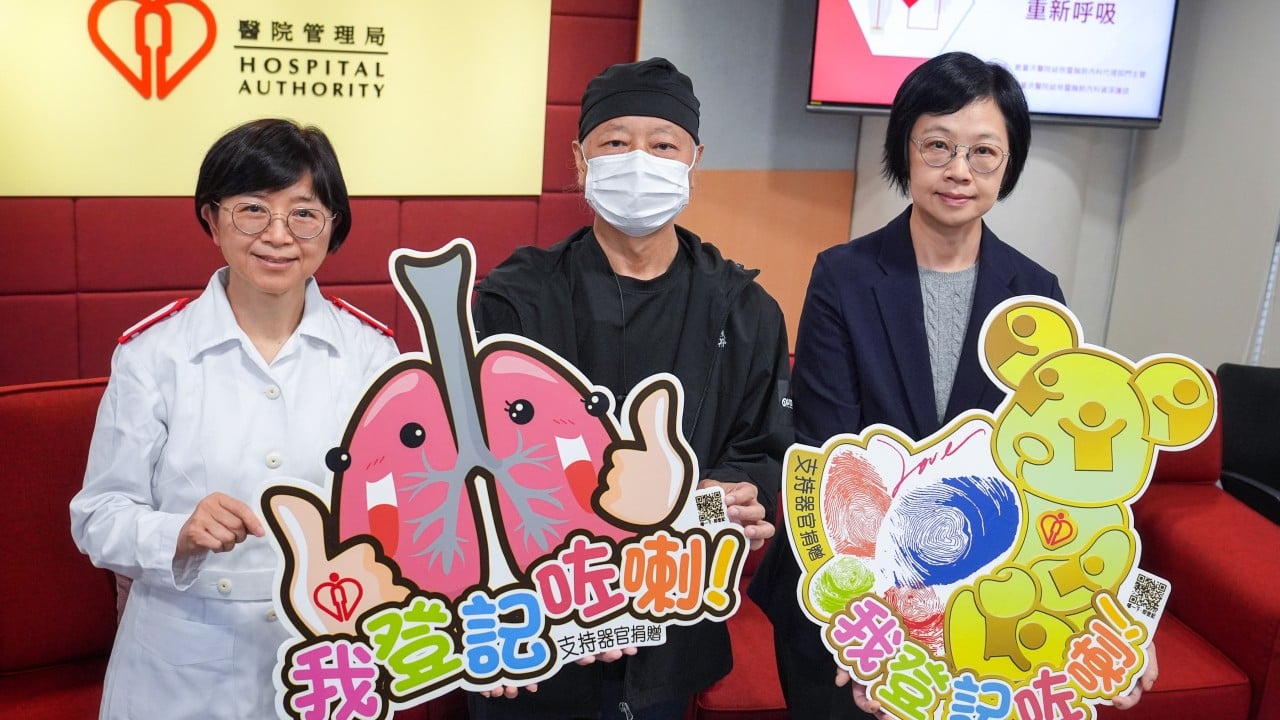
Raymond, 66, lived in constant fear of becoming a burden to his family in recent years as his lung disease, diagnosed 16 years ago, worsened, and he needed an organ transplant to survive.
The pulmonary fibrosis patient said on Thursday that he had waited to receive a lung transplant for more than two years after being placed on the waiting list in 2023. His brother, who suffered from the same condition, died three years after being diagnosed.
Pulmonary fibrosis is one of more than 200 lung conditions known as interstitial lung diseases, which cause irreversible damage, warranting a lung transplant in severe cases.
“I’m really grateful to the donor for giving me a second life. Without this organ donation, I wouldn’t be here today,” Raymond said. “I will do my best to live life to the fullest and make sure the donor’s generosity is not in vain.”
Ahead of Organ Donation Day this Saturday, Hong Kong urgently needs donors, with 2,631 patients on the transplant waiting list, according to health authorities.

Dr Yan See-wan, deputising chief of service (Tuberculosis and Chest Medicine) at Grantham Hospital, said lungs were especially scarce. Only three lung transplants were completed in the first nine months of this year despite 18 waiting patients, with the gap due to donor lungs being rare and prone to infection.
Yan added that patients with end-stage lung disease often faced severe limitations in their daily lives and even had to rely on ventilators.
“With no curative treatment and a high risk of death, they urgently need transplants,” she said. “Donor lungs are particularly vulnerable to infection, making suitable organs scarce.”
Before the transplant, Raymond recalled, he could only walk for about 10 minutes before needing to rest, and even basic tasks like showering or mopping had become exhausting.
He could not forget how his brother had to rely on oxygen 24 hours a day and needed his family to take care of him constantly before dying of the same disease – pulmonary fibrosis.
“During the wait for a donor, I worried that one day I would follow in my brother’s footsteps and become the biggest burden to my family. That’s the last thing I wanted to see.”
When he received the call about a donor, he felt excited, but terrified that he might never see his wife and daughter again.
In the end, he decided to “take a gamble on this opportunity,” describing his feeling after surgery as like he had “returned to Earth.”
Yan called on the public to build a culture of organ donation by signing up on the official Centralised Organ Donation Register, speaking out to share their wishes with family and friends, and spreading the message to encourage others to support life-saving donations and reignite hope for patients.
Health authorities have also sought assistance from mainland China, as under the cross-boundary organ transplant mutual assistance mechanism, organs from mainland donors could be allocated to Hong Kong patients if no suitable recipient is found on the mainland.
However, Yan said that cross-border lung transplants were exceptionally difficult because lungs are highly prone to infection, stressing that “increasing the number of local donors is the most important thing”.
She revealed that no lung donations had yet been secured via the cross-boundary donation mechanism.
Raymond, as someone who benefited from organ donation, hoped to pass on the kindness.
“I hope to sign up as a donor and see this cycle of organ donation continue, thus bringing hope to more people,” he said.
KioskNews shows a cleaned-up reading view extracted from the publisher’s page — the original always lives on their site, not ours.