Explained: What It Takes For A Robot To Fight A Depot Fire
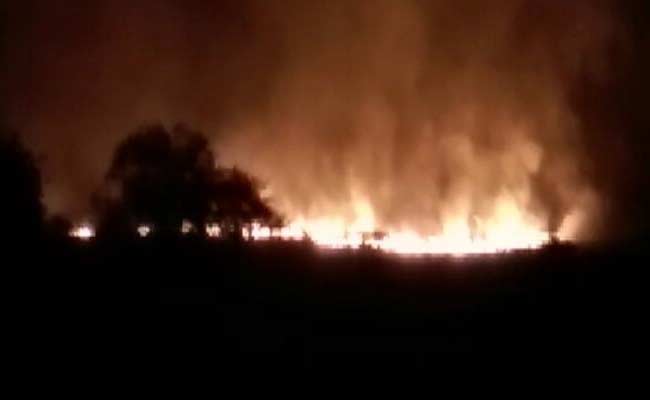
Around 1 am on May 31, 2016, firefighters at the Central Ammunition Depot in Maharashtra's Pulgaon saw flames in a storage shed. They used whatever equipment they had available. Inside the shed were roughly 20,000 defective anti-tank mines. As the heat climbed, the mines began to go off. Two army officers and 13 civilian firefighters died.
Ten years on, Pulgaon remains the starkest picture of what a depot fire demands of the people sent to fight it. It also raises a question that matters more now that robots are entering military fire safety. Before a machine drives toward a burning ammunition shed or fuel area, who vouches that it will work?
A year before Pulgaon, the Comptroller and Auditor General had found the Army's ammunition depots short of firefighting staff and equipment, which left them exposed to fire accidents. Across the eight depots it examined, the gap came to nearly half the firefighting staff and almost two-thirds of the main equipment.
Two more facts make things worse. Depot guidelines let firefighters tackle a blaze only while it stays inside a single shed. And army officers have pointed out that every past depot fire has broken out in summer. So the window to act is short, and the season of risk is easy to predict. This is where a remotely operated firefighting robot earns its keep. It can get there early, go closer than any person should, and help keep the fire to one shed while people stay back.
A robot that impresses at a demonstration isn't the same as one a commander can count on at 1 am in May. Trials show a prototype can do the job on the day. They don't show that the fiftieth unit off the production line will do the same, or that it will still do so after months in a depot store.
Certification by the Directorate General of Quality Assurance (DGQA) is meant to close that gap. The DGQA, which sits under the Ministry of Defence, checks equipment against the services' specifications and confirms that what is produced actually conforms to them. Its certificate is, in effect, the state putting its name to a claim: this item, built this way, will perform as stated.
The FF Bot shows what that means in practice. It's a remotely operated firefighting vehicle developed by Ahmedabad-based Swadeshi Empresa Private Limited under the Ministry's iDEX innovation programme. It carries thermal and optical cameras and sprays water or foam from a safe distance. The Navy already uses it, and in January 2026 the Army signed for units meant for ammunition depots and fuel sites. DGQA certification is what turns those orders into equipment that a depot can plan around.
The conditions attached to the certificate may be its most useful part. They spell out the units and settings where the robot can be sent and where it can't. That could look like a limitation. It's closer to an operating instruction. A depot commander preparing for summer needs to know what the machine is cleared to do as much as what it can do so it gets used where it adds safety and not where it breeds false confidence.
Once it is delivered, a firefighting robot is only as effective as its last service. That's where codification comes in. Codification gives an item and each of its spares a stock number that places it in military inventory. With that number, a camera module or a nozzle can be requested through the normal supply chain, tracked, stocked at the right level and replaced on schedule. Nobody has to scramble for a one-off purchase after something breaks. The FF Bot has been codified.
The system behind that number is also significant. India's national codification bureau became a Tier-II international member in February 2019. That recognition means its codification meets international standards and supports two-way data exchange with partner nations.
Future purchases get easier as well. An item that's certified and codified doesn't have to be proven from scratch every time another unit, command or service wants it. Repeat orders are easier to justify and quicker to place, and budgets can account for spares from the start.
None of this replaces trained firefighters, full staffing or safer storage. Pulgaon began with defective mines left sitting in a shed. But when the next summer fire starts among explosives, the first thing sent toward it should be something the system has already vouched for. That's what certification offers.
KioskNews shows a cleaned-up reading view extracted from the publisher’s page — the original always lives on their site, not ours.