Live: PM responds to criticism of algorithm legislation
No country can manage the risks of artificial intelligence "alone", Anthony Albanese has told world leaders in a call for international cooperation to regulate the technology.
Follow all the updates in our live blog.
Filter Posts
All
5
Key Events
1
Key Event
Leaders must come together to tackle risks of AI, not repeat mistakes of social media: PM
By Clare Armstrong
By Clare Armstrong
No country can manage the risks of artificial intelligence "alone", Anthony Albanese has told world leaders in a call for international cooperation to regulate the technology.
The prime minister has used a speech on the sidelines of the United Nations to warn tackling risks like child exploitation, biological weapons or rogue AI incidents requires global coordination.
As a co-host of the Coalition for Children's Rights and Protection in the Age of AI event in New York overnight, Albanese argued artificial intelligence can "bring great good" but only if "humans are in control of it".
He has promoted Australia's social media age ban as a way of giving children breathing space online, noting more than 20 countries are considering similar laws.
The PM has argued a coordinated approach on AI is also required.
"The idea, as some have argued, that AI will create perfection is something that I think is very misdirected," he says.
"We do have the power. We have the agency but importantly as well, we have the choice.
"But the choices that we have as leaders will determined what happens for the next year and the next decade.
"Because if we leave it like I think we did on social media .... we should have moved earlier. Let's not make the same mistake. Let's learn form it and make sure that we shape AI in the interests of humanity".
Trump weighs 'big decision' on Iran, rejects AI push in major UN speech on 'American power'
By Brad Ryan
By Brad Ryan
US President Donald Trump has used a speech at the UN to portray "American power" as the solution to the world's problems, defending his ongoing war with Iran and declaring he now must decide whether to "annihilate" the Islamic Republic.
Trump also said the US would reject any international scheme to put controls on artificial intelligence.
The comment came just a day after 22 world leaders, including Prime Minister Anthony Albanese, signed a statement calling for global guardrails.
You can read the rest of Brad Ryan's report of Trump's address to the UN at the link below.
Opening of UNGA is people watching on steroids as world leaders roll in
By Jane Norman
By Jane Norman
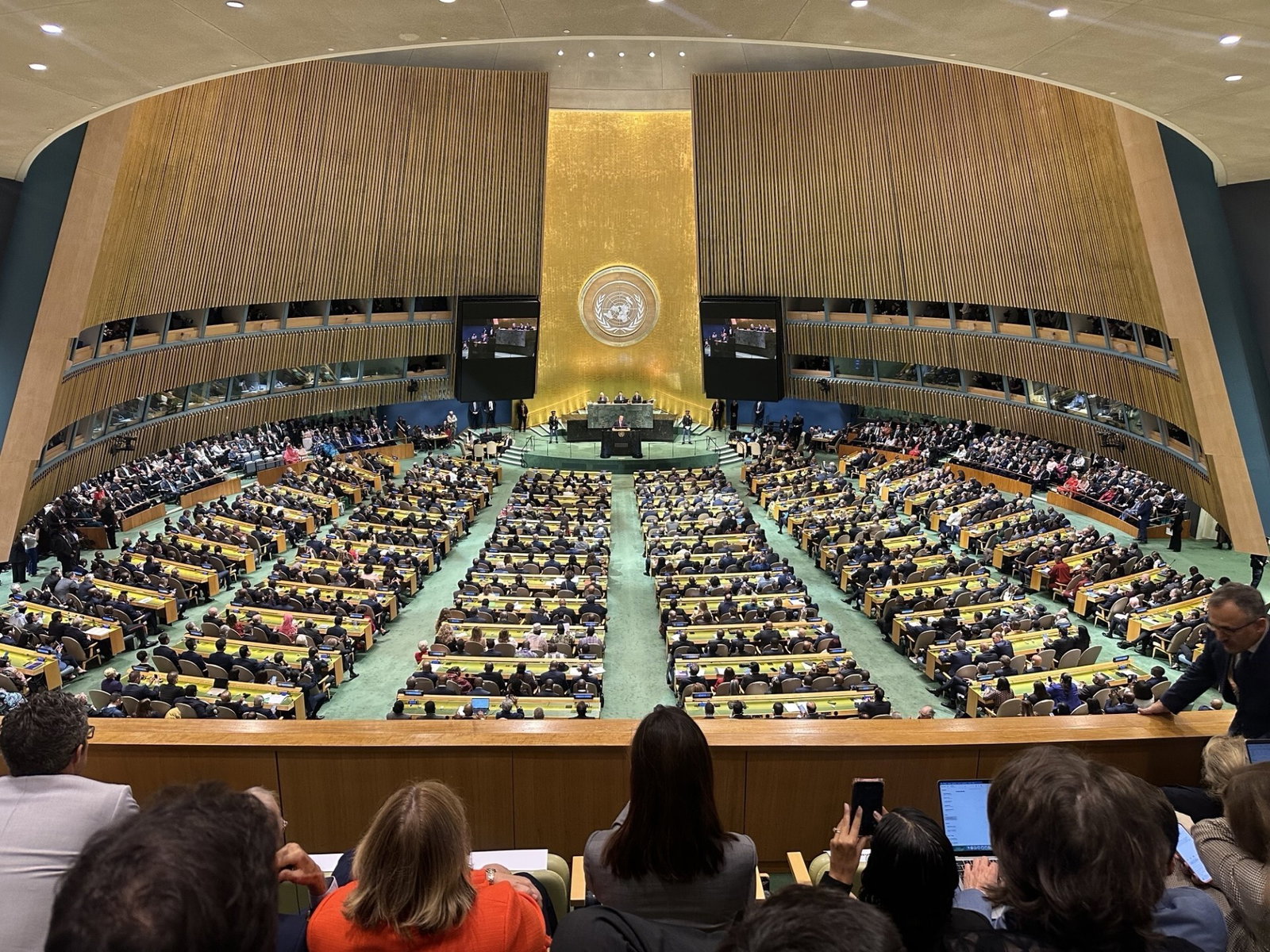
On the floor of the iconic United Nations General Assembly hall, the world's most powerful people and their aides are brought to attention by a man carving his way through the crowd enthusiastically, waving a brass handbell above his head.
The opening session of the 81st General Assembly has begun. It is the largest gathering of leaders in one place and was set up to maintain and enforce international rules in the aftermath of World War II. In 2026, it's under serious strain from superpowers rewriting the rules in their favour.
From the gallery overlooking the circular hall — for the journalists (including this correspondent) lucky enough to have secured a ticket — it’s people watching on steroids.
Anthony Albanese shakes hands with Canada’s Mark Carney before Julie Bishop — former foreign minister and now special envoy on Myanmar — makes a surprise appearance and sidles up beside him for a chat.
Once seated (on the same table as Austria and two rows behind Volodymyr Zelenskyy of Ukraine), Albanese and Penny Wong are joined by Australia’s ambassador to the UN, James Larsson, ambassador to the US Greg Moriarty, the PM’s international adviser Rod Hilton and DFAT boss Jan Adams.
Everyone patiently listens to UN secretary-general António Guterres’s defiant final address (for which he was given a standing ovation), and then Brazilian President Luiz Inácio Lula da Silva, (who gets top billing due to longstanding tradition) before the man everyone is here for, Donald Trump, enters the room.
Ninety minutes late, he walks straight up to the rostrum. And now, the show begins.
Albanese meets with Korean counterpart
By Courtney Gould
By Courtney Gould
Reporting by pool reporter Katina Curtis in New York.
Anthony Albanese has met Korean President Lee Jae Myung at the Korean Permanent Mission to the United Nations.
The meeting was preceded by an extended negotiation between officials over whether the leaders would shake hands twice or once for media and protocol purposes.
Lee greeted Albanese by asking when he had arrived in New York.
Speaking via a translator, Lee then noted that due to the ongoing conflict in the Strait of Hormuz, Korea had faced "various challenges" with energy supply chain disruptions.
"But thanks to the help and cooperation of Australia, our energy market has been stabilised," he said.
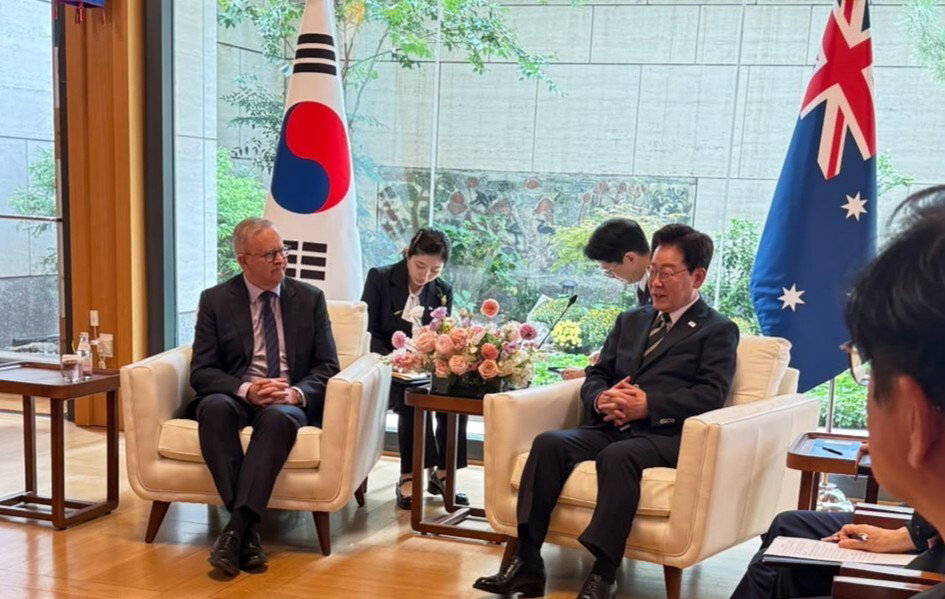
Albanese thanked him for the warm welcome and said Australia and Korea were "great friends" who shared a similar world view of support for multilateral institutions, security and stability.
"We rely upon each other as well for economic security. Particularly, we regard the role that we play in supplying secure energy to Korea as being very important," he said.
Albanese ended his remarks by saying he looked forward to welcoming Lee to Australia early next year.
They shook hands twice.
Good morning 👋
By Courtney Gould
By Courtney Gould
Hi friends. Welcome to our politics live blog. I'm Courtney Gould from the ABC's Parliament House team, here to guide you through the day.
Prime Minister Anthony Albanese attended the opening of the UN General Assembly overnight. On the sidelines, he just delivered a speech pushing Australia's role as a "world leader" on digital regulation. He's also met with several world leaders. More on that shortly.
Back at home, expect more reaction to the reignition of the superannuation battle this morning following Liberal frontbencher Andrew Bragg floating the possibility of people being able to use retirement savings as collateral for a mortgage.
KioskNews shows a cleaned-up reading view extracted from the publisher’s page — the original always lives on their site, not ours.