EJA gathers in Krakow to urge European leaders for action against surging antisemitism

European Jewish Association (EJA) Chairman Rabbi Menachem Margolin opened the annual symposium and EJA delegation to Auschwitz in Krakow on Monday, issuing an urgent call for European political leaders to take decisive legislative action against surging antisemitism across the continent.
Margolin opened by welcoming the gathering of international representatives, "Before I say anything else, I want to thank you for the most important thing you did today: you came."
Addressing the impending visit to the former extermination camp, he prepared delegates for the weight of what they would encounter: "Tomorrow we will walk through the gate of Auschwitz-Birkenau; words will fail you. They were murdered not for anything they did, but for who they were. So tomorrow I do not ask you to understand. Nobody can understand. I ask you only to see, and to remember what you saw."
Highlighting the stark contrast between official rhetoric and daily life, Margolin acknowledged the security measures currently in place while pointing to a deeper systemic failure: "We are deeply grateful for the protection that governments provide. Without it, many communities could not function. But we must be honest with one another: a Europe in which Jews can only feel safe behind armed guards is not yet the Europe that was promised after Auschwitz."
Margolin identified three primary drivers behind this persistent security gap: "First, laws that exist on paper are not always enforced in practice... Second, people hesitate to confront antisemitism when it comes from an uncomfortable direction... Third, hatred now travels faster than ever."
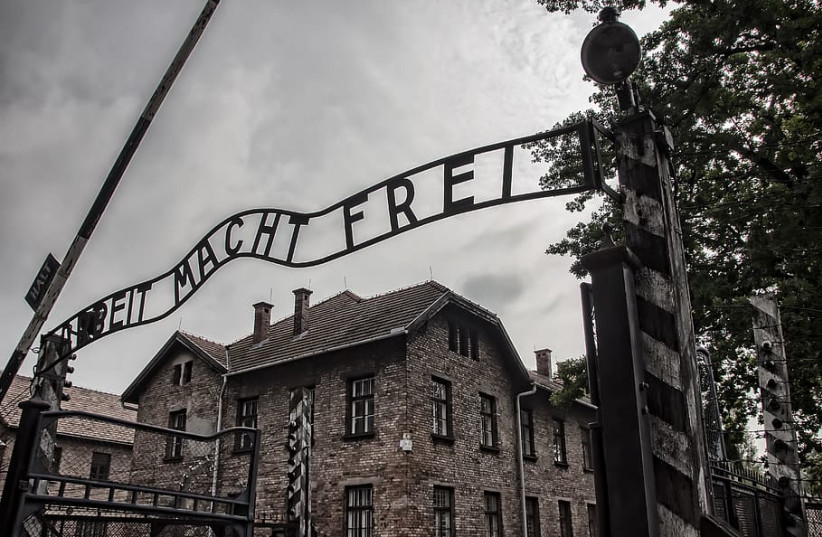
Margolin reminds delegates of how Holocaust began
Reminding delegates that the Holocaust did not begin with the gas chambers. It began with words, parliamentary legislation, and official indifference. Margolin placed the onus directly on the assembled parliamentarians and ministers: "Not every person in Europe holds the power you hold. You write the laws. You set the budgets. You decide what is tolerated and what is not."
Margolin presented a concrete three-point call to action: "First, by enforcing the law against antisemitic threats, incitement and violence, without hesitation and without exceptions... Second, by protecting Jewish life in full... Third, by teaching the next generation not only what happened at Auschwitz, but how it happened and how it can happen again when good people stay silent."
Closing his address with a stark challenge to the political figures present, Margolin stressed that true moral leadership requires action regardless of public sentiment: "The true test of leadership is not whether we condemn antisemitism when everyone agrees. It is whether we confront it when it is uncomfortable... Tomorrow, at Birkenau, we will stand in silence. But for the living, silence is never neutral."
Margolin concluded by underscoring the ongoing duty of the international community, "Because Never Again is not only a memory. It is a responsibility, and it is ours. Thank you for being here. Thank you for coming to see. And thank you, in advance, for what you will do when you go home."
Kristallnacht a timely warning sign, Vice-Chairman says
Choosing to convene over the anniversary of Kristallnacht rather than International Holocaust Memorial Day, the EJA underscored the 1938 pogroms as a vital historical warning sign for the present. While “Auschwitz remains the ultimate, horrifying apex of the Holocaust,” EJA Vice-Chairman Alex Benjamin noted that it has increasingly become an abstract symbol.
"Kristallnacht is an early warning system, and when people say never again all the time, never again on its own doesn't actually mean anything, unless you deal with a situation that started in 1938," Benjamin said in an interview with The Jerusalem Post.
The conference is designed to bring European parliamentarians, ministers, and decision-makers face-to-face with the reality of the threat currently facing European Jewish communities. By exposing first-time attendees to both the historical context and the lived realities of modern antisemitism, past delegations have proven instrumental in shaping informed legislative advocates across European capitals, Benjamin told the Post.
Operating across a continent where Jewish populations represent roughly 0.2% of the total population, the EJA acts as an overarching umbrella organization representing approximately 650 communities. Its core mission is to foster, protect, and ensure that no Jewish community is left behind, advocating at the highest levels of the European Union on issues ranging from security and combating antisemitism to defending traditional religious practices like circumcision and shechita.
Following the opening addresses, the symposium convened a series of expert panel discussions examining key pillars of Holocaust remembrance, legislative countermeasures, and public strategy. Central to the discussions was the imperative of adopting and enforcing the International Holocaust Remembrance Alliance (IHRA) working definition of antisemitism. Expert panelists, including Alex Hearn and Professor Christer Mattsson, highlighted how standardizing the IHRA definition equips European educational and judicial systems to properly identify and combat both traditional and contemporary manifestations of anti-Jewish hatred.
Representatives from major technology platforms, including Microsoft and Meta, joined educational leaders to outline collaborative measures against online hate speech and disinformation. Panels focused on leveraging technology to enhance public education, counter algorithmic radicalization, and protect young generations from targeted online hostility.
Throughout the sessions, European Jewish community leaders shared firsthand accounts detailing the daily realities, security challenges, and resilience of Jewish life across the continent. Emphasizing proactive measures to safeguard the future, speakers urged European governments to maintain robust legal protections for religious freedoms while actively securing Jewish institutions and communal spaces.
In addition to the panel discussions, the conference features a high-profile address and participation by exiled Iranian Crown Prince Reza Pahlavi. Pahlavi is scheduled to hold a dedicated press conference on Monday evening, receive the EJA King Solomon Award during the evening's memorial dinner, and join delegates in the solemn candle-lighting service at Birkenau.
EJA’s Director of strategy, Tal Rabina, Head of EJA’s offices in Israel, who also leads The Europe Israel Press Association (EIPA) told the Post, “One might think that we are only commemorating a big tragedy from the past. Unfortunately, so many decades after the Holocaust, when you go in the streets of Europe these days, and even literally today, and even in such a so-called friendly country like the Netherlands, you cannot feel safe as a Jew. The hatred, the ignorance, the wish of death to the Jewish people is in some way the same extent that we used to see in the late 30s and early 40s, and maybe what Europeans don't understand is that it may be starting with the Jews, but it never stops there.”
“We hope that by bringing all those ministers and parliamentarians from all across the continent to here, will be a little voice of a wake-up call for everybody. Because these days it's up to the leaders to lead and not follow the crowd, and unfortunately we don't see such big shows of leadership courage that it's so necessary these days,” Rabina told the Post.
The symposium runs ahead of Tuesday's formal delegation visit to Auschwitz-Birkenau.
KioskNews shows a cleaned-up reading view extracted from the publisher’s page — the original always lives on their site, not ours.