The 10 Best Shows in HBO History, Ranked

Michael Block is a 14 time GLAM Award nominated writer, producer, and host of the podcast Block Talk. Throughout his time in the entertainment industry, he has worked on and off Broadway as a stage manager, written several produced plays, critiqued hundreds of theatrical performances, drag and cabaret shows, and has produced events randing from drag competitoons to variety concerts!
On Block Talk, he interviews nightlife personalities, covers the wide world of entertainment through features, ranking episodes, and recaps ALL of Drag Race, as well as Dragula and Survivor. He has interviewed hundreds of RuGirls that span the globe at DragCon NYC, DragCon LA, and DragCon UK.
In his free time, he makes one-of-a-kind jewelry and gift baskets with his mom. He is a proud member of the LGBTQ+ community.
Sign in to your Collider account
The landscape of television has proven to be an ever-changing world. At first, it was only network television. Then premium cable arrived. Then streaming broke through and took over the world. As we've changed how we consume television, some steadfast players have remained at the forefront. One of those dominating forces is HBO.
From epic fantasy masterpieces to shockingly hilarious comedies, these shows have defined the network. While many incredible shows have made their mark, these ten titles went on to influence the medium forever. For this list, we'll focus only on shows under the main HBO banner, not HBO Max. Apologies to The Pitt and Hacks! How many of these incredible shows have you watched?
10 'Sex and the City' (1998--2004)

Though the four-piece, female-led comedy wasn’t revolutionary, what Sex and the City did was. Created by Darren Star, the romantic comedy followed the lives, careers, and romantic escapades of four single women living in New York City. Carrie Bradshaw (Sarah Jessica Parker) is a newspaper columnist who writes a weekly column called "Sex and the City," using her own experiences and observations to explore modern dating. Samantha Jones (Kim Cattrall) is a confident, sexually liberated public relations executive who approaches romance with an independent, unapologetic mindset. Charlotte York (Kristin Davis) is a traditional, romantic art dealer who holds a classic view on love, marriage, and fairy tales. Miranda Hobbes (Cynthia Nixon) is a sharp, cynical corporate lawyer who balances a pragmatic, often skeptical outlook on men with a demanding career. Beloved for its frank, open discussions of sex, relationships, and women's shifting social roles during the era, Sex and the City revolutionized women-centric narrative television.
At its core, Sex and the City championed the power of female friendship. By putting it front and center, the series established an accessible world. The series celebrated self-discovery. Whichever character you identified with, fans flocked to the series because they could relate to their narratives and personalities. It shifted cultural expectations, showing women who prioritized careers, financial independence, and personal fulfillment over traditional paths of marriage and motherhood. Though the quartet cycled through boyfriends and partners, the focus remained on how those relationships affected them and their lives. High fashion became a co-star as Patricia Field's costumes turned Manhattan into a runway, blending high fashion and consumerism into a cultural movement. Whether you saw it as an aspirational fantasy or not, Sex and the City painted New York City like a fairy tale world. But that was its charm. Spawning a prequel and sequel, Sex and the City defined HBO at the turn of the century.
9 'Boardwalk Empire' (2010-2014)

Created by Terence Winter, the period crime drama Boardwalk Empire captured the birth and rise of organized crime in Atlantic City, New Jersey, during the Prohibition era of the 1920s and 1930s. The show centers on Enoch "Nucky" Thompson (Steve Buscemi), the corrupt treasurer of Atlantic County who rules the city as both a political boss and a bootlegger. Set against the backdrop of a "wet" Atlantic City where alcohol is outlawed nationally, Nucky partners with emerging gangsters, including fictionalized versions of famous historical figures, to import and distribute illegal liquor. Nucky's lavish, high-rolling lifestyle draws intense scrutiny from federal Prohibition agents and sparks power struggles with his own protégés and rivals.
Boardwalk Empire became a masterclass in historical storytelling. Through a high-budget pedigree and a rich 1920s Prohibition setting, every street, vintage car, wardrobe piece, and jazz-age club was built with obsessive accuracy. Once the setting was established, Boardwalk Empire became a fervent character study. Instead of a traditional muscle-bound enforcer, Buscemi played Nucky as a smooth, calculating Atlantic City politician and fixer who lets others handle the dirty work. The series featured stars like Michael Shannon, Michael Pitt, Kelly Macdonald, Shea Whigham, Michael Stuhlbarg, and Stephen Graham, elevating the material to new heights. Over its five-season run, the series racked up 20 Emmy Awards and a Golden Globe for Best Drama Series, becoming a defining series for HBO.
8 'Six Feet Under' (2001-2005)

Don’t let the morbid title fool you; Six Feet Under was a profoundly human story, passionately alive. Created by Alan Ball, the five-season series follows the dysfunctional Fisher family as they run an independent Los Angeles funeral home called Fisher & Sons. After the family patriarch dies in a sudden car accident, his sons, Nate (Peter Krause) and David (Michael C. Hall), along with their mother Ruth (Frances Conroy) and sister Claire (Lauren Ambrose), are forced to navigate grief, family secrets, and the realities of running a mortuary. Each episode opens with a death of the week, establishing a specific thematic tone for that week's funeral arrangements and family conflicts. Six Feet Under treats death not just as a tragedy, but as an inescapable part of life that forces characters to evaluate their own choices, using the narrative as a philosophical tool.
Six Feet Under uses mortality as a mirror to examine the messy, complex, and ultimately hopeful realities of being alive. Six Feet Under balances a profoundly human story with surreal moments. The show brilliantly visualizes grief and guilt by having characters converse with manifested "ghosts" of the dead. Deceased characters, most frequently Nathaniel Sr. (Richard Jenkins), frequently appear as hallucinations or manifestations of the main characters' subconscious thoughts. The story explores how family members hide their true feelings, struggle with addiction or infidelity, and eventually confront their dysfunction. By leading with compassion, humanity, and honesty, Six Feet Under’s rare warmth set it apart from its rivals.
7 'The Leftovers' (2014-2017)

In Damon Lindelof and Tom Perrotta’s supernatural drama, The Leftovers captures the aftermath of the Sudden Departure, an unexplained global event in which 2% of the world's population vanishes simultaneously into thin air. Focusing fully on the survivors, the story revolves around Kevin Garvey (Justin Theroux), the beleaguered chief of police in Mapleton, New York, who tries to maintain public order while battling his own fracturing family and strange psychological breaks, and Nora Durst (Carrie Coon), a grieving woman who lost her entire family in the Departure, leading her through a complex journey of loss and reinvention. Meanwhile, the Guilty Remnant, acult-like organization whose members dress in all-white, take a vow of silence, and act as "living reminders" of the Departure to prevent people from moving on. Across three seasons, The Leftovers lifts Perrotta’s novel while expanding the narrative to new locales and centering on people over puzzles.
The Leftovers abandons traditional "mystery box" storytelling for an emotionally raw, deeply human exploration of grief, faith, and survival. The series refuses to give neat answers and focuses on how the survivors cope with the unanswerable. With a powerful ensemble that included Amy Brenneman, Christopher Eccleston, Ann Dowd, Liv Tyler, Margaret Qualley, Janelle Moloney, and Regina King, the story was in capable hands. While the first season used a heavy, somber tone, the subsequent seasons shifted into a bolder, surreal, and darkly comedic style that became a masterclass in television evolution. Unlike many prestige dramas that stumble at the finish line, The Leftovers concluded on its own terms after three tight seasons, delivering a moving series finale that trusts its audience to sit with ambiguity.
6 'Game of Thrones' (2011-2019)

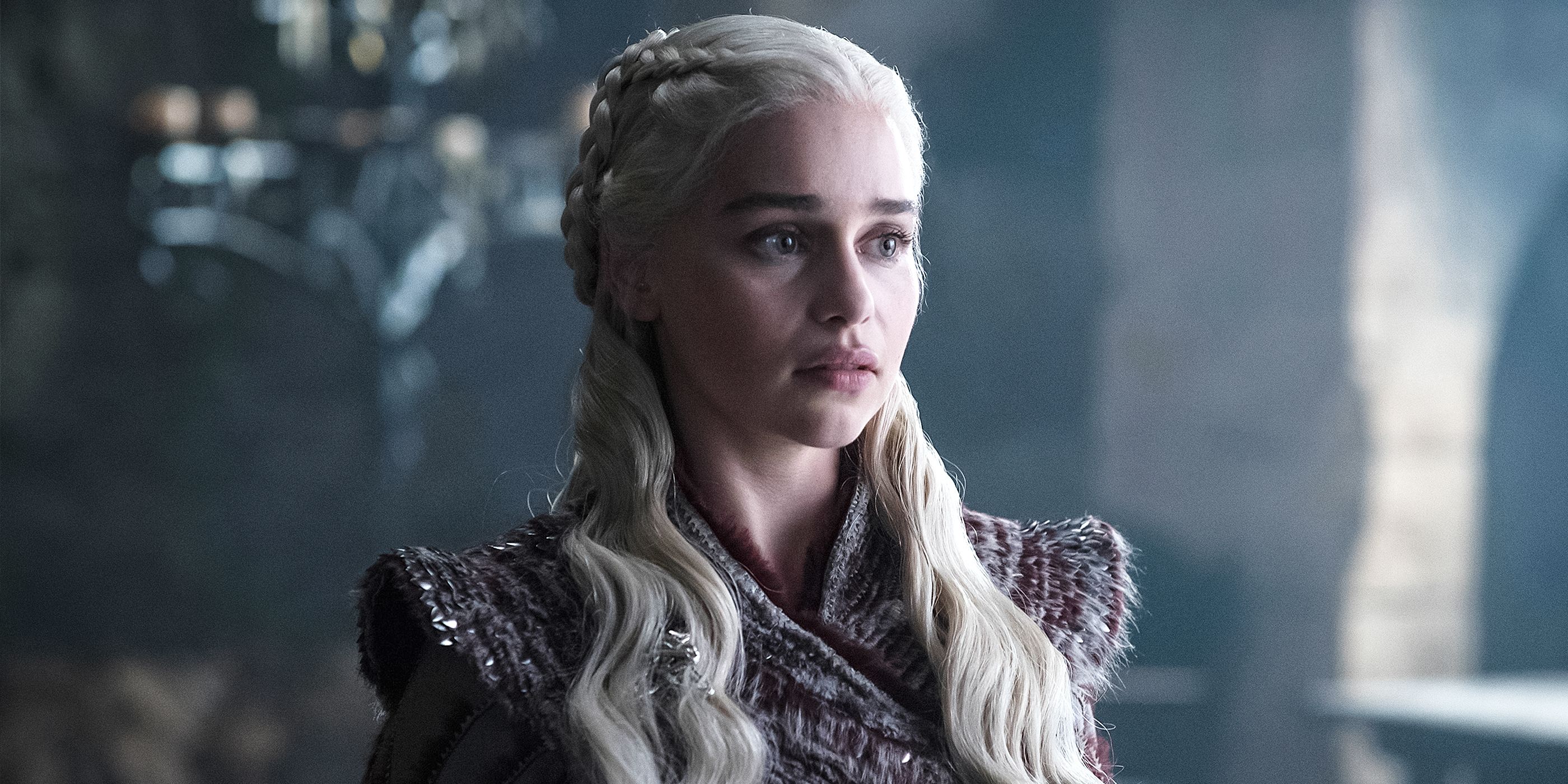
No HBO show revolutionized water-cooler pop culture the way Game of Thrones did. The greatest fantasy series, created by David Benioff and D. B. Weiss, dramatizes the events in George R. R. Martin’s high fantasy novel series A Song of Ice and Fire. Centering on the war for the Iron Throne, noble families fight a brutal political and military conflict for control of the Seven Kingdoms. Game of Thrones focuses heavily on complex power struggles, shifting alliances, and moral ambiguity rather than traditional high-fantasy heroism. With a robust ensemble and characters frequently killed off, regardless of their importance to the plot, Game of Thrones was appointment television that became the hottest show for eight triumphant seasons. A milestone television experience, Game of Thrones transformed high fantasy into mainstream prestige drama.
Game of Thrones was known for iconic television moments, especially shocking deaths. Each episode featured the scope, visual effects, and production values of a blockbuster movie. By breaking the television safety net that usually keeps main characters alive, the show made every alliance and conversation feel genuinely dangerous. Instead of a simple good-versus-evil setup, the narrative focused on morally gray power struggles, Machiavellian schemes, and realistic consequences. A revolving door by design, the series boasted a brilliant ensemble, featuring breakout stars like Sean Bean, Emilia Clarke, Nikolaj Coster-Waldau, Charles Dance, Kit Harington, Lena Headey, Jason Momoa, Sophie Turner, and Maisie Williams. Though the final seasons ended questionably, soaring past the source material, fans fervently and passionately stood by the show until the bitter end.
Collider Exclusive · Game of Thrones Personality Quiz Which Game of Thrones House Do You Belong To? Stark · Lannister · Targaryen · Baratheon · Tyrell
Five great houses. Five completely different answers to the same question: how do you hold power in a world that will take it from you the moment you stop paying attention? Eight questions will determine where your loyalties — and your nature — truly lie.
🐺Stark
🦁Lannister
🐉Targaryen
🦌Baratheon
🌹Tyrell
01
Someone powerful is acting dishonourably and everyone knows it. What do you do? In Westeros, the answer to this question has ended more than one great house.
02
What is the source of your power? Every house endures because of something. What is it for yours?
03
Who do you truly fight for? Strip away the banners and the words. The honest answer tells you everything.
04
How do you deal with your enemies? A house's method reveals its character as clearly as its words ever could.
05
What kind of ruler do you believe in? Westeros is full of answers to this question. Most of them end badly.
06
You suffer a devastating loss. How does your house respond? How a house handles defeat tells you more about it than how it handles victory.
07
Which of these truths about Westeros do you most believe? Every house has a philosophy. This is yours.
08
The Iron Throne is within reach. What do you do? The answer reveals not just your ambition — but your character.
The Maester Has Spoken Your House Is…
Your answers point to the great house whose words, values, and way of surviving in Westeros match your own. Bend the knee — or don't. That's very much up to you.
🐺 House Stark
Winter is Coming — and you have always known it. You prepare not out of fear but out of duty, because the people who depend on you deserve someone who takes the long view.
- You lead with honour even when it costs you, because you understand that a reputation built on integrity is the only one worth having.
- Your loyalty to family and people runs deep — not as sentiment but as a code that doesn't bend when things get difficult.
- The North endures because Starks endure — not by being the cleverest players in the game, but by being the kind of people others are willing to follow into the cold.
- You are that kind of person. The pack survives. The lone wolf dies. You already know which one you are.
🦁 House Lannister
You understand the game — its rules, its exceptions, and exactly when the rules become the exception. You play it without illusions and without apology.
- You are sharper than most people realise, and you have learned to use that gap to your advantage.
- A Lannister always pays their debts — and you always keep your word, because your word is an instrument of power, and instruments must be kept in working order.
- You love your family with a ferocity that sometimes blinds you, and you know it, and you do it anyway.
- The lion doesn't concern itself with the opinion of sheep. Neither, in the end, do you.
🐉 House Targaryen
You carry a sense of destiny that is difficult to explain and impossible to ignore — the feeling that you are not simply participating in the world but meant to reshape it.
- You are capable of extraordinary things, and you know it, and that knowledge is both your greatest strength and your most dangerous quality.
- Fire and blood are not just words to you — they are a philosophy about what change requires and what it costs.
- The Targaryens at their best were transformative rulers who broke chains and defied the limits of what anyone thought possible.
- At your best, so are you. The dragon has three heads. You are one of them.
🦌 House Baratheon
You are a force — direct, powerful, and difficult to ignore when you enter a room or a conflict. You do not negotiate with challenges. You meet them.
- Ours is the fury — and yours is a kind of intensity that commands attention, respect, and occasionally fear from those who underestimate what's behind it.
- You value strength and straight dealing. You'd rather know where you stand in a fight than navigate a web of courtly whispers.
- The Baratheons built their house on the back of one of the greatest military victories in Westerosi history — and then struggled with what came after.
- The lesson of your house is that winning is not the end of the story. Governing is. You are learning that too.
🌹 House Tyrell
You understand that power does not always announce itself — that sometimes it arrives with flowers, good wine, and a smile that doesn't quite reach the eyes.
- Growing strong is your house's motto, and you live it: patiently, strategically, always investing in the relationships and resources that will matter most when it counts.
- You are charming by choice and calculating by nature — a combination that makes you one of the most effective players in any room you enter.
- The Tyrells fed King's Landing and shaped its politics without ever sitting on the Iron Throne — and they were arguably more powerful for it.
- You know that the person who controls the food controls the kingdom. And you always know where the food is.
5 'Deadwood' (2004-2006)
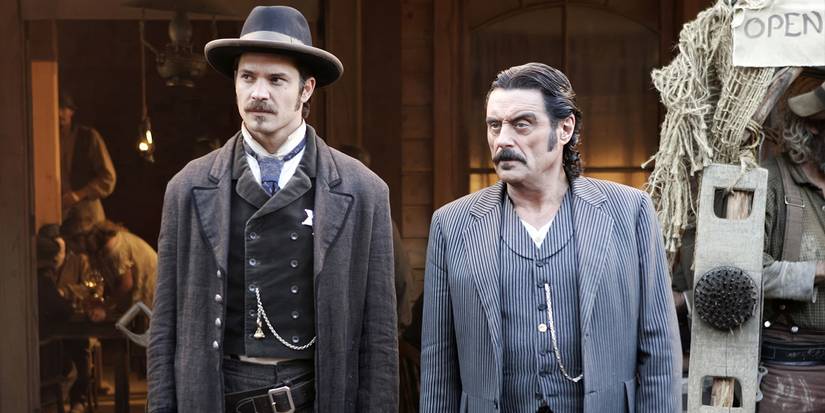
Reinvigorating a fascination with Western storytelling, Deadwood brought a slice of American history to the small screen. Created by David Milch, Deadwood charts the rapid, gritty evolution of Deadwood, South Dakota from an illegal 1870s gold-mining camp into a civilized town. The story tracks how a chaotic camp of prospectors, outcasts, and entrepreneurs gradually builds social order, infrastructure, and capitalism. Seth Bullock (Timothy Olyphant), a bitter, duty-bound former lawman, arrives in Deadwood with his partner, Sol Star (John Hawkes), to open a hardware business and frequently clashes with the camp's dark underbelly. On the opposite end, Al Swearengen (Ian McShane), the ruthless, foul-mouthed owner of the Gem Saloon and brothel, effectively runs the town's day-to-day criminal and economic affairs. Filled to the brim with rich characters, many of whom are inspired by real-life historical figures, Deadwood chronicles the psychological and political friction of turning a violent, lawless frontier into a structured society as institutional wealth, land grabs, and corporate interests reshape individual freedom.
Deadwood was a rare blend of raw historical texture and deep exploration of how human civilization emerges from brutal chaos through the lens of a gritty, romanticized past. With dialogue that had Shakespearean weight, Milch mixed vulgar, period-accurate frontier slang with elevated, rhythmic cadence. These monologues and conversations had as much power as gunfights. With authenticity placed in the atmospheric production design, Deadwood felt like a tangible place. Though many liberties were taken in storytelling, its strength lay in the fusion of real and historical figures. Deadwood was a morally gray world, yet the characters were so rich that even those considered antagonistic had a layer of intrigue that made you champion their story. Deadwood sadly ended long before it deserved to. Though the movie reunited many steadfast favorites and brought closure to a brilliant story, Deadwood proved how the West was won.
4 'Succession' (2018-2023)
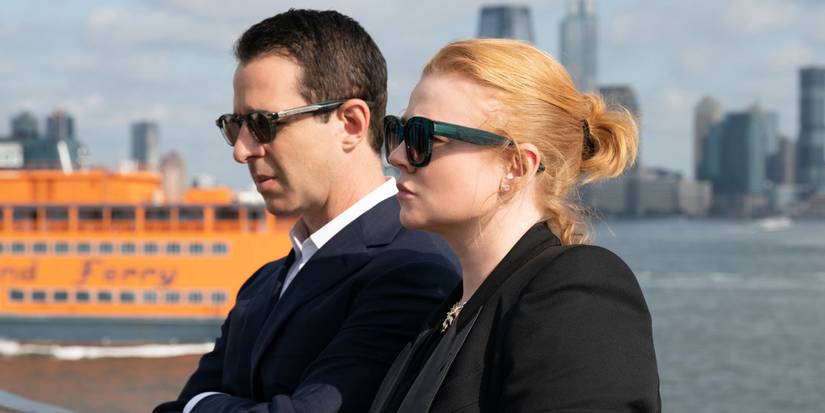
Created by Jesse Armstrong, the satirical dramedy Succession was a family drama like no other. The story centers around the high-stakes drama surrounding the wealthy, dysfunctional Roy family as they fight for control of Waystar RoyCo, a massive global media and entertainment conglomerate. Aging, ruthless billionaire Logan Roy (Brian Cox) controls the empire and refuses to step down, even as his health begins to fail. His four adult children—Kendall (Jeremy Strong), Roman (Kieran Culkin), Shiv (Sarah Snook), and Connor (Alan Ruck)—along with extended family members like Tom Wambsgans (Matthew Macfadyen) and Cousin Greg (Nicholas Braun), constantly scheme, form temporary alliances, and betray one another to win their father's favor and the top job. Modeling the show's corporate and family dynamics loosely on real-life media dynasties, Succession serves as a black comedy that exposes the absurdity, moral vacuum, and out-of-touch nature of the ultra-rich.
Succession shines through its razor-sharp Shakespearean family tragedy and dark corporate drama. The show maps a modern power struggle while displaying a timeless tale about children trying to step out of a domineering father’s shadow and the psychological ruin that causes. The dialogue blends vicious, comedy-club-level insults and dark wit with profound emotional devastation, forcing viewers to empathize with deeply flawed, often loathsome characters. The series uses handheld, documentary-style cinematography with a melancholic classical score, giving it the weight of a Greek tragedy. Earning 3 Emmy wins for Outstanding Drama Series, Succession simply dominated until the final frame.
3 'The Wire' (2002-2008)

Created and primarily written by American author and former police reporter David Simon, the daring crime drama The Wire dropped audiences straight into Baltimore, Maryland, to examine the United States' war on drugs and the systemic decay of American urban institutions. The Wire shifts its institutional lens with each season while retaining an interconnected narrative, exploring the clash between a Baltimore drug empire and a specialized police unit, the decline of blue-collar labor, the local dockworkers, and international smuggling through the Baltimore port, municipal politics, mayoral races, bureaucratic compromises, and early attempts at drug policy reform, institutional failures in education, and the decline of print journalism. The show posits that large systems are self-preserving entities that routinely fail the people they are supposed to serve.
Receiving critical acclaim, The Wire uses authentic local vernacular, real-life Baltimore locations, and a cast that includes local actors and former residents to capture the gritty mechanics of urban life. The series flourished by setting its story in moral ambiguity. Characters rarely fit into clean categories of "good" or "bad"; cops can be corrupt, negligent, or broken, while high-level drug operators can be articulate business strategists. The large ensemble featured some of the era’s greatest performances, including Michael K. Williams, Dominic West, Idris Elba, Wood Harris, and Wendell Pierce. The Wire became a prophetic time capsule on institutional decay, systemic inequality, and the limits of the "War on Drugs".
2 'Veep' (2012-2019)

No show has captured the absurdity of politics quite like Veep. Created by Armando Iannucci, the comedy follows Selina Meyer (Julia Louis-Dreyfus) as she becomes the Vice President of the United States. She quickly discovers that the job is completely powerless, unglamorous, and full of trivial tasks, awkward public relations, and a frustrating relationship with the President. Over seven seasons, Veep follows Selina and her chaotic, self-serving staff as they navigate scandals, backstabbing, election campaigns, and her eventual rise to the presidency. Through biting satire, Veep portrays Washington, D.C. not as an inspiring place of public service, but as a swamp of petty egos, incompetence, and absurd blunders. Infamous for rapid-fire, heavily profanity-laden insults and a cynical view of modern politics, Veep is a razor-sharp masterpiece.
Veep relies on a machine-gun rhythm of creative, savage insults and biting wit that leaves almost no room to breathe because you’re on the floor laughing. Veep strips away lofty ideology to show how Washington actually runs: on polling data, petty egos, photo ops, and hollow opportunism. The series lives and dies by Louis-Dreyfus's pitch-perfect performance. Winning six consecutive Emmy Awards, she struck the right balance with deep-seated insecurity, megalomaniacal ambition, and pure panic with remarkable micro-expressions. Meeting their match, Veep featured a powerhouse ensemble, including Anna Chlumsky, Tony Hale, Reid Scott, Timothy Simons, and Matt Walsh. One of the funniest shows ever made, Veep cemented its legacy as a landmark satire.
1 'The Sopranos' (1999-2007)
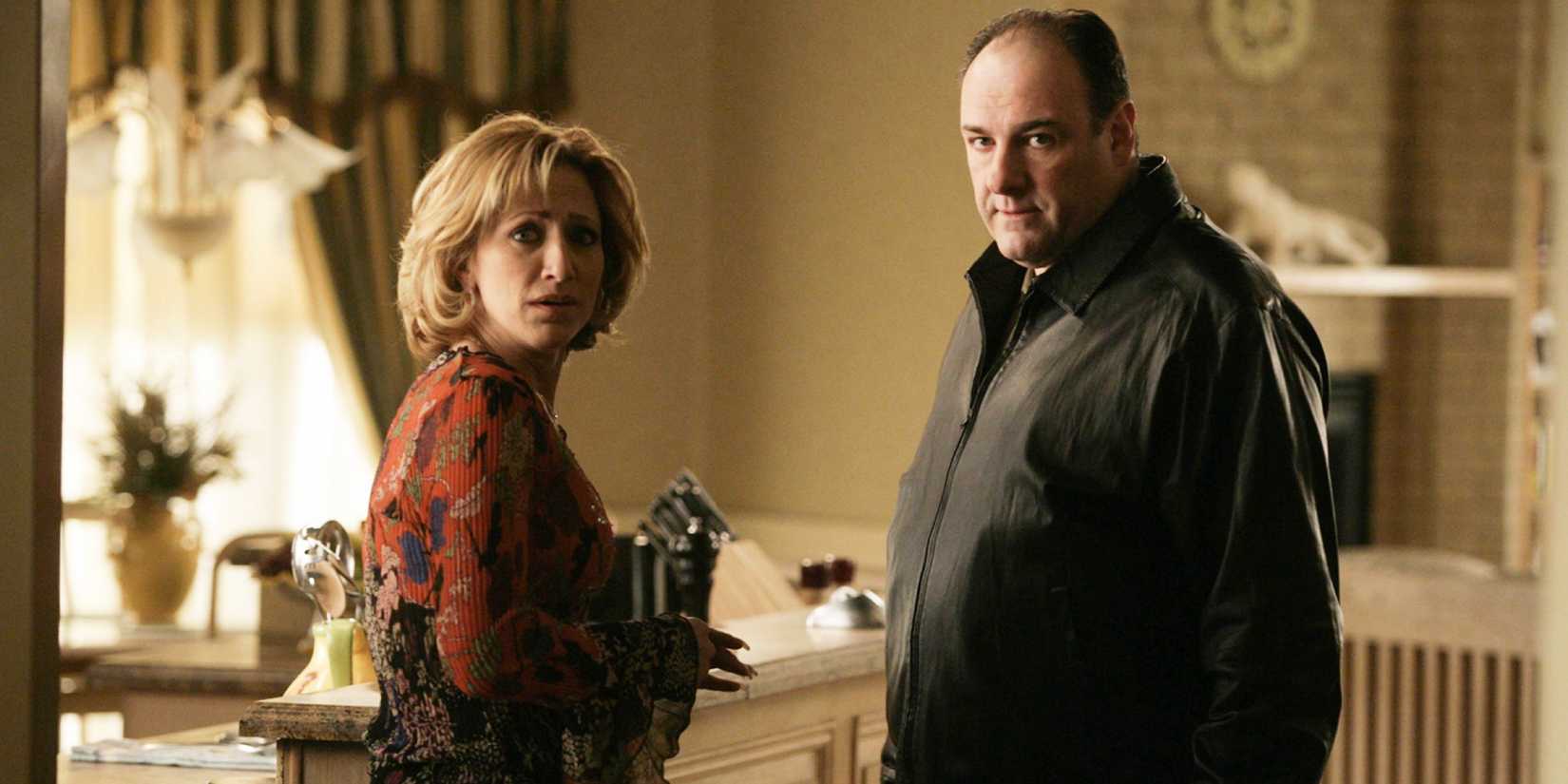
After a decade of strong mob movies, the mafia made its way to the small screen with the utterly brilliant The Sopranos. Created by David Chase, the crime drama follows Tony Soprano (James Gandolfini), a high-ranking Italian-American mob boss in North New Jersey. After suffering from sudden panic attacks, Tony secretly begins seeing a psychiatrist, Dr. Jennifer Melfi (Lorraine Bracco). Tony attempts to manage the violent, cutthroat pressures of “the family” alongside the ordinary, messy struggles of his suburban biological family. Widely considered the launchpad for the golden age of prestige television, The Sopranos popularized complex antiheroes through a unique approach to mob stories. The Sopranos was unlike anything before it because it wasn’t just about the mafia. Instead, it explored rich themes, including Tony's depression, generational trauma, and the moral hypocrisy of trying to live as a "good family man" while committing brutal crimes.
Breaking away from standard gangster tropes, the series grounded Tony in reality by having him suffer from panic attacks and attend secret psychotherapy sessions, treating mental health trauma and family dysfunction with a seriousness rarely seen on 1990s television. The series also reframed machismo. The series rejected traditional episodic closure in favor of long-form narrative arcs, surreal dream sequences, dark satire, and an infamous, abrupt cut-to-black finale that sparked decades of cultural debate. Gandolfini led a powerful ensemble that included Edie Falco, Michael Imperioli, and Dominic Chianese. A revolutionary series, The Sopranos permanently transformed the medium, with lingering effects felt still today.
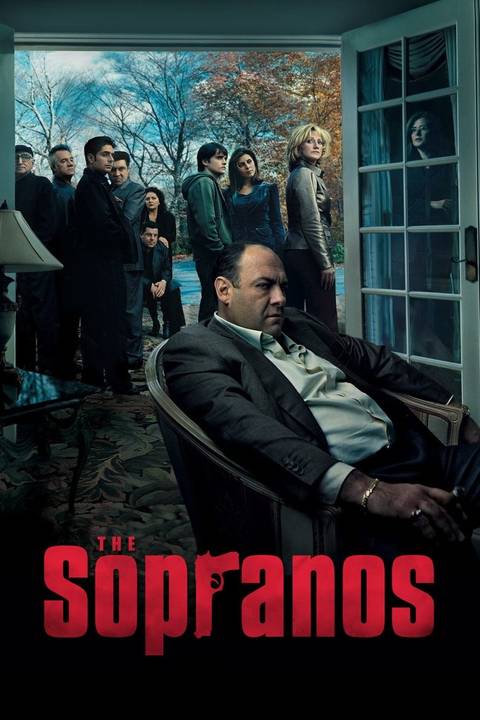
The Sopranos
- Release Date
- 1999 - 2007-00-00
- Network
- HBO
- Showrunner
- David Chase
- Directors
- Tim Van Patten, John Patterson, Alan Taylor, Jack Bender, Steve Buscemi, Daniel Attias, David Chase, Andy Wolk, Danny Leiner, David Nutter, James Hayman, Lee Tamahori, Lorraine Senna, Matthew Penn, Mike Figgis, Nick Gomez, Peter Bogdanovich, Phil Abraham, Rodrigo García
KioskNews shows a cleaned-up reading view extracted from the publisher’s page — the original always lives on their site, not ours.