How an Oscar-tipped film updated a classic thriller into scathing commentary on the Russia-Ukraine war
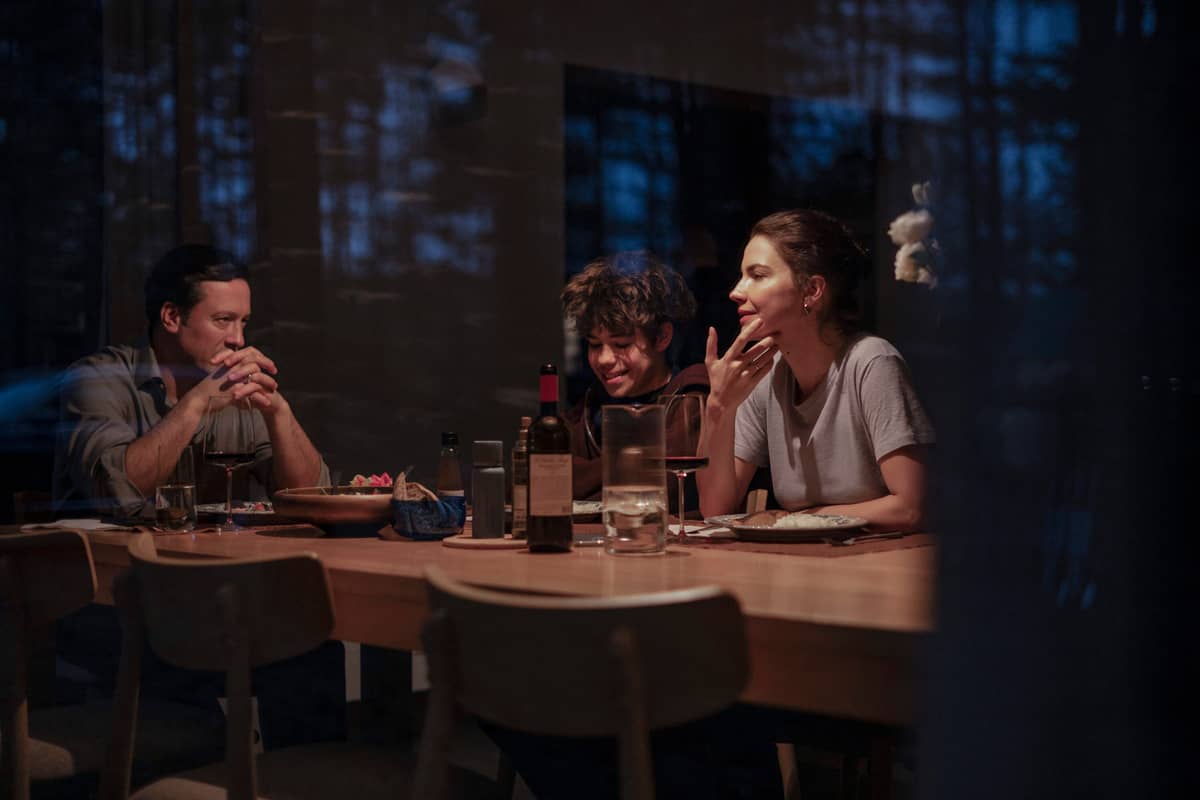
In the time since Russian filmmaker Andrey Zvyagintsev's last film – Loveless – was released in cinemas, the director has gone through quite an ordeal. First, he had a near-death experience after losing most of his lung function following severe COVID-19-related complications, then he opted to live in exile in France after his country's invasion of Ukraine, rather than returning home following his emergency treatment.
But clearly, Zvyagintsev has lost none of his talent. His new film Minotaur was a prize-winner at this year's Cannes Film Festival and is widely tipped as a contender for the best international film award at next year's Oscars.
The picture is based on Claude Chabrol's classic 1969 French thriller The Unfaithful Wife – which was previously adapted into a 2002 Hollywood film starring Richard Gere and Diane Lane – but it's just as interested in exploring the context of the Russia-Ukraine war as it is looking at the matter of infidelity.
But interestingly, Zvyagintsev had first had the idea to make the film a few years prior to the invasion.
"I watched the film in 2018 and I was ready to do the remake because I was excited about the intrigue that Chabrol was able to build in his film," he explained to Radio Times in an exclusive interview at this year's London Film Festival.
"He built a great narrative. From the very start of the film, we already know that there is something off about specifically the dynamic; there is a spoiler or a foreshadowing in the title. That's very interesting."
In 2018, it was impossible to strike a deal for the rights to the film. But a few years later, producer Nathanaël Karmitz reached out to Zvyagintsev and asked if he was still interested in doing it. For the director, it was an easy answer.
"I'm really happy that in 2018 I was actually not able to do it," he said. "Because it would have been a completely different film. There wouldn't have been the context of what was happening outside the window during the fall of 2022. These occurrences only fortified the tension of this story."
The war is a constant in the background of the film; a key plot point sees main character Gleb (Dmitriy Mazurov) asked to choose 14 of his workers to be sent to the frontlines, while both tank convoys and anti-war graffiti can be seen at regular intervals. As it turned out, not too much research was needed for Zvyagintsev to weave these aspects into the film.
"We just witnessed what was happening in real life," he said. "We witnessed it on YouTube. We witnessed what was happening in Russia during the mobilisation process. In the news, we saw that hundreds of thousands of people were trying to escape the border, including the Georgian border, which had a line of an enormous amount of cars trying to escape. We were taking that material as the base."
This page contains content provided by Google reCAPTCHA. We ask for your permission before anything is loaded, as Google reCAPTCHA may use cookies and other technologies. To view this content, choose 'Accept and continue' to allow Google reCAPTCHA and its required purposes.
Intriguingly, Zvyagintsev did not want his cast to know that they were starring in a remake – preferring them to think this was an original work while filming was under way.
"Andrey forbade his team to mention Chabrol's name or Chabrol's film or anything," lead actress Iris Lebedeva revealed. "Because he didn't want any of the actors actually get wind of the fact that this was a remake of Chabrol.
"I only learned about it from the program in Cannes, and because Andrey was expecting Thierry Fremaux – the head of the Cannes festival – to mention it, he felt that he had to let me know. We were having breakfast, and he was chewing his scrambled eggs, and then he broke the news for me. I was shocked!"
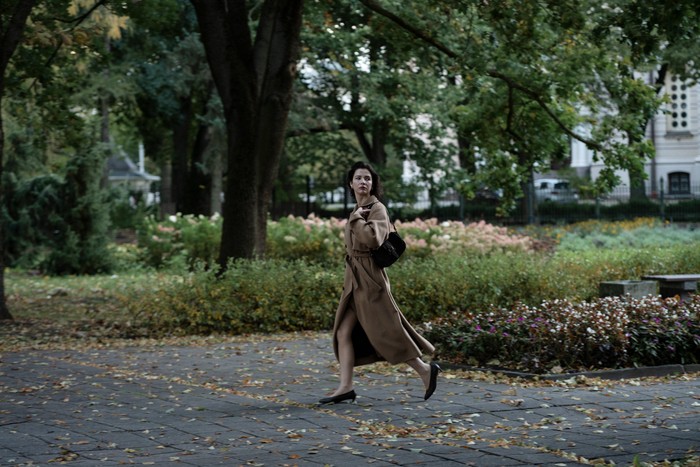
Lebedeva continued: "When I read the script, I realised that this is the best script I'd ever read. I haven't seen the Chabrol film even now, but I think Andrey and Simon Lyashenko, the scriptwriter, he did an absolutely marvellous job. And I think that this kind of character that doesn't have any compromises was an absolutely superb, fantastic heroine."
The film, unsurprisingly, had to be made entirely outside of Russia – it was shot in the Latvian capital city Riga – and similarly won't be shown in cinemas in the country where it is set. With that in mind, what role does Lebedeva think art can play in shaping politics, especially in countries with such strict censorship laws?
"I'm looking with a lot of pessimism at all this," she said. "We also have our past, but people tend to forget everything and repeat the mistakes they made in the past.
"With all the information that we have around us, we – when I say we, I mean people – can't really resist propaganda, can't resist influences, and it's very difficult. So that's my question back to you: can a person influence very much?"
Minotaur is now showing in UK cinemas.
Check out more of our Film coverage or visit our TV Guide and Streaming Guide to find out what's on. For more TV recommendations and reviews, listen to The Radio Times Podcast.
KioskNews shows a cleaned-up reading view extracted from the publisher’s page — the original always lives on their site, not ours.