Republicans face prospect of ‘civil war’ as Trump’s air of invincibility starts to fade
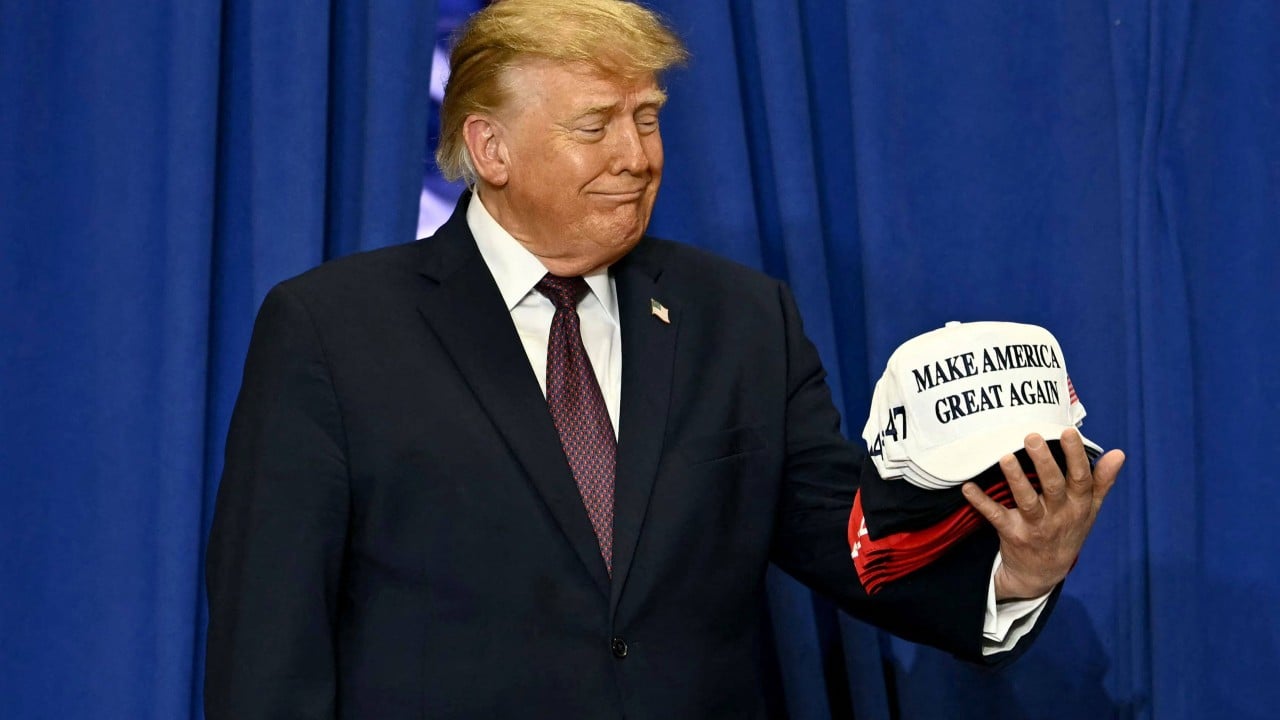
In the weeks leading up to the midterm elections, US President Donald Trump displayed unwavering confidence in his star power, urging supporters to close their eyes and “pretend I’m on the ballot”.
But Tuesday night’s disastrous results for the Republicans – the first time in 20 years both houses of Congress have changed hands at the same time – have punctured the aura of invincibility that once shielded Trump and allowed him to keep potential critics in line with the threat that opposing him could end their careers.
According to analysts tracking the post-election fallout, the Republican Party is increasingly at risk of a power struggle between Trump’s supporters and more traditional establishment figures.
Feng Chucheng, founding partner of the consultancy Hutong Research, said the results showed Trump had become “growingly detached” from grass-roots voters squeezed by rising living costs, inflation, tariffs and the Iran war.
“It’s very likely there will be an internal civil war within the Republican Party, leading to the 2028 presidential race to determine whether or not the Republicans want to find an alternative to Donald Trump,” he said.
“Who are they going to endorse in 2028 for the Republican candidacy? Are they going to endorse [Vice-President] J.D. Vance, who is seen as a protege of Trump, who is seen as a Maga successor of Trump? Or are they going to go back to people more orthodox like [Secretary of State] Marco Rubio, for example?” Feng asked, pointing to Rubio’s bipartisan confirmation as a sign of his broader appeal.
Feng argued the perceived risks of challenging Trump had weakened, adding: “Because you saw a lot of people aligning with Donald Trump, you saw Donald Trump on the campaign trails in the final weeks of the midterm elections, campaigning for this, endorsing these Republican candidates, and they all lost.
“They will have to first figure out, why did we lose all these critical toss-up elections? … They have to figure out who to blame. And right now, it looks like it’s Trump and the Iranian wars that they’re going to blame for their losses in these battlefield states.”
Wei Zongyou, a professor at Fudan University’s Centre for American Studies in Shanghai, described the results as a “blue tsunami”, predicting that “the GOP [Republicans] will look for a scapegoat after this”.
He said the losses could embolden establishment Republicans and dissenters to challenge Trump’s authority, adding: “They will use this opportunity to build up their strength and wait for the right moment.”
“His influence within the Republican Party will certainly decline,” he said, adding that more Republicans may begin to see Trump not as an electoral asset but as a “political liability”.
Denis Simon, from the Quincy Institute for Responsible Statecraft, a think tank in Washington, agreed that the results seemed to have “considerably” weakened Trump’s control of the party.
He added the midterms “have created a potentially important opening” for the Republicans the president had marginalised and those who “believe the party has become too dependent on Trump’s narcissistic personal leadership”.
Trump has systematically sidelined both traditional conservatives such as ex-Congresswoman Liz Cheney and national-security hawks like former national security adviser John Bolton, ex-secretary of state Mike Pompeo and former ambassador to the United Nations Nikki Haley, treating them as political liabilities.
03:00
The global impact of the coming US midterm elections under Donald Trump
Simon added that a Republican revolt against “Trump’s political style and methods is not necessarily a revolt against Trump’s policy agenda”.
He said: “Now Republican politicians face a different question: is the cost of remaining associated with Trump greater than the cost of disagreeing with him?”
He outlined three possible forms of rebellion, saying Republicans could try to distance themselves from the president; lawmakers may try to oppose him on issues such as China, tariffs, Iran and congressional oversight; or leading figures could challenge his control over candidate selection in the run-up to the next round of elections.
Diao Daming, a professor at Renmin University in Beijing, argued that even if Republicans thought the defeat was down to Trump’s poor performance in office, “would they necessarily win without him? I think that is equally uncertain”.
Austin Strange, an associate professor of international relations at the University of Hong Kong, said some Republicans had been vocal about their “displeasure with certain policies or gestures that Trump has recently made regarding China”.
“The midterm results – and the widespread perception that Trump’s recent policies were electoral liabilities rather than assets – certainly won’t make such individuals less likely to publicly voice their views,” he said.
Strange also said many members of Congress were China hawks, adding: “There has been a clear, bipartisan trend towards depicting US-China relations on fundamentally competitive terms.”
But he argued the main foreign policy focus was likely to be elsewhere, saying: “So while the need to more effectively manage relations with China remains an important agenda acknowledged by many … it will probably continue to take a back seat for now.”
Feng said he doubted that the China hawks would quickly regain real power within the party.
“These people, they are strategists. They are foreign-policy makers. They don’t have as much of an influence as someone coming from a Republican stronghold,” he said.
“John Bolton can say whatever he wants on TV shows with regard to Trump. Pompeo can say whatever he wants on TV shows with regard to Trump, but he will not really influence the electoral outcomes in that regard.”
He added that Trump now had less room for manoeuvre on China.
Once Democrats take control of Congress in January, they will be even less willing to let him use congressional China bills as bargaining chips in negotiations with Beijing. “That’s a net gain for Beijing,” he said.
Strange also said Republican lawmakers were likely to focus on their domestic priorities and would be unlikely to accommodate the president’s requests for flexibility on China legislation.
Sourabh Gupta of the Institute for China-America Studies framed the night as a defeat for neoconservatives and “defence-first” Republicans, with the balance inside the party shifting towards figures such as Vance or the former TV host Tucker Carson who are wary about nation-building and fighting wars abroad.
He was blunt about the prospects for the figures Trump had marginalised, arguing that “their brand of foreign policy is dead in the current Republican Party. Trump was the one who killed it before he got swept into his own misadventure.”
01:47
President Trump accuses China of US election interference in prime-time speech
Feng and other analysts also argued there was still life in the Maga movement.
“I would say it’s not about whether or not Maga can continue to ride on Trump after he finishes his term,” he said. “It’s more about whether or not the people that ride on Maga will continue to claim that they are still Maga when Trump is gone.”
Ali Wyne, an analyst from the International Crisis Group, said: “Obituaries for the movement would be premature.
“President Trump would not have won twice, and more decisively in 2024 than in 2016, had it not had deep roots in the American body politic. The midterm results demonstrate, however, that his grip on his core base is diminishing.
“It is difficult to imagine, moreover, that any Republican successor could come close to exerting a comparable grip or dominating the media environment as thoroughly.”
Meanwhile, Simon from the Quincy Institute argued: “Too soon to say dead. Can say mortally wounded.”
KioskNews shows a cleaned-up reading view extracted from the publisher’s page — the original always lives on their site, not ours.