Gold, silver rout leaves investors counting heavy losses in 2026
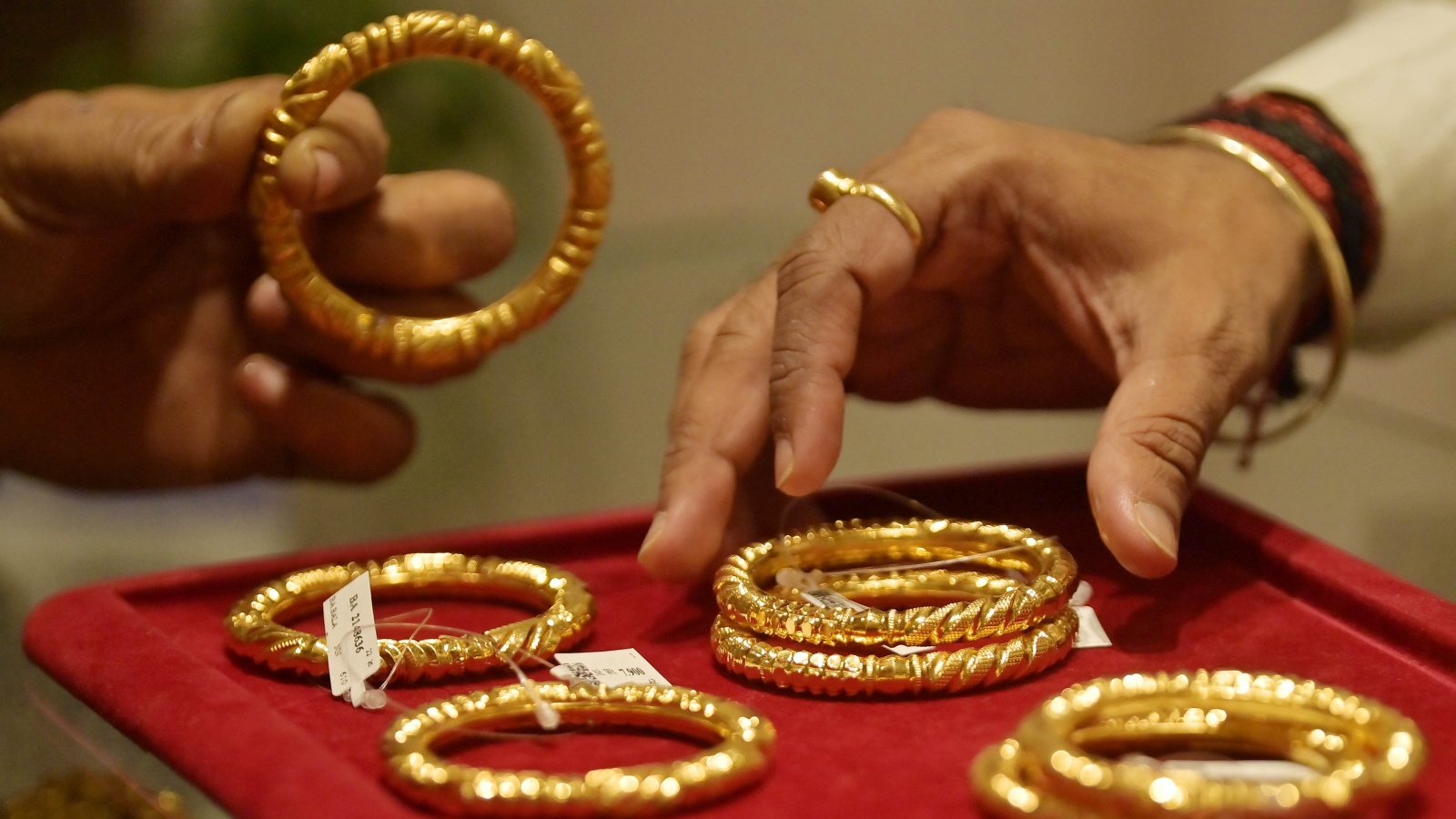
The gold and silver rally that dazzled investors in 2025 has turned into a nightmare in 2026. After scaling unprecedented highs in January, both precious metals have suffered a sharp correction, wiping out a substantial chunk of investors’ wealth and exposing the risks of a market driven by aggressive buying, monetary policy expectations and speculative flows.
Silver has taken the hardest hit, plunging 64.2% from its January peak, while gold has fallen 31.5%. The correction has rattled investors who bought at elevated levels, with gold and silver exchange-traded funds (ETFs) also witnessing a sharp erosion in value on stock exchanges.
Consider these figures. An investment of Rs 10 lakh in gold at its January peak would be worth around Rs 6.85 lakh at November 20 prices. The same investment in silver would have shrunk to approximately Rs 3.58 lakh in 10 months.
Gold had surged to nearly $5,600 an ounce in January before retreating below $4,000 and subsequently recovering. Silver, which had crossed $100 an ounce, suffered an even more punishing reversal. Since India imports much of its bullion, domestic prices closely track international markets, with movements in the rupee adding another layer of volatility.
Unlike the largely one-way rally of 2025, 2026 has been marked by sharp swings. Changing expectations around US interest rates, persistent inflation, elevated bond yields, a stronger dollar and geopolitical uncertainty have repeatedly unsettled precious metal markets.
Navneet Damani, Head of Research – Commodities at Motilal Oswal Financial Services, said gold continues to retain its importance as a defensive asset amid global economic and geopolitical uncertainty. However, its near-term trajectory will remain sensitive to US Federal Reserve policy, inflation, the dollar and real bond yields.
The September 25-basis-point Fed rate hike, taking the policy rate to 3.75-4%, has reinforced concerns over tighter monetary conditions, Damani said. While central-bank diversification, investment demand and fiscal uncertainty continue to provide structural support, elevated prices have already moderated discretionary jewellery demand in India.
Story continues below this ad
Carsten Menke, Head of Next Generation Research at Julius Baer, described the current market as a mirror image of the beginning of the year. Excessive expectations of US monetary tightening are driving precious metal prices lower. Gold and silver fell 8.5% and 13.5%, respectively, during the week he assessed.
“Flows are dominating the markets, while the fundamental backdrop has undoubtedly deteriorated,” Menke said.
He cautioned that the return of US exceptionalism and the dominance of the dollar could become major headwinds. The biggest risk, he said, is sustained selling of physically backed gold and silver products. Although holdings have barely moved so far, disappointed investors could eventually decide to exit.
Silver takes the bigger beating
Silver’s collapse has been particularly severe because it is not merely a precious metal but also an industrial commodity. Weakening industrial demand, concerns over global growth and expectations of tighter monetary policy have compounded the pressure.
Story continues below this ad
Ponmudi R, CEO of Enrich Money, said the correction reflects weakness across industrial commodities, a stronger dollar and concerns over the global growth outlook. The counterweight is supply: the Silver Institute projects a sixth consecutive annual deficit of around 35 million ounces. However, supply tightness has offered little immediate protection against the sell-off.
ICICI Securities expects silver to remain volatile, with prices facing downward pressure from cooling industrial demand and tighter monetary policy expectations. The technology sector’s AI-led rout could further weaken its near-term demand outlook.
Rising inventories have also eased concerns over an immediate supply squeeze. London inventories climbed to 932 million ounces by end-September, a four-year high. Available inventories, excluding physically backed ETFs, have doubled from their October 2025 lows to 267 million ounces.
Meanwhile, expectations of a December Fed rate hike have strengthened, with the CME FedWatch Tool putting the probability above 75%. Tighter monetary policy expectations across other major economies, including Japan and the UK, add to the pressure.
Story continues below this ad
The first signs of investors turning cautious are also visible in gold ETFs, which have recorded outflows after 13 consecutive weeks of inflows, indicating a shift in risk appetite towards bonds.
Is the worst over?
The sharp correction has divided market participants between those who see further downside and those who believe the sell-off is creating an opportunity to accumulate.
Damani said elevated US real yields and a stronger dollar could trigger further profit-taking. Strong US growth and firm employment data could also allow the Fed to keep interest rates higher for longer. Yet the longer-term case for gold has not disappeared. Persistent inflation, concerns over US fiscal indebtedness, geopolitical uncertainty and central-bank buying remain important structural supports.
Saiyam Mehra, director at Unique Chains and Jewells and past president of the All India Gems and Jewellery Domestic Council, believes current prices offer an attractive entry point for buyers. While further weakness cannot be ruled out, he does not expect a much sharper correction. He attributed the recent volatility to uncertainty around the US Fed and bond yields and expects gold to rise to $4,500 an ounce by next year.
Story continues below this ad
“The way the situation is in gold, customers should buy in parts, not together… because if there’s a fall, it can come down by 5-10%. Overall, there’s no expectation of a sharp fall in the market right now,” said Rajesh Rokde, Chairman of the All India Gems and Jewellery Domestic Council.
Gold-loan lenders face a collateral test
The price crash is not just an investor problem. It could also test the business models of banks and non-banking financial companies (NBFCs) that have expanded their gold-loan portfolios during the price boom.
Rising gold prices allowed borrowers to raise larger loans against the same quantity of jewellery. For lenders, this translated into higher average ticket sizes, repeat borrowing and rapid growth in assets under management. However, falling prices threaten to reverse that advantage.
As the value of pledged jewellery declines, the effective loan-to-value ratio of outstanding loans rises, reducing the collateral cushion available to lenders in case of defaults. Fresh borrowing capacity could shrink and disbursements may moderate.
Story continues below this ad
A Motilal Oswal report points out that gold loans are typically short-tenor and backed by physical collateral, allowing lenders to auction pledged jewellery to recover dues when borrowers default. But this protection is not absolute. If gold prices fall further before an auction, lenders could recover less than anticipated.
CRISIL Ratings expects assets under management of gold-loan-focused NBFCs to cross Rs 4 lakh crore by March 2027. The correction will test whether lenders have adequately accounted for the possibility that the collateral underpinning their loans could move sharply in the opposite direction.
The rally made gold look like an increasingly valuable safety net. The crash is now testing just how safe that net really is.
KioskNews shows a cleaned-up reading view extracted from the publisher’s page — the original always lives on their site, not ours.