US Supreme Court to review 1868 federal ban on home distilling of liquor
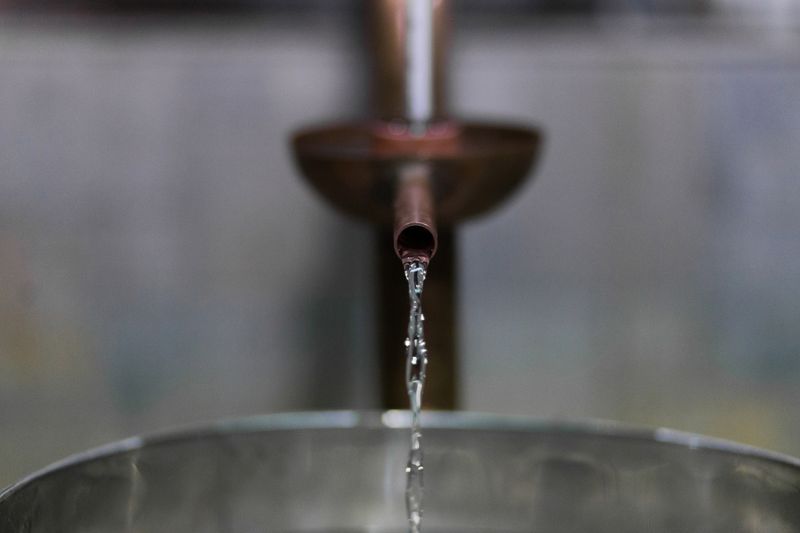
The dispute pits Republican President Donald Trump's administration, which is defending the law, against challengers who argue that the home-distilling prohibition exceeds the authority of Congress under the US Constitution. More than a dozen Republican-led states have backed the legal challenge to the statute.
The Supreme Court took up the administration's appeal of a lower court's decision against the ban. The justices are expected to hear arguments in the case and issue a ruling by the end of June.
Following the Civil War of 1861-1865, Congress sought to protect federal revenue by passing a law that banned home distilling. The current version of the law subjects violators to up to five years in prison and a $10,000 fine.
Challenges to the ban's legality have led to a split among lower federal courts of appeals.
In April, the New Orleans-based 5th US Circuit Court of Appeals declared the law unconstitutional, calling it an unnecessary and improper means for Congress to exercise its power to tax. Days later, the Cincinnati-based 6th US Circuit Court of Appeals upheld the constitutionality of the law, saying it was a "necessary and proper means" of collecting federal excise tax on distilled spirits.
The dueling decisions prompted appeals to the Supreme Court by the Justice Department and legal challengers.
Attorneys general from 15 Republican-led states, including Ohio, Florida and Idaho, filed a Supreme Court brief backing the challengers to the federal ban and urged the justices to resolve the division, or "split," between the circuit courts of appeals.
"Unlike a good whiskey," the attorneys general wrote, "this split will not age well."
The 5th Circuit ruling was a legal victory for the nonprofit Hobby Distillers Association and 4 of its 1,300 members who argued in court papers that people should be free to distill spirits at home, whether as a hobby or for personal consumption.
Robert Alt, president and chief executive officer of the Buckeye Institute think tank and a lawyer for the challengers, expressed enthusiasm that his clients "will have their day in court."
"Our country's founders would be rolling over in their graves to learn that a pastime in which even George Washington partook, which is as American as apple pie and certainly a lot older, has quite absurdly been turned into a federal crime," Alt said.
The 5th Circuit upheld a 2024 ruling by US District Judge Mark Pittman in Fort Worth, Texas. The ruling barred federal authorities from enforcing the ban against the plaintiffs in that case.
The Justice Department, urging the justices to take up the case, emphasized the importance of protecting federal revenue.
"Congress restricted home distilling 160 years ago in response to an extensive history of evasion of the distilled-spirits tax," Justice Department lawyers wrote.
"The government has a substantial interest in its authority to safeguard a significant source of tax revenue — a source that was used to pay Revolutionary War debts at the founding (of the nation) and now generates billions of dollars in tax revenue every year," they wrote.
KioskNews shows a cleaned-up reading view extracted from the publisher’s page — the original always lives on their site, not ours.