6 Best Serial Killer Shows Where Every Episode Is a Masterpiece, Ranked

Sign in to your Collider account
The most disturbing part of a serial killer show doesn’t always have to be the crime itself. Sometimes, it’s the realization that the viewer is just as curious about the person responsible for the crime as they are about the investigation. The reason why crime stories have always been a part of mainstream conversations is that they allow people to understand what makes serial killers tick. That curiosity is a powerful storytelling tool, but it can also wear thin pretty quickly.
Once the audience knows what a killer is capable of, their reasons to stay interested have to go beyond waiting for the next shocking crime. The story needs to keep changing what the audience knows to be the truth. Every episode has to offer something new so the premise doesn’t start feeling repetitive. The shows on this list understand that perfectly and deliver stories that don’t slow down for a single minute.
6 'Bates Motel' (2013–2017)

Bates Motel takes one of cinema’s most infamous killers and gives him a backstory that makes the audience care about him, even as they watch him turn despicable. The show is a contemporary reimagining of Alfred Hitchcock’s Psycho. The story follows Norma Bates (Vera Farmiga), who buys a rundown motel in the Oregon town of White Pine Bay in the hopes of giving herself and her teenage son Norman (Freddie Highmore) a fresh start. What she doesn’t know is that the town has plenty of secrets of its own. To make things worse, Norman soon begins experiencing blackouts that leave him unable to explain what happened while he was gone. As Norma becomes increasingly desperate to protect him, their already unusually close relationship starts suffocating them both.
The brilliance of Bates Motel is the way it gradually builds up to the events of the original movie. The series spends five years building Norman and Norma’s relationship to the point where the audience fully understands why it has to end the way it does. The story is definitely good enough to stand on its own, though, and doesn’t just exist to fill in the blanks of Hitchcock’s film. By the time Marion Crane (Rihanna) finally checks into the motel, this version of the story has enough weight that even fans who know Psycho by heart can’t be certain how events will unfold.
5 'Criminal Minds' (2005–Present)

Criminal Minds has now spent more than two decades finding new ways to make a familiar police investigation feel terrifying. The series follows the FBI’s Behavioral Analysis Unit, a team of profilers brought in when local authorities encounter particularly disturbing or difficult cases. For much of the show’s original run, the team has been led by Aaron Hotchner (Thomas Gibson), alongside Spencer Reid (Matthew Gray Gubler), Penelope Garcia (Kirsten Vangsness), and Jennifer “JJ” Jareau (A.J. Cook). Their investigations often begin with a string of seemingly unrelated crimes, but the team gradually identifies patterns in the victims, locations, and methods to work out who might be responsible before the killer strikes again.
It’s actually impressive how Criminal Minds finds so much variety within that basic structure. Every episode follows the team doing the same job, but each case feels completely distinct, whether that is due to the killer’s behaviour or the victim’s backstory, or the way some of them begin to affect the investigators themselves. The profiling itself adds another layer of suspense to the narrative. However, the most important thing is that Criminal Minds knows that catching the killer is not always the most important part of the story. The show finds immense emotional range within its familiar format, which is a testament to its brilliant storytelling.
4 'The Chestnut Man' (2021–Present)

The Chestnut Man is hands down one of the most unsettling crime stories in recent times. The Danish series begins with the disturbing discovery of a murdered woman in a playground. What’s strange is that the killer has left a tiny figurine made from chestnuts next to her body. That’s not where it ends, though. Soon enough, detectives Naia Thulin (Danica Curcic) and Mark Hess (Mikkel Boe Følsgaard) discover that the figure carries a fingerprint belonging to Kristine Hartung, the daughter of politician Rosa Hartung (Iben Dorner). The only problem is that Kristine was presumed dead a year earlier, and someone has already confessed to her murder.
Suddenly, the detectives are investigating two cases that should have nothing to do with each other, but seem to be connected in unimaginable ways.
Every chestnut figure opens up a whole new can of worms, but somehow, everything keeps coming back to Kristine’s disappearance and whether the original investigation got anything right. Thulin and Hess’s dynamic only adds to the intrigue. Thulin and Hess approach the investigation completely differently, and their disagreements make the search for answers more interesting. The show barely has any room for distractions and makes excellent use of its short runtime by always leaving viewers with a new question they can’t wait to get the answers to.
Collider Exclusive · Villain Personality Quiz Which Criminal Mastermind Would Be Your Nemesis? Lecter · Joker · Moriarty · Chigurh
Four of the finest criminal minds ever put on screen. One of them would look at you and see something worth their time. Eight questions decide which one comes for you, why they picked you, and what they would want when they arrived.
🍷Lecter
🃏Joker
♟️Moriarty
🪙Chigurh
01
What would a criminal mastermind notice about you first? Great villains choose their opponents carefully. Something about you got their attention.
02
How do they make first contact? The introduction tells you everything about what is coming next.
03
What do you actually believe about right and wrong? Every nemesis is really an argument about the thing you believe most.
04
What finally gets under your skin? Everybody has a pressure point. Finding yours is the whole plan.
05
They have made their move. How do you fight back? This is the part of the film where the audience finds out who you are.
06
What would they use against you? A good villain never brings a weapon you have not already handed them.
07
What do they actually want from you? The money is never the point. Something else always is.
08
How does it end between the two of you? Eight questions in, this is the one that decides who comes for you.
The Case File Is Complete Your Nemesis Is…
Four criminal masterminds. One of them was always going to be yours. Here is who comes for you, why they picked you out of everyone available, and what they want from the encounter.
Hannibal Lecter
Your nemesis does not want to beat you. He wants to know you completely, and he is patient enough to wait for it. The frightening part is how good the conversation is.
- Lecter is the most dangerous kind of opponent: the one who finds you interesting. He never raises his voice, because he has never needed to.
- You keep a great deal to yourself and you are careful about what you show. That reserve is exactly the door he would knock on.
- The films understood something other thrillers missed. The horror is not the violence. It is being perfectly understood by the wrong person.
- He would be unfailingly polite about all of it. That is the worst part.
The Joker
Your nemesis is not after money, territory or revenge. He is after a demonstration, and you are the person he has chosen to prove his point on.
- The Joker only picks opponents who believe in something. Your decency is not a defence against him. It is the entire reason he showed up.
- He has no plan you can predict and nothing you can take away, which removes every tool you would normally reach for.
- His whole argument is that you are one bad day away from being him, and you would spend the rest of your life proving him wrong.
- He would call it a magic trick. You would call it the worst night of your life.
Moriarty
Your nemesis respects you, which sounds flattering until you work out what it means. He chose you because nobody else was worth his time.
- Moriarty is the original criminal mastermind, the template every later one borrows from: a mind the equal of the hero's, pointed the wrong way.
- You enjoy being the cleverest person in the room. He is counting on exactly that, and he has already built the room.
- This is the rare nemesis who would be genuinely disappointed if you lost badly. He needs the game to be worth playing.
- It ends the way these things always end. Two people, one problem, and only one way down.
Anton Chigurh
Your nemesis has no personal interest in you whatsoever, and that is precisely what makes him unsurvivable. You are not a rival. You are a stop on the way.
- Chigurh does not negotiate, gloat or explain. He arrives, he asks one question, and the answer was decided long before you opened your mouth.
- You trust yourself to handle things. He is the one problem in the world that has no interest in how capable you are.
- No Country for Old Men rewrote the screen villain by removing the thing audiences quietly rely on: the sense that talking might work.
- Call it. He will wait.
3 'The Fall' (2013–2016)

The Fall makes even the most ordinary moments feel uncomfortable, and that’s what makes the show impossible to quit. The series is set in Belfast and follows Detective Superintendent Stella Gibson (Gillian Anderson), who is brought in from London to investigate a string of murders targeting young women. Soon enough, the audience meets Paul Spector (Jamie Dornan), a grief counselor who lives with his wife Sally Ann (Bronagh Waugh) and their two children. However, they also learn that he is the very killer Stella is on the hunt for. From there, the show follows both sides of the investigation, with every step bringing the detective and Paul dangerously close together.
The most disturbing part about The Fall is how easily Paul moves between his two lives. The show spends a surprising amount of time on his everyday routines, and that is exactly why he feels like such an unsettling antagonist. The Fall is fairly quiet with its violence, but the fact that it can make entire conversations feel threatening without anyone raising their voice is a testament to how well it understands suspense. Every episode plays out like a psychological game of chess, and by the time the two characters finally face each other, the audience is ready for Paul’s facade to come crashing down.
2 'Hannibal' (2013–2015)

Hannibal presents a new take on one of the most iconic villains of all time. The series follows FBI profiler Will Graham (Hugh Dancy), who has the extraordinary ability to understand how killers think. However, getting inside their heads takes an enormous toll on him, so FBI chief Jack Crawford (Laurence Fishburne) introduces Will to psychiatrist Hannibal Lecter (Mads Mikkelsen). What neither man realizes is that Hannibal is a serial killer himself, and his interest in Will goes far beyond helping him cope with his work. Hannibal eventually begins manipulating Will through their conversations, and the FBI profiler begins to question his memories, his judgment, and eventually his own innocence. What makes Hannibal so fascinating is how much the audience knows that Will doesn't.
Hannibal prepares elaborate meals for his unsuspecting guests, offers thoughtful advice to the investigators hunting him, and quietly interferes with Will's attempts to understand what is happening to him. The fact that all of this looks entirely effortless is what gives the show its haunting quality. Hannibal is also unforgettable thanks to its unmistakable visual style that presents crime scenes arranged like elaborate works of art, which sounds weird in theory but works perfectly on screen. Across three seasons, the show gradually moves beyond its initial procedural structure as Will and Hannibal's relationship becomes the story's main attraction. Every episode adds something to their dynamic, which is why the show remains compelling till the very end.
1 'Mindhunter' (2017–2019)
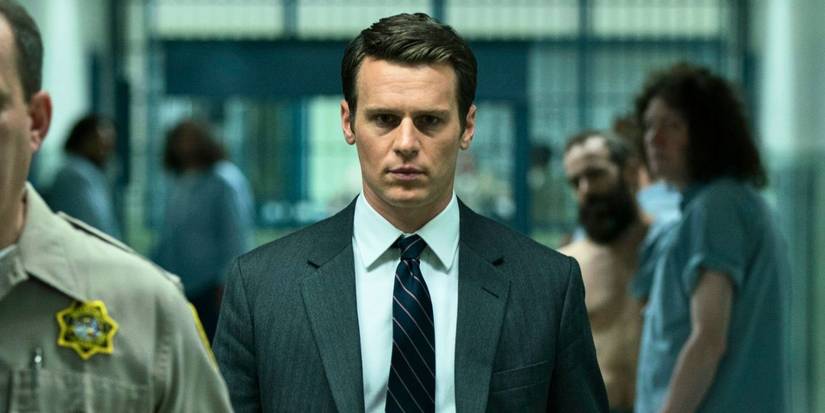
Mindhunter is a crime thriller like no other. The series is set in the late 1970s and follows FBI agents Holden Ford (Jonathan Groff) and Bill Tench (Holt McCallany) alongside psychologist Wendy Carr (Anna Torv) as they begin interviewing imprisoned serial killers to understand how they think. The story takes place at a time when the FBI is still developing its approach to criminal profiling, so the team has the difficult job of turning these conversations into something the organization can actually use. The show follows Holden and Bill as they interview fictionalized versions of real-life criminals, including Ed Kemper, Richard Speck, and Charles Manson.
However, getting these men to talk is only half the challenge. The agents also have to decide which parts of their stories are worth believing and whether anything they learn can help solve crimes outside the interview room. The show unfolds almost entirely through conversation, but it never needs a chase scene or a dramatic arrest to keep the audience on edge. The way these investigations start to affect Holden and Bill is one of the most harrowing parts of the show. Every episode contributes to the development of an investigative method, which is why Mindhunter feels like so much more than any other serial killer show.
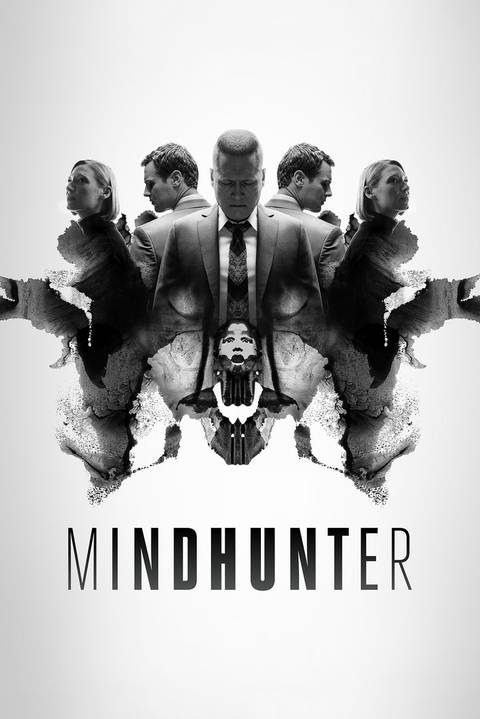
Mindhunter
- Release Date
- 2017 - 2019
- Network
- Netflix
- Showrunner
- Joe Penhall
- Directors
- David Fincher, Carl Franklin, Andrew Dominik, Andrew Douglas, Asif Kapadia, Tobias Lindholm
KioskNews shows a cleaned-up reading view extracted from the publisher’s page — the original always lives on their site, not ours.