Maradona's death was unforeseeable, expert tells trial into star's death
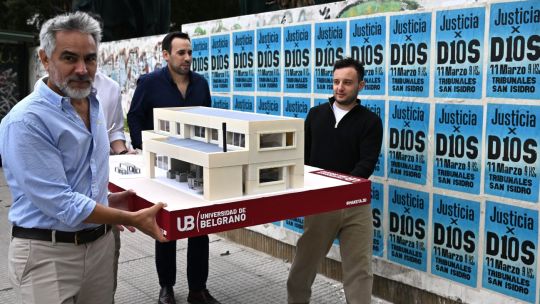
A cardiologist called by the defence in the trial over Diego Maradona's death said on Thursday that the football star died from a sudden and unexpected event that could not have been foreseen.
Seven healthcare professionals are charged with homicide with dolo eventual, a legal classification meaning they were aware that their actions or omissions could lead to the death of ‘El Diez.’ Prosecutors argue that the fatal outcome could have been anticipated.
But cardiologist Ricardo Iglesias said Maradona "had an acute arrhythmic event, which is why he died. Acute, sudden events are unexpected, and there were no signs that foreshadowed an ending of this kind."
His testimony contradicted prosecution experts who had previously told the court that Maradona endured a prolonged period of agony as a result of untreated heart failure.
Iglesias dismissed that theory and said the former footballer had no active cardiac condition in 2020. He explained that after stopping the drug use that had caused a cardiac event in 2000, Maradona's heart had achieved "restitutio ad integrum" – a complete restoration to its normal state.
"The heart is absolutely normal. I find no evidence to support the claim that there was a prolonged period of agony," Iglesias said, contradicting experts who had testified that the late star may have been in agony for 12 hours before his death.
Maradona died on November 25, 2020, aged 60, from cardiorespiratory arrest associated with acute pulmonary oedema while receiving home care at a house in Tigre, north of Buenos Aires, following head surgery.
On the organisation of the home care, whose suitability is also under scrutiny, Iglesias placed responsibility on "the prepaid medical company" and defended the treating team, pointing out that when Maradona was previously discharged from hospital, he had not been prescribed any cardiac medication.
"I thought the way they handled things was logical," he said.
José Antonio Maya, a physician called by the defence of lead defendant and neurosurgeon Leopoldo Luque, also testified on Thursday.
"Maradona underwent several operations and had cardiac assessments before each one that established an ASA 2 anaesthetic risk [moderate]. He was not a cardiac-risk patient," Maya said.
The lengthy trial in the city of San Isidro, near Tigre, began in April and has now entered its final stage. The defendants – doctors, nurses and a psychologist – face up to 25 years in prison if convicted. All maintain their innocence.
With only a handful of witnesses still to testify, closing arguments by the 13 parties involved in the case, divided between six prosecution teams and seven defence teams, will begin on October 8.
KioskNews shows a cleaned-up reading view extracted from the publisher’s page — the original always lives on their site, not ours.