‘This is where I live now, the back of a truck’: a day in the life of a grandmother in Gaza
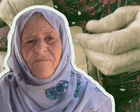
As the war in Gaza approaches its fourth year, the Guardian follows five ordinary Palestinians as they go about their lives. Each tells the story of their day, revealing the terrible toll of the conflict. At 76, Mansoura’s most precious possession is the key to her former home
As the war in Gaza approaches its fourth year, this week, the Guardian follows five ordinary Palestinians as they go about their lives. Each will tell the story of their day, revealing the terrible toll of the ongoing conflict.
The flat-bed truck is open to the hot summer air, its metal frame covered on two sides by draped tarpaulins, the rear by a pegged-up bedsheet. On the tin floor lies a squab mattress and pillow with a yellow frilled cover.
Mansoura Ibrahim Mohammed Abdel Dayem balances a thin cushion at the truck bed’s metal edge to protect her knees as she crawls in and out. She lowers her foot to the plastic chair below, then drops to the ground, staggering slightly as she gets her balance. Mansoura is 76 years old. The truck is her home now. All around her, her family live in tents, the fabric ripped and fraying.
This is a day in the life of a grandmother living in Gaza.
Daybreak
Last night, I stayed awake until 2am. I barely sleep during the night because of the mosquitoes and the heat. I fall asleep for a short while, I wake up early in the morning, pray to God, and wait to hear the call to dawn prayer. When I wake up, I call for my grandson to bring over the white plastic chair that I need to climb in and out of the truck.
This is where I live now: in the back of a pickup truck. This truck, we brought it with us when we were fleeing for our lives from Beit Lahia [a city in northern Gaza]. Its owners had abandoned it, so we took it with us, displaced from place to place – until we ended up here. When we finally arrived, there was no space for me anywhere else – the tents that we have are small, torn and overcrowded, they fall down on the children – so I was forced to live in the truck. I sleep in it to escape the sand, dirt and insects. That is the story of the truck.
After I wake up, I fold up the mattress and prop it with the pillows against the wall, then use a cloth to sweep the dirt and sand from the tarpaulin floor. I sit with my grandson, and we try to make the tiny gas stove work, to boil water for coffee. It’s an old stove – inherited from my own grandfather – and it’s hard to get it to light, as there isn’t enough gas, but eventually we get a flame. I boil water in a small pot and brew coffee for my sons and I – a few spoonfuls for each person. The coffee is filled with the taste of paraffin.
Midday
Mansoura’s son holds up the phone for a video call with one of her grandsons, who left Gaza and is now living overseas, and she chats to him for a while. For lunch, Mansoura takes a few basil leaves from a plant the family have grown in a tin can, and grinds them with garlic in her mortar and pestle. She adds a chopped tomato and eats it with a little bread.
This is the salad I used to make at home – back then I would add rosemary, green thyme and mint. When I see vegetables growing, it reminds me of Beit Lahia, of our farming, crops and land.
Before the war, I lived like a queen. I had a beautiful life. I was a farmer. I planted and harvested my land. I had animal shelters where I raised livestock, chickens, rabbits and ducks. I lived a very beautiful life, but it has changed for me.
Now, we have no home, no source of income and no good food. Life in tents is terrible – actually unbearable. There are insects everywhere, mosquitoes, sand, dirt, garbage and torn tents. And the wind. In winter, it blows everything away. In summer, we die from the extreme heat. We do not even have enough space to build a proper bathroom – a person who showers in a tent comes out dirtier leaving the bathroom.
My feeling is that for people my age, death is more honorable than living this life. This isn’t life. We are not living. We are dead. Everything beautiful is gone. It has disappeared, and I have disappeared with it.
After eating, I wash the clothing for my family. Back home, we lived in a two-storey house, and had a washing machine – I used to run it on the long cycle, rinsing the clothes once, twice, even three times. Now, even though I am an elderly woman, I wash all the clothes by hand in a plastic bucket.
Afternoon
After lunch, Mansoura sits on the ground outside, gathers her grandchildren around her, and quizzes them about their old lives. Some are young and can barely remember a time before the war: they have spent nearly three years living in tents amid the rubble.
“Where did we live, Mohammed?” Mansoura asks.
“In northern Beit Lahia,” he answers.
“Where in the north?”
“Near 36th Street.”
“Tell them what Beit Lahia was like before the war.”
“Honestly, it was good, better than these days.”
“We will return there,” Mansoura says.
She draws her leather satchel toward her, looking through the pockets.
“Look at what I have in my bag. What is this?” Mansoura asks, dangling an object in front of her.
They answer: “The key of the house.”
This is the most precious thing I own – the key to our house in the north. It is the key to the house that the occupation forces bulldozed. They flattened it: the house, the trees, the well, even a pen full of animals – they bulldozed it all. We couldn’t take anything with us, no money, no livestock.
I lived through wars before this. None was as bad as this one. During the 52-day war, we sheltered in schools, and we were OK – there wasn’t bombing like this, not the level of killing, and not the destruction of homes. But this war is extremely difficult. The destruction is enormous, the devastation is enormous – and all without any benefit. All of this is for nothing.
Life has become very different. Our family never knew hunger before, never knew displacement, bombardment, missiles, killing and destruction in this way or on this scale. The other thing I keep in this bag is a bullet – it was pulled from my son’s back. During the famine, he had nothing to eat and nothing to feed his seven children, so he went to get a bag of flour to feed his children from the aid stations, and they shot him. I keep this as a reminder of what happened – all for the sake of getting food.
Honestly, every day is the same for me now. I wake up, arrange the place around us and our sleeping area, clean it, eat, sit, and sleep.
The things that make me smile are when I wake up in the morning and find my children safe, when I hear that my grandchildren are well, and when I myself am OK, thank God … This is the greatest life for me and the greatest happiness for me.
At night, I call my grandson to bring the chair. Then I crawl back into the truck to sleep.
KioskNews shows a cleaned-up reading view extracted from the publisher’s page — the original always lives on their site, not ours.