‘I little expected to finish it in a prison’: Rare Matthew Flinders letter could fetch $400,000
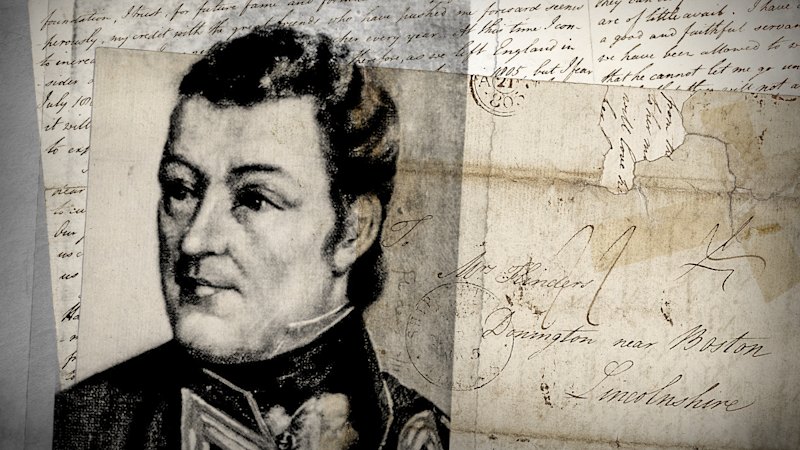
“We arrived here yesterday from having circumnavigated New Holland.”
With those nine words, Captain Matthew Flinders announced one of the greatest feats in Australian exploration in a letter to his stepmother, Elizabeth, written just a day after sailing into Port Jackson in June 1803.
But the letter, which has remained in the British Naval officer’s family for more than two centuries and is now expected to fetch up to $400,000 at auction, tells a far more extraordinary story than its triumphant opening suggests.
Begun at the pinnacle of Flinders’ career, it would be finished 17 months later in a French prison on the island of Mauritius, where the celebrated navigator faced an uncertain future.
“What is written above has been lying by me a very long time: I little expected to finish it in a prison,” he wrote on August 25, 1804.
The remarkable document, appearing on the market for the first time, will be offered at Christie’s Valuable Books & Manuscripts auction in London on December 10, with an estimate of £150,000 to £200,000.
Written on June 10, 1803, the day after Flinders returned to Sydney aboard the Investigator after the first recorded circumnavigation of mainland Australia, the letter gives an intimate account of the man behind one of the nation’s defining voyages. His achievement had been “dreadfully embittered” by receiving the devastating news that his father, Matthew Sr, had died during his absence, robbing Flinders of the chance to share his success with him.
The explorer had hoped his growing reputation and prospects would enable him to provide for his father, a surgeon, in retirement.
“One of my fondest hopes is now destroyed, – Oh my dearest, kindest father, how much I loved and reverenced you, you cannot now know,” he wrote, before turning his thoughts to supporting his stepmother and securing the future of his younger sisters. Then came another cruel reversal.
Attempting to return to England, Flinders was forced to seek refuge in Mauritius aboard the leaking schooner Cumberland. With Britain and France at war, French authorities detained him on suspicion of espionage. He would remain a prisoner for almost seven years.
He described how sympathetic French residents had offered him money and assistance, while he and two companions had finally been permitted to walk in a garden after months of confinement. Despite his ordeal, Flinders remained convinced he would be vindicated and return to England within months.
“My great consolation is, that as I have done nothing to forfeit my passport, or that can justify them for keeping me a prisoner, so I must be set at liberty with honour when the time comes,” he writes.
Thomas Venning, head of books and manuscripts at Christie’s London, said the letter captured both the explorer’s historic achievement and the personal suffering that followed.
“This letter could claim to have the best opening line of any letter relating to the early history of Australia,” Venning said.
“But there is much more to the letter than the victory lap you might expect from that opening: you see the human side of Matthew Flinders in his reaction to learning, at the moment of his greatest achievement, that his beloved father has died.”
The second instalment, written from captivity, brought a different sadness as Flinders confronted the possibility of an indefinite imprisonment.
“Given the rarity of Flinders letters on the market – only three have sold at international auction in the last 40 years – it’s quite remarkable to have so much of the triumph and tragedy of his Australian voyage encapsulated in a single letter,” Venning said.
Flinders’ circumnavigation, undertaken with a crew that included Aboriginal navigator Bungaree, helped establish the shape of the Australian continent and produced detailed charts of its coastline.
After his release in 1810, Flinders returned to England and completed his landmark account, A Voyage to Terra Australis, helping popularise the name Australia. He died in July 1814, aged 40, the day after the book was published.
Two earlier letters from Flinders to his father, written aboard the Investigator during his voyage to Australia in 1801 – one from Madeira and the other from the Cape of Good Hope – will also go under the hammer, with an estimate of between £40,000 and £70,000.
Start the day with a summary of the day’s most important and interesting stories, analysis and insights. Sign up for our Morning Edition newsletter.

KioskNews shows a cleaned-up reading view extracted from the publisher’s page — the original always lives on their site, not ours.