6 Greatest Sci-Fi Shows of the Last 50 Years, Ranked


Sign in to your Collider account
Science fiction has gone through a massive shift in the last few decades. The genre once seemed built for the scale of movies, where spaceships, alien worlds, and futuristic technology could be delivered as spectacle in a couple of hours. Television eventually proved that sci-fi could do something even more interesting when given time to breathe.
Long-form storytelling allows the genre to develop its worlds and characters with more intention, which helps even the wildest ideas feel real enough for viewers to get completely lost in them. Over time, some of the genre’s most ambitious stories have come from the small screen, with some shows completely changing what audiences expect from the genre. These six series represent the very best of that evolution and stand as the greatest sci-fi shows of the last 50 years.
6 ‘Battlestar Galactica’ (2004–2009)
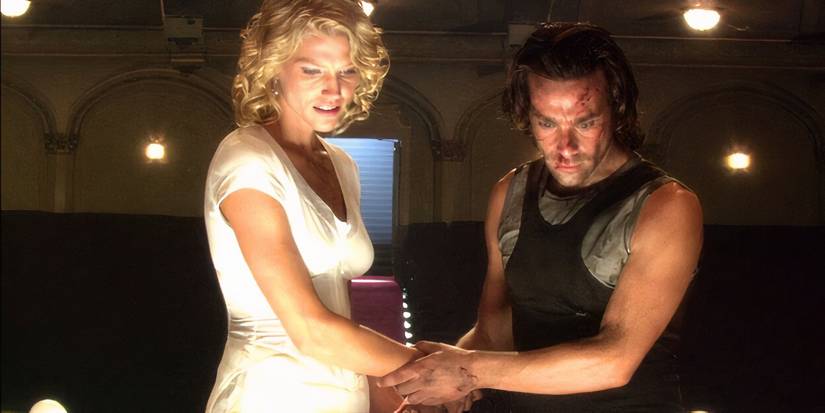
Battlestar Galactica is when a classic space opera meets a morally complicated sci-fi story. Humanity has created a race of artificial beings called Cylons, only for those creations to rebel and eventually launch a devastating attack on the Twelve Colonies. After most of civilization is wiped out, around 50,000 survivors escape aboard a collection of ships led by the aging Battlestar Galactica. Commander William Adama (Edward James Olmos) has to keep the fleet alive, while President Laura Roslin (Mary McDonnell) tries to preserve some form of government as they search for the mythical planet Earth.
The problem is that the Cylons have evolved to look exactly like humans, and some of them are actually hiding among the fleet. This idea allows Battlestar Galactica to become so much more than just a sci-fi spectacle. The series tackles ideas of religion, military power, and occupation with such nuance that it’s difficult to reduce humans and Cylons to simple heroes and villains. The show’s moral uncertainty gives it its lasting power because it uses machines to ask questions that feel human. That means the real story is always about figuring out what parts of humanity are worth saving.
5 ‘The Expanse’ (2015–2022)
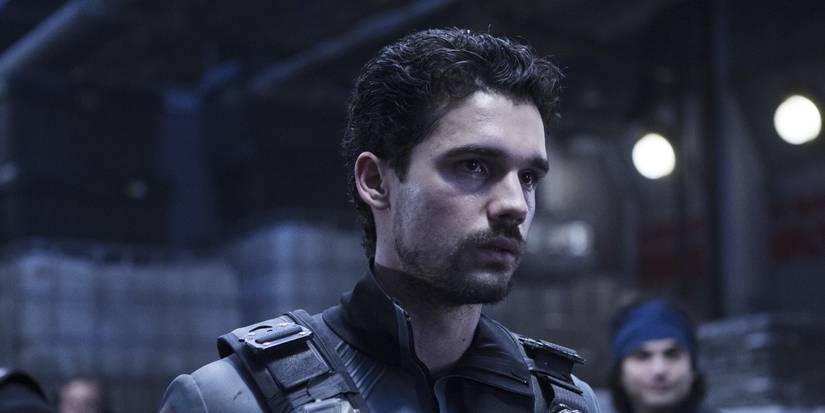
The Expanse imagines humanity spreading across the solar system without pretending that doing so would make things any better. The show’s unapologetic hook makes it impossible for one to stop watching. The story takes place hundreds of years in the future, where Earth, Mars, and the people living throughout the asteroid belt have developed into competing societies with completely different interests. Earth still holds enormous political power, Mars has built a highly militarized civilization of its own, while Belters spend their lives extracting the resources everyone else depends on while receiving very little of that power themselves. That fragile balance begins to collapse when detective Josephus Miller (Thomas Jane) investigates the disappearance of Julie Mao (Florence Faivre).
On the other hand, James Holden (Steven Strait) and the surviving crew of the Canterbury become caught in an incident that threatens to start an interplanetary war. Those two storylines eventually lead to the discovery of the protomolecule, an alien technology that completely changes what humanity thought it knew about the universe. However, The Expanse never allows that grand sci-fi idea to erase the political reality this show operates under. Even space itself feels grounded because distance, gravity, fuel, and limited resources constantly shape what the characters can actually do. The Expanse unfolds with a realism that most people don’t expect from the sci-fi genre, and that’s what makes it special.
Collider Exclusive · Sci-Fi Survival Quiz Which Sci-Fi World Would You Survive? The Matrix · Mad Max · Blade Runner · Dune · Star Wars
Five universes. Five completely different ways the future went wrong — or sideways, or up in flames. Only one of them is the world your instincts were built for. Eight questions will figure out which dystopia, galaxy, or desert wasteland you'd actually make it out of alive.
💊The Matrix
🔥Mad Max
🌧️Blade Runner
🏜️Dune
🚀Star Wars
01
You sense something is deeply wrong with the world around you. What do you do? The first instinct is often the truest one.
02
In a world of scarcity, what resource do you guard most fiercely? What we protect reveals what we believe survival actually requires.
03
What kind of threat keeps you up at night? Fear is useful data — if you're honest about what you're actually afraid of.
04
How do you deal with authority you don't trust? Every dystopia has a power structure. Your approach to it determines everything.
05
Which environment could you actually endure long-term? Survival isn't just tactical — it's physical, psychological, and very much about where you are.
06
Who do you want in your corner when things fall apart? The company you keep is the clearest signal of who you actually are.
07
Where do you draw the line — if you draw one at all? Every survivor eventually faces a moment that tests what they're actually made of.
08
What would actually make survival worth it? Staying alive is one thing. Having a reason to is another.
Your Fate Has Been Calculated You'd Survive In…
Your answers point to the world your instincts were built for. This is the universe your temperament, your survival instincts, and your particular brand of stubbornness were made for.
The Matrix
You took the red pill a long time ago — probably before anyone offered it to you. You're a systems thinker who can't help but notice the seams in things.
- You're drawn to understanding how the system works before figuring out how to break it.
- You'd find the Resistance, or it would find you — your instinct for spotting constructed realities is the machines' worst nightmare.
- You function best when you have access to information and the freedom to act on it.
- The Matrix built an airtight prison. You'd be the one probing the walls for the door.
Mad Max
The wasteland doesn't reward the clever or the well-connected — it rewards those who are hard to kill and harder to break. That's you.
- You don't need comfort, community, or a cause larger than the next horizon.
- You need a vehicle, a clear threat, and enough fuel to outrun it — and you're good at all three.
- You are unsentimental enough to survive that world, and decent enough — just barely — to be something more than another raider.
- In the wasteland, that distinction is everything.
Blade Runner
You'd survive here because you know how to exist in moral grey areas without losing yourself completely.
- You read people accurately, keep your circle small, and ask the questions others prefer not to answer.
- In a city where humanity is a legal designation rather than a feeling, you hold onto something that keeps you functional.
- You're not a hero. But you're not lost, either.
- In Blade Runner's world, that distinction is everything.
Dune
Arrakis is the most hostile environment in the known universe — and you are precisely the kind of person it rewards.
- Patience, discipline, and political awareness are your core strengths — and on Arrakis, they're survival tools.
- You understand that the long game matters more than any single victory.
- Others come to Dune and are consumed by it. You'd learn its logic and earn its respect.
- In time, you wouldn't just survive Arrakis — you'd begin to reshape it.
Star Wars
The galaxy far, far away is vast, loud, and in a constant state of violent political upheaval — and you wouldn't have it any other way.
- You find meaning in being part of something larger than yourself — a cause, a crew, a rebellion.
- You'd gravitate toward the Rebellion, or the fringes, or whatever pocket of the galaxy still believes the Empire's grip can be broken.
- You fight — not because you have to, but because standing aside isn't something you're capable of.
- In Star Wars, that willingness is what makes all the difference.
4 ‘Star Trek: The Next Generation’ (1987–1994)

Star Trek: The Next Generation inherited a legendary universe and did complete justice to it. The series, set decades after the original Star Trek, follows Captain Jean-Luc Picard (Patrick Stewart) and the crew of the USS Enterprise-D as they travel through space exploring new worlds, making first contact with alien civilizations, and dealing with threats that often challenge them intellectually as much as physically. Picard’s crew includes Commander William Riker (Jonathan Frakes), android officer Data (Brent Spiner), and Klingon security chief Worf (Michael Dorn), each of whom brings a completely different perspective to the problems they encounter.
The show follows a largely episodic structure, but it is not completely standalone. Every new planet, alien species, or diplomatic problem contributes to character relationships and personal arcs that develop over the course of seven seasons. The show could be philosophical without becoming inaccessible and optimistic without pretending the future would be simple. More than 30 years later, The Next Generation still feels like one of the clearest examples of how science fiction can use the future to ask difficult questions about the present.
3 ‘Black Mirror’ (2011–Present)

Black Mirror made science fiction more frightening than ever before, and part of that is because of how plausible it makes the future feel. The anthology series tells a completely different story in almost every episode, with new characters, settings, and technologies each time. One episode can unfold like a psychological thriller, while others can lean more into romance, satire, or outright horror. That freedom allows the show to explore the sci-fi genre like no other. However, the thread that ties every story together is always the human behavior behind the technology.
The series attempts to show how greed, jealousy, obsession, and selfishness can turn even useful inventions into something disturbing, which means that technology itself is rarely the villain here. That is what has made Black Mirror one of the defining sci-fi shows of the modern era. Rather than asking audiences to imagine distant planets or centuries into the future, it takes habits people already recognize and pushes them just far enough to feel unsettling. Every episode reimagines the near future in a completely different way. Black Mirror is not tied to one cast, setting, or timeline, which allows it to test the same basic anxieties from completely different angles. One story might be about surveillance, another about memory, social status, or propaganda, without the show ever losing its distinct identity.
2 ‘Doctor Who’ (2005–2022)

Doctor Who keeps replacing its lead actor, and that's one of the show's best parts. The 2005 revival of the 1963 BBC series begins with the Ninth Doctor (Christopher Eccleston), the last survivor of the Time War, as he travels through time and space in the TARDIS with Rose Tyler (Billie Piper). From there, the Doctor repeatedly regenerates into new bodies, with David Tennant, Matt Smith, Peter Capaldi, and Jodie Whittaker each bringing a completely different personality to the same character. Now, every trip in the TARDIS can lead somewhere completely different. This lets Doctor Who reinvent itself from one episode to the next. One adventure can involve the fate of an entire planet, while the next builds suspense around a single room or person.
The best part is that even the Doctor is designed to keep changing. When a Time Lord is fatally wounded, they regenerate into a new body, which means that the show’s major casting changes become part of the story itself. The regeneration never completely wipes the slate clean. Every Doctor carries the memories, losses, friendships, and mistakes of the people who came before, so a casting change becomes part of the story rather than something happening outside it. The show’s constant sense of unpredictability and adventure makes it an extremely addictive watch. It’s also why the show has survived when so many long-running sci-fi series eventually run out of road. After decades of reinvention, Doctor Who still feels capable of going literally anywhere, and that is its brilliance.
1 ‘Severance’ (2022–Present)
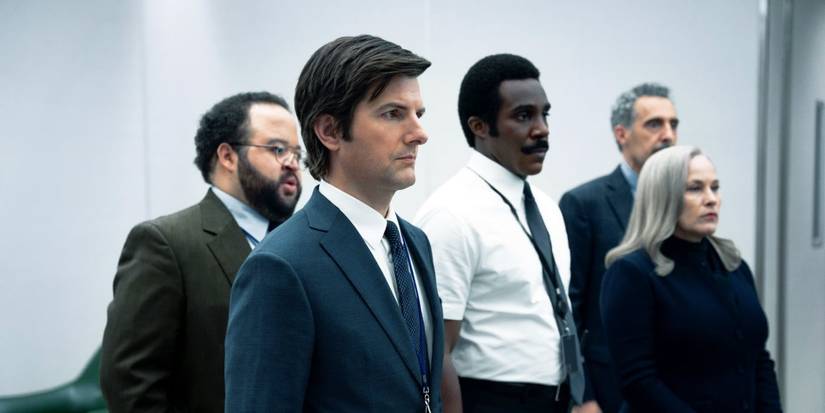
Severance already feels like a modern sci-fi classic in the making. It’s remarkable how quickly the show has established such a unique identity, visually and in terms of its storytelling. The HBO series follows Mark Scout (Adam Scott), an employee at Lumon Industries, who has undergone the “severance” procedure, which divides his memories between work and home. The Mark who walks into Lumon every morning remembers nothing about his life outside, while the version who leaves at night has absolutely no idea what happened during his shift. His coworkers Helly (Britt Lower), Irving (John Turturro), and Dylan (Zach Cherry) exist under the same arrangement, and they all spend their days sorting mysterious numbers for reasons nobody will properly explain.
That setup gives Severance room to make the most mundane parts of office culture extremely unsettling. The real catch, though, is how quickly the “innies” stop feeling like fragments of other people and become characters with identities of their own. Once that happens, the entire idea of severance becomes much harder to defend. Of course, there is a larger mystery surrounding Lumon, but Severance takes its sweet time to reveal all the puzzle pieces. Even this early in its run, it has the visual language, characters, and central idea of a show that feels built to last far beyond spectacle and into a genuine exploration of capitalism and corporate culture.
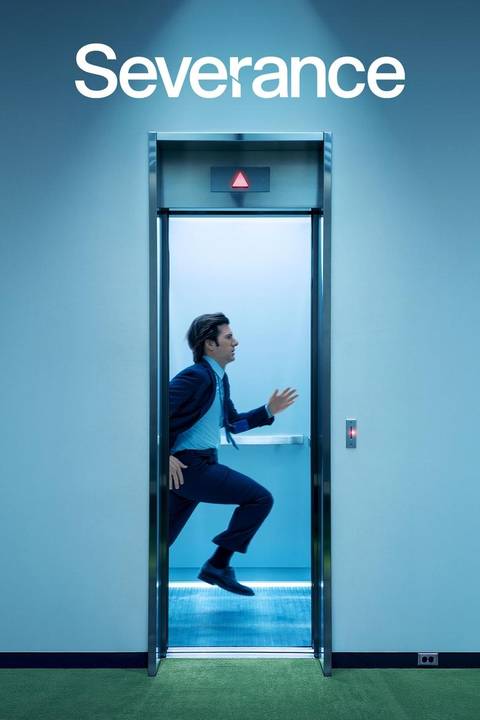
Severance
- Release Date
- February 17, 2022
- Network
- Apple TV
- Showrunner
- Dan Erickson, Mark Friedman
- Directors
- Ben Stiller
KioskNews shows a cleaned-up reading view extracted from the publisher’s page — the original always lives on their site, not ours.