The Social Reckoning is a timely reminder that we shouldn't trust Meta
Leah Gallo for Sony
The Social Reckoning isn't really a straightforward sequel to The Social Network, despite its title and similar marketing push. Instead, like a social media spin on All the President's Men, it chronicles the Wall Street Journal's investigation into Facebook, which culminated in the Pulitzer Prize-winning 2022 series "The Facebook Files," which revealed that the company knew how badly Instagram affected teen girls' mental health, and that Facebook's algorithm pushed users towards extremist content.
While The Social Reckoning lacks The Social Network's sharp direction and imminently listenable score, writer and director Aaron Sorkin (who wrote the first film) succeeds at making a movie that champions old-school journalism, while also shining a light on the severe moral rot behind Facebook. As Meta is trying to push its way further into our lives with its Muse AI assistant and creepy surveillance glasses, and is potentially on the hook for a $40 billion fine after lying about the Cambridge Analytica scandal, The Social Reckoning is yet another reminder of why we shouldn't trust it.
The film follows Jeff Horowitz (Jeremy Allen White), an investigative reporter with little tech experience, but a relentless desire to figure out what's driving Facebook. He eventually makes contact with Frances Haugen (Mikey Madison), a Facebook engineer working in its Civic Integrity Team, who discovers that Facebook helped radicalize her formerly progressive friend into a white supremacist. (Yes, that actually happened.) Haugen is a true believer of the tech industry's mission to connect the world, but becomes disillusioned as that mission drifts toward engagement at any cost.
Spoilers for real life: Haugen eventually delivered the documents behind "The Facebook Files" and claimed whistleblower status for legal protection. She testified about her findings in front of a Congressional committee in 2021. "The choices being made inside of Facebook are disastrous for our children, our public safety, our privacy and for our democracy," she said at the time. "And that is why we must demand Facebook make changes."
 Leah Gallo for Sony
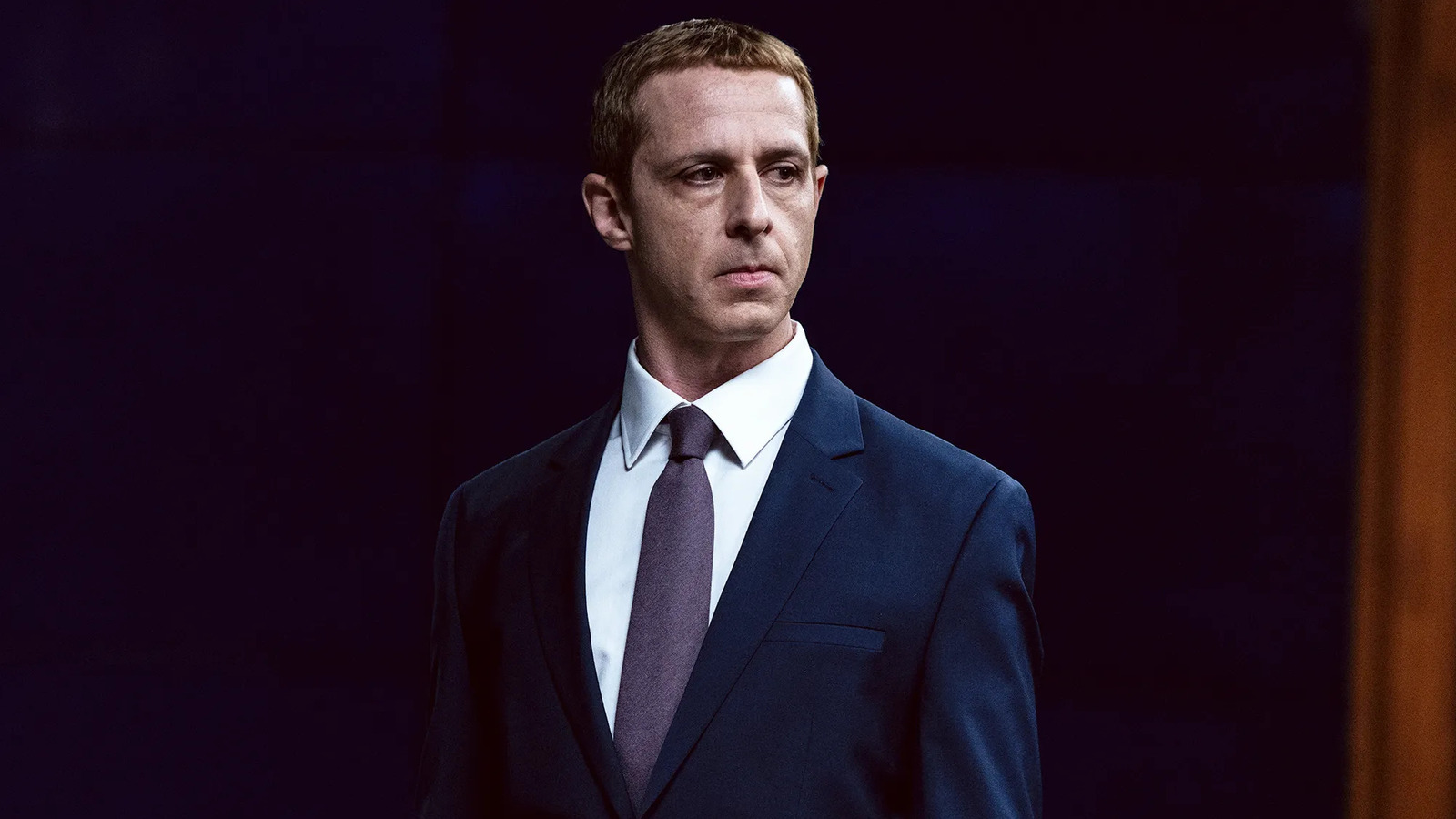
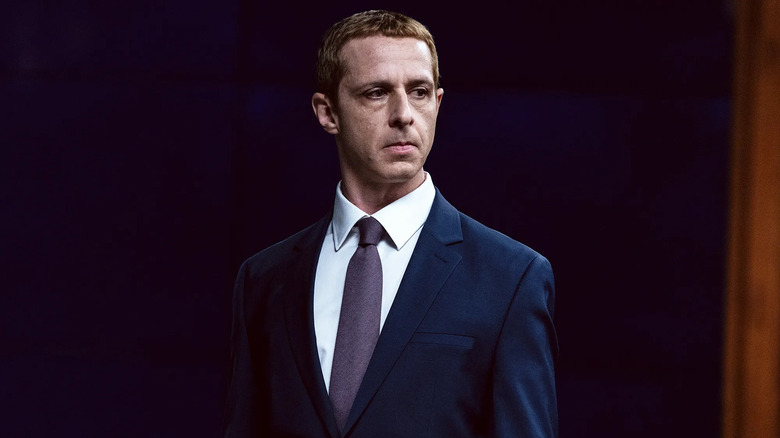
The Social Reckoning jumps between the beginning of the WSJ's investigation and 2021, as Mark Zuckerberg (now played by Jeremy Strong) prepares for yet another Congressional grilling. The young and insecure Zuckerberg from the end of The Social Network, futilely refreshing his Facebook page for a glimpse of human connection is long gone. He's aged into an expressionless automaton, a "free speech absolutist" who refuses to confront the ways his platform is harming people.
In one pivotal scene, which was also referenced in "The Facebook Files," he barely gives Haugen's Civic Integrity Team a moment to deliver their latest findings about dramatically reducing misinformation on Facebook. Without a second thought, he ignores their analysis because acting on it would lead to a minuscule drop in user engagement.
It's strange being reminded of Zuckerberg's stoic era in The Social Reckoning — now he's seemingly loosened up after shifting his fashion to designer t-shirts and declaring that he's done apologizing for Facebook's misdeeds. This current era of Zuckerberg is the one who decided not to have any internal fact checks on his platforms, and who has repeatedly debased himself before the current Trump administration.
It's not a huge spoiler to say that The Social Reckoning climaxes with the January 6th Capitol riot and Zuckerberg's reluctant decision to ban Trump's Facebook accounts. Last year, Meta paid Trump $25 million to settle a lawsuit over that ban.
I don't think The Social Reckoning will have the cultural impact of The Social Network, a movie that tapped into the excitement around the early days of social media and the undeserved "rockstar" status of ambitious startup CEOs. But it's a valuable reminder that Meta has gone to extraordinary lengths to maximize growth and engagement, regardless of the consequences to its users. And aside from the occasional fine, the company hasn't suffered much. Maybe think twice about giving Muse access to your most sensitive data, before AI's disastrous externalities become fodder for a third film.
KioskNews shows a cleaned-up reading view extracted from the publisher’s page — the original always lives on their site, not ours.