Rapture review – cult Spanish horror is a deeply strange cheese dream of cinemania
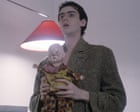
This cult supernatural mystery from 1979 is a deeply strange cheese dream of a film from Spain, in which almost the entire opening 10 minutes unfolds in a jittery quiet. There are some longueurs and some pop-eyed silent-movie acting from one of its leads, yes, but also a deeply unnerving, enveloping atmosphere of dread.
At least some of its fascination stems from the marginal involvement of the young Pedro Almodóvar, who did voice-overdubbing for one female character. Director Iván Zulueta was to maintain his connection with Almodóvar from then on and much of Almodóvar’s procedure can be traced back to this influential film: the rapture for movies (what a character here calls “cinemania”), the double-stranded narrative, the queer euphoria and the importance of extended flashbacks.
Rapture, or Arrebato, is, without acknowledging it, a kind of vampire film and a film about addiction (it bears comparison, incidentally, with Abel Ferrara’s The Addiction). Eusebio Poncela plays José, a failing horror movie director with a heroin addiction, trying and failing to get a new film off the ground called Wolf Man or The Curse of the Wolf Man, and living in co-dependent squalor with Ana, played by Cecilia Roth – who was later, of course, to become a totemic repertory player for Almodóvar. José needs a country house to film in and his garrulous ex Marta (Marta Fernández Muro) offers to take him to a handsome property owned by her Aunt Carmen (Carmen Giralt) to scout the location. It is there that they come across her eccentric cousin Pedro (Will More), whose drug addiction is quite as bad as José’s.
Pedro spends all day stalking around the grounds wearing a heavy overcoat in the sultry heat, talking to himself and shooting his interminable Super 8 home movies. Having declared José to be a kindred spirit, Pedro fatefully gets in contact with him after their acquaintanceship has been established (which we see in flashback), trying to convey his own obsessive passion for film which has been triggered by a kind of creative breakthrough. He has attached a timer to his cine-camera, enabling him to take eerie time-lapse movies of his home life and his night-time roaming, particularly in the big city after he moved to Madrid. But most weirdly of all he has taken to shooting Warholian films of himself asleep during which his time-lapse camera seems to have developed a mind of its own, adding strange single red frames. Pedro is convinced that the act of filming is causing in him a rapture which cancels the agony of addiction, and his general weltschmerz.
Rapture is not precisely a scary movie: most of its conventional scariness is saved for the final five minutes, although the moment in which a red-eyed Betty Boop doll appears to make a TV show speed up is disturbing. It is more about the sublime yet unwholesome and uncanny experience of movie immersion, of never seeing daylight, like a vampire. In a bizarre way, Pedro’s film obsession redeems José’s bleary professional disillusion; the washed-up director had before this been said to have a “magnetic halo” around him, created by his growing hatred of making films, although only a true believer would have any sort of halo at all. There are some very startling images: the shot of a penis becoming erect is juxtaposed with a cigarette’s long curling ash as it burns out, in a horribly inspired pairing.
The last time I saw Poncela on screen was in Juan Carlos Fresnadillo’s mysterious chiller Intact from 2001; there he played a man working for Max von Sydow’s casino owner, employed to use his mysterious gift for ill fortune to drain good luck away from gamblers enjoying winning streaks. He has the same haughty, doomy aura here.
KioskNews shows a cleaned-up reading view extracted from the publisher’s page — the original always lives on their site, not ours.