What next for Aukus? Shifting US priorities put Australia in a bind
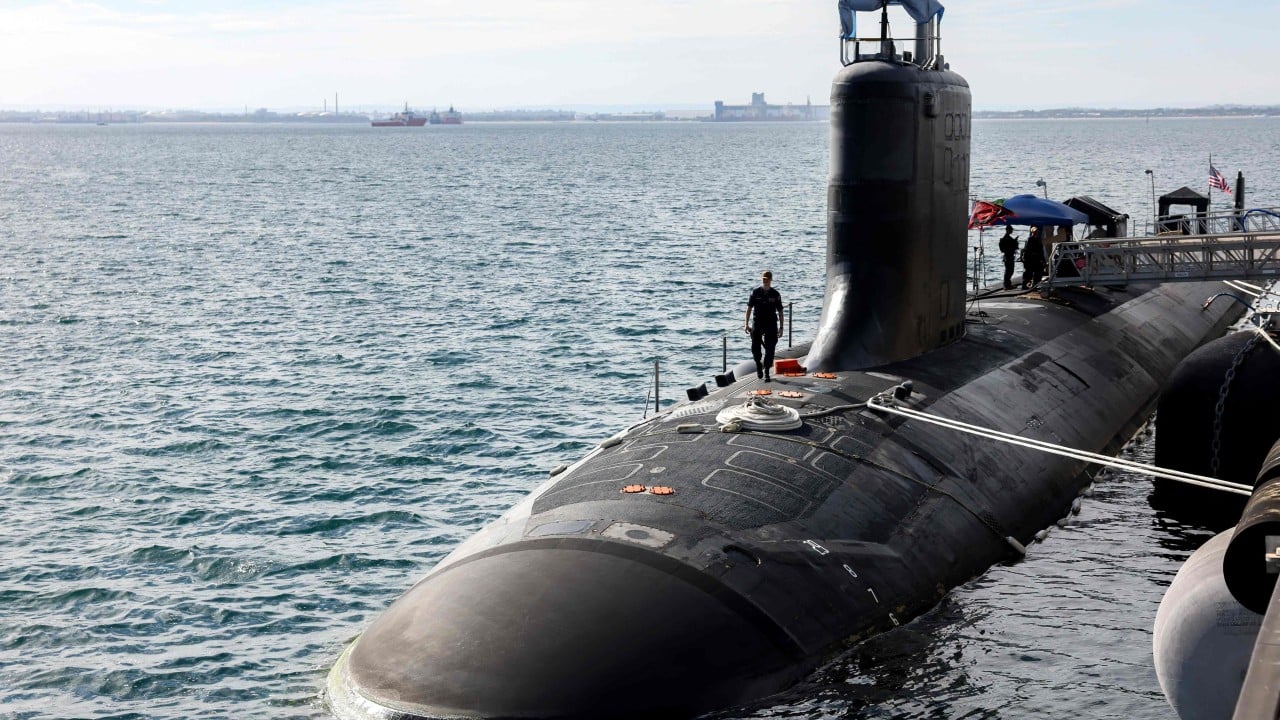
A recent US report suggesting that nuclear submarines might be delayed or even undelivered to Australia hints at the possibility of Washington giving itself “maximum flexibility” on delivering the vessels while it prioritises its own defence requirements, analysts have said.
On Sunday, Australian Defence Minister Richard Marles rebuffed reports that the Aukus agreement to supply nuclear-powered submarines to Australia would diminish the United States’ naval force for “many years”.
His remarks came after the US Congressional Budget Office (CBO) warned that the Aukus agreement could place further strain on US shipyards already facing production challenges.
“The US submarine industrial base is currently struggling to meet the Navy’s demand for submarines,” according to a report released by the office on Friday.
“Increasing production further to replace SSNs [nuclear-powered submarines] sold to Australia would increase the challenges that the US Navy and the shipyards are facing,” it added.
A trilateral security partnership between Australia, the United Kingdom and the US, Aukus is aimed primarily at providing Canberra with eight conventionally armed, nuclear-powered submarines.
Three Virginia-class submarines will be provided by Washington from 2032 while Australia – in collaboration with its two partners – will begin building the remaining five SSN-Aukus vessels, with the first slated for delivery in the early 2040s.
While the US has maintained that it is officially committed to helping Australia acquire the vessels, signals coming out of Washington suggest otherwise.
During a Senate Armed Services Committee testimony in July last year, US Admiral Daryl Caudle said the delivery pace of the Virginia-class submarines was around 1.2 a year and needed to reach roughly 2.2 to 2.3 a year to meet Aukus commitments.
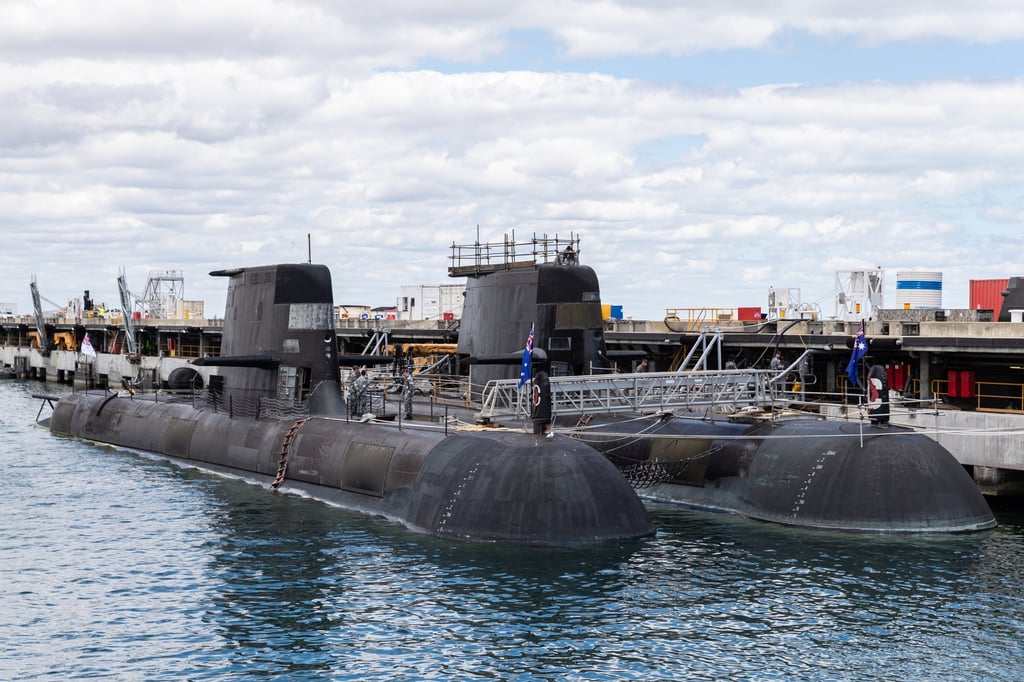
A US Congressional Research Service report in January suggested that rather than transferring the vessels to Australia, the US would keep them and operate them out of Australian bases.
Doing so would protect US fleet strength and allow America to deploy vessels immediately during a conflict or crisis in the Taiwan Strait.
Beijing sees Taiwan as part of China to be reunited by force if necessary. Most countries, including the US, do not recognise Taiwan as an independent state, but Washington is opposed to any attempt to take the self-governed island by force and is committed to supplying it with weapons.
Morgan Rees, a senior lecturer at the Queensland University of Technology, said despite Australia’s reiteration that Aukus is on track, the US had been consistent that submarines would only be transferred to Australia when there was a surplus to the needs of its own navy.
“The US has given itself maximum flexibility on timelines,” he said, adding that if the vessels are not delivered, there will be greater reliance on the rotational presence of US and UK submarines in Australia rather than an abandonment of the broader strategic plan.
Political scientist Adam Bartley said while Washington planned to increase spending and force projection with massive new funding, this would not necessarily translate into new shipbuilding capabilities, particularly in the short term.
Costs are also rising due to inflation, while labour is increasingly scarce and maintenance is an ongoing problem, said Bartley, a postdoctoral fellow at RMIT University researching Indo-Pacific security and Aukus.
This, he said, would force the US to return to “the raw calculations of defence interests” where it must guard its own capabilities and interests.
“These decisions are strategic, meaning it doesn’t matter who is in the White House,” Bartley said, noting that the real sign of trouble would come amid a deterioration of strategic realities in East Asia, in which case the US would be forced to delay the handover of the vessels to an “uncertain date in the future”.
“This doesn’t mean a failure of Aukus, but it will force the Australian government to confront its capability deficit, which is already significant, with a great deal of embarrassment,” Bartley said.
Earlier this year, the US administration proposed a record US$1.5 trillion defence budget for next financial year, an increase of about 42 to 44 per cent, aimed at expanding military capabilities and force projection.
Jennifer Parker, adjunct professor at the University of Western Australia Defence and Security Institute, said while the challenges with US submarine production rates were well known, what was often overlooked was the progress being made.
At the Naval Submarine League’s annual symposium held in Arlington earlier this month, vice-admiral Rob Gaucher outlined improvements, including a reduction of more than 40 per cent in submarine maintenance delays and an increase in annual submarine construction hours from 22 million to nearly 29 million.
Australia has also conducted maintenance on both US and UK nuclear-powered submarines at the HMAS Stirling base in Western Australia, while 70 Australian submariners are serving aboard US Virginia-class submarines.
In October, the US announced the USS Colorado as the first submarine assigned to Submarine Rotational Force-West – an arrangement starting in late 2027 that will station up to four US and one UK nuclear-powered attack submarine.
“[That] remains on track to commence in late 2027,” Parker said, adding: “There is no indication that the US is stepping away from its commitment to Aukus.”
“We should be assessing Aukus against the milestones in the agreed pathway, rather than continually speculating about its collapse,” Parker said.
Mustafa Izzuddin, a senior international affairs analyst with Solaris Strategies Singapore and visiting fellow at the Harvard Kennedy School, said the latest report could be triggered by US domestic and geopolitical considerations.
Under US President Donald Trump’s America First policy, it is uncertain if Aukus enjoys domestic support, he said, adding that Washington might want a different relationship with China that is better aligned with US strategic priorities.
“Aukus, which is heavily criticised by China, could be a geopolitical impediment to an evolving US-China relationship,” Mustafa said, particularly after Trump’s first-ever trilateral summit with China and Russia in Shenzhen last week.
“The CBO is gearing itself up to the possibility of the more progressive Democrats questioning such military spending,” especially after they secured a large majority during the midterm US elections earlier this month, Mustafa said.
Beijing views Aukus as a military containment effort that threatens regional stability, nuclear non-proliferation and China’s strategic security.
“It is in Canberra’s interest to refresh the Aukus security partnership [so it] is less dependent on the US, which will be increasingly contingent on domestic sentiments,” Mustafa said.
Japanese backup?
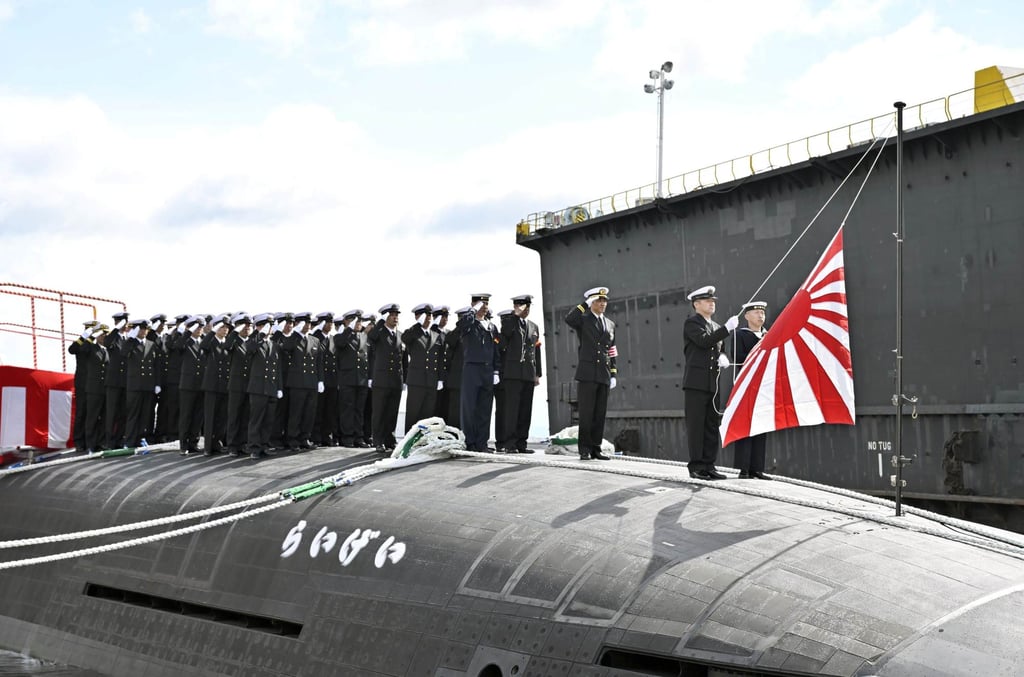
While Canberra does not have a Plan B in case of non-delivery of the vessels, Rees said one likely scenario was for Australia to turn to Japanese alternatives either in place of or to cover any interim capability gaps.
Tokyo had produced submarines on a consistent schedule, increasing the chances of quick delivery, he said, noting that Japanese vessels were also interoperable with American fleets.
This, Rees said, would reduce pressure on US production without compromising Australia’s strategic alignment while providing it with additional capabilities.
“One of the key challenges is that Aukus is more than just submarines,” Rees said, adding that the deal is now a fundamental part of Australia’s strategic relationship with the US.
“This makes it very challenging to openly discuss alternatives even where it may be strategically necessary,” Rees said.
To fall back on diesel-operated submarines would be a big blow to Canberra, Bartley said, as the government has often stated that nuclear vessels offer the only true deterrent potential.
“Oceans are becoming transparent due to new capabilities. In this sense, there is no real ‘going back’,” Bartley added.
Unlike diesel submarines, which must regularly surface, their nuclear counterparts can remain completely submerged for months at a time.
Parker said Canberra was unlikely to seriously consider alternative submarine acquisitions unless something went wrong with the Aukus pathway.
“To date, that has not happened,” she said, adding that there is a distinction between prudent contingency planning and actively pursuing an alternative submarine acquisition.
“There is no compelling reason to do the latter at this stage,” Parker added.
KioskNews shows a cleaned-up reading view extracted from the publisher’s page — the original always lives on their site, not ours.