Wait, Tolkien Officially Said Saruman Was NEVER The Most Powerful Wizard?!

Once head of Screen Rant's Star Wars coverage, Tom's career began as a fan of the fantasy and sci-fi genres, and his love of major franchises has ultimately led to a decade-long career. He'd had the privilege of interviewing writers, authors, directors, actors, stunt coordinators, and VFX artists on a staggering number of his favorite franchises, including Star Wars, the MCU, Stranger Things, Halo, Foundation, and more. He's conducted set visits in the UK, attending major comic cons in New York and London, and reported at Star Wars Celebration 2023 as press. You can find him on Twitter @TomABacon, on LinkedIn @tabacon, or on Muckrack under tombacon.
Tom has a wide range of interests, and he continues to serve his university as a volunteer chaplain. He's heavily involved with his local church, and anyone who checks him out on Twitter will swiftly learn he's into British politics too.
Sign in to your ScreenRant account
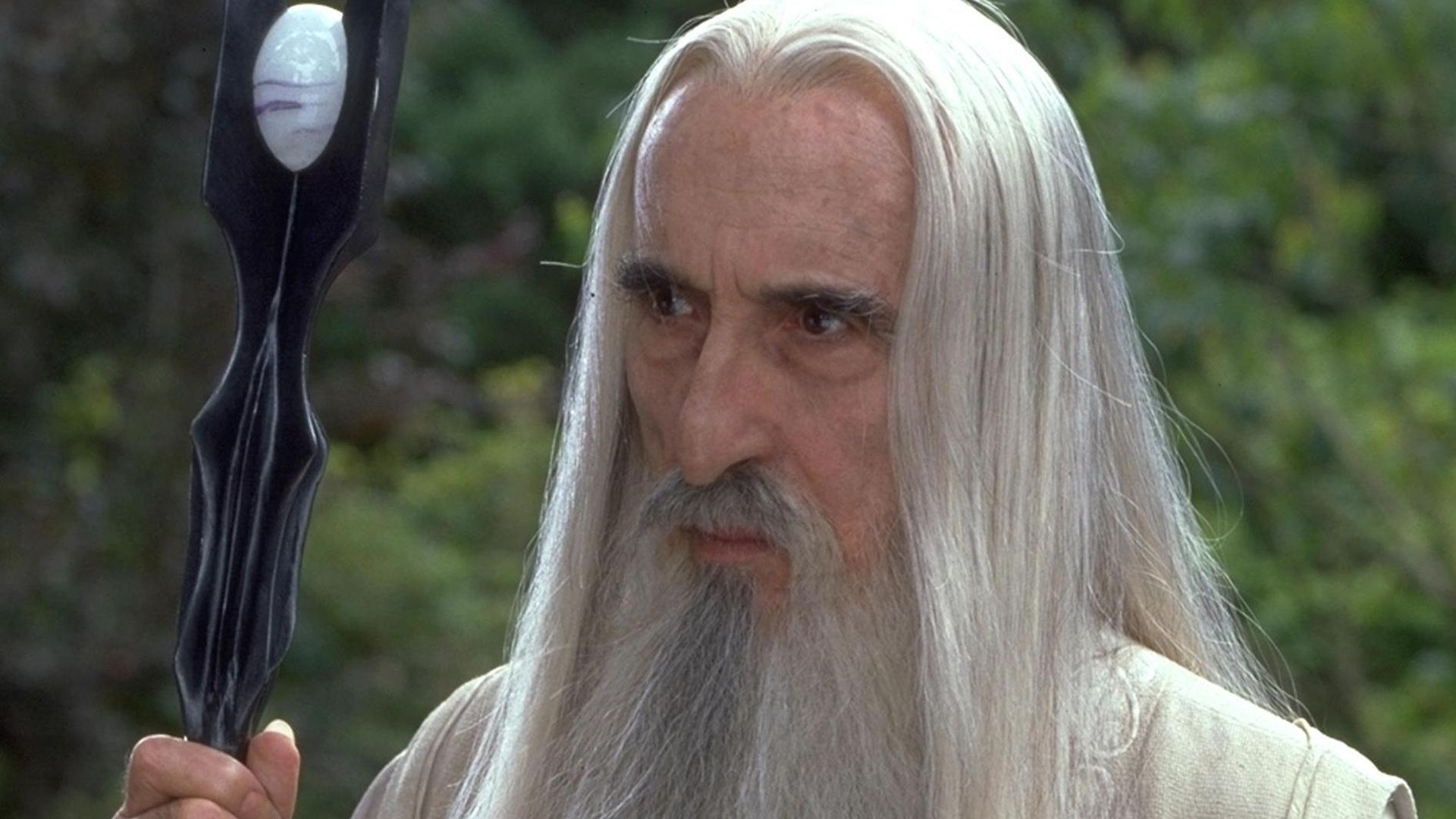
Most readers have always assumed Saruman was more powerful than Gandalf in The Lord of the Rings—at least until Gandalf's promotion. It's easy to understand why; Saruman was superior in rank, after all. Although Tolkien never really explained how wizard colors worked, white seemed to refer to leadership, and that is commonly assumed to relate to power. Gandalf himself only seemed to challenge Saruman's power after his grey robes had turned white.
Personally, this always seemed like a reasonable assumption. I never even questioned it when ranking Lord of the Rings' wizards by power in a recent article. And then, to my absolute shock, I stumbled upon a quote in Unfinished Tales that suggests I was wrong. Edited and published by Christopher Tolkien after his father's death, Unfinished Tales is exactly what it says on the can; a collection of short stories and essays that had never been published. They're not always consistent, but they're considered "canon," and they turn the hierarchy of power on Middle-earth on its head.
Gandalf Was Always More Powerful Than Saruman
Yes, you read that right. In an essay on "The Hunt for the Ring," Tolkien writes:
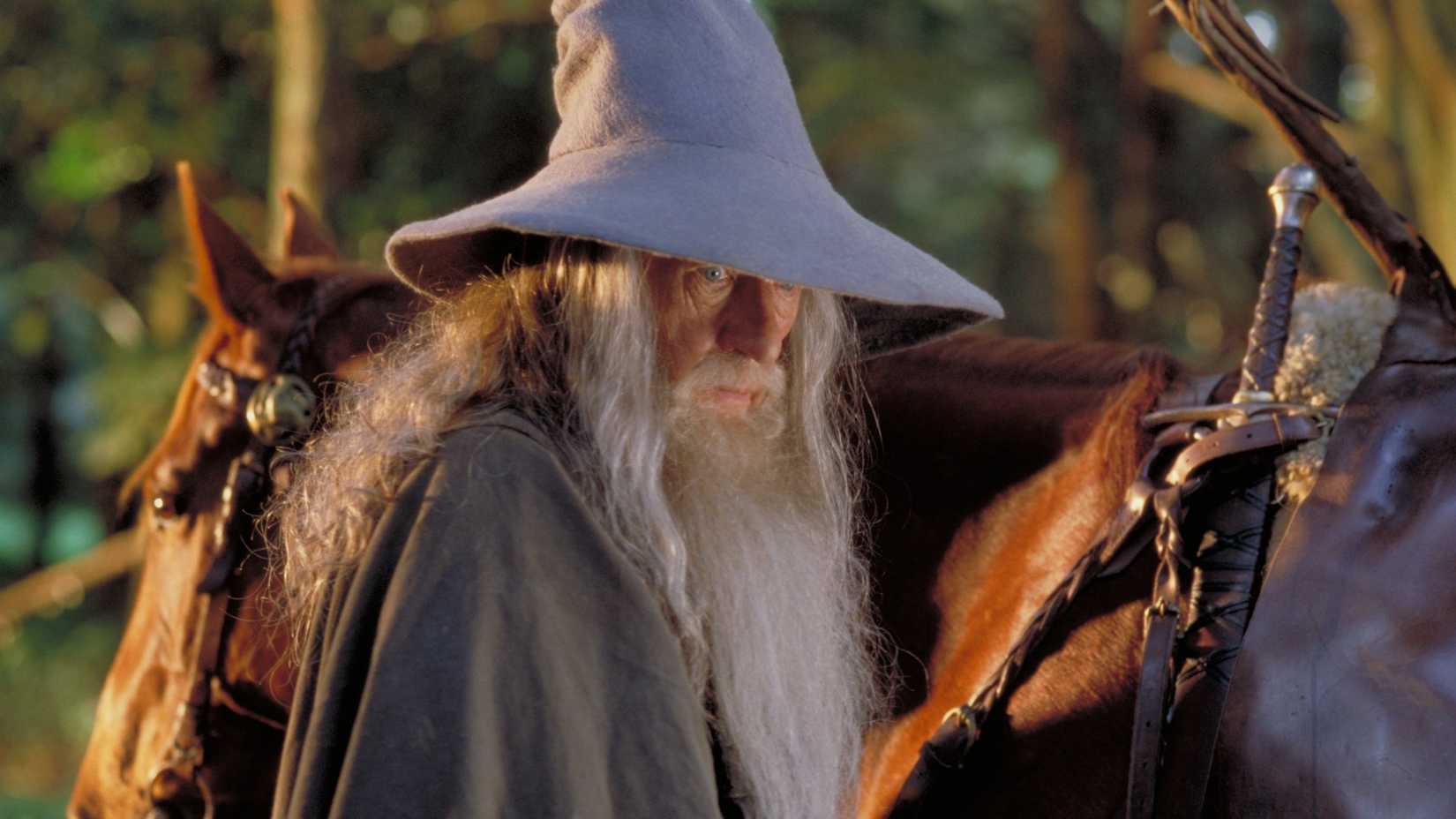
"Saruman soon became jealous of Gandalf, and this rivalry turned at last to a hatred, the deeper for being concealed, and the more bitter in that Saruman knew in his heart that the Grey Wanderer had the greater strength, and the greater influence upon the dwellers in Middle-earth, even though he hid his power and desired neither fear nor reverence."
In Tolkien lore, the wizards are essentially angels. Each was sent for a specific purpose, and Gandalf's was to interact with the sentient races of Middle-earth. This naturally made him much more popular among Middle-earth's "dwellers," while Radagast the Brown preferred to protect and honor the natural world. The Blue wizards are sent as explorers, and they were therefore absent from The Lord of the Rings.
Saruman's rank as the White did not, it seems, mean he was the most powerful; it simply meant he was supposed to be the leader. According to Tolkien, Gandalf was always the more powerful wizard. The key difference lay in his character, because Gandalf did not desire power, nor did he wish to wield it to influence the lives of others—except for when it came to fighting the Shadow. Saruman lacked Gandalf's character, and coveted power.
Unfinished Tales goes further. Apparently Saruman's envy of Gandalf was the reason he too became interested in Hobbits, and he'd frequently disguise himself and visit the Shire. Hilariously, the Hobbits thought he was Gandalf. The Sackville-Baggins family became Saruman's primary agents in the Shire, which he saw as a useful resource for growing food for his armies. That's why Saruman traveled to the Shire after Sauron's defeat, a scene cut from Peter Jackson's films.
The Saruman Of The Lord Of The Rings Was Even Weaker
Tolkien implies Saruman's envy was one of the reasons he fell. But, interestingly, there's evidence he considered Saruman to become even weaker after that. As Aragorn himself explains in one scene in The Lord of the Rings:
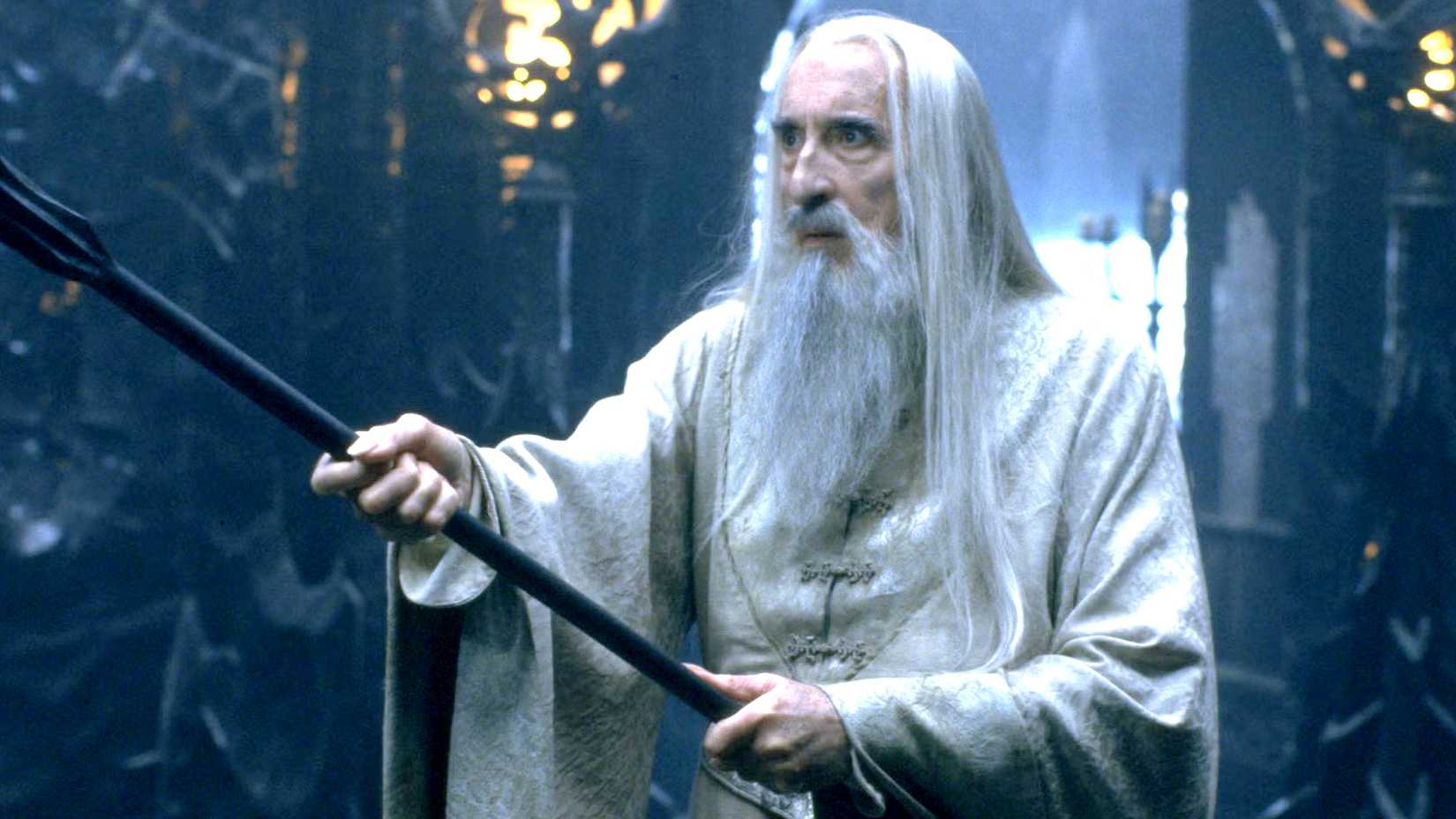
"Once he was as great as his fame made him. His knowledge was deep, his thought was subtle, and his hands marvelously skilled; and he had a power over the minds of others. The wise he could persuade, and the smaller folk he could daunt. That power he certainly still keeps. There are not many in Middle-earth that I should say were safe, if they were left alone to talk with him, even now when he has suffered a defeat. Gandalf, Elrond, and Galadriel, perhaps, now that his wickedness has been laid bare, but very few others."
Tolkien believed that evil is, by nature, weaker than good. When a thing is corrupted, as Saruman was, then it is diminished. Thus, while Saruman remained the White, he was nowhere near as great as he used to be. "Once he was as great as his fame made him," Aragorn observes, with the clear implication that he has become so much less.
Gandalf the White Became Even More Powerful
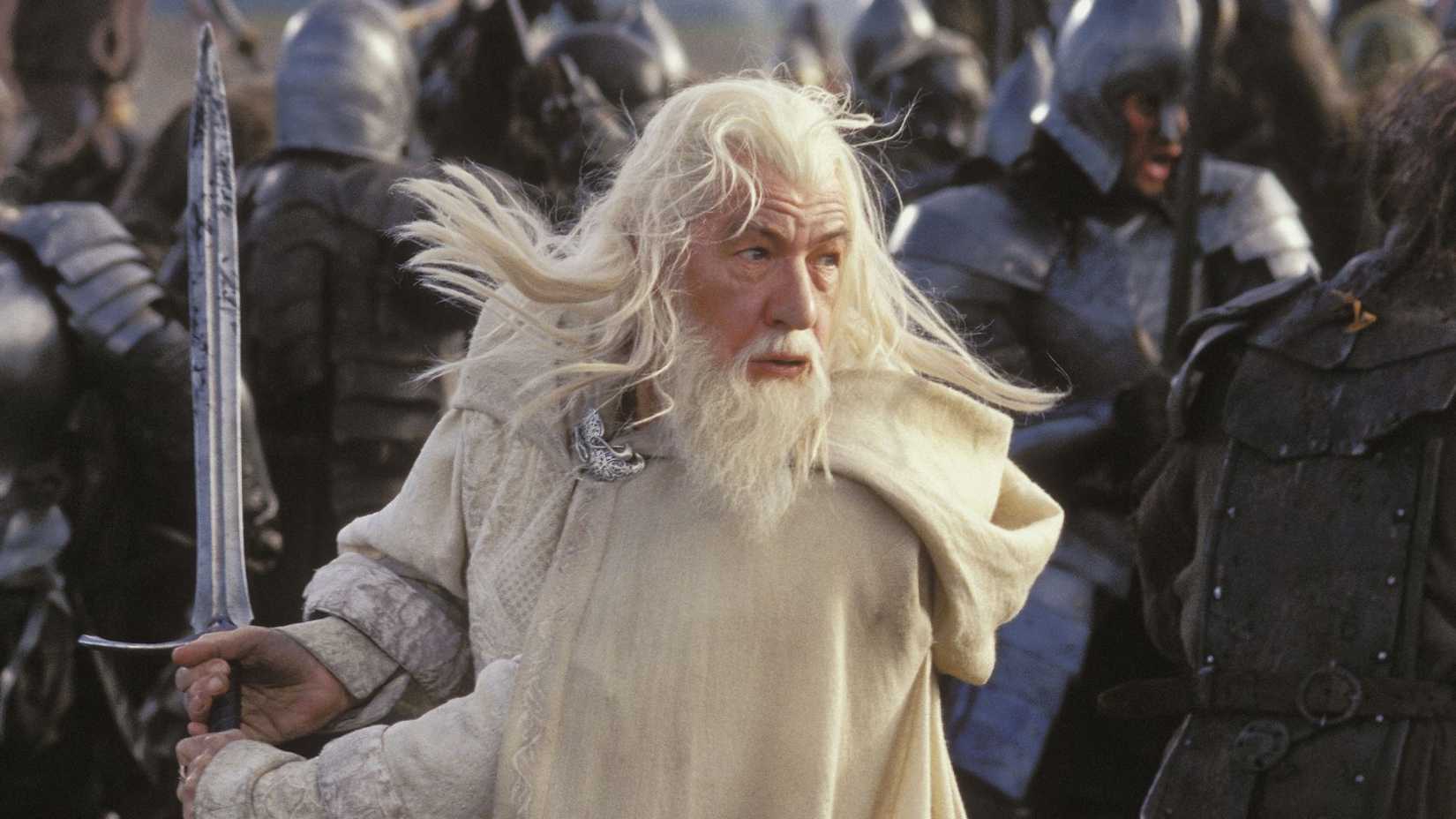
Gandalf the Grey was already more powerful than Saruman. But Gandalf the White was even more powerful, as Tolkien acknowledged in a letter to Robert Murray in November 1954. Explaining Gandalf's resurrection, Tolkien indicated that his sacrifice was accepted, and he returned "similar in personality and idiosyncrasy, but both his wisdom and power are much greater." Curiously, Tolkien suggests the Grey could not have dealt with Théoden or Saruman.
I'd read that comment before, and had previously assumed it was all about power; that Tolkien was indicating that Gandalf needed to become the White in order to challenge Saruman. In reality, it perhaps speaks to character and rank; as the Grey, Gandalf knew he was not positioned to serve as leader. Unleashing even the power he possessed back then would have felt like a betrayal, a denial of the order of things, and thus he was overmatched by Saruman. It's easy to imagine Saruman's contempt at that.
But when Gandalf was promoted to the White, and more of his power was unlocked, it proved he was now the right one to challenge Saruman. Saruman had betrayed his position, neglected his role, and been corrupted by his own envy and ambition. The mantle of leadership among the wizards had passed to Gandalf, and the hierarchy needed to be corrected. Both transformed and promoted, Gandalf headed out to confront Saruman.
The Lord of the Rings' lore is fascinating and deep, meaning there's always more to discover. I confess that, in this case, I can't help wondering whether this is effectively a retcon; Tolkien deciding he simply preferred Gandalf, and thus rewriting his own story to make him more powerful all along. Whatever your own view may be, though, the comment alone is remarkable.
- Movie(s)
- The Lord of the Rings (1978), The Lord of the Rings: The Fellowship of the Ring, The Lord of the Rings: The Two Towers, The Lord of the Rings: The Return of the King, The Hobbit: An Unexpected Journey, The Hobbit: The Desolation of Smaug, The Hobbit: The Battle of the Five Armies, The Lord of the Rings: The War of the Rohirrim
- TV Show(s)
- The Lord of the Rings: The Rings of Power
- Video Game(s)
- The Lord of the Rings Online (dupe), Middle-Earth: Shadow of War, The Lord Of The Rings: Gollum, The Lord of the Rings: Return to Moria
- First Film
- The Lord of the Rings (1978)
- Cast
- Norman Bird, Anthony Daniels, Elijah Wood, Ian McKellen, Liv Tyler, Viggo Mortensen, Sean Astin, Cate Blanchett, John Rhys-Davies, Billy Boyd, Dominic Monaghan, Orlando Bloom, Christopher Lee, Hugo Weaving, Sean Bean, Ian Holm, Andy Serkis, Brad Dourif, Karl Urban, Martin Freeman, Richard Armitage, James Nesbitt, Ken Stott, Benedict Cumberbatch, Evangeline Lilly, Lee Pace, Luke Evans, Morfydd Clark, Mike Wood, Ismael Cruz Cordova, Charlie Vickers, Markella Kavenagh, Megan Richards, Sara Zwangobani, Daniel Weyman, Cynthia Addai-Robinson, Lenny Henry, Brian Cox, Shaun Dooley, Miranda Otto, Bilal Hasna, Benjamin Wainwright, Luke Pasqualino, Christopher Guard, William Squire, Michael Scholes, John Hurt
- Created by
- J.R.R. Tolkien
KioskNews shows a cleaned-up reading view extracted from the publisher’s page — the original always lives on their site, not ours.