‘Kaikeyi had a divine purpose’: Lara Dutta says her Ramayana character is not a villain
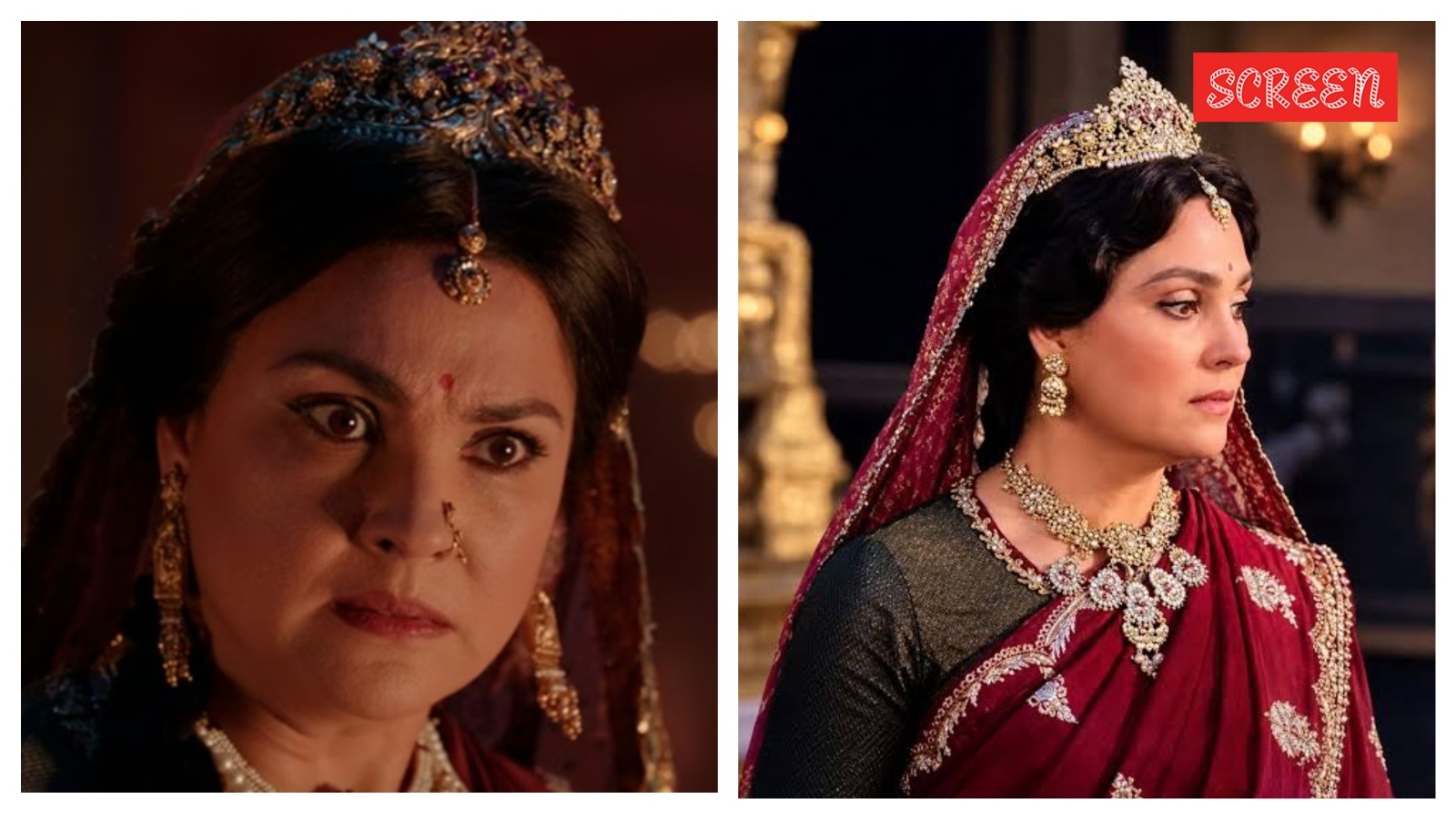
Ramayana is often hailed as the ultimate battle between good and evil. But there are very few characters who embody both within the Indian epic, at least in popular culture. Lara Dutta, who plays Kaikeyi in Nitesh Tiwari’s new film adaptation, insists her role is much more than the evil stepmother trope that’s come to be associated with her in multiple interpretations through the ages. In an exclusive interview with SCREEN, she decodes the character’s backstory and how she traced such a steep arc within the span of a few scenes.
“Nitesh has depicted Kaikeyi on screen with sensitivity and delicacy. It’s been depicted in many versions that Kaikeyi loved Rama, possibly more than even Bharat. He was always her favourite,” points out Lara. Even in the film, she’s seen feeding the first bite of every meal to her eldest stepson Rama, much to the dismay of her biological son Bharat, throughout their childhood. “Kaikeyi never objected to Rama being declared the heir to Ayodhya. It was a joyous occasion for her,” she reminds us, referring to the scene when her character is seen picking out the most ornate jewellery and clothes for Rama’s rajyaabhishek (coronation). It takes a Manthara (Sheeba Chaddha) to serve as the catalyst for her arc, and, in turn, the 14-year exile of Rama.
“Sheeba Chaddha, what an actor! Without Manthara, the arc of Kaikeyi wouldn’t have been solidified. Both these characters go hand in hand. The history between them is so deep. Manthara may have been small-minded and manipulative, but her influence on Kaikeyi was immense. It’s a very intricate, complex relationship,” argues Lara, underlining the backstory that Nitesh chalked out for her reference. “Kaikeyi was the only daughter born in a family of men. She lost her mother at childbirth. She was raised by Manthara. Therefore, her relationship with Manthara goes beyond just being a nurse-maid. She was, in many ways, a mother figure,” reasons Lara. Having been raised as a warrior princess much like her future stepdaughter Sita (Sai Pallavi), Kaikeyi was a master charioteer. She steered the carriages of not only her brothers, but also her husband Dasharatha (Arun Govil) after her marriage.
“When she saved him from the battlefield once, he promised to fulfil her wish as the king’s word. At that time, she said it was just her duty,” says Lara. But Manthara reminded Kaikeyi of not only Dasharath’s vachan from the battlefield, but also another vow from their wedding. “When Kaikeyi asked for Dasharatha’s hand in marriage, her father didn’t want her to be the third queen of a king because he knew that in those days, alliances were made purely through marriage,” says Lara. That led to Dasharatha promising Kaikeyi’s father that her son would ascend the Ayodhya throne, whether he’s the eldest or not.
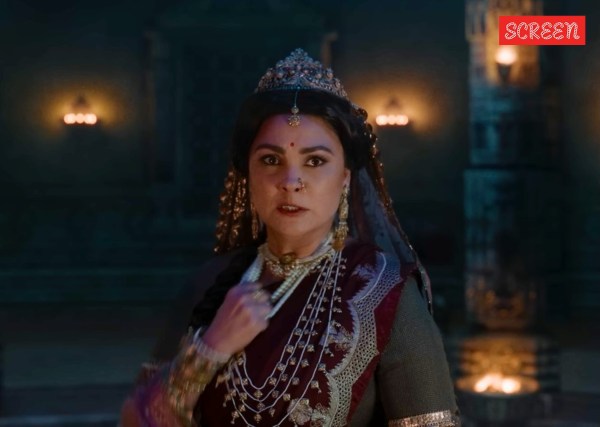 Lara Dutta as Kaikeyi. Photo Credit: YouTube screengrab.
“She was caught between her love as a mother and her duty as a mother to enforce what was her son’s birthright. If she didn’t fight for her son, in a massive kingdom like Ayodhya, where there was so much intrigue and court politics at play, he’d lose what was promised to him at birth. It’s an incredibly complex character to play,” says Lara, adding that she wanted to bring dignity to her character. “She’s always been portrayed as a villain, but if you actually look at it, it’s said in a different version that she took birth with the divine purpose to make Lord Rama fulfil the prophecy of vanquishing Ravana and restoring peace and faith on Earth.”
Calling her arguably the most misunderstood character, Lara claims there’d be no Ramayana without Kaikeyi. “Because then Rama would’ve become the king of Ayodhya, ruled like any other king, and that would’ve been his history. But it was only because he was banished to the forest that all the events, including Ravana kidnapping Sita, took place. She’s such a pivotal character in the story,” explains the actor. But even for Kaikeyi herself, though she regrets her choices later, she’s not the villain because “in her mind, she’s just asking for what was promised to her, and not manipulating anybody.”
The Kaikeyi arc, from love, anger to guilt, remorse
Nitesh Tiwari plays on this notion of manipulation, often invoked in past interpretations, to lend a Shakespearean touch to the Kaikeyi-Manthara-Dasharath sequence. Lara’s Kaikeyi snaps her pearl necklace, stages a mess at Kop Bhawan, and looks Dasharath in the eye, her own eyes moist with a manufactured ache. But as soon as Dasharath succumbs to her bait, she assumes power, standing erect with her head held high. That particular sequence invited the internet’s suspicion, as it claimed her sari was draped like a vamp straight out of a daily soap. “You’ve to look beyond all of that when you’re making a film of this scale. There are so many moving parts to this film. I had a conversation that if Kaikeyi was coming in from a different area, wouldn’t she carry her stree dhan? Wouldn’t she wear jewellery different from the other queens? But if you go into such intricate details, you’re opening a Pandora’s box,” argues Lara.
Story continues below this ad
Given the insurmountable scope of the epic, her own screentime was reduced to a few quick scenes, which proved to be a daunting yet rewarding task for Lara. “Keeping it subtle and restrained, and keeping my emotions in check, was very important for me to portray those scenes convincingly, instead of overperforming. She was a loving mother first, then became a dutybound mother who had to take a firm stand to not disregard the other son. Because otherwise there was nobody else to fight for her son, for what was he rightfully due,” says Lara. But the most complex part of her performance was towards the end of her arc, when she realizes and witnesses the cost of her request. Was it just her divine purpose that held Kaikeyi back from undoing the damage?
“By the time she had summoned all her courage to ask for what she wanted, she saw what it actually entailed. It was too late because Rama was also bound by dharma, his father’s word. By the time she felt the remorse, the wheels of history had already been put in motion. It was incredible to play that on screen. The performance had to be finely nuanced. It was such a joy as an actor. When you see the audience cry, feel that pain, and sense that remorse during the vanvas departure scene, it means the highest accolade for me, more than any written praise,” says Lara, smiling. “Though it wasn’t shown on screen, I think about whether Kaikeyi would’ve let Manthara go or let her stay by her as a constant reminder of her guilt and remorse. That’s such a beautiful visual to introspect on because it helps you add layers and bring in nuance to your character,” she adds.
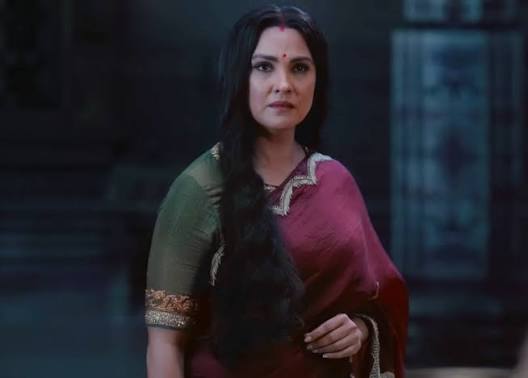 Lara Dutta as Kaikeyi in Ramayana. Photo Courtesy: Trailer screengrab.
On working with the Rama then and the Rama now
“What a privilege to work with the actual Rama,” says Lara on sharing screen space with Arun Govil, who essayed the central character in Ramanand Sagar’s 1987 television show Ramayan. “He was, in a big way, the guiding light for all of us. The emotion of the Ramayana is in his blood,” she says, confessing that they’d often joke about the “weight of his crown”, more literal than symbolic. “It looks very glamorous to do a mythological drama, but to perform with the weight of your crown, jewellery, clothes, and the wig glued on to your hair is like carrying 15-16 kg with you,” says the actor.
The most arduous job among the cast, however, she feels fell in the lap of Ranbir Kapoor. “Ranbir was a revelation in the Ramayana. It’s the hardest to portray a character when everything you rely on as an actor is taken away from you. He’s playing a god on screen. He had to exude a sense of dispassion and vairagya, to have a serenity in your eyes at all times. Lord Rama was beyond all emotions, beyond anger and joy. So, when you don’t have the ability to use your facial muscles to portray extreme emotions, you have to internalize that. Today, there’s so much praise for Yash as Ravana, and he’s brilliant at that. But Ravana had the ability to show anger, but Rama and Sita didn’t. They have done an incredible job to bring in that single-minded focus throughout the film,” insists Lara.
Story continues below this ad
Also Read — ‘Had no clue’: Soni Razdan smoked ‘100 cigarettes a day’ on set while pregnant with Alia Bhatt
As a mother to her and husband and tennis legend Mahesh Bhupathi’s 14-year-old daughter Saira herself, Lara relates a great deal with Kaikeyi’s “internal war between a mother’s heart and mind when it comes to her children”. She relates with both the duty she felt towards her only biological son, but also the hurt that pierced through her to do what she did do to the “child she truly loved the most”. When Bharat (Adinath Kothare) tells Rama he disowned Kaikeyi for her actions, one can sense the heartbreak his mother would’ve felt in her bones. “We left that to the viewers’ imagination because that’d have been more powerful,” saya Lara. Channeling the mother within, she adds, “You can imagine what that would’ve felt like for both Kaikeyi and Bharat. It’d have been like somebody put a knife through her. It would’ve been the worst kind of retribution for her actions.”
KioskNews shows a cleaned-up reading view extracted from the publisher’s page — the original always lives on their site, not ours.