South Korea launches 'K-brand' scheme to fight counterfeits
Under the new "K-Brand Government Certification System", consumers will now be able to check whether a product is authentic by scanning a QR code attached to it with their mobile phone.
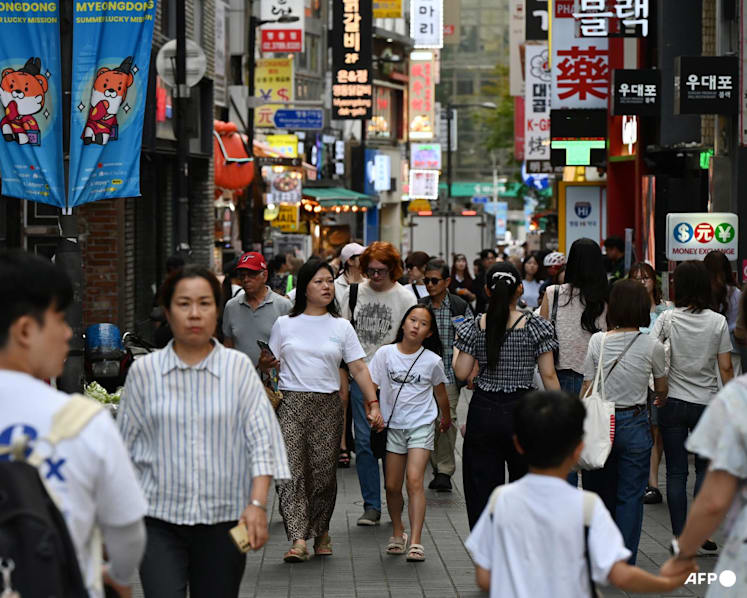
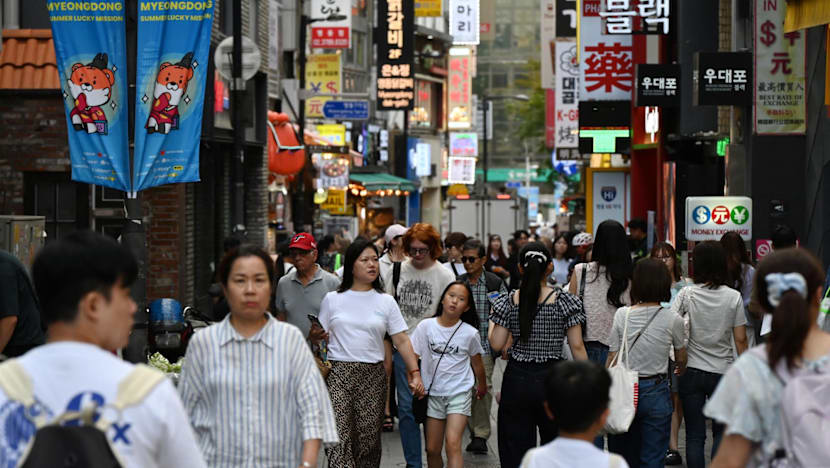
People walk along a shopping street in the Myeongdong area of Seoul on Jul 24, 2026. (Photo: AFP/Greg Baker)
07 Oct 2026 02:41PM (Updated: 07 Oct 2026 02:42PM)
SEOUL: South Korea's president said on Wednesday (Oct 7) the country is taking steps to protect the country's booming cultural cache, launching a new "K-brand" authentication system that will let consumers know if goods they are purchasing are the real deal.
Led by K-pop acts such as BTS, hit Netflix series Squid Game and KPop Demon Hunters, the so-called Hallyu, or Korean cultural wave, saw content exports hit a record US$14.9 billion last year, surpassing overseas sales of computers and home appliances.
The popularity of so-called K-food and K-beauty products, meanwhile, saw exports of agricultural and fisheries products and cosmetics hit record highs of US$12.4 billion and US$11.4 billion, respectively.
Under Seoul's new "K-Brand Government Certification System", consumers will now be able to check whether a product is authentic by scanning a QR code attached to it with their mobile phone, President Lee Jae Myung said on Wednesday.
"From K-beauty and K-food to K-fashion, Korean brands are rapidly becoming part of the everyday lives of people around the world," Lee said on X.
"But as K-brands grow in popularity, Korean companies are also suffering increasing damage from counterfeit products overseas," he said.
"The government will respond swiftly to counterfeit products overseas," Lee said, adding that it would "no longer leave our companies to fight alone".
Thirty-one companies have already signed up for the scheme, including Samyang Foods, the maker of Buldak spicy chicken ramen, and Amorepacific, South Korea's largest cosmetics company.
According to data released by the OECD in 2024, the global market for counterfeit "K-brand" products was approximately 11 trillion won (US$8.2 billion).
The love of all things Korean has also impacted arrivals to the country, with the number of foreign tourists hitting an all-time high of 18.94 million last year.
KioskNews shows a cleaned-up reading view extracted from the publisher’s page — the original always lives on their site, not ours.