10 Essential Cyberpunk Books That Aren’t ‘Neuromancer,’ Ranked

Michael Hein has been covering entertainment, fandom news, and trending topics since 2016 on outlets including Rogues Portal, PopCulture.com, and ComicBook.com. He has provided live coverage of red carpet premieres, conventions, and up-fronts, and has interviewed major stars including Charles Dance, Patrick Stewart, and Chloe Sevigny. An avid fiction reader and writer, Michael has been diving deep into all the biggest book-to-screen adaptations of the last decade, from Game of Thrones to Foundation.
Cyberpunk has become one of the most popular and groundbreaking science fiction subgenres over the last few decades, but most fans know it best on the screen. Whether it's in video games like Cyberpunk 2077 or movies like Blade Runner, cyberpunk has had its high profile moments in a visual medium. With Apple TV's upcoming adaptation of Neuromancer premiering on January 22, cyberpunk is getting back to its literary roots. Already, people are reading or re-reading Neuromancer by William Gibson in anticipation of the TV show, and many are left wanting more. Fortunately, there's plenty of Cyberpunk to go around.
Cyberpunk may not have existed for all that long compared to other pockets of sci-fi and fantasy, but it has been fertile ground for great books. It helps that the genre definition here is pretty loose. Several of the books on this list straddle the lines between subgenres, but all of them are great follow-ups to Neuromancer. Read on for 10 essential cyberpunk novels you can read after Neuromancer while you wait for the TV show to premiere.
10 'Count Zero' by William Gibson

Perhaps the most obvious thing to read after Neuromancer is another book by William Gibson. The author has written several other acclaimed novels in the cyberpunk genre, including two direct sequels. While Neuromancer can be read alone, it works brilliantly as the start of the Sprawl trilogy. The second volume is titled Count Zero, while the third is Mona Lisa Overdrive. Both make for excellent reading after Neuromancer, though they may be difficult to adapt into future seasons on TV.
Gibson's short story "Burning Chrome" is also set in the same "Sprawl" setting as Neuromancer, but he has other works in the cyberpunk subgenre that are disconnected. His Bridge series begins with Virtual Light, and his Blue Ant series begins with Pattern Recognition. These are great books in their own right, though it might be better to branch out with other authors and return to Gibson later.
9 'Vurt' by Jeff Noon
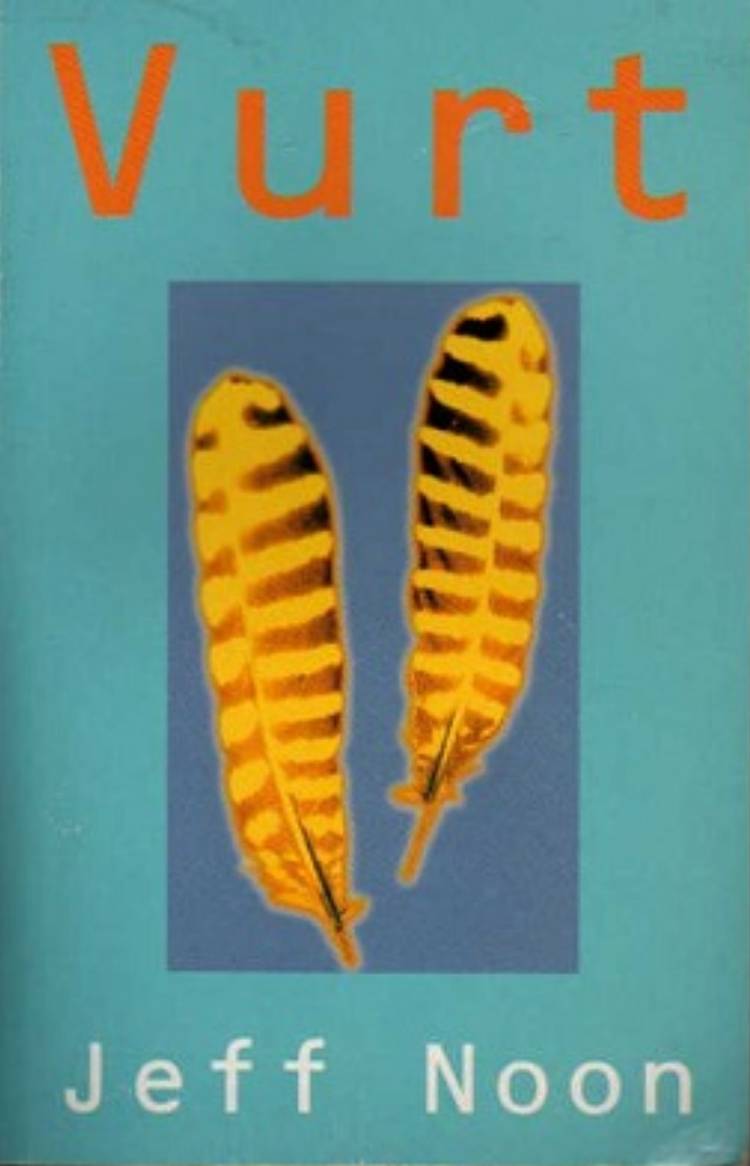
English author Jeff Noon has dabbled in genre fusions for three decades now, but his 1993 debut novel Vurt gets the cyberpunk tag more often than any of his other books. The story is set in a dystopian Manchester, England, at a time when the city has been thrown out of balance by a powerful designer drug called Vurt. It sends users into a shared hallucinogenic experience which they can't discern from objective reality. Before long, the reader will have trouble telling the truth from hallucinations as well.
8 'Altered Carbon' by Richard K. Morgan

Altered Carbon by Richard K. Morgan is an acclaimed novel in its own right, before factoring in the popular Netflix adaptation that aired in 2018. The book is worth reading whether you've seen the TV show or not. It is set in a highly advanced yet dystopian future where humanity has mastered the ability of transferring consciousnesses between bodies, making themselves functionally immortal. This technology also allows them to travel throughout space, but they bring plenty of familiar baggage along with them.
7 'Snow Crash' by Neal Stephenson

Image via Penguin
Back in 1992, Neal Stephenson's Snow Crash made some eerily accurate predictions about where life was headed in the 21st century. The novel's take on virtual reality and direct mind-to-computer interface stands out, but Stephenson got other, more subtle aspects of modern life right as well. In Snow Crash, the U.S. economy is crumbling, with the remaining industry reliant on "the attention economy" much like today's internet. The book undercuts these serious topics with a healthy dose of satire, but it remains incredibly prescient.
6 'Watchmen' by Alan Moore and David Gibbons

Watchmen is, first and foremost, a deconstruction of the superhero genre, but it wouldn't have worked without its near-future dystopian setting. This is pure cyberpunk, making it a worthy addition to this list. If you needed one more excuse to check this graphic novel off of your TBR, here it is. Watchmen is set in an alternate history version of the U.S. where the Watergate scandal was never exposed, and the Cold War was never resolved. It confronts the imbalance of power not just between people with super powers, but between people of difference classes, education levels, and political affiliations. All of that may sound extremely familiar after reading Neuromancer.
5 'Hyperion' by Dan Simmons
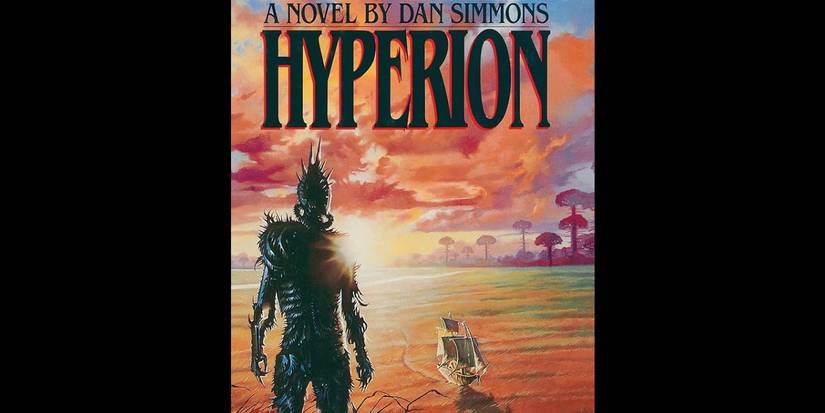
In his 1989 novel Hyperion, Dan Simmons made no attempt to hide the fact that he was dabbling in various sci-fi subgenres. The book is modeled after The Canterbury Tales, with six interstellar pilgrims sharing their stories as they all head toward their final destination together. One reads like a horror story while the next is like an action blockbuster, and so on. Near the end, Brawne Lamia shares a noir-style detective story with some clear cyberpunk influence.
Hyperion is the first of four books in Simmons' series The Hyperion Cantos, and later installments take the cyberpunk aspects of the story much further. The series could be called a space opera as easily as cyberpunk, but it's worth a read for any sci-fi fan and it's a great follow-up to Neuromancer.
4 'The Murderbot Diaries' by Martha Wells
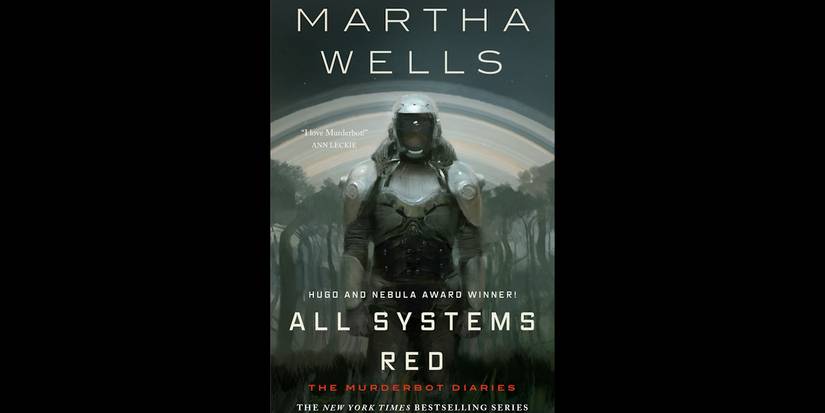
Skipping ahead to something much more recent, The Murderbot Diaries series by Martha Wells is a masterful progression of the cyberpunk style. It's set in a future where humanity is colonizing much of the galaxy, but power is held primarily by massive corporations. The titular hero is a cyborg manufactured by one of these corporations to be a security specialist, or "SecUnit." It manages to override its programming and hack its way into autonomy, yet it struggles to decide what to do with this newfound freedom. It's an incredibly interesting story about self-determination and post-humanity couched within a hilarious first-person narrative.
Apple TV adapted this series into Murderbot starting last year, with Alexander Skarsgård starring as SecUnit. The series was a massive hit, and a second season is expected soon. Murderbot is one of Apple TV's biggest sci-fi hits so far, and a great reason to have faith in the streamer's adaptation of Neuromancer.
3 'Memory's Legion' by James S.A. Corey

The Expanse series by James S.A. Corey is most definitely a space opera, but that doesn't mean it can't graze other subgenres in its long path through the stars. You may have watched the TV show or even read all nine novels in the main series without picking up the novellas that accompany them. There are eight additional stories set between books, all of which were collected in the 2022 tome Memory's Legion. The whole thing is worth a read of course, but for those that want The Expanse's take on cyberpunk, "The Churn" should be their first stop.
"The Churn" takes readers down to earth's surface to explore the unique dystopia cooked up by Corey. Overcrowding has made life miserable for many earthlings, yet people still have children illegally outside the birth limits imposed by the government. The story follows one such illegally-born young man trying to scrape a living in Baltimore. He grows up to be Amos Burton, the mechanic on the Rocinante. "The Churn" serves as his origin story, and provides some excellent context for the greater narrative.
2 'Infomocracy' by Malka Older
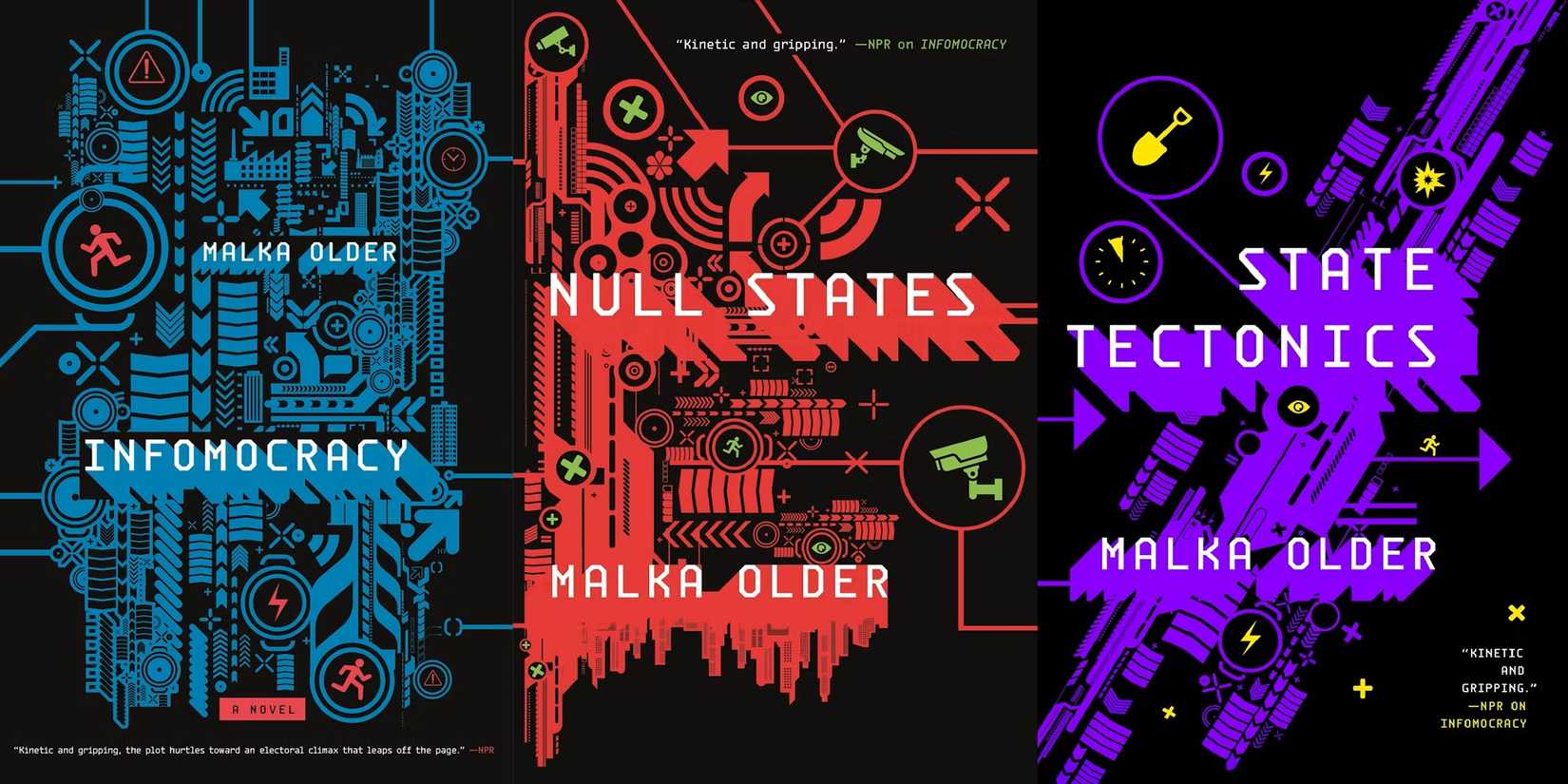
Malka Older's 2016 novel Infomocracy is the first installment of her Centenal Cycle Trilogy — an excellent exploration of what cyberpunk literature can achieve. The books are set in a near-future where social media and other technology has been leveraged to allow for maximum transparency and civic engagement. The entire world votes on important issues through a process called "micro-democracy," and through it war has been eliminated for decades. However, the series explores how these systems of checks and balances are constantly tested, and venerates the endless work of keeping the playing field fair.
1 'Do Androids Dream of Electric Sheep?' by Philip K. Dick
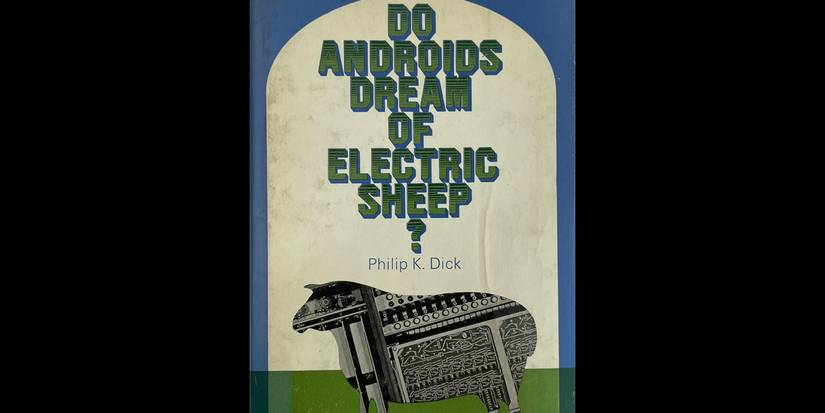
Finally, Philip K. Dick's 1968 novel Do Androids Dream of Electric Sheep? is one of the main reasons Gibson refuses to take full credit for "creating" the cyberpunk genre. Although it was published years before the term cyberpunk was used, the philosophical and aesthetic connections between Dick's novel and the cyberpunk boom that followed later can't be ignored. This book should be first on the list for anyone seeking to understand modern sci-fi and cyberpunk, or simply those looking for their next great read after Neuromancer.
Do Androids Dream of Electric Sheep? is set in a post-apocalyptic future after nuclear war has ravaged the earth. People are encouraged to move onto off-world colonies while earth's ecology recovers, while highly advanced androids are manufactured to take on the work left behind. The book follows a detective named Rick Deckard who is assigned to track down androids who have broken containment and are living among humans in disguise. The book was adapted into the 1982 film Blade Runner, but not without some significant changes. Whether you loved the movie or not, the book is worth checking out.
The ten books on this list are all great reads, and they only scratch the surface of modern cyberpunk and sci-fi literature. They are all available now in print, digital, and audiobook formats. Neuromancer premieres on Friday, January 22 on Apple TV.

- Release Date
- January 22, 2027
- Network
- Apple TV+
- Showrunner
- Graham Roland
-
Henry Case
-

Briana Middleton
Molly
-
Mark Strong
Armitage
-
John Ashpool
KioskNews shows a cleaned-up reading view extracted from the publisher’s page — the original always lives on their site, not ours.