The Assassin(s) Review: Gripping JFK-Style Conspiracy Mystery Is A True Throwback [TIFF]
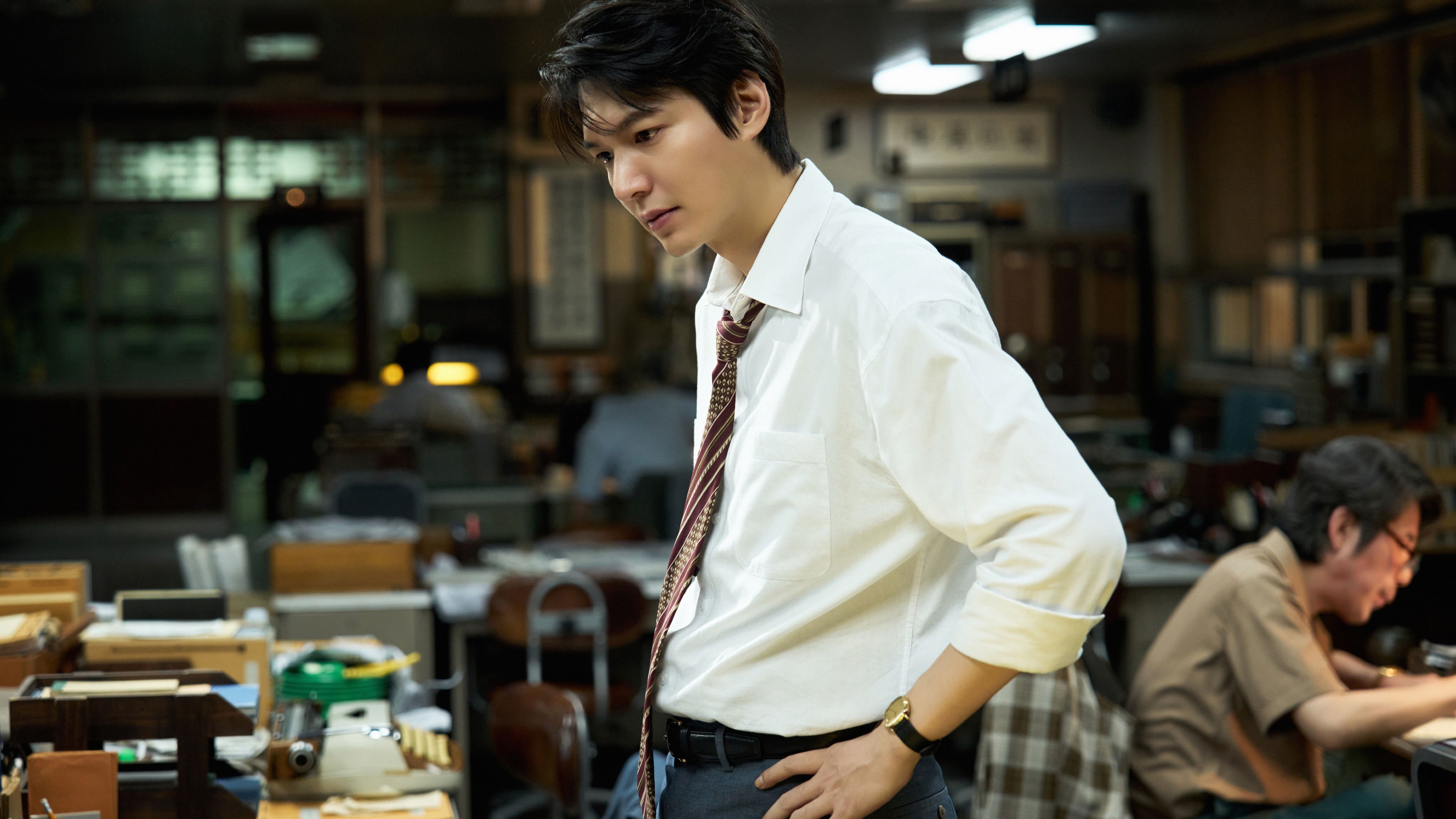
The Assassin(s) exists in the vein of All the President's Men as a gripping political conspiracy mystery with disturbingly relevant commentary.

George is a film critic and journalist with over nine years of experience in the entertainment industry. Beginning as the Co-Creator and Co-Editor of Star Wars Holocron, the most followed Star Wars fan account on Twitter/X, George went on to develop The HoloFiles, a movie and television-focused website with his brother and writing partner Josh.
A member of the Hollywood Creative Alliance, Chicago Indie Critics, Online Film and Television Association, and the Internet Film Critic Society, George has covered major industry events as credentialed media, including D23, CinemaCon, SXSW, Fantastic Fest, Star Wars Celebration, Tribeca Festival, and more. He also regularly writes reviews and contributes articles to ScreenAnarchy, BRWC, Film Obsessive, TV Obsessive, and Under the Radar. George's work has been featured in various esteemed publications, including the BBC, Associated Press, Forbes, and The New York Times.
Few political assassinations have generated as many questions, contradictions, and conspiracy theories as the attempted killing of South Korean President Park Chung-hee.
On August 15, 1974, gunshots rang out during the president’s speech at a Liberation Day ceremony, leaving Park alive, but killing First Lady Yuk Young-soo and a high school student named Jang Bong-hwa. The alleged assassin, Mun Se-gwang, was immediately apprehended and identified as a Korean Japanese Maoist radical, seemingly providing authorities with a convenient explanation for the tragedy. But six shots were fired, and Mun’s pistol only carried five bullets; suddenly, the official story doesn’t seem quite so airtight.
In The Assassin(s), director Hur Jin-ho turns this real-life mystery into a fact-based whodunnit that explores just how dangerous the pursuit of truth can become. Making its world premiere at this year’s Toronto International Film Festival, the film follows a senior police inspector (Yoo Hai-jin), veteran journalist (Park Hae-il), and rookie reporter Han Young-il (Lee Min-ho) as they attempt to determine what actually happened during the chaotic ceremony. As inconsistencies in the official report begin to pile up, the trio begin to ask more questions, but, whenever anyone investigates the strange circumstances surrounding the murders, they are accused of being communists, threatened with professional consequences, or ordered to leave the matter alone. The three men have to risk their careers, and their lives, to get to the bottom of a potential cover-up.
The Assassin(s) Turns A Historical Tragedy Into A Gripping Whodunnit

Hur wastes little time getting into the heart of the conspiracy. Moving at a brisk pace, The Assassin(s) immerses audiences in the political turmoil of 1974 Korea while gradually transforming what initially appears to be a straightforward assassination attempt into an increasingly labyrinthine mystery. In many ways, the film feels like a dramatization of the South Korean equivalent of the JFK assassination. There are missing bullets, contradictory evidence, strange circumstances, and no shortage of conspiracy theories about what really happened. But rather than becoming overwhelmed by its historical context, Hur uses the procedural framework to steadily reveal how difficult it is to establish the truth when every institution surrounding the investigation appears compromised.
The film’s political intrigue is particularly effective, as Hur never treats the conspiracy as an excuse for empty thrills. At its core, The Assassin(s) is a biting critique of censorship and political corruption. This makes the film especially resonant in an era in which truth itself can feel disturbingly subjective.
The movie repeatedly returns to the importance of establishing facts, even when doing so is inconvenient, politically dangerous, or personally destructive. Its characters are not simply chasing a killer – they are fighting against a political context in which the truth can be suppressed, manipulated, or dismissed whenever it threatens those in power. Hur’s decision to frame this historical event through a procedural mystery makes all of these ideas accessible and without ever being heavy-handed.
Park Hae-il, Yoo Hai-jin & Lee Min-ho Make A Great Investigative Trio

Much of the film’s success comes from its central trio. Park Hae-il, known for his role in Decision to Leave, brings a weary intensity to the veteran journalist who becomes suspicious of the official account and increasingly distrustful of the police response following the murders. Yoo Hai-jin’s senior inspector provides another perspective on the investigation, caught between the responsibility to pursue the evidence and the enormous institutional pressure to stop. Lee Min-ho’s Han Young-il, meanwhile, functions as the trio’s fresh face, bringing a younger, less established perspective to an investigation that quickly becomes far larger than any of them anticipated.
Together, Park, Yoo, and Lee make for a terrific trio of protagonists, trading mesmerizing dialogue as their characters gradually piece together the inconsistencies surrounding the assassination attempt. Their dynamic gives the film much of its momentum, particularly as suspicion shifts between individuals and institutions. Rather than relying solely on action or spectacle to generate suspense, Hur allows conversations, interrogations, reports, and seemingly minor discrepancies to become increasingly threatening.
The Assassin(s) Calls Back To Political Thrillers Of Old

The film’s influences are also readily apparent, with The Assassin(s) blending the paranoid political intrigue of Oliver Stone’s JFK, the investigative journalism of All the President’s Men, and the conspiratorial unease of The Parallax View. Admirers of 20th century political thrillers like these will find it a delightful throwback to a kind of movie seldom produced anymore.
For all its strengths, The Assassin(s) occasionally risks becoming overly dense as its conspiracy expands and the historical and political details accumulate. The film has an enormous amount of information to convey, and its determination to follow so many inconsistencies can sometimes make the mystery feel more convoluted than necessary. Still, Hur’s brisk pacing prevents the movie from becoming bogged down for long, and each new revelation provides enough intrigue to keep the investigation moving forward, even if its ideation on the truth never quite strikes the intended emotional chord.
By turning the attempted assassination of Park Chung-hee into a suspenseful, political murder mystery, Hur Jin-ho crafts a thriller filled with conspiracy, historical intrigue, and tantalizing dialogue. His central message lies in the importance of truth, which is just as critical now as it was in 1974. The truth is that The Assassin(s) is a pretty great movie.
The Assassin(s) premiered at the 2026 Toronto International Film Festival.

- Release Date
- September 23, 2026
- Runtime
- 131 minutes
- Director
- Hur Jin-ho
- Writers
- Lee Ji-min, Gwon Gi-jun
- Producers
- Won-kuk Kim
KioskNews shows a cleaned-up reading view extracted from the publisher’s page — the original always lives on their site, not ours.