The challenge in making the national language a vessel for unity
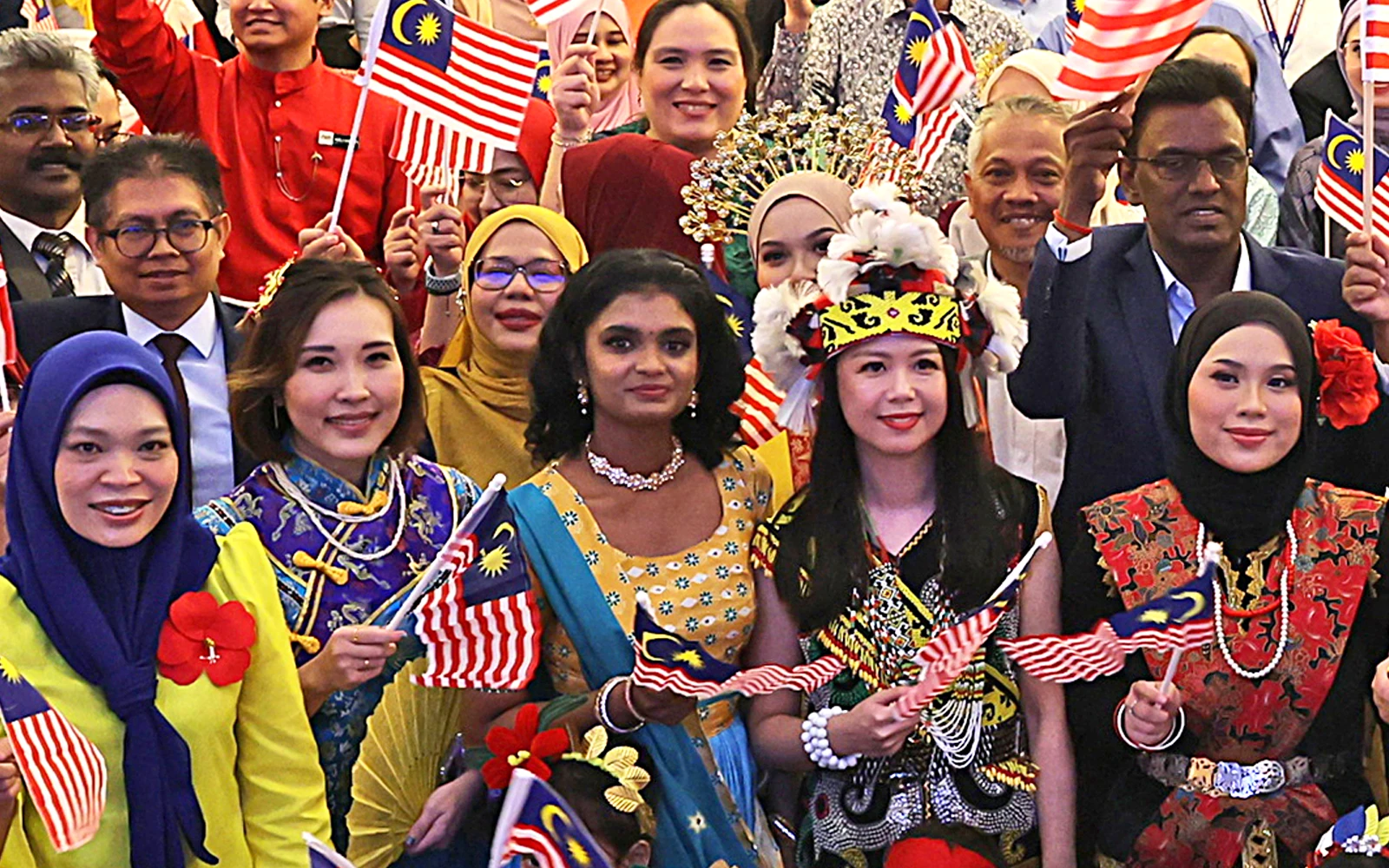
In the noble effort to elevate Bahasa Melayu as the core of national identity, a topic frequently discussed among language enthusiasts is the level of mastery and fluency of the national language among multi-ethnic communities.
Most narratives typically focus on daily communication, the corporate sector, or administrative affairs.
However, from a sociolinguistic perspective, there is a dimension that is rarely explored deeply but carries significant influence over language assimilation: the use of the national language within the religious and cultural expressions of non-Muslim communities.
On one hand, there are high expectations for all citizens to anchor their lives around Bahasa Melayu. On the other, when touching upon the spiritual realm, a more complex dynamic emerges.
Understanding these contrasting approaches is not meant to assign blame, but rather to examine how language can function more inclusively as a bridge for unity without disrupting established socio-religious sensitivities.
Historical framework and the unique situation in the peninsula
The difficulty of expanding the use of Bahasa Melayu in non-Muslim religious affairs in Peninsular Malaysia is rooted in a combination of legal history, demographics, and the evolution of the language’s corpus itself.
Under Article 160 of the Federal Constitution, Malay identity is clearly defined by three main elements: professing the religion of Islam, habitually speaking the Malay language, and conforming to Malay custom. This close alignment has caused Bahasa Melayu to evolve with a heavy Islamic imprint over hundreds of years through the absorption of Arabic theological terms into everyday vocabulary.
To preserve harmony and prevent theological confusion, most states in the peninsula enforce the Enactment on the Control and Restriction of the Propagation of Non-Islamic Religions, guided by the principles of Article 11(4) of the Federal Constitution. These laws restrict the use of certain religious terms to ensure the doctrinal integrity of the majority community remains protected.
Aware of these legal and social sensitivities, non-Muslim communities in the Peninsula—comprising largely Chinese and Indian ethnic groups—opt for a cautious approach.
To maintain racial harmony and safeguard their respective theological purity, they feel more comfortable retaining their mother tongues (such as Mandarin or Tamil) or English in their religious affairs. This situation inadvertently creates a linguistic divide in spiritual matters, even though they are fluent in Bahasa Melayu in other daily affairs.
Diverse models in East Malaysia and Indonesia
The reality in the peninsula presents a stark contrast when looking at the socio-political models in Sabah, Sarawak, and Indonesia. In East Malaysia, a unique demographic structure has long positioned Bahasa Melayu as the primary unifying vessel.
For hundreds of indigenous sub-ethnicities such as the Iban, Kadazandusun and Bidayuh, Bahasa Melayu has served as the daily lingua franca, including in church services and their Alkitab (Bible) texts.
The general practice and sharing of religious terms rooted in the same language are accepted with high tolerance as a historical norm, in line with the socio-political guarantees under the Malaysia Agreement 1963 (MA63).
Looking at our neighbour, Indonesia underwent a comprehensive language assimilation process because Bahasa Indonesia was established as a neutral and inclusive national asset. There, all recognised religions fully utilise Bahasa Indonesia in rituals and scripture translations.
Major Islamic figures and organisations like Nahdlatul Ulama (NU) and Muhammadiyah play a mature role in guiding society.
They have successfully educated the public by decoupling the language’s function as a national communication tool from the essence of an individual’s personal faith.
This approach allows for the harmonious sharing of certain religious vocabularies, anchored by the concept of inter-citizen brotherhood or “ukhuwah wathaniyah”.
Building harmony through mutual understanding
These differing linguistic approaches have a tangible impact on daily social relations. In the peninsula, the separation of language in religious affairs shapes a model of “cautious coexistence”.
Multi-ethnic communities deeply respect each other’s boundaries, yet opportunities for deeper cross-cultural dialogue can sometimes be limited by fears of stepping on legal sensitivities. Social interactions remain largely concentrated in secular spaces like economics, education and sports.
Conversely, the dynamics in Sabah, Sarawak and Indonesia demonstrate that when a national language is shared in the most deeply personal aspect of life—spirituality—it can erode suspicion and strengthen a sense of togetherness. The national language is no longer seen as the exclusive property of one group, but as a grand canopy sheltering all citizens.
Conclusion
The desire to see Bahasa Melayu fully embraced by all Malaysians is a noble dream that deserves support. However, discourses on elevating the language must look beyond casual conversation.
We must acknowledge the sociolinguistic challenge that arises when the national language is restricted in non-Muslim spiritual realms to safeguard faith, while simultaneously expecting these communities to assimilate the language into every facet of their lives.
To move forward, the best path is to construct a harmonious, localised understanding. Drawing from the spirit of tolerance in East Malaysia, we can begin to view Bahasa Melayu not as a tool of division, but as a bridge that unites.
Without compromising the legal protections that safeguard the faith of Muslims in the peninsula, the cultivation of the national language in cultural and literary spaces across all communities must continue to be nurtured maturely—for the future of a truly integrated Bangsa Malaysia.
Moaz Nair is an FMT reader.
The views expressed are those of the writer and do not necessarily reflect those of FMT.
Subscribe to our newsletter and get news delivered to your mailbox.
KioskNews shows a cleaned-up reading view extracted from the publisher’s page — the original always lives on their site, not ours.