52 Years Later, The Greatest Crime Drama's Final Line Still Officially Defines the Genre
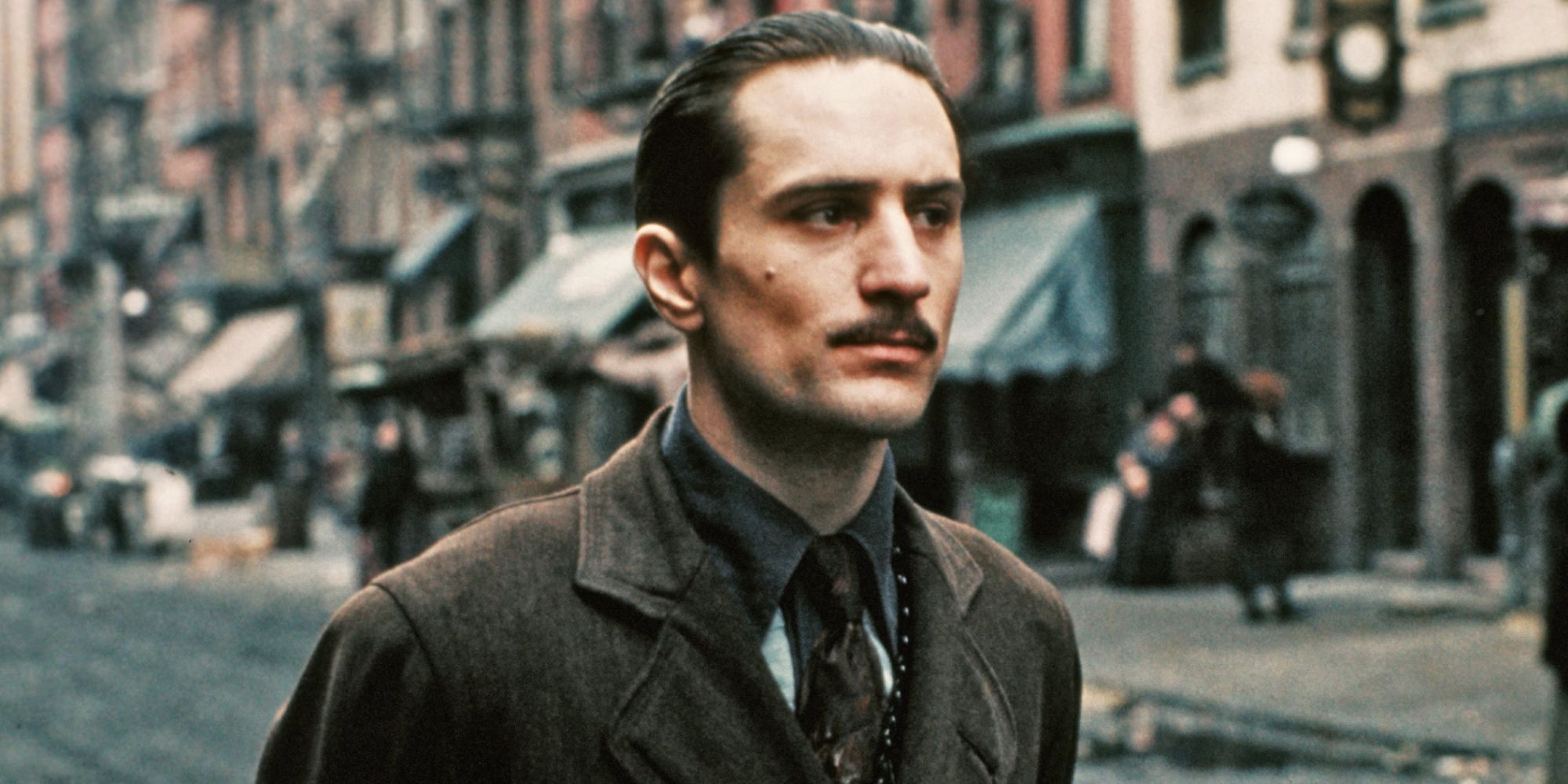

Over half a century after its release, Francis Ford Coppola’s The Godfather Part II remains in the conversation for one of the greatest films ever made. The Shakespearean rise of Michael Corleone (Al Pacino), playing in tandem with a flashback storyline focused on the beginnings of his father, Vito (Robert De Niro), is a cinematic symphony, with an ending that is as glorious today as it was at the time. Looking at the film retrospectively, Michael’s final line also came to define the gangster genre — nine words that gave a painful reminder of the compromises the character made, and the mentality of someone who craves absolute power.
‘The Godfather Part II’ Ends with a Poignant Flashback

The sobering coda of Coppola’s classic takes place in between the parallel storylines, with Vito established as a Don, and Michael still in college, sitting at a kitchen table with his brothers Sonny (James Caan), Tom (Robert Duvall), and Fredo (John Cazale). The family is waiting to surprise Vito on his birthday, when Michael reveals he has dropped out of college in order to join the Marines. Sonny is enraged, Fredo is supportive, but Tom reminds Michael that his father pulled strings to secure his education, and that he has “big plans” for his future. In quiet defiance, Michael replies: “Well, I have my own plans for my future.”
The scene is remembered by Michael in the present day, as he sits reflecting on his position in life having killed Fredo, his own blood, for his betrayal. To step into his father’s footsteps was never something he intended, but life has pushed him toward that fate. Even so, he did it in his own way – he is crueler than Vito, perhaps even a monster depending on your point of view. Michael’s last line is a reflection on the irony of his beginnings, but also a reminder that even if he didn’t get to decide his direction in life, he chose the method of his ascension.
The Final Line of Coppola’s Classic Can Be Felt in Every Gangster Movie

For Michael Corleone, control was always paramount. He was not a helpless victim consumed by the criminal world he was born into, he was seduced by it, lured into a world of power gained by violence and intimidation. After succumbing to the role he fought against for so long, he approached it in his own way that was more extreme than his father ever could have imagined.
It’s not surprising that this attitude has been reflected in most gangster movies since. In the 1940s and 50s, gangsters were hoodlums, street toughs who were rough around the edges, no matter how expensive their suits became. Coppola reframed the gangster as an emperor, rising to dominate the surrounding environment, and ultimately becoming a victim of his own ambition, paranoia, or both. Whatever the fate, Michael and characters like him always did things their way. In other words, they had their own plans for their future.
Pacino himself would play a few of these archetypes, perhaps most famously Scarface antihero Tony Montana, who is a heightened, almost fantasy-like figure, shooting and carving his way to his goal of ruling the world. In 2007’s American Gangster, Denzel Washington rises from driver to kingpin thanks to a singular vision of becoming the invisible hand that controls everything around him. In 1990’s Goodfellas, Henry Hill’s opening line declares: “As far back as I can remember, I always wanted to be a gangster," only for him to get his wish in a way he never anticipated.
Michael Corleone’s “Plans” Cost Him Everything
The irony of Michael’s defiant line, as well as the other characters influenced by him, is that he was never in control. When he didn’t want to be a criminal, circumstances pushed him that way. When he embraced the criminal life, he tried to control it in a way that was never possible. This is brought to a close in the final act of the saga, 1993’s The Godfather Part III, where he comes to accept that he can never escape the consequences of his actions. In one pivotal scene in the movie, an older Michael breaks down while taking confession with a priest, lamenting: “I betrayed myself.” In response, the priest sums up Michael’s tragedy. “Your life could be redeemed, but I know you don’t believe that,” he says. “You will not change.”
The path of Michael, and the gangster legends like him, is one of inevitable downfall. Despite his continual insistence that he is in control of his path, that he has his “own plans” for his future, the drive and obsession of such a life pulls him in a direction that he never intended, and cannot escape. As most gangster movies since have shown, eventually the weight of a kingpin’s misdeeds catches up with them, and they either watch their empire fall from a prison cell, or burn with it.
As with all the Godfather movies, Michael’s final line in Part II has several meanings – a sad look at what might have been, and a glimpse of the mindset that would lead him to a life of violence, betrayal, and eventual despair. The best movie in the trilogy ended with a line that summed up all that came after it.

- Release Date
- December 20, 1974
- Runtime
- 202 minutes
- Director
- Francis Ford Coppola
- Writers
- Francis Ford Coppola, Mario Puzo
- Prequel(s)
- The Godfather
KioskNews shows a cleaned-up reading view extracted from the publisher’s page — the original always lives on their site, not ours.