10 Unfilmable Books That Became Amazing Movies

Luc Haasbroek is a writer and videographer from Durban, South Africa. He has been writing professionally about pop culture for eight years. Luc's areas of interest are broad: he's just as passionate about psychology and history as he is about movies and TV. He's especially drawn to the places where these topics overlap.
Luc is also an avid producer of video essays and looks forward to expanding his writing career. When not writing, he can be found hiking, playing Dungeons & Dragons, hanging out with his cats, and doing deep dives on whatever topic happens to have captured his interest that week.
Sign in to your Collider account
Novels and films are very different mediums. Readers can undergo entire experiences, so long as the writer has a command of tone, language, and purpose. Thus, a book loaded with abstract ideas and stream-of-consciousness might still be compelling thanks to gorgeous prose and an immersive mood.
Translating those features to the screen, however, is a tall order, which is why plenty of classic novels have long been considered "unfilmable". Nevertheless, some stubborn (mad?) directors have taken on these challenging books and succeeded in crafting them into phenomenal cinema. With that in mind, here are ten titles that seemed impossible to adapt and yet turned into movie magic, from the psychedelic paranoia of Fear and Loathing in Las Vegas to the colossal, lore-heavy world-building of Dune.
'Cloud Atlas' (2004)

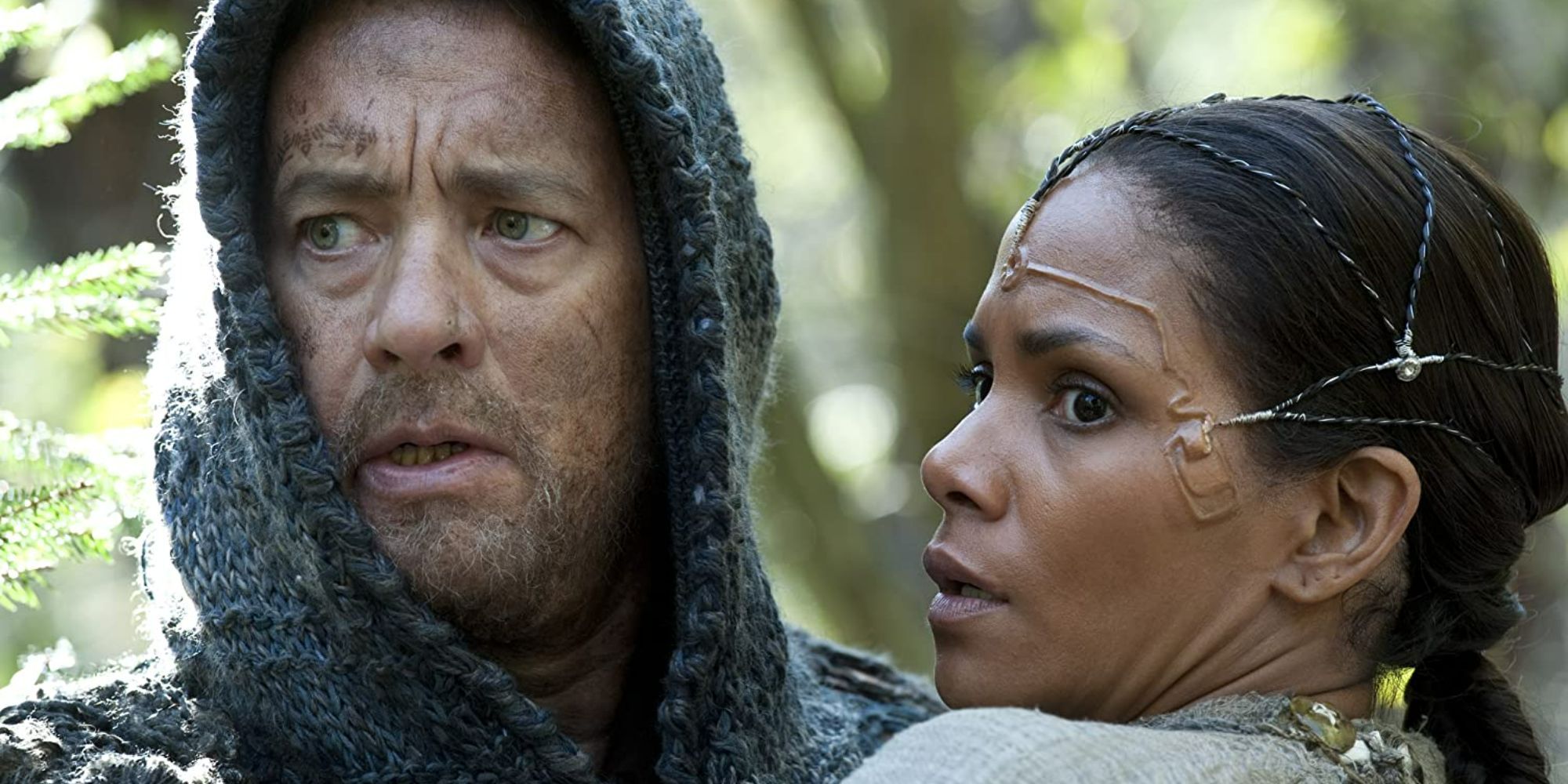
"Our lives are not our own." The uber-ambitious Cloud Atlas consists of six interconnected stories spanning thousands of years, from the nineteenth century to a distant post-apocalyptic future. More than that, each narrative possesses its own style, genre, voice, and protagonist, and the novel's structure famously interrupts stories midway before returning to complete them later. Likewise, while there is rich imagery in it, a lot of the novel is also conveyed through inner monologues, which don't exactly scream "cinematic."
This meant that bringing the book to the screen would be a Herculean task, enough to break the sanity of most filmmakers. And yet the Wachowskis did a solid job with their version, nicely capturing its epic sweep without ever becoming (overly) confusing. They cleverly use recurring actors across multiple timelines. Likewise, editing, visual parallels, and musical motifs help to marshal all the storylines into something harmonious.
'Fear and Loathing in Las Vegas' (1971)

"We can't stop here. This is bat country." This cult classic is one of the defining books by Gonzo journalist Hunter S. Thompson, though it's less a conventional novel than a prolonged drug-induced hallucination. In it, journalist Raoul Duke and his attorney Dr. Gonzo travel to Las Vegas under the pretense of covering a motorcycle race. What follows is a chaotic odyssey through casinos, hotel rooms, bars, and conferences as the pair consume staggering quantities of drugs while reflecting on the collapse of 1960s idealism.
The novel's reputation as unfilmable stemmed largely from its structure, or more specifically, lack thereof. Much of the book unfolds inside Duke's distorted perception, drifting from one bizarre encounter to another. Ultimately, though, the film's distorted lenses, grotesque visual effects, surreal production design, and wild performances from Johnny Depp and Benicio del Toro successfully recreate the novel's fever-dream atmosphere.
'Naked Lunch' (1959)

"Exterminate all rational thought." This oddball tale follows addict and writer William Lee through a series of disconnected episodes involving hallucinations, paranoia, addiction, political satire, and a ton of grotesque imagery. The book lacks a conventional plot and frequently abandons narrative logic altogether. Instead, much of its power comes from Burroughs' fragmented prose and free-associative structure. How do you make a movie out of that?
David Cronenberg's solution was ingenious. Rather than adapting the novel literally, he created a film that combines elements of Naked Lunch with aspects of author William S. Burroughs' own life. His interpretation sees the protagonist becoming entangled in a bizarre world of giant talking insects, secret agents, and literary creation. Cronenberg's body-horror sensibilities were perfectly suited to Burroughs' imagination, making this a great distillation of the author's mindset, if not a one-to-one translation of his book.
'A Clockwork Orange' (1962)

"What's it going to be then, eh?" It might seem strange to think that people once considered this unfilmable, since Kubrick's movie adaptation is so iconic. However, before he made it, several screenwriters and directors passed on A Clockwork Orange, believing the text simply could not be translated into a commercial cinematic format. The main hurdles were the invented Nadsat language, the relentless extreme violence, and the fact that the book wants us to sympathize (at least a little) with its monstrous main character.
Fortunately, Kubrick found cinematic equivalents for writer Anthony Burgess' literary innovations. He used voice-over to help viewers understand the Nadsat words, placing them in context so we could relatively easily deduce their meanings. Similarly, he gives the violence an absurd, hyper-stylized treatment, thus ensuring that it still hits hard without becoming an overwhelming onslaught of gore.
'A Scanner Darkly' (1977)
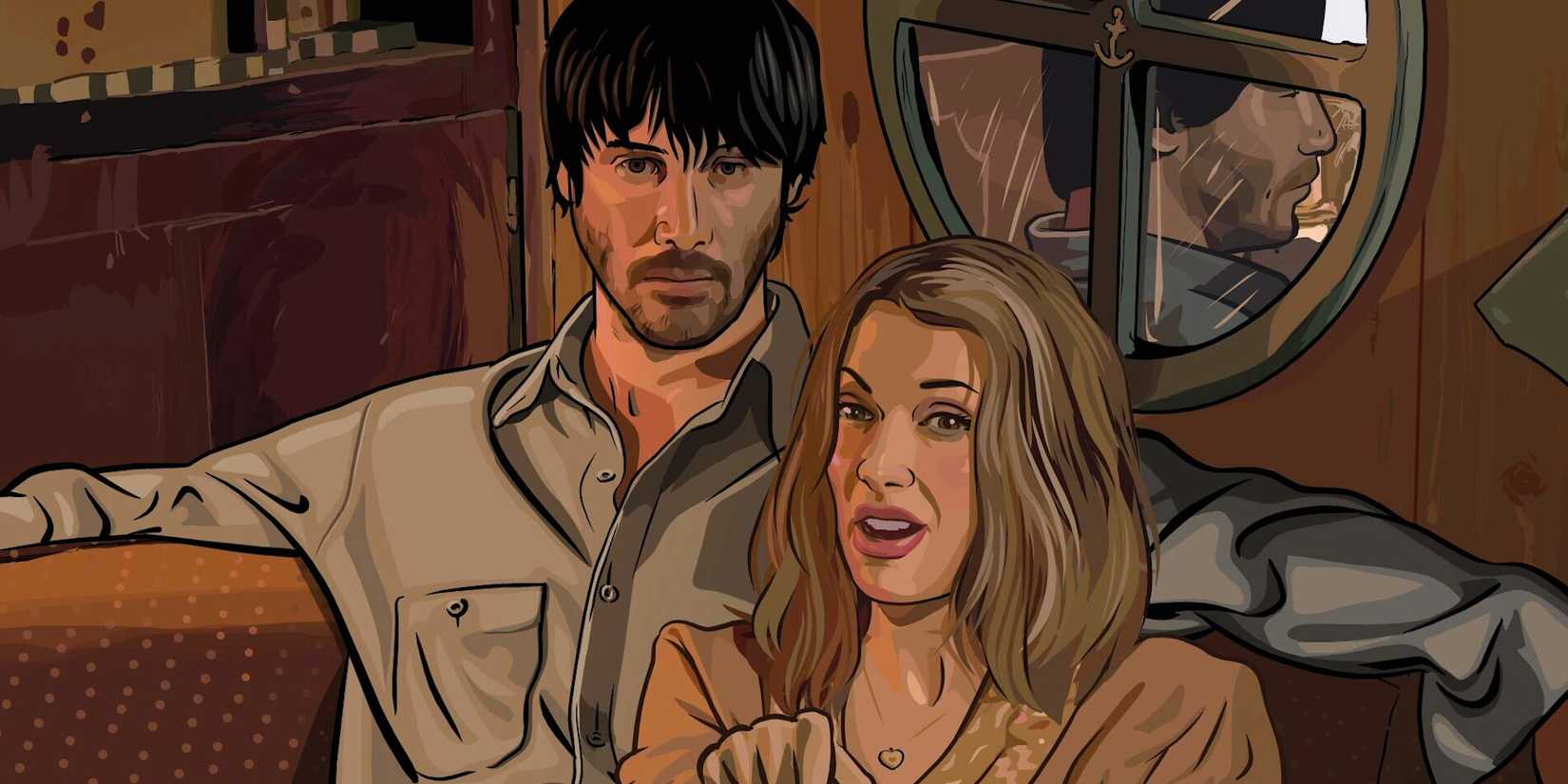
"What does a scanner see?" Philip K. Dick's A Scanner Darkly follows undercover narcotics agent Bob Arctor, who becomes trapped in a surreal nightmare after prolonged exposure to a dangerous drug known as Substance D. Rapidly losing his ability to distinguish reality from illusion, Arctor finds himself investigating people he knows, including increasingly fragmented versions of himself. The biggest challenge here is the subjectivity. Much of the story unfolds inside a mind being systematically dismantled by addiction and surveillance.
Nevertheless, Richard Linklater (of all people) committed himself to bringing this bizarro story to the screen, and he knocked it out of the park. His adaptation was shot in live action and then digitally rotoscope animated frame by frame, resulting in a dreamlike visual style that perfectly matches the material. The rest of the heavy lifting is done by the talented cast, including Keanu Reeves, Robert Downey Jr., Woody Harrelson, and Rory Cochrane.
'Dune' (1965)

"Fear is the mind-killer." For decades, Frank Herbert's Dune was perhaps the most famous "unfilmable" novel in sci-fi (a reputation that was not really improved by David Lynch's divisive 1984 adaptation). Set thousands of years in the future, the book revolves around Paul Atreides after his noble family takes control of the desert planet Arrakis, the only source of the universe's most valuable substance: spice. It's a hugely complex epic of philosophy, political intrigue, religious prophecy, ecological themes, and interstellar warfare.
Despite the intimidating challenge, Denis Villeneuve crafted the unwieldy material into one of the best sci-fi film series of the last quarter-century. His version of Dune treats Herbert's world with seriousness and respect, trusting audiences to absorb information gradually rather than overwhelming them with exposition. The visuals are also crucial: Arrakis feels genuinely vast and alien, while the giant sandworms finally appear with the scale and majesty readers had imagined for decades.
Collider Exclusive · Sci-Fi Survival Quiz Which Sci-Fi World Would You Survive? The Matrix · Mad Max · Blade Runner · Dune · Star Wars
Five universes. Five completely different ways the future went wrong — or sideways, or up in flames. Only one of them is the world your instincts were built for. Eight questions will figure out which dystopia, galaxy, or desert wasteland you'd actually make it out of alive.
💊The Matrix
🔥Mad Max
🌧️Blade Runner
🏜️Dune
🚀Star Wars
01
You sense something is deeply wrong with the world around you. What do you do? The first instinct is often the truest one.
02
In a world of scarcity, what resource do you guard most fiercely? What we protect reveals what we believe survival actually requires.
03
What kind of threat keeps you up at night? Fear is useful data — if you're honest about what you're actually afraid of.
04
How do you deal with authority you don't trust? Every dystopia has a power structure. Your approach to it determines everything.
05
Which environment could you actually endure long-term? Survival isn't just tactical — it's physical, psychological, and very much about where you are.
06
Who do you want in your corner when things fall apart? The company you keep is the clearest signal of who you actually are.
07
Where do you draw the line — if you draw one at all? Every survivor eventually faces a moment that tests what they're actually made of.
08
What would actually make survival worth it? Staying alive is one thing. Having a reason to is another.
Your Fate Has Been Calculated You'd Survive In…
Your answers point to the world your instincts were built for. This is the universe your temperament, your survival instincts, and your particular brand of stubbornness were made for.
The Matrix
You took the red pill a long time ago — probably before anyone offered it to you. You're a systems thinker who can't help but notice the seams in things.
- You're drawn to understanding how the system works before figuring out how to break it.
- You'd find the Resistance, or it would find you — your instinct for spotting constructed realities is the machines' worst nightmare.
- You function best when you have access to information and the freedom to act on it.
- The Matrix built an airtight prison. You'd be the one probing the walls for the door.
Mad Max
The wasteland doesn't reward the clever or the well-connected — it rewards those who are hard to kill and harder to break. That's you.
- You don't need comfort, community, or a cause larger than the next horizon.
- You need a vehicle, a clear threat, and enough fuel to outrun it — and you're good at all three.
- You are unsentimental enough to survive that world, and decent enough — just barely — to be something more than another raider.
- In the wasteland, that distinction is everything.
Blade Runner
You'd survive here because you know how to exist in moral grey areas without losing yourself completely.
- You read people accurately, keep your circle small, and ask the questions others prefer not to answer.
- In a city where humanity is a legal designation rather than a feeling, you hold onto something that keeps you functional.
- You're not a hero. But you're not lost, either.
- In Blade Runner's world, that distinction is everything.
Dune
Arrakis is the most hostile environment in the known universe — and you are precisely the kind of person it rewards.
- Patience, discipline, and political awareness are your core strengths — and on Arrakis, they're survival tools.
- You understand that the long game matters more than any single victory.
- Others come to Dune and are consumed by it. You'd learn its logic and earn its respect.
- In time, you wouldn't just survive Arrakis — you'd begin to reshape it.
Star Wars
The galaxy far, far away is vast, loud, and in a constant state of violent political upheaval — and you wouldn't have it any other way.
- You find meaning in being part of something larger than yourself — a cause, a crew, a rebellion.
- You'd gravitate toward the Rebellion, or the fringes, or whatever pocket of the galaxy still believes the Empire's grip can be broken.
- You fight — not because you have to, but because standing aside isn't something you're capable of.
- In Star Wars, that willingness is what makes all the difference.
'Life of Pi' (2001)

"I suppose in the end, the whole of life becomes an act of letting go." This beloved book from Yann Martel tells the story of Pi Patel, a young Indian boy who survives a shipwreck and finds himself stranded on a lifeboat with a Bengal tiger named Richard Parker. This premise sets the stage for a survival adventure, as well as a meditation on faith and the nature of truth. Much of the novel's power comes from ambiguity and rich philosophical ideas (not exactly easy to convey visually), as well as Martel's gorgeous prose.
Consequently, several directors flirted with adapting Life of Pi, including heavyweights like M. Night Shyamalan, Alfonso Cuarón, and Jean-Pierre Jeunet, though they all eventually walked away. Ang Lee was the one who eventually saw it through, crafting it into a gem worthy of the novel's reputation. The CGI is top-notch, and the imagery he conjures up is breathtaking, earning him a second Best Director Oscar.
'American Psycho' (1991)
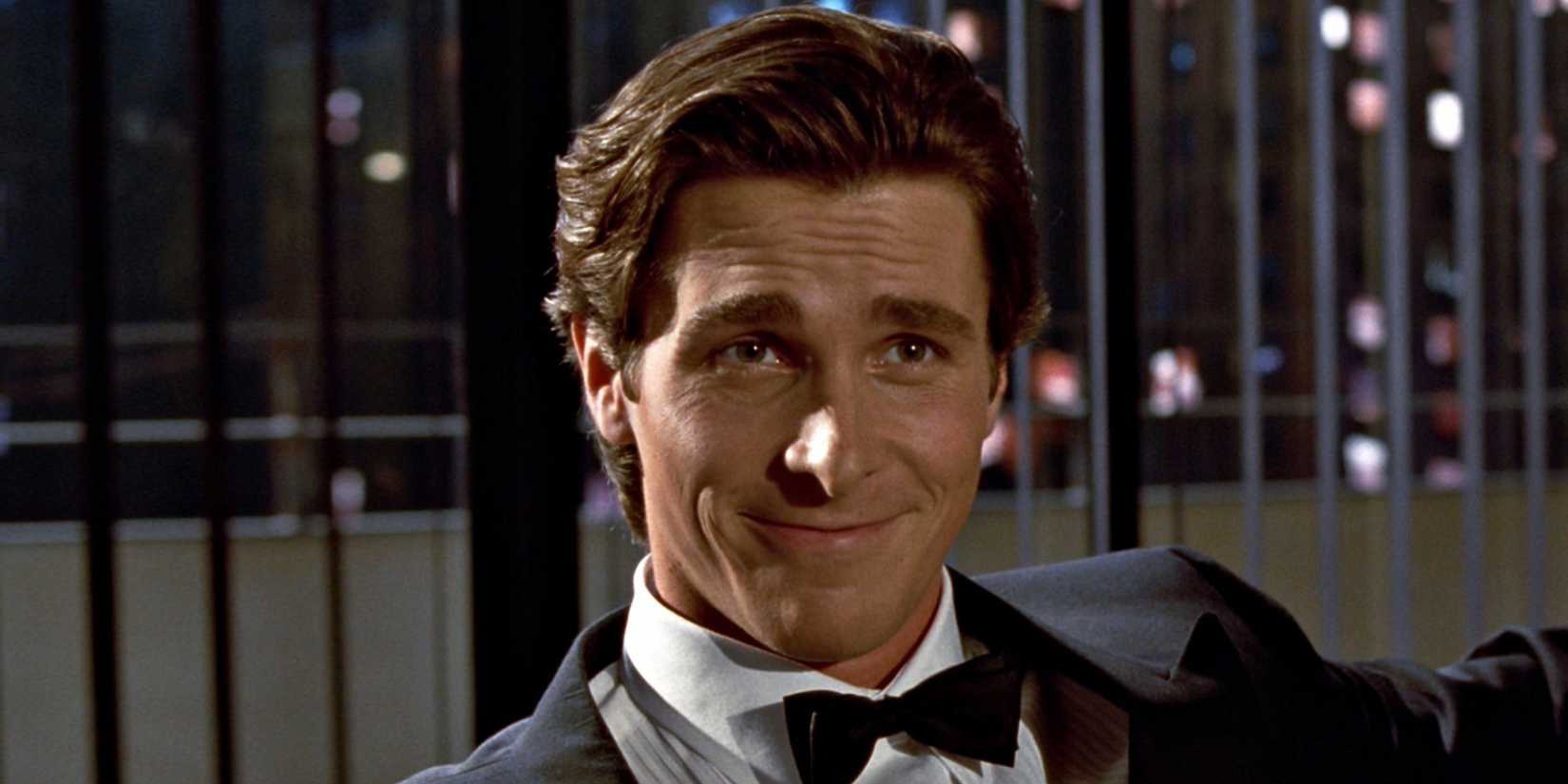
"I like to dissect girls. Did you know I'm utterly insane?" This dark classic centers on Patrick Bateman, a wealthy Manhattan investment banker whose life is defined by consumerism, status-seeking, and possibly serial murder. His narration is unreliable, repetitive, darkly comic, and frequently shocking, while bursts of stomach-turning violence punctuate the plot itself. The difficulty for any would-be adapters was in balancing satire and horror.
Taken literally, the novel risks becoming an exercise in cruelty and bad taste. Yet Brett Easton Ellis intended much of the story as a savage critique of materialism and 1980s excess. Director Mary Harron found the right middle ground between these two vibes, giving us a dark comedy with a genuinely disturbing edge. That said, the key ingredient in American Psycho is Christian Bale, who plays Patrick as simultaneously terrifying and absurd, resulting in several hilarious but unsettling moments.
'Ulysses' (1922)

"Think you're escaping and run into yourself. Longest way round is the shortest way home." Few books have intimidated readers more than James Joyce's Ulysses. It follows Leopold Bloom, Stephen Dedalus, and several other characters through a single day in Dublin, but describing its plot hardly captures its complexity. Joyce experiments constantly with language, perspective, structure, and style, to the point that many regard this as one of the most difficult novels ever written. Its impact lies less in external events than in the way Joyce represents consciousness itself.
Obviously, none of that introspective approach lends itself well to the screen. Nevertheless, director Joseph Strick, who also worked in the theater and on documentaries, turned it into a surprisingly strong character-driven drama in 1967. His movie version of Ulysses is faithful to the themes and emotions of the book, and evinces the filmmaker's clear affection for the source material.
'The Return of the King' (1955)

"I am glad you are here with me. Here at the end of all things, Sam." Pretty much everything about The Lord of the Rings resisted a live-action adaptation: the vast scope, enormous cast, detailed mythology, invented languages, wealth of monsters, and steady stream of sprawling battles. It was only in the late '90s and early 2000s that special effects were even capable of truly realizing something like this, and even then Peter Jackson's movies seriously strained at the limits of what the medium could do.
And yet, the finished product was an utter masterpiece, not just a new high-water mark for fantasy filmmaking, but one of the greatest movies ever made in any genre. More than 20 years after its release, The Lord of the Rings: The Return of the King remains the genre's finest achievement, a title it will likely hold for a long time to come.

- Cast
- Elijah Wood, Ian McKellen, Viggo Mortensen, Sean Astin, Andy Serkis, Dominic Monaghan, Billy Boyd, John Noble, David Wenham, Miranda Otto, Bernard Hill, John Rhys-Davies, Orlando Bloom, Hugo Weaving, Liv Tyler, Cate Blanchett, Karl Urban, Ian Holm, Sean Bean, Lawrence Makoare, Marton Csokas, Paul Norell, Noel Appleby, Sarah McLeod, Ali Astin
- Runtime
- 201 minutes
- Director
- Peter Jackson
- Writers
- Fran Walsh, Philippa Boyens, Peter Jackson, J.R.R. Tolkien
KioskNews shows a cleaned-up reading view extracted from the publisher’s page — the original always lives on their site, not ours.