7 Horror Films to Prepare You for Zach Cregger's Resident Evil

Ben Brewster is a filmmaker, critic, screenwriter, and actor whose work sits at the intersection of film culture, craft analysis, and storytelling.
He is a movie list contributing writer at Collider and a contributing writer for High on Films, where he covers contemporary cinema, independent film, and festival releases with an eye toward narrative structure, performance, and visual language.
Ben is an active film festival participant, having worked with Newport Film, the Nantucket Film Festival and as a screener for the Austin, Boston & Woodstock film festivals.
He brings to that work a programming instinct shaped by years of close engagement with independent and documentary cinema. This comes with a deep investment in the kinds of films that rarely find their way into the mainstream conversation without someone willing to advocate for them.
His background spans documentary and narrative filmmaking, film marketing, and production, including work with award-winning directors. This as well as developing his own indie production company, Lilac Creative Studio, through which he develops and produces original work across fiction and nonfiction forms.
His debut documentary, Diamond in the Rust, is an examination of economic redevelopment and displacement in the Queens area of New York City. The film was recently accepted to the Unisphere Film Festival, the Defense of Democracy Film Festival, and the Urbanite Arts & Film Festival. This would mark his first festival recognition as a director.
In addition to his writing and programming work, Ben hosts Beneath the Bloom, a film podcast exploring the work behind the scenes in cinema, and the struggles one can face to make a movie become a reality. The show reflects the same sensibility that runs through all of his work. A conviction that film is not merely entertainment but one of the most powerful tools human beings have for understanding each other.
Across mediums, his work is driven by a deep belief in film as a communal, transformative art form.
Sign in to your Collider account
Zach Cregger's Resident Evil hits theaters September 18th, and after Weapons and Barbarian, expectations could not be higher. Cregger has quickly become one of the most exciting creative voices in modern horror, someone who understands terror as a slow, patient build built on expectation rather than the jump scares that dominated the genre for quite some time. Sony clearly believes he's the right person to finally crack a franchise that has struggled to translate its video game roots into a quality theatrical experience. This new take follows Bryan (Austin Adams), a medical courier who stumbles into an outbreak at a remote hospital and is forced to fight his way out through hordes of infected creatures over one nightmarish night. Cregger is fresh off of 2025's Weapons, a critical and commercial smash that grossed over $269 million worldwide and earned Amy Madigan an Oscar. He arrives with more industry goodwill and creative leverage than almost any other horror director stepping into a video game adaptation ever has. That combination of proven craft and creative trust and license is exactly why this particular reboot feels different from the franchise's prior attempts.
Getting ready for it means revisiting the films that built the DNA that Cregger is clearly drawing from: outbreak horror, claustrophobic survival, and the kind of anxiety-inducing fear that can only come when you truly do not know what to expect next. This list traces that lineage all the way from the Umbrella Corporation's earlier screen outings through the genre's high points, ending with what might be the single best pure zombie film ever made. Consider it required viewing before opening night. Each of these projects approaches infection and outbreak horror from a slightly different angle; corporate conspiracy, claustrophobic confinement, global scale, giving a full picture of everything this subgenre is capable of. There's no reason to watch these in order, but it does trace a clear evolution in how directors have handled this kind of story for the past two decades.
Here are seven horror films to get you fully primed for Cregger's take on Resident Evil. Some showcase the outbreak-horror lineage directly, tracing where the genre's visual and tonal language actually comes from. Others share Cregger's specific interest in modern horror tactics, letting suspense and fear develop pretty much as long as possible. A couple are pure scale and spectacle, useful reminders of just how big this kind of story can get once a studio commits fully to it. Together, they map out the territory that Cregger is stepping into and what kind of performances and sequences he will need to top.
7 'Resident Evil' (2002)

Paul W.S. Anderson's original film adaptation may not be any masterpiece of horror craft, but its placement here is purely as a baseline comparsion for how far this franchise has come. The reboot allows for ample room for Cregger's version to reinvent it in a survival horror aesthetic that more closely mirrors the game's aesthetics and structure. Milla Jovoich's Alice became an iconic action horror lead of the 2000s almost overnight, even as the version of the franchise leaned harder into stylized gunfights and fought constant mixed reviews over its nearly decade and a half run (2002-2016). Looking back at the original a decade later after its final entry, audiences are reminded that aspects such as the hive setting, were fairly effective as a claustrophobic horror space. An all-sterile white corridors and a homicidal AI were entertaining elements of an otherwise unevenly developed project. Regardless, this debut kicked off a six-film franchise that grew increasingly action focused with every subsequent film, which is exactly the thing Cregger's reboot seems destined to correct.
Watching it now is less about scares and more about looking at what a straight, atmosphere-first Resident Evil adaptation was capable of being. The Umberlla Corporation's cold, coproate indifference to human life, dropping test subjects into a nightmare, is a theme that's remained throughout every film. It's a useful reminder of the franchise's premise, stripped down to its essentials before six sequels buried it in increasingly convoluted mythology. Jovovich's performance, for all the film's shortcomings, established a template for a capable, resourceful horror lead that later entries relied upon. For anyone catching up before Cregger's version, this is where the cinematic side of the story actually began.
6 'Barbarian' (2022)
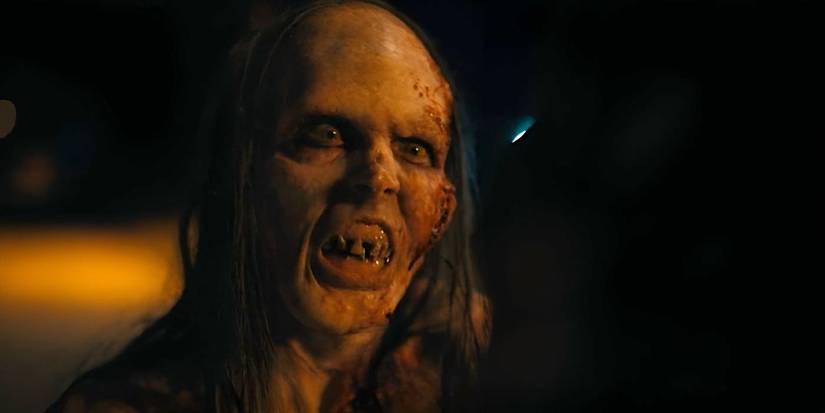
Zach Cregger's solo directorial debut announced him as a uniquely creative horror talent, a project designed around subverting expectations about where its story is actually headed. Georgina Campbell stars as a woman who discovers her Airbnb has been double booked with a stranger, a set-up that spirals into something far darker and terrifying. Cregger's command of tone, shifting from tense thriller to pitch black comedy to grotesque body horror, is what makes his body of work such an intriguing fit for a franchise this vast and tonally varied. The film's now infamous midpoint structural swerve is still one of the more talked about surprises in recent horror memory.
Barbarian is the film that should tell you everything about what to expect tonally from Resident Evil, a real confidence in patience and build up, and an interest in the human ugliness evident in institutional and interpersonal decay. Cregger creates empathy for his characters before subjecting them to escalating horror, a discipline that separates great horror from more disposable scares. It's the clearest evidence yet that he understands how to build a truly unsettling atmosphere from the ground up. Justin Long's performance demonstrates Cregger's gift for casting against type, in ways that pay off enormously by the film's end. If you've somehow missed this one, it's essential pre-Resident Evil homework.
5 '28 Days Later' (2002)

Danny Boyle's genre-redefining outbreak film reinvented what a zombie movie could be, trading the shuffling, groaning undead for the fast and feral rage-infected humans capable of the immediate terror the franchise has come to be known for. Cillian Murphy anchors the film as a man waking up from a coma into a version of London already emptied by catastrophe. Those early shots and sequences of him wandering an abandoned city are some of the most haunting images of 21st century horror. Boyle's grainy, digital-video aesthetic gives the film a raw, documentary-like urgency that countless outbreak films have tried and failed to replicate since. The back half of the movie shifts its focus to a group of surviving soldiers, and adds a real moral complexity about what humanity looks like once civilization collapses.
28 Days Later is the film that essentially rewired audience expectations for infection horror, and its DNA is all over every subsequent Resident Evil adaptation's attempts to modernize its own creature threats. The "fast zombie" innovation alone changed the genre permanently, injecting a form of physical urgency that hadn't been explored in a subgenre that had unfortunately grown into something comfortable, slow and recognizable to audiences. Its bleak, morally ambiguous ending remains one of the zombie film category's most effective gut-punches. Boyle's willingness to end on uncertainty instead of a tidy resolution sets a tonal precedent that better apocalyptic films on the undead have followed ever since. Watch this one to understand where modern zombie horror's visual and tonal language is bred from.
4 'Cloverfield' (2008)

Matt Reeves's found-footage monster movie relocated giant horror to street level, following a group of young New Yorkers trying to survive and document a sudden, inexplicable attack on the city in real time. The shaky, handheld camera work, controversial at the time, puts the audience directly inside the characters' confusion and panic without offering the clarity and comfort of a traditional wide shot. Reeves withholds full depictions of the creature for the majority of its runtime, opting for a strategy of suggestion and partial glimpses which tend to be much scarier than a complete reveal. The film's ground-level chaos, collapsing buildings, panicked crowds, military barricades, give it a scale to a story told and centered on an incredibly intimate, limited perspective.
The connection to Resident Evil is less about zombies specifically and more about tone: ordinary people with no special training thrown into a catastrophic, world-ending event they don't understand and can't control. That's precisely the position Cregger's protagonist Bryan finds himself in, a medical courier with no combat training forced into one night of pure non-stop survival. Cloverfield's commitment to disorientation and limited information mirrors the kind of dread that any good survival-horror adaptation should generate. The movie's refusal to fully explain its creature or its origins keeps audiences in the same state of confused panic as the characters are in throughout. It's a reminder that scale and intimacy aren't mutually exclusive in this genre.
3 'World War Z' (2013)

Marc Forster's globe-trotting zombie epic swings for a blockbuster scale, following Brad Pitt's former UN investigator as he races around the world trying to find the source of, and a cure for, a rapidly spreading zombie pandemic. The film's most memorable sequences, massive, swarming hordes of infected scaling walls and overwhelming cities in tidal waves of bodies, gave the zombie genre a sense of true, apocalyptic scale rarely attempted before or since. Pitt leads with a grounded urgency, playing an ordinary family man ripped from his loved ones and thrust into a globe-spanning crisis he had no plan for. The production's notoriously troubled reshoots reworked the entire third act, but the finished film's mix of scale and intimate survival tension still largely works over a decade after its original release.
World War Z serves as useful preparation specifically for understanding how a franchise can steadily ramp up a virus outbreak without losing the horror elements or human stakes entirely, a balance that the Resident Evil games and movies have wrestled with across every installment. The film's central question, whether a single family's survival matters against a planet-scale catastrophe, echoes the corporate-versus-individual tension that's always driven the Umbrella Corporation's mythology. It's blockbuster horror rather than pure genre film-making, but its scale remains genuinely impressive. The international scope of the project, moving from South Korea to Israel to Wales within its runtime, gives it a global sense of catastrophe that few zombie adjacent films attempt. A solid reminder of just how large this kind of story can get when a studio commits fully to the spectacle.
2 'Dawn of the Dead' (2004)

Zack Snyder's feature directorial debut Dawn of the Dead reinvented George Romero's original for a new generation, trading slow, shuffling zombies for fast, aggressive, terrifyingly relentless ones. The shift ended up changing the genre's pacing and tonal language permanently. A group of survivors barricades themselves inside a shopping mall as the outbreak spreads outside, and the fear escalates and desperation escalates from within. Snyder mines real tension from the claustrophobia of a space meant for consumption now serving as a fortress against imminent collapse. The film's opening sequence, a wordless, escalating descent from ordinary morning routine into full-blown chaos, remains one of the most purely effective openings in zombie movie history. Snyder balances his scares with dark comedy and surprisingly effective character work across a large, well-drawn ensemble cast.
This is essential preparation for the kind of relentless, high-velocity threat Cregger's version of Resident Evil seems to be building toward, infected creatures capable of speed and aggression at a degree most zombie films don't gear themselves toward. The film's interest in how quickly social order collapses once systems stop working is reminiscent of the kind of institutional failure baked into the workings and history of the Umbrella Corporation. It's tightly structured, genuinely tense from start to finish, and remains one of the best modern zombie movies made in English. Snyder's later career, despite all of its grand scale, never again matched the lean efficiency he brought to this debut. If Cregger's Resident Evil captures even half of this film's relentless energy, audiences are in for something special.
1 'Train to Busan' (2016)
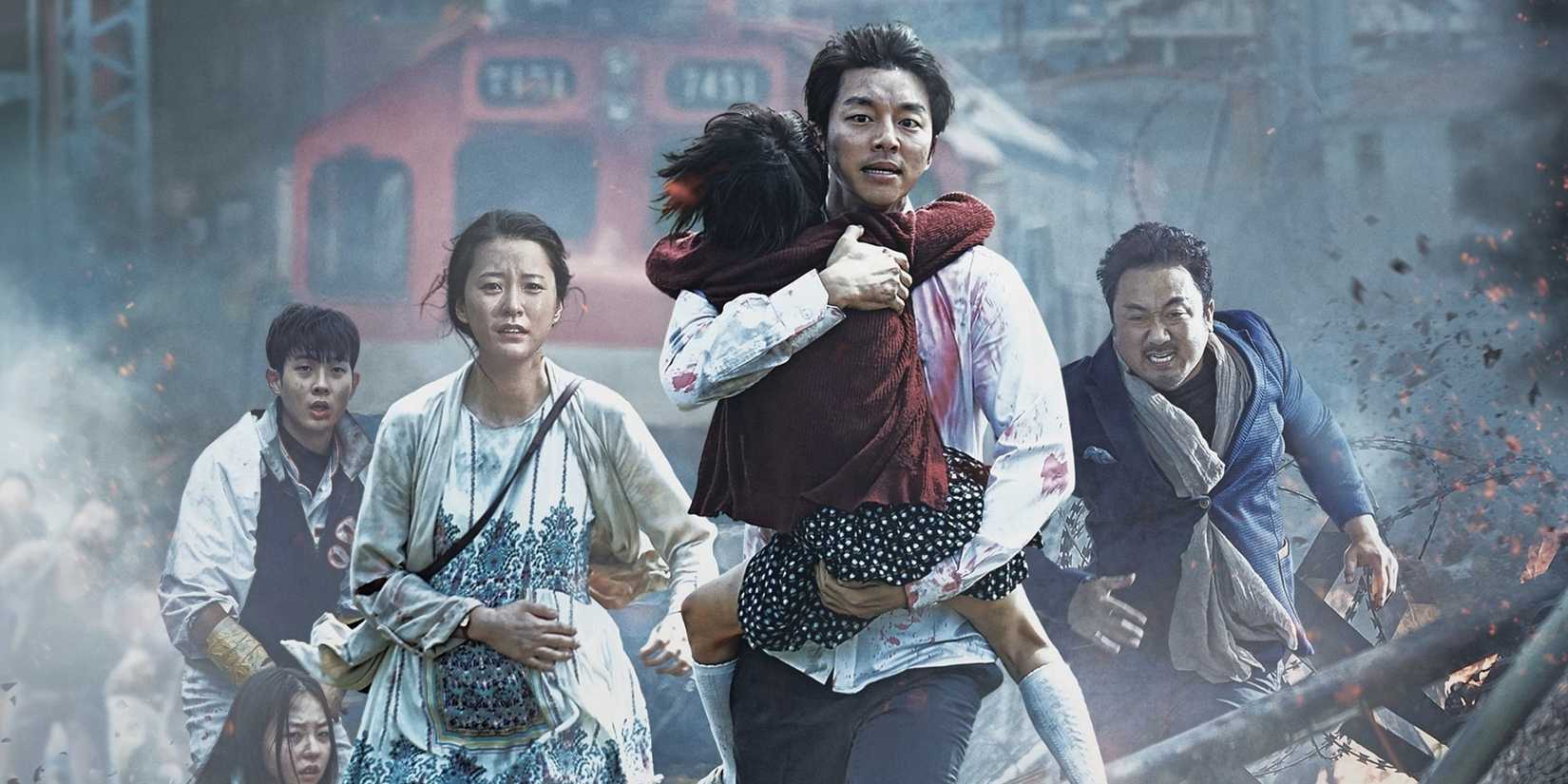
Yeon Sang-ho's claustrophobic masterpiece Train to Busan stands as the gold standard of modern outbreak horror, confining its entire zombie apocalypse to a single high-speed train racing toward the last uninfected city in South Korea. Gong Yoo anchors the film as an emotionally distant father forced to confront his own selfishness while protecting his young daughter against a series of increasingly desperate train cars. Yeon builds devastating emotional stakes alongside relentless, propulsive action, making the film's losses land with real weight rather than feel like cheap genre spectacle. The zombies themselves are terrifyingly fast and aggressive, but the film's real horror often comes from the selfish, cowardly choices made by the surviving humans around them.
This is the film every modern outbreak horror movie, Resident Evil included, is still chasing. It's a perfect combination of visceral tension, tight structural confinement, and a human desperation that feels second to none. Its influence on the entire subgenre since release has been massive, and it is the clearest possible argument for why claustrophobic, character-driven outbreak projects work better than sprawling effects-driven herds of slow-moaning zombies or infected. Every element, pacing, character work, practical tension, is calibrated as close to perfectly as this kind of film gets. Its success also helped fuel a broader global appetite for South Korean genre film-making that continues to shape international horror to this day. If you watch nothing else on this list before Resident Evil, make it this one. It's simply the best the genre has to offer.
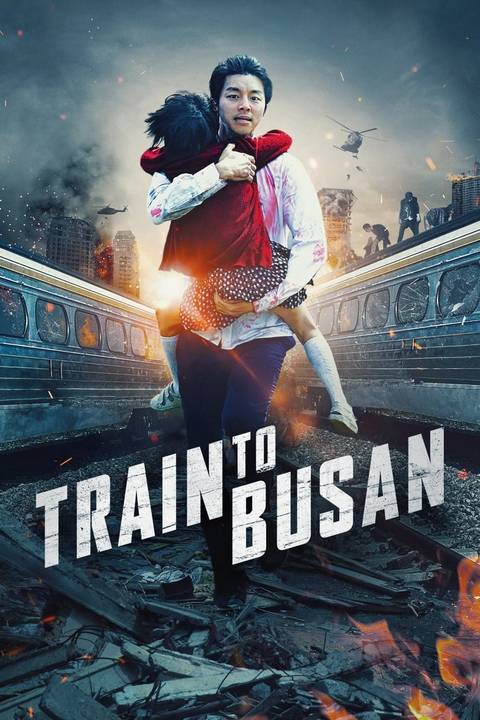
- Release Date
- July 20, 2016
- Runtime
- 118 minutes
- Director
- Yeon Sang-ho
- Writers
- Park Joo-suk
- Producers
- Kim Woo-taek, Lee Dong-ha, Huh Soo Young
KioskNews shows a cleaned-up reading view extracted from the publisher’s page — the original always lives on their site, not ours.