As Europe warms, Italy sees West Nile virus spread
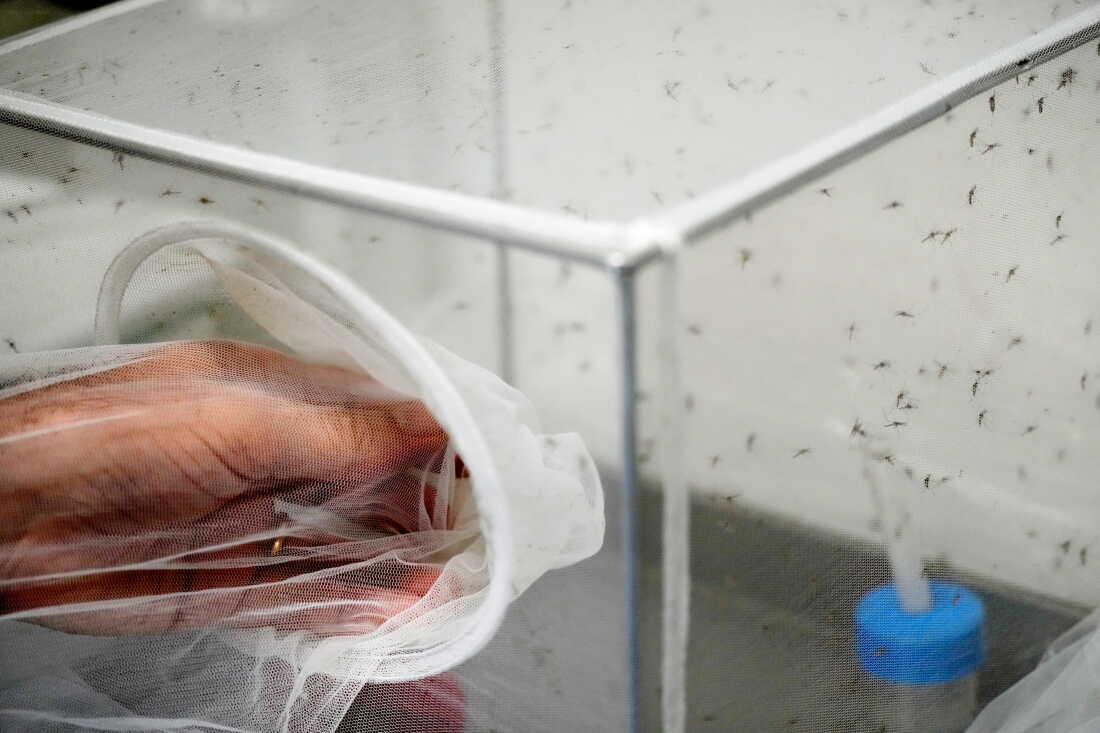
Francesco Severino, a senior researcher in medical entomology, places a net over a cage containing mosquitoes inside a laboratory at the Italian National Institute of Health in Rome, Friday, Sept. 18, 2026. Gregorio Borgia/AP hide caption
toggle caption
Gregorio Borgia/AP
Italian health authorities see evidence that rising temperatures and longer warm seasons are helping mosquitoes spread West Nile virus across a wider area, during more months of the year.
More than 650 infections have been reported in Italy so far this year, accounting for roughly half of all cases recorded in Europe, according to local health authorities.
"Higher temperatures linked to climate change help mosquitoes reproduce and extend the transmission season, increasing the chances that infected mosquitoes will spread the virus to people," said Antonino Bella, researcher at Italy's National Institute of Health, or ISS.
West Nile has been considered endemic in Italy since 2020, when cases started to surge, and is now reported every summer and early fall. About 80% of infected people develop no symptoms, while most others experience a mild flu-like illness. Severe neurological complications occur in a small minority of cases, mainly among older adults and people with underlying health conditions.
Experts say this year's case numbers are broadly in line with recent seasons.
But warmer temperatures favor mosquito reproduction and can mean the transmission season sometimes lasts as late as November, Bella explained. Areas once largely unaffected are increasingly reporting infections, reflecting a gradual expansion of the virus across the country.
Italy's experience with the virus is drawing attention from European countries located farther north. A Belgian research team visited the ISS last May to study Italy's research and surveillance system after the country began recording locally acquired West Nile cases.
The Netherlands this year has reported more than two dozen West Nile cases, the first since 2020, as well as several deaths, according to its public health institute.
"There's no doubt that warming weather will expand the period of replication for the virus and the vector in more countries," said Marc-Alain Widdowson, who leads the Pandemic Threats, Communicable Diseases, and AMR Division at the World Health Organization's Europe office.
"You've got to be careful not to say that climate change is all of it, but certainly a warming climate means that we have a longer mosquito season, so that the vectors can survive for longer. Warm temperatures also mean that the virus itself will survive better," he added.
Experts note that Italy's extensive monitoring network, which tracks mosquitoes, birds, blood donors and human infections, also helps explain why the country detects so many cases.
"There are definitely trends which we think are contributing to increased activity," Widdowson said, citing a warming climate, loss of biodiversity and changes in land use. A longer mosquito season creates more opportunities for transmission, he added, while declines in bird diversity may favor species that are efficient reservoirs of the virus.
In June, the European Center for Disease Prevention and Control, or ECDC, warned that because Europe is experiencing a warming trend — with heat waves and flooding becoming more frequent and severe, and summers getting longer and warmer — the conditions are more favorable for invasive mosquito species such as Aedes albopictus and Aedes aegypti.
Aedes aegypti — known to transmit dengue, yellow fever, chikungunya, zika and West Nile viruses — has been established in Cyprus since 2022 and may spread to other European countries.
A decade ago, the Aedes albopictus mosquito was established in eight European countries, with 114 regions affected. This year, the mosquito is established in 13 countries and 337 regions, the ECDC said.
KioskNews shows a cleaned-up reading view extracted from the publisher’s page — the original always lives on their site, not ours.