For 40 days, she must not eat a thing. Thousands come to watch
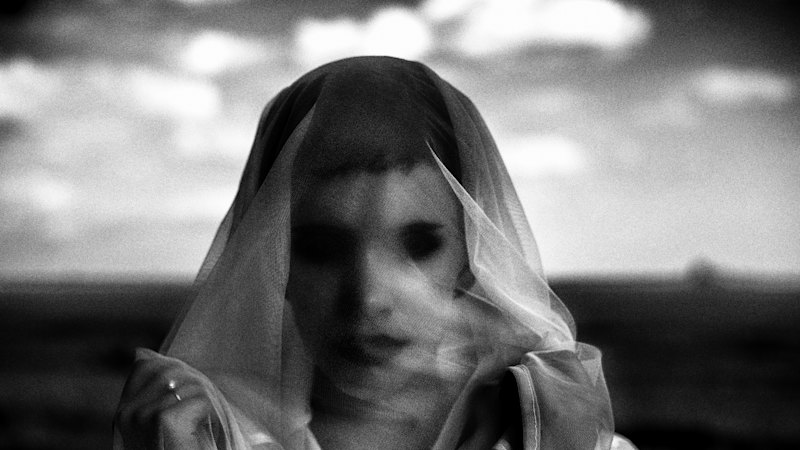
Hazel, a young veiled woman in a wedding dress, lies in a glass casket for 10 hours each day, with the goal of slowly wasting away. She is allowed to sip water, but nary a morsel should pass her lips. If she succeeds for 40 days and nights, she’ll receive £40,000.
To make this spectacle even more compelling, around her enclosure prowls a bedraggled lion. Ragtag customers line up to ogle her, as though she were a princess trapped in a crumbling castle, albeit one who’s fated to never marry her prince.
Such an outlandish premise is the subject of New Zealand novelist Catherine Chidgey’s latest novel, The Starving Bride which, even more strangely, is based on a real-life event in the 1930s, as the author’s note points out.
The starving bride of this morbid, subversive fairytale set some time in the near future in Blackpool, England, is lured into performing her circus act by her glittery childhood friend, Gilda. Desperate, impoverished and long anxious about what she perceives as her excessive weight, Hazel sees her hunger strike in captivity as an opportunity to both gain money and lose kilos.
The world has gone to seed thanks to climate change, prompting all manner of social and environmental unrest, including food riots and the death of bees. As a way of helping the disenfranchised escape into another reality, the seaside town launches a cynical marketing campaign to lure tourists by appealing to their nostalgia and recreating a sideshow of freak acts from yesteryear. This “simpler time” meant retrograde exploitation as entertainment. Thus, we find our bride nestled among the likes of “Wonder Midgets,” “Britain’s Fattest Boy,” conjoined twins, and tigers jumping through hoops – fodder for the voyeuristic masses. It was all supposed to be an illusory ruse, of course. Hazel was allowed to eat small meals at night, her shrinking frame to be aided by make-up, wardrobe modifications, and lighting.
But what happens when she takes her quest seriously? The delirious 40-day countdown begins.
Chidgey explores the cult of thinness with a keen, mordant eye. The Starving Bride is all about the aesthetics of surface and body dysmorphia. Hazel’s biggest fans are teenagers and young women who want to know the secret of her self-control, how she can discipline herself to not succumb to the allure of food. She is their thinspiration. Just like our present day, appearances matter deeply here. Even Hazel’s mother, an interior decorator, knows the value of prettifying and decluttering to maximise the sale of a home.
A secondary storyline follows the plight of town councillor Frank, who is concerned about Blackpool’s tower – the town’s most famous landmark – and is on a one-man mission to have it restored and strengthened because its foundations and cladding are in dire condition. Eventually, the two narratives intertwine, with Frank’s adolescent daughter – a zealous fan of the starving bride – providing the link between them. Frank’s strand is not as strong as Hazel’s point of view, and is the weaker element of the book. He doesn’t read like a fully formed character and seems like just a mouthpiece to move the plot along.
Nonetheless, as a whole, the novel is a beguiling and horrifying exploration of both extreme dieting and the voraciousness of public consumption of novelty and scandal.
Fittingly, the book is book ended by Chidgey’s dedication “for our younger selves, who were beautiful already”, and a list of organisations that help with eating disorders.
The Starving Bride by Catherine Chidgey is published by Penguin ($35).
What else is happening in the book world?
- I hated this book. Then I realised just how brilliant it was
- Looking for your next book? Read our critics’ takes on the latest releases
- Rage, depression, despair: This book explains why PMDD is still so misunderstood
- In her new book, Pachinko author Min Jin Lee takes on the tyranny of ambition
The Booklist is a weekly newsletter for book lovers from Jason Steger. Get it delivered every Friday.
KioskNews shows a cleaned-up reading view extracted from the publisher’s page — the original always lives on their site, not ours.