What happens inside a baby’s brain when looking at screens
Tan Yin Ling and her baby, eight-month-old Raynera, are taking part in an experiment at NUS Medicine, where their brain activity is detected using the equipment they wear on their heads.
Then, under the instructions of NUS Medicine clinician scientist Evelyn Law, who is conducting the experiment, Tan turns away briefly.
When she faces her daughter again, she is holding her phone, head down and absorbed in reading an e-mail on her phone.
She does not smile and does not react to anything that Raynera does.
What happens next is most striking.
Adapted from a famous experiment from the 1970s, similar ones are being replicated around the world. The results are similar – infants cry when their parents and caregivers turn their attention away from their children to their mobile phones.
This phenomenon is called “technoference”. It is one of the issues being studied by Law, who is an associate professor, and teams of researchers at NUS Medicine and A*STAR as they examine the effects of screens on children.
They are among researchers worldwide looking into the impact of screen exposure on growing children – including their social, emotional and cognitive development at a young age and into their teenage years.
One of the most impactful studies to date by the NUS team led by Law looked inside the brains of babies with varying levels of screen exposure to investigate whether and how it might affect them. The study found differences in the brains of toddlers as young as 18 months of age.
Here are the brain scans of two toddlers who took part in the study, which was published in 2023 in the peer-reviewed medical journal JAMA Pediatrics.
Look closely at the 18-month-olds’ brain scans.
The colours represent the balance between two types of brainwaves.
Blue and green beta waves are faster brainwaves that are associated with active thinking, focus and executive function.
Orange and red theta waves are slower brainwaves that, when a child is awake, reflect a more passive and unengaged state.
Law said the findings add to the evidence that excessive screen time is linked to differences in brain development and learning in children from a very young age.
Law specialises in developmental and behavioural paediatrics at the NUS Yong Loo Lin School of Medicine and National University Hospital. She is also principal investigator at the A*STAR Institute for Human Potential and Development.
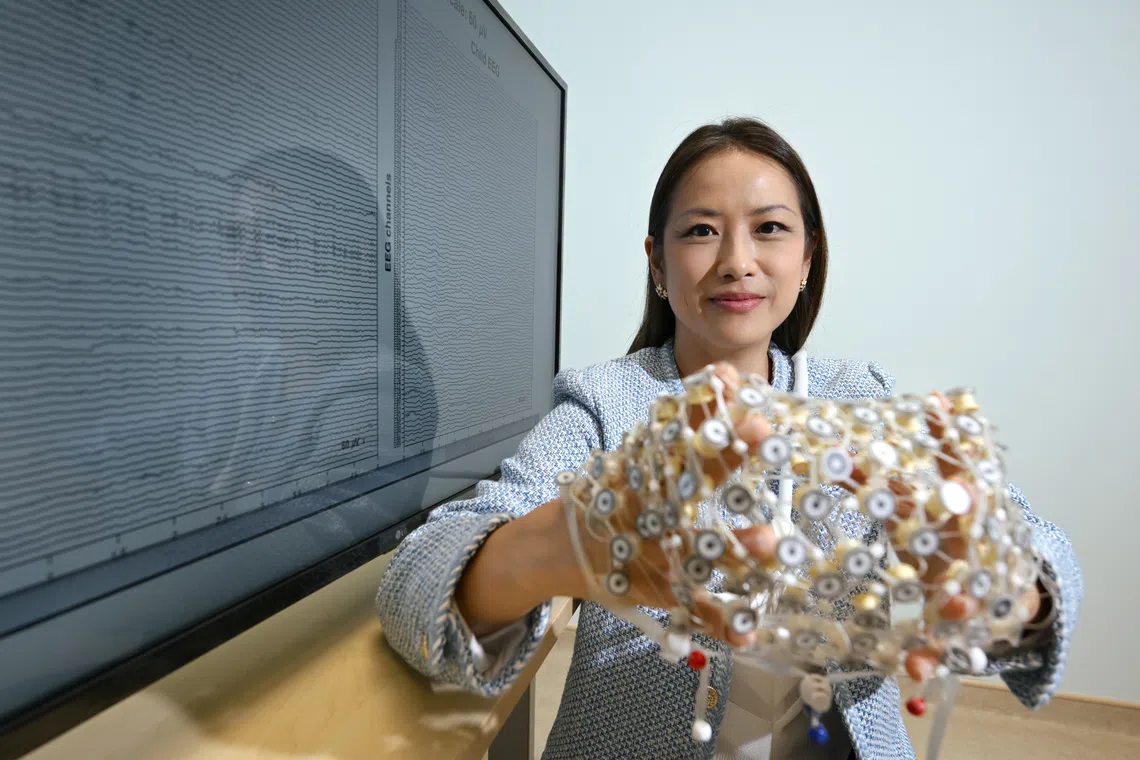
Evelyn Law, an associate professor and clinician scientist from NUS Medicine and National University Hospital, with a flexible cap or “net” equipped with electrodes to detect electrical activity.
ST PHOTO: NG SOR LUAN
The children are part of the GUSTO (Growing Up in Singapore Towards healthy Outcomes) study, a long-term project that tracks mothers and their children from pregnancy to childhood and adolescence.
When the 500 babies involved in the study were 12 months old, researchers asked the parents how much time their babies spent with screens on weekdays and weekends. The children were then divided into four groups according to their daily screen exposure – less than one hour, one to two hours, two to four hours and more than four hours.
Law explained that researchers included television viewing as part of screen time because a TV is a digital display device that emits light, motion and sound, capturing a toddler’s attention just like a phone or tablet.
In child development research, any time spent watching a video display counts as screen exposure because it replaces active play, human interaction and hands-on learning.
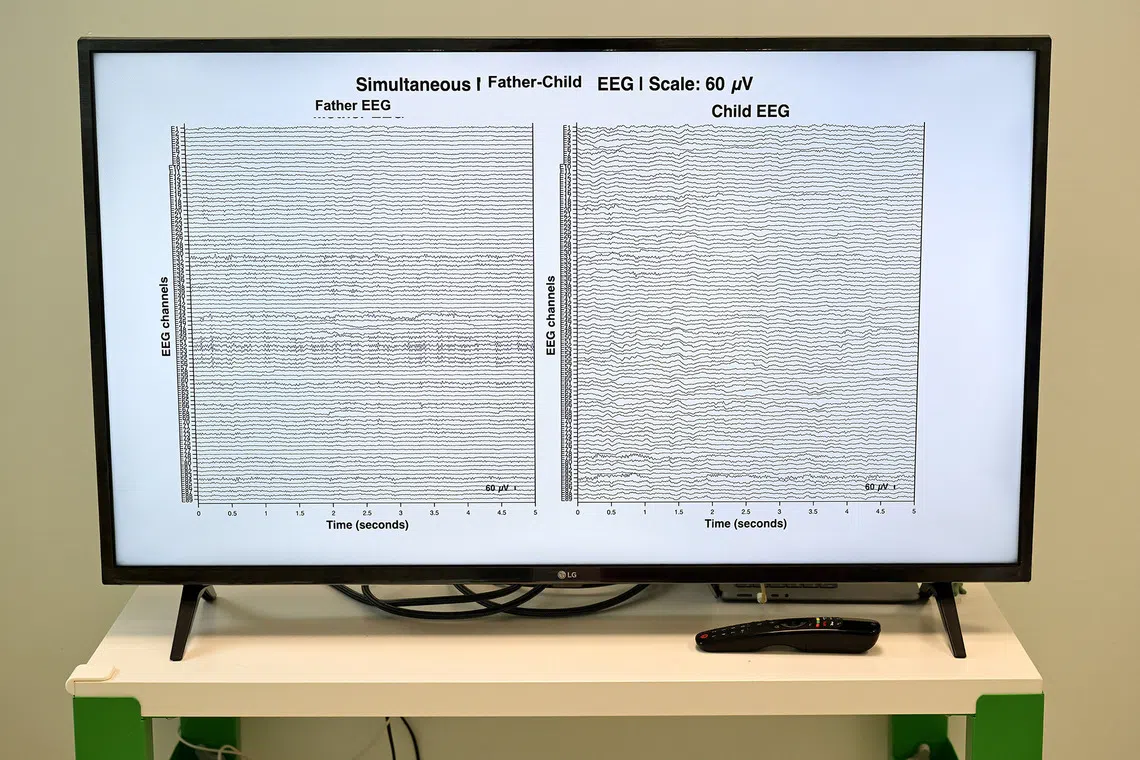
When the same group of children were 18 months old, the researchers used electroencephalograms to study the electrical activity in their brains. The toddlers wore a flexible cap or “net” equipped with electrodes to detect electrical activity.
This revealed that infants with high daily screen time had disproportionately stronger theta waves compared with beta waves when they were awake.
At age nine, the children in the study were assessed again. The aim was to find out whether screen time and the changes observed in their brain activity had impacted them as they grew up.
This time, the researchers used a neuropsychological test, the Nepsy-II, to assess executive function abilities, such as the ability to focus and pay attention, memory and self-control.
Again, the pattern in the earlier findings held. As screen exposure increased, the greater the difficulties with attention and executive functioning.
In one part of the Nepsy test, a child sees a series of black and white arrows that are randomly pointed up and down.
First, the child is asked to state the direction of each arrow.
Then the rules change: An arrow pointing up must be called “down”, and vice versa.
The next level is even harder: The children are asked to state an arrow’s correct direction when it is black and the opposite direction when it is white.
Law explained that this test measures attention, self-monitoring and inhibitory control – how well the brain can adapt when the rules of a task change suddenly, and the ability to override an automatic response and do the opposite.
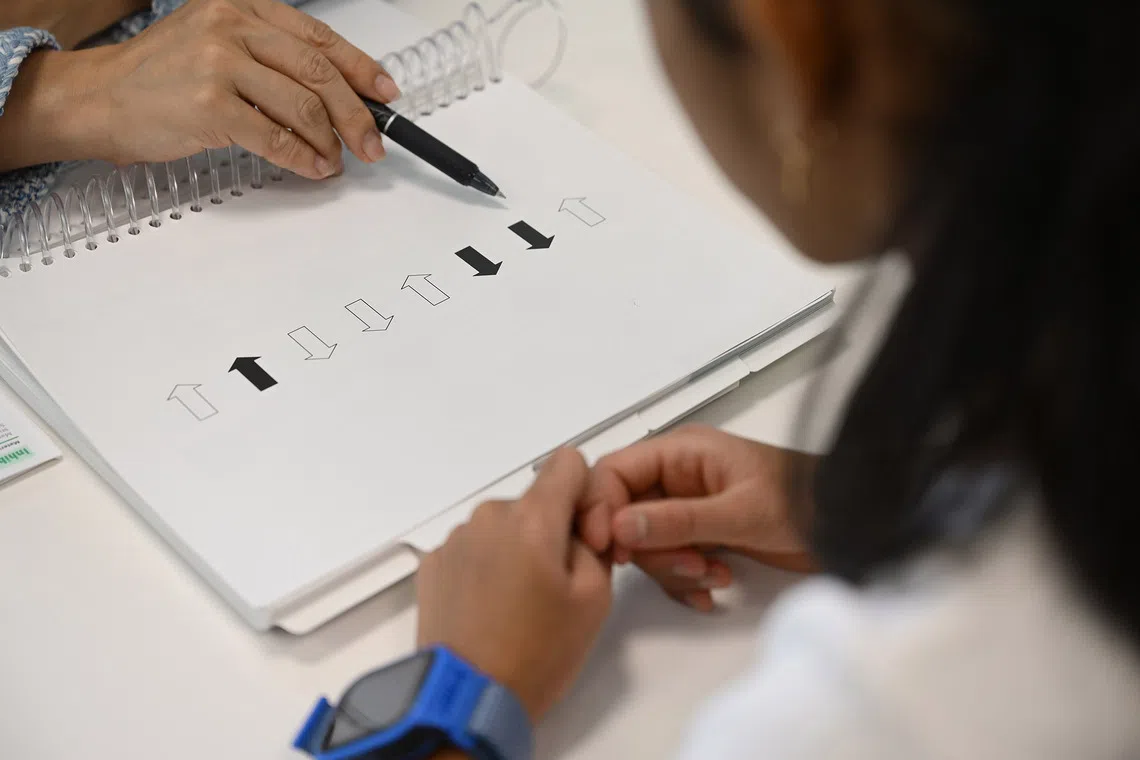
In one part of the Nepsy-II test, a child initially has to call out the direction of each arrow shown in a series.
ST PHOTO: NG SOR LUAN
These are the same skills that children with executive function deficits struggle with when they have to follow multi-step instructions, control an impulse, persist in a difficult task or manage their impulses or emotions, she said.
These are essential skills for learning and doing well in school, Law added.

Then the rules change. An arrow pointing up must be called “down”, and vice versa.
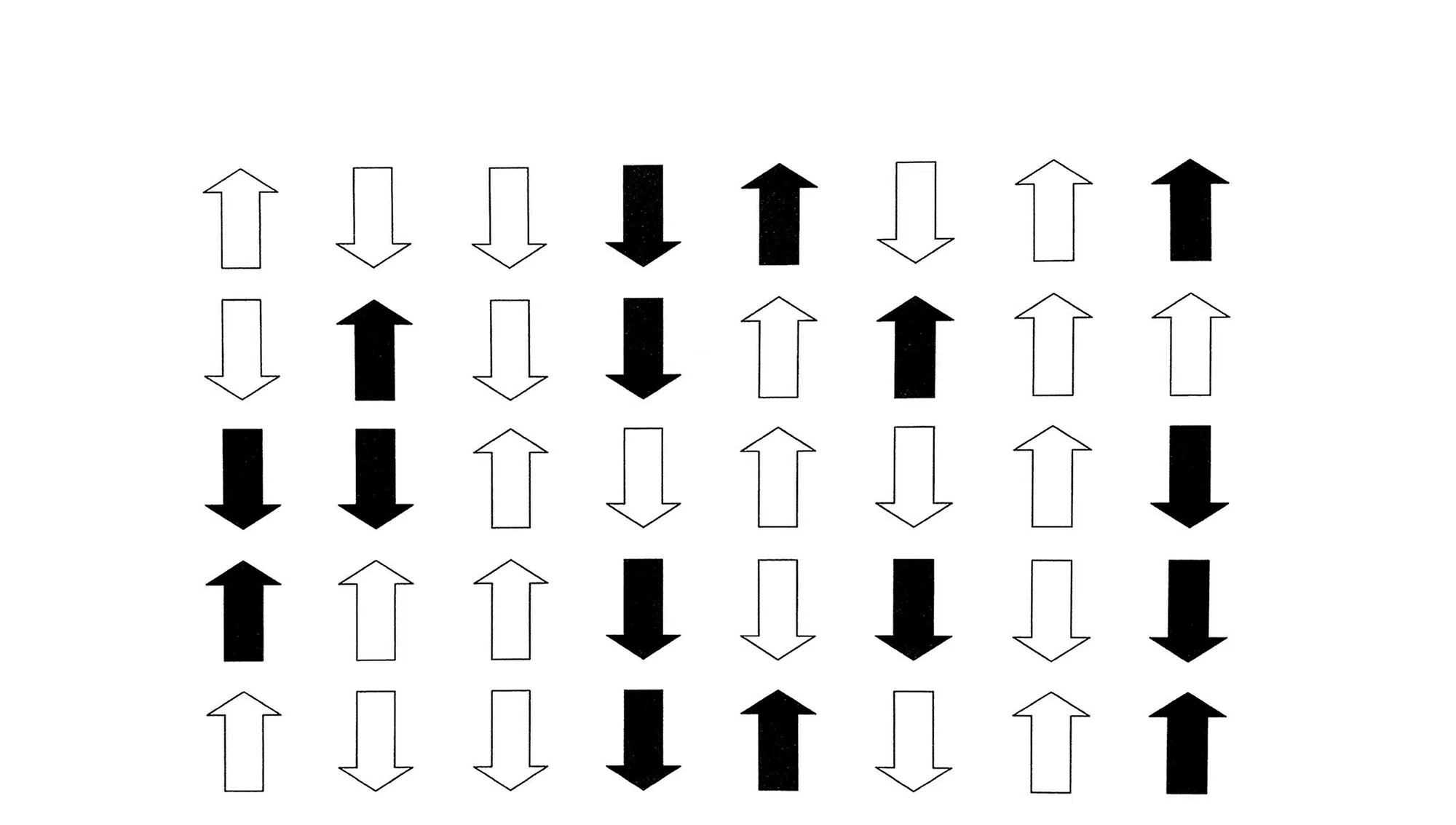
The next level is even harder: The children are asked to state an arrow’s correct direction when it is black and the opposite direction when it is white.
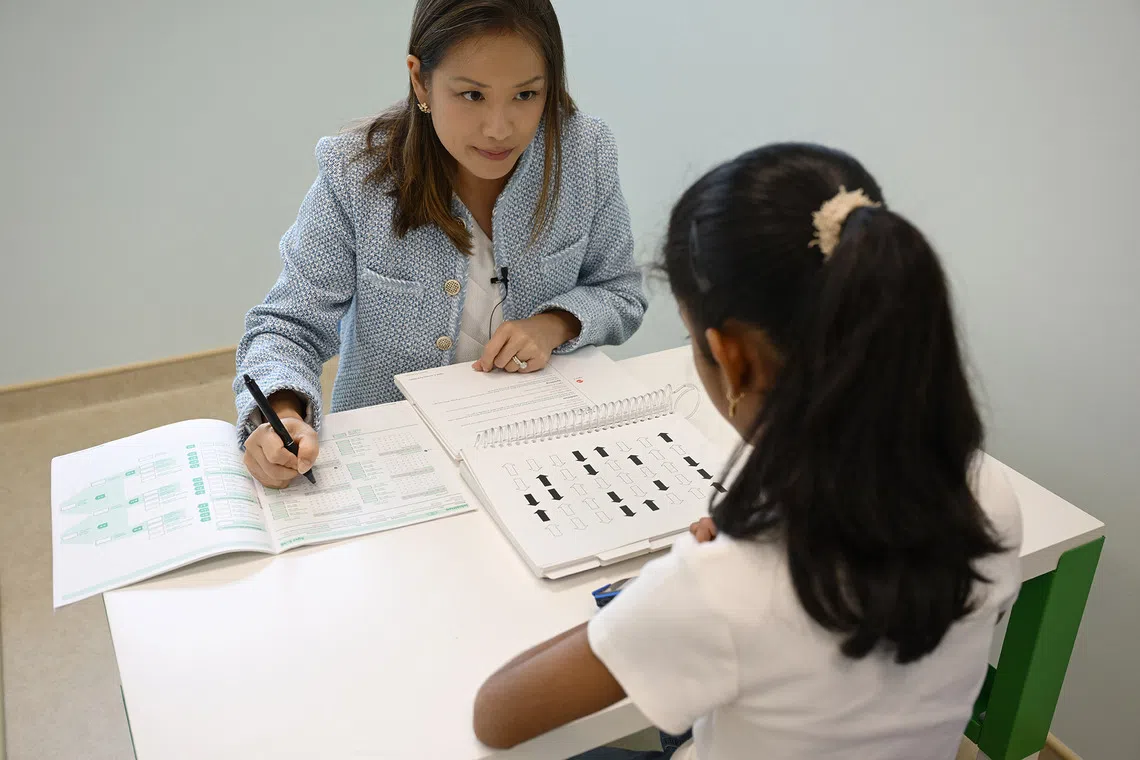
Law conducting the Nepsy test with a child. The test measures attention, self-monitoring and inhibitory control.
ST PHOTO: NG SOR LUAN
So what does screen time actually do to the brain?
According to the researchers, one explanation is that the bombardment of fast movements, sounds and scene changes can leave few resources for the brain to build self-regulation skills. This then leads to an inability to follow multi-step instructions or persist in challenging activities.
Law, who is a mother of two children, said the findings of the study made her think of the times she herself had resorted to using the TV or iPad as a babysitting tool.
“I am a parent myself and I know how hard it is to keep screens away from kids. But as the brain scans and Nepsy test results show, it is important for all of us, parents and caregivers, to keep screen time to a minimum.”
The results of the Singapore study are not isolated findings. Research elsewhere in the world has also found possible links between more screen exposure and differences in brain development, cognition and behaviour.
Research carried out at the Cincinnati Children’s Hospital in the United States using brain scans found that higher screen usage among children of pre-school age was associated with “lower integrity” in parts of the brain supporting language and emergent literacy skills.
The Adolescent Brain Cognitive Development Study (ABCD) has similarly found links between high digital media use in youth and structural differences in brain regions tied to visual processing, attention and memory. The parents of the youth also reported more behavioural problems among the youngsters.
ABCD, the largest long-term study of brain development and child health in the US, tracks nearly 12,000 young people starting at ages nine to 10 till early adulthood.
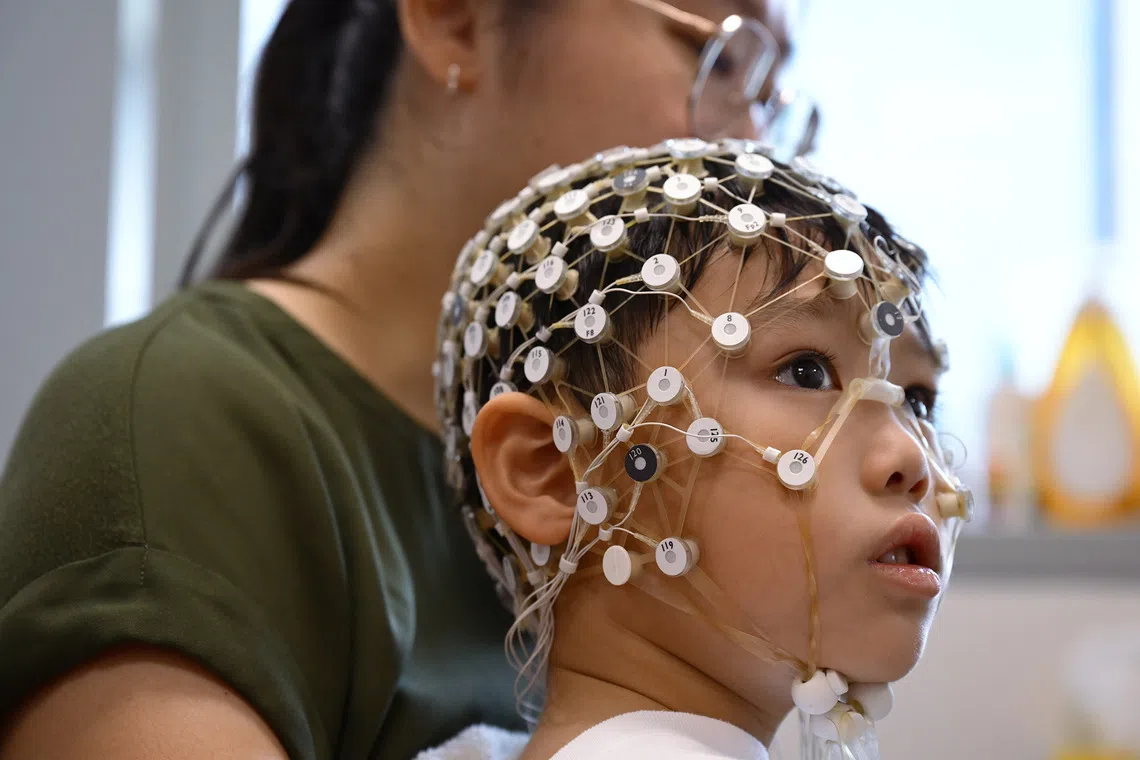
Five-year-old Xavier, who has on a flexible cap or “net” equipped with electrodes, and his mother getting ready for an experiment at NUS Medicine.
ST PHOTO: NG SOR LUAN
But all is not lost.
Law said that the effects of screen time can be mitigated.
For children under five, Law said parents should seize every opportunity to talk and play with them.
A baby does not need to be able to speak to benefit from conversation.
“Parent talk is one of the most important things you can do with your child to develop their brain,” Law said.
In early child development research, back-and-forth exchanges between a young child and a caring adult are called “serve and return”.
A glance, a pointed finger, a little kick of the legs, making a sound or a facial expression – these are a child’s “serves”, said Law.
When a parent responds by naming what the child sees, does or expresses, the exchange helps build early language and social connections in a developing brain. These serve as a foundation for more complex cognitive abilities that form later in life.
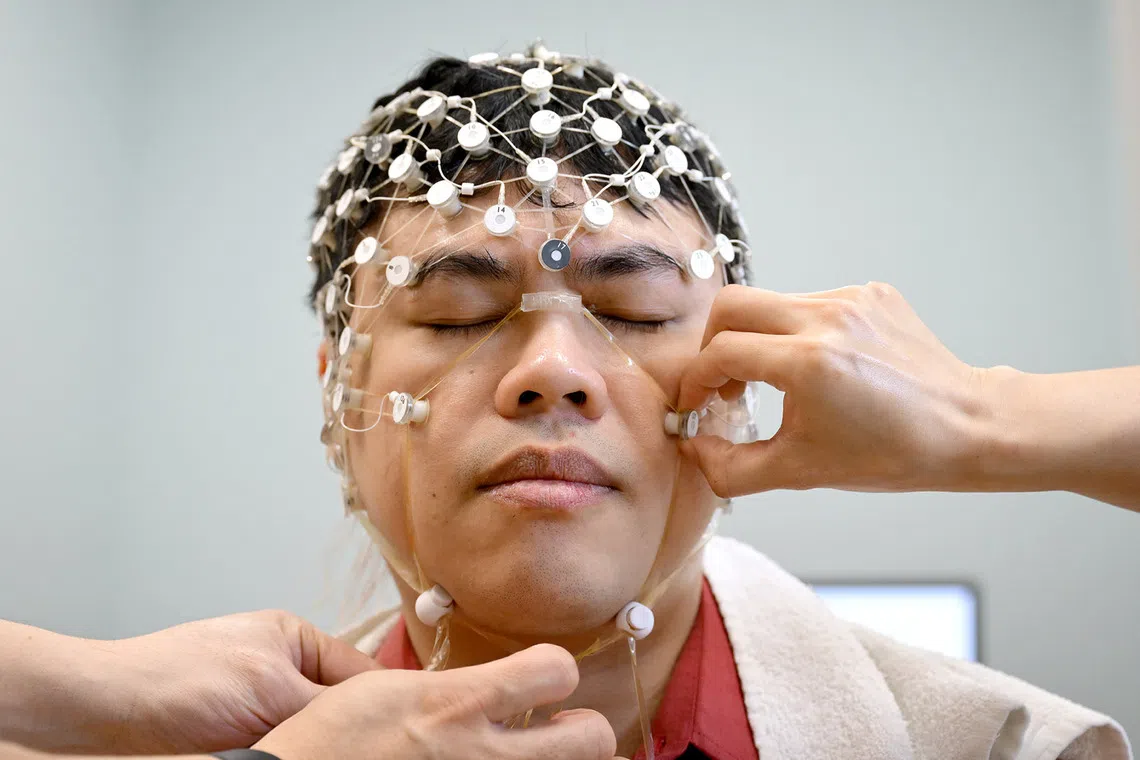
Wong Ken Rhee, Xavier’s father, being readied for the experiment.
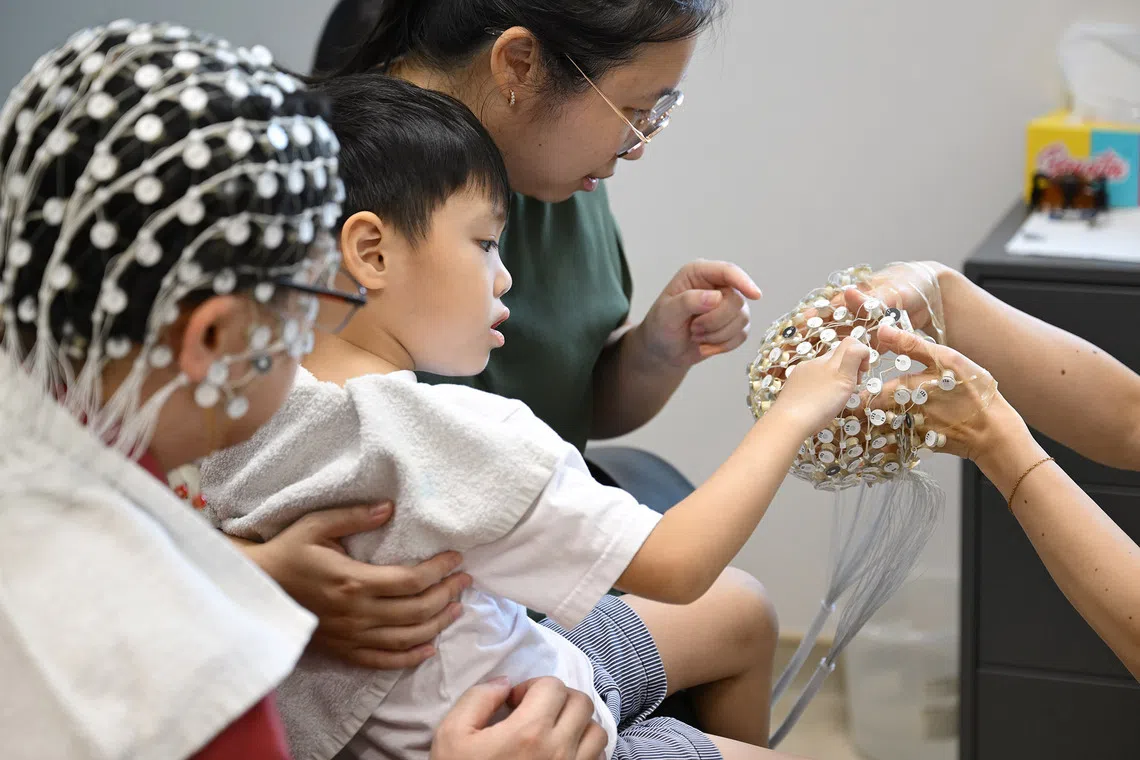
Wong and his wife, Mok Sook Fern, coaxing their son to put on the flexible cap equipped with electrodes.
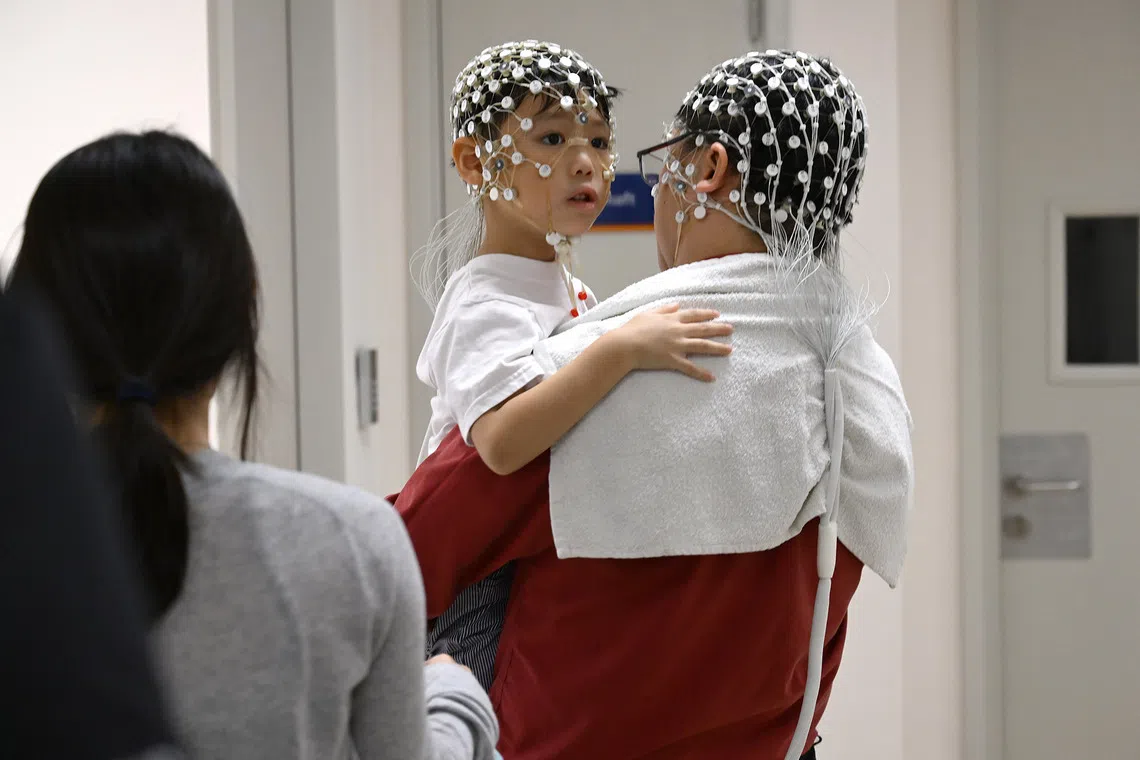
Father and son preparing to read together to show what happens to their brain activity when they are engaged with each other.
“Whether it is playing or reading a book together, the best thing about serve-and-return interactions is that you don’t need any special knowledge or training to do it. It’s just you and your baby or child having fun and responding to each other,” Law said.
She also recommends reading books aloud to babies.
When a father and his young son play and read together, their brain activity, heartbeats and breathing often synchronise, she said, pointing to research done in her lab as well as research led by Alan Mendelsohn, a renowned developmental-behavioural paediatrician at New York University.
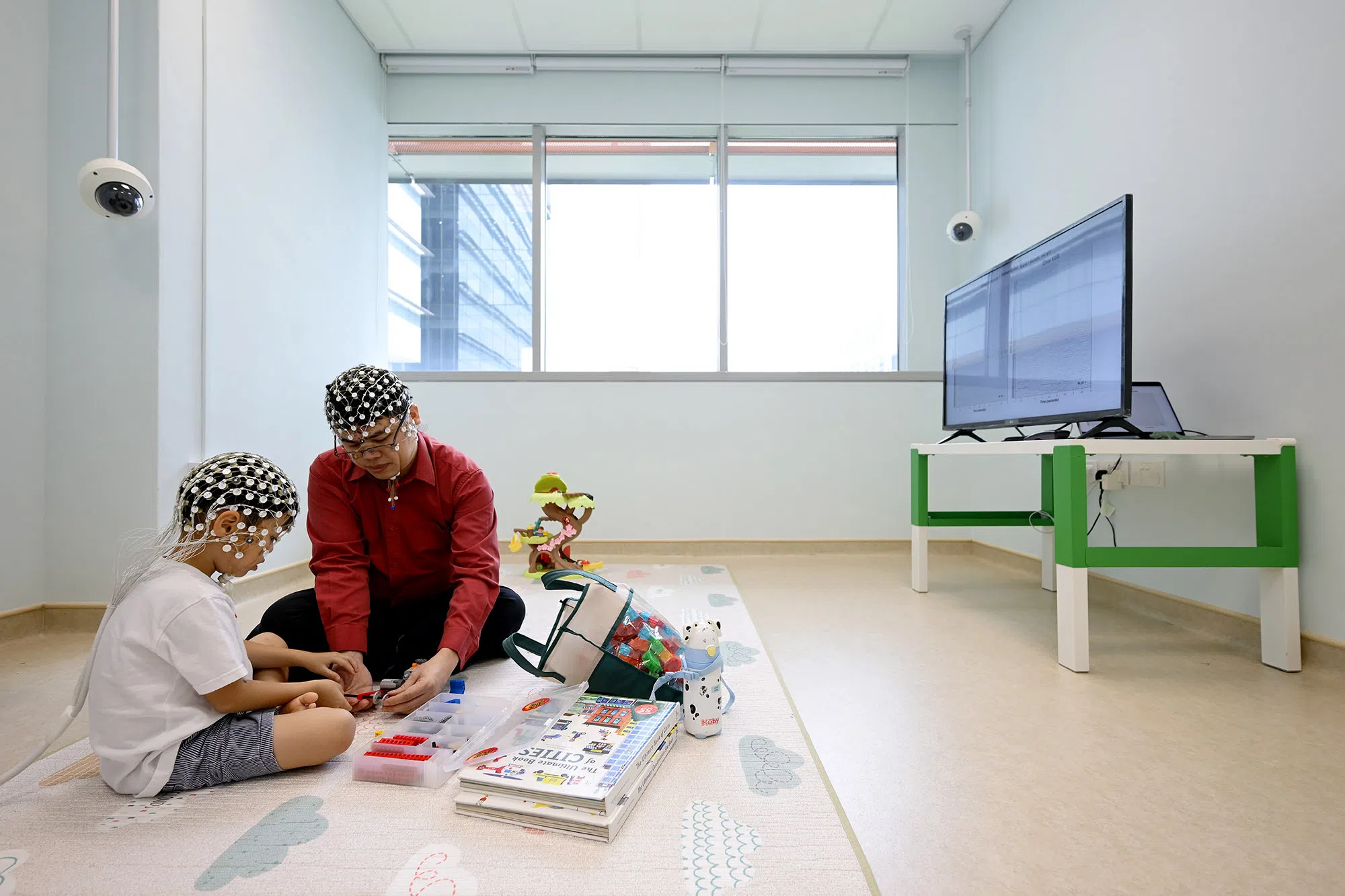
Wong and his son Xavier, five, playing and reading together. Research has shown that when parents and young children do such activities together, their brain activity, heartbeats and breathing often synchronise.
ST PHOTO: NG SOR LUAN
This shared rhythm calms the child’s developing mind, while the reading itself stimulates the toddler’s frontal lobe and builds crucial neural pathways for language and emotional safety.
Another study using some children from GUSTO, headed by researcher Tan Ai Peng at NUS and A*STAR, showed that parent-child reading at the age of three acts as a critical buffer against the negative neurological impacts of early childhood screen time.
In the study, published in Psychological Medicine in 2024, the team found that infant screen time can alter brain networks that govern emotional regulation, but consistent parent-child reading could counteract some of these brain changes.
This suggests that shared reading may provide the kind of enriched, interactive experience that passive screen consumption lacks, including back-and-forth engagement, language exposure and emotional connection.
Given how crucial the bond between a parent and baby is to a child’s healthy development, and how building this bond requires parents to respond appropriately to their child’s cues, technoference is a huge problem, Law said.
Observational research done by the University of Washington in the US has found that 35 per cent of parents spend about one out of every five minutes of their time – or even more – on their phone while at the playground with their child.
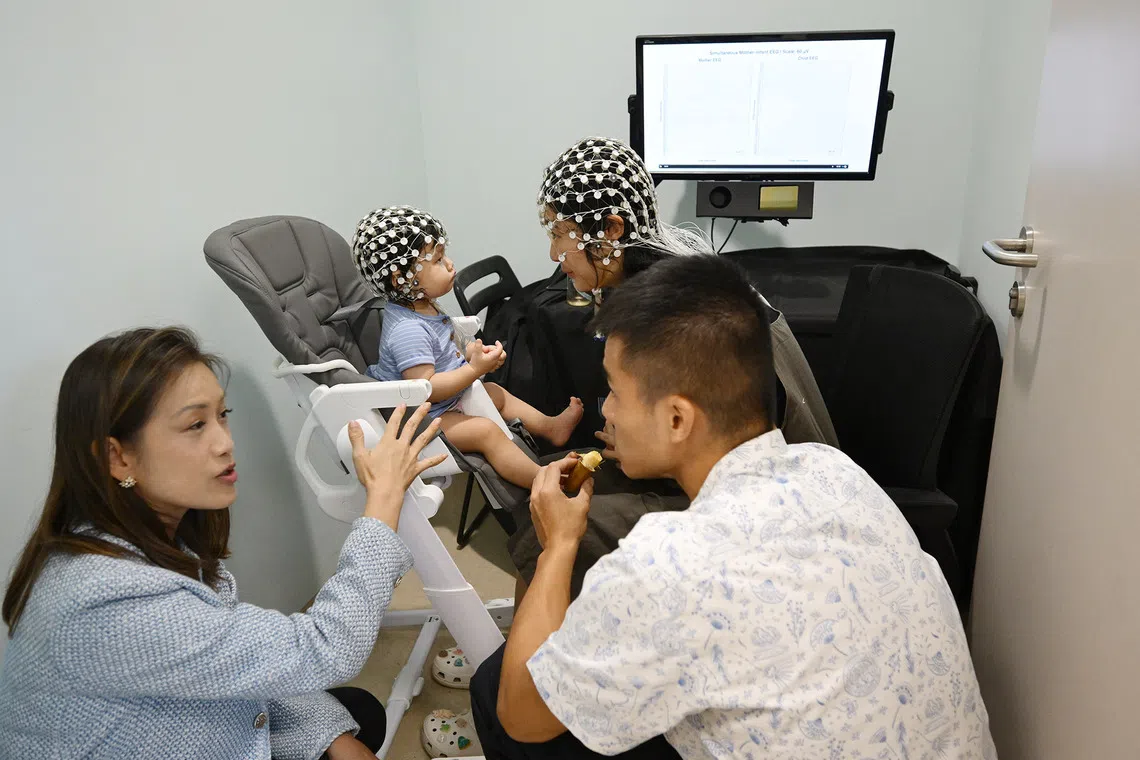
Law talking to baby Raynera’s father, Rodney Chan, while his daughter and wife interact with each other at NUS Medicine.
ST PHOTO: NG SOR LUAN
Babies look to parents and caregivers to learn how to calm down. Occasional phone use by parents is normal, said Law, and not harmful to children, especially when parents know how to re-engage with the baby and repair the connection.
But she cautioned that if those moments of connection are repeatedly interrupted and for long periods of time, there may be fewer opportunities for this kind of co-regulation and social-emotional learning.
“Constant inattentiveness can also lead to higher anxiety or attachment issues in children over time,” she added.
What we have to ask ourselves is this, she said: “Do we need to disconnect to reconnect with our children?”
Photos: Ng Sor Luan
Video: Jordan Lee
Brain scan image: NUS Medicine and A*STAR
Produced by: Andy Chen, Sandra Davie, Stephanie Yeow and Yu Sheng Sin
KioskNews shows a cleaned-up reading view extracted from the publisher’s page — the original always lives on their site, not ours.