Tax changes to discretionary trusts are likely – what is happening and why are some Australians upset?
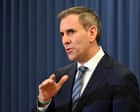
The Albanese government on Wednesday introduced into parliament rules that will place a minimum 30% tax on income received from discretionary trusts.
It is the latest legislation from what Jim Chalmers, the treasurer, has humbly titled “the most ambitious tax reform in a generation”.
If you are unfamiliar with how trusts work, you’re not alone.
More than 95% of taxpayers do not get any income from trusts. And those that do tend to be among the wealthiest.
Ahead of introducing the minimum tax on discretionary trusts bill, Chalmers said “the arrangements that we start legislating today will mean a fairer tax system, and will also fund tax cuts for workers”.
Putting a minimum 30% tax on discretionary trust income will raise an estimated $4.5bn in 2029-30, its first year of operation.
Taking away a tax lurk for rich Australians, and using the extra dough to help pay for lower taxes on working families?
Sounds like a lay-down misere for the government.
Unfortunately for Labor, it has not turned out that way. But before we get into that, let’s start with the basics.
What is a discretionary trust?
Discretionary trusts allow income earned from assets held by the trust – such as a business, property or shares – to be split between beneficiaries, often family members.
The “discretionary” in the name means the trustee can choose and change who receives what from the trust. In contrast, a “fixed” trust locks in who gets what from the trust, and this arrangement is exempt from the new rules.
Perusing the websites of various accountancy and legal firms, the number one benefit is to minimise tax paid by distributing income to beneficiaries – again, usually family members – who are in lower tax brackets.
These nominated beneficiaries could be children at university (they have to be at least 18), or a spouse earning little or no taxable income of their own.
The second main benefit is protection; otherwise known as “peace of mind” in the marketing literature from accountants and lawyers.
The assets in the trust are protected from legal claims against the beneficiaries. The assets are held for family members, not by them.
So how does it work in practice?
To illustrate the tax advantages of the trust structure, Treasury in its budget documents uses the fictional examples of Steven and Angela.
Both earn $200,000 a year, but Steven earns it from income from investments held in a discretionary family trust.
As the trustee, he splits the income evenly among himself and three family members who have no other earnings. All up, Steven’s family pays $24,008 in tax, at an average tax rate of 12%.
What about Angela? She earns her money via her wage and pays $59,352 in tax, at an average rate of 30%.
According to Treasury analysis, the tax rate for families with discretionary trusts in 2022-23 was on average 4 percentage points lower than families with similar incomes but who did not use trusts.
That doesn’t seem fair
Many economists and academic experts agree.
Chalmers has been keen to point to a number of tax reviews over the past 50 years that have all raised similar concerns about discretionary trusts: that they create a situation where people on the same income can end up paying very different levels of tax.
This reform is an attempt to address this longstanding inequality in the tax system.
It is also worth noting most of the benefits provided by discretionary trusts go to the top 10% of families by income, according to Treasury analysis of 2022-23 tax data.
What are the new rules?
Under the proposed legislation, and as mentioned, there will be a minimum 30% tax applied to income derived from discretionary trusts from mid-2028.
So even if you are a uni student earning no money of your own, any income you receive from the family discretionary trust will be taxed at a minimum of 30% – no tax-free threshold or lower marginal rates for you.
Treasury’s explainer from the May budget says “introducing a 30% minimum tax brings the tax outcome on income earned in a discretionary trust closer to wage and salary earners”.
So what’s the problem?
Well, the essential problem is those affected by the changes do not like it as they will have to pay more tax.
People and businesses who have set up their affairs through discretionary trusts may now need to restructure to avoid the minimum 30% tax rate.
For example, somebody who was distributing income from their small business through a trust may want to transfer to a company structure instead (small companies pay a 25% tax rate).
Restructuring is expensive and complicated. Contracts will need to be rewritten with insurers and lenders.
The Australian Chamber of Commerce and Industry is opposed to the government’s tax reforms.
ACCI claims nearly 240,000 small businesses will be affected by the minimum trust tax, and restructuring will cost each of them tens of thousands of dollars in legal, accounting and financial advice.
Treasury reckons the number of affected small firms is more like 210,000. Even so, add up all the hypothetical restructuring costs and the compliance bill runs into the billions of dollars, as the opposition has been quick to highlight.
This at a time when small businesses are already struggling with soaring costs, high interest rates and weak demand, ACCI says.
The broader problem is that it has become apparent that the government failed to think through how its budget tax reform package (including changes to capital gains tax) would work in practice.
Unintended consequences abound, and Chalmers has been forced to make a series of rolling adjustments, exemptions and clarifications to the reforms.
What are the amendments to the minimum trust tax rules?
Wednesday’s bill implements the core components of the minimum tax on discretionary trusts, but also expands the options to “limit or eliminate restructuring costs for small businesses and others”.
Under the new rules, trustees can now choose to make fixed distributions to pre-nominated beneficiaries, a bit like a fixed trust (which are exempt from the 30% minimum tax). That way they can avoid the new minimum tax without having to go through a costly and complicated restructure.
This is in addition to the existing three years of “rollover relief” from income tax consequences (like CGT) for those small businesses that do wish to restructure.
After consultations, the government has also agreed to exempt donations from discretionary trusts to sporting and community groups.
There is an outstanding issue that restructuring out of a trust will trigger stamp duty at the state or territory level. Chalmers this week said Treasury officials are talking to the states about how to waive stamp duty in this instance, so watch this space.
Will the legislation pass?
Probably, despite the Coalition’s steadfast opposition.
Tim Wilson, the shadow treasurer, bemoaned the impact on “cafes and tradies”.
“We already have near-record small business insolvencies, collapsing consumer confidence and real profits lower than at the change of government, and the answer from the Albanese government is to add new taxes and costs,” he has said.
Labor, however, can pass its legislation with backing from the Greens.
That support was undermined on the morning of the legislation after Nick McKim, the Greens economics spokesperson, criticised what he called a “loophole” where the exemption for payments from discretionary trusts included private school fees.
Ultimately, however, the Greens are unlikely to stand in the way of a change that makes the tax system more equitable.
KioskNews shows a cleaned-up reading view extracted from the publisher’s page — the original always lives on their site, not ours.