Malaysia must prepare for quantum computing and rogue AI threats, Fahmi says
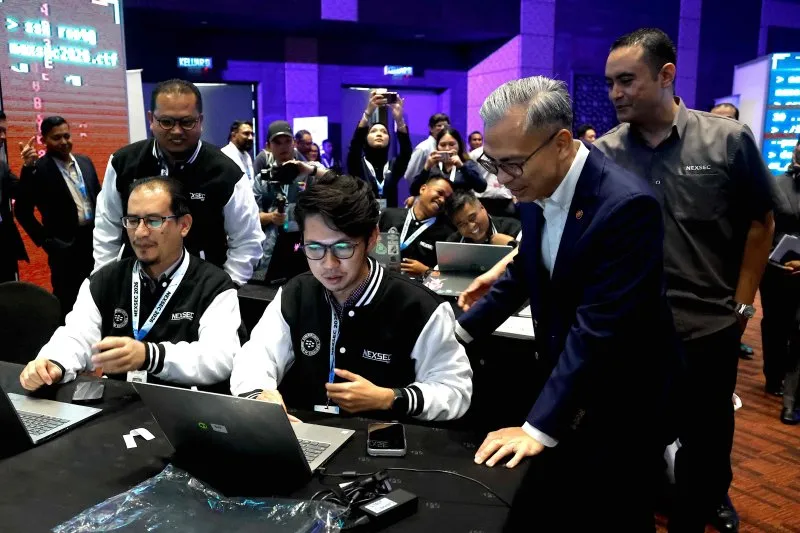
Communications Minister Datuk Seri Fahmi Fadzil views exhibits at the launch of NEXSEC 2026 at the Malaysia International Trade and Exhibition Centre in Kuala Lumpur on November 25, 2026. — Picture by Firdaus Latif
By Kenneth Tee
First Published: Wednesday, 25 Nov 2026 2:52 PM MYT
Last Modified: Wednesday, 25 Nov 2026 2:56 PM MYT
KUALA LUMPUR, Nov 25 — Malaysia must rapidly upgrade its national cybersecurity defences in lockstep with physical infrastructure investments to shield the country from emerging vulnerabilities posed by quantum computing and autonomous rogue agentic artificial intelligence, Communications Minister Datuk Seri Fahmi Fadzil said today.
Addressing the opening of the NEXSEC2026 cybersecurity conference at the Malaysia International Trade and Exhibition Centre (MITEC), Fahmi said that the government is prioritising quantum migration and post-quantum cryptography to prevent sensitive data traversing domestic telecommunications networks from being compromised.
“This is why I have tasked the Malaysian Communications and Multimedia Commission (MCMC) with convening research and development discussions on quantum migration and quantum-safe communications involving telecommunications companies and infrastructure providers.
“The shift towards quantum-safe communications is increasingly important to ensure data transmitted through telecommunications networks remains protected against interception, theft and hacking by cybercriminals,” he said.
Quantum migration involves upgrading legacy encryption protocols and security architecture to quantum-resistant algorithms capable of withstanding the unprecedented processing power of future quantum supercomputers.
For Malaysia, this transition requires retrofitting national telecommunication backbones and cloud routing systems to neutralize “harvest-now, decrypt-later” surveillance threats before quantum machines reach commercial maturity.
Fahmi warned that constructing world-class fibre and data centre infrastructure yields little value if sovereign data remains exposed to sophisticated digital intrusion.
However, he acknowledged that transitioning to quantum-safe communications entails substantial capital outlays, urging telecommunications operators and digital infrastructure concessionaires to strategically balance baseline capacity expansions with targeted cybersecurity expenditures.
The minister’s directive was delivered during NEXSEC2026, MCMC’s flagship cybersecurity symposium convened to assess sector readiness, accelerate advanced cyber engineering talent, and expand threat intelligence sharing among network operators, statutory agencies, and tertiary research institutions.
KioskNews shows a cleaned-up reading view extracted from the publisher’s page — the original always lives on their site, not ours.