Russia’s parliamentary elections will not be a referendum on the Ukraine war – or anything, really
Russia is not a democracy. However, Russia does have elections – many of them, in fact.
From September 18-20, Russian voters will elect their national parliamentary representatives (to the Russian State Duma), as well as 11 governors, deputies to 39 regional assemblies, and deputies to other lower-level representative bodies.
The elections will be the first parliamentary elections since Russia’s full-scale invasion of Ukraine in 2022. However, this will not be a barometer of public opinion about the war, the state of the Russian economy, or, well, anything.
Russians have many reasons to be disenchanted with President Vladimir Putin’s regime. The war is now in its fifth year, with an estimated 1.4 million battlefield casualties (including 450,000 deaths). Some 30,000 Russian soldiers are either being killed or injured a month. Ukraine is also increasingly bringing the war home to Russians with frequent drone attacks.
Yet, these elections will be carefully stage-managed to guarantee a favourable result – and a continued strong mandate – for Putin’s party.
Elections under dictatorship
Most modern dictatorships are not run by decree; they hold nominally multiparty elections in an effort to legitimise their systems as democratic and consensual. This is called “electoral authoritarianism”. Today, it is the most common form of authoritarian government in the world.
These elections perform a variety of functions for authoritarian regimes. In Russia, they help the Putin regime gauge the mood of the electorate, gather information about Russia’s voter base, and mobilise its key supporters.
Putin still holds all of the power in Russia, and traditionally and constitutionally, the president stands above the other branches of government.
Yet, parliament still exists – nominally. It has been controlled by the United Russia party since 2003.
Although the party is a strong vehicle of support and mobilisation for Putin, he is not a party member. This reflects the historical role of the president being “above the fray” of Russian party politics, which former President Boris Yeltsin started.
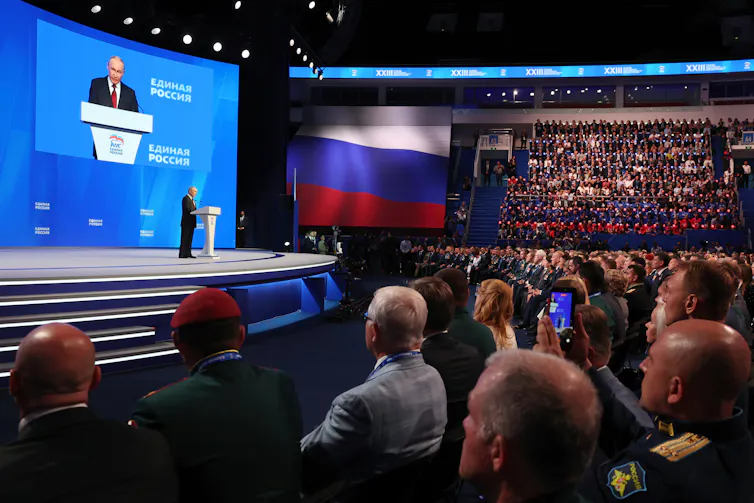
However, for these elections, Putin has positioned himself closer to United Russia by appearing several times at its party congress. He’s likely done this to boost the party’s sagging popularity and demonstrate he strongly endorses the party of power.
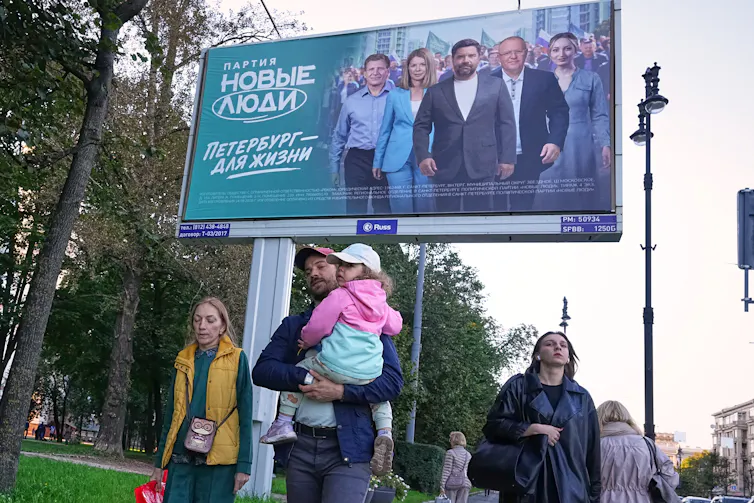
Russia has a select number of approved parties that are allowed to take part in elections because they are ultimately loyal to the Kremlin. These include ostensible opposition parties, such as the Communist Party and the nominally liberal New People party. They offer the veneer of a diverse electoral packaging, even if the product is the same.
But more democrats sat in the last Soviet parliament from 1989–91 than have have been in the Duma over the last two decades. Indeed, there have not been any bone fide democratic deputies in the Duma since 2007. This was when new election laws were ushered in following terrorist attacks in the North Caucasus, which skewed the playing field against democrats to the benefit of pro-Kremlin parties.
While Russia’s political parties have been offered surprising independence at times in the past, this has declined markedly since the 2022 invasion of Ukraine. Today, nearly all parties are united in support of the war.
The only party that has been opposed to the war is the pro-Western Yabloko party. It has existed since 1993 and been allowed to run in previous elections. This is because its platform of pro-Western liberalism has fairly limited electoral appeal and Putin’s regime has been able to keep it in check through repressive actions.
This year, however, Yabloko’s parliamentary candidates were blocked from taking part in elections for the first time. Both of the party’s deputy leaders, Lev Shlosberg and Maksim Kruglov, also received long prison sentences for “discrediting” the Russian military and “spreading false information about the war”.
Another anti-war candidate planning to run for parliament, Boris Nadezhdin, was also convicted on spurious charges that will keep him out of the elections.
Voting in Russia: carrots and sticks
Electoral authoritarian regimes generally try to avoid overt election fraud to maintain a democratic facade. However, they constantly look for ways to interfere with them.
For example, remote electronic voting will be used in many regions this year. Critics say this provides the state with an easy and largely untraceable way of manipulating the vote, if it so chooses.
Ensuring these elections function smoothly and appear legitimate will also mean maximising turnout. One problem is that elections with pre-determined outcomes struggle to attract the attention of voters.
The Putin regime therefore offers material incentives to vote. This includes creating a carnival-like atmosphere at polling centres with raffles, vouchers and even cars on offer as prizes for voting. It has also used more coercive measures, such as putting pressure on biudzhetniki, employees of state institutions, to vote for the ruling party.
In the occupied regions of Ukraine, voting is likely to be particularly coercive. It may literally be carried out at the barrel of a gun.
However, even in electoral authoritarian systems, governments have to permit some uncertainty of the outcome to legitimise the process, and surprises can occur.
In 2018 and 2019, for instance, the nationalist-oriented Liberal-Democratic Party of Russia won majorities in the municipal and regional Dumas of Khabarovsk in Siberia, and its candidate won the governorship.
The tight grip the regime keeps on its elections and the barring of troublesome opposition candidates is not a sign of regime strength. Rather, it reveals a substantial degree of anxiety on the part of the regime.
In reality, these elections demonstrate that the Putin regime is struggling to contain opposition to its rule amid the ongoing social and economic strain posed by its floundering war in Ukraine.
KioskNews shows a cleaned-up reading view extracted from the publisher’s page — the original always lives on their site, not ours.