Ban on ketchup sachets is down to Burnham and not the EU, says No 10
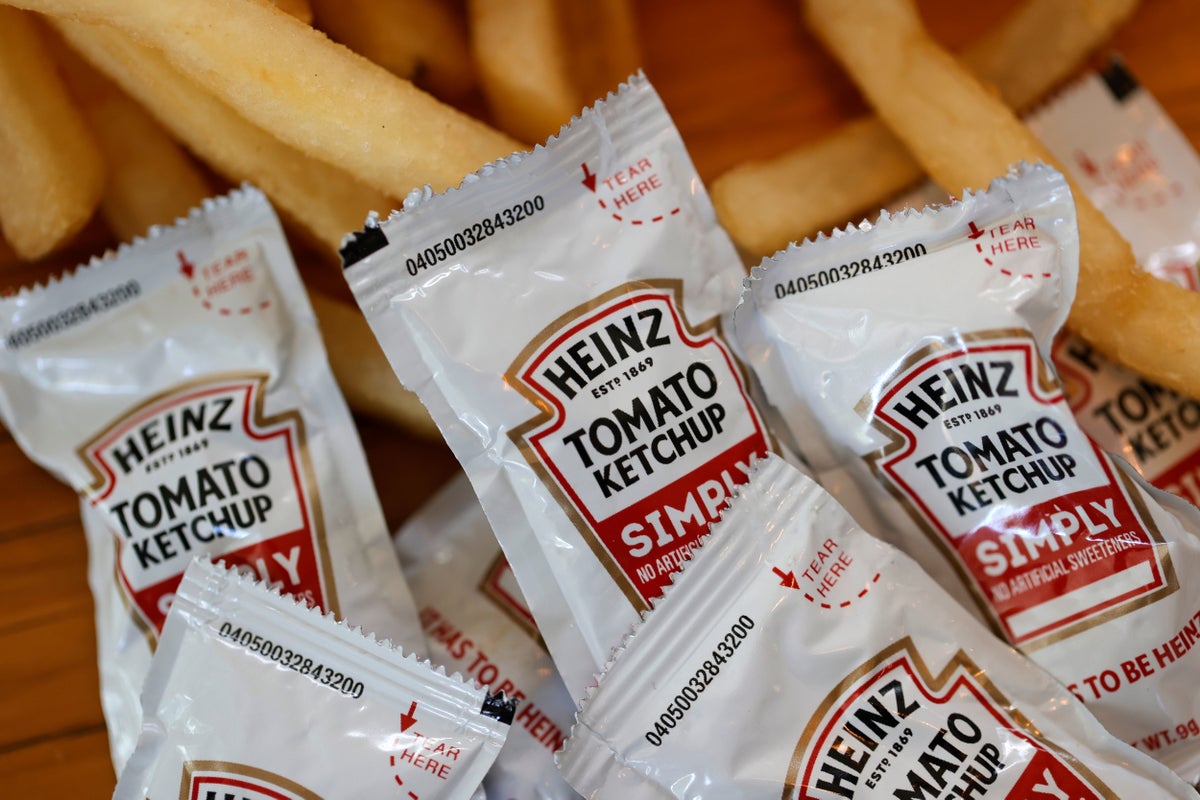
Downing Street has denied plans by Andy Burnham to ban tomato ketchup sachets are a result of the prime minister’s new closer ties with the European Union.
No 10 says any such ban would be ministers’ own decision following a consultation, after it was revealed that Mr Burnham was considering stopping cafes and restaurants from giving out sachets of ketchup, mayonnaise and vinegar.
The EU has outlawed single-use plastic packaging for condiments in the catering sector on environmental grounds.
Estimates suggest there are up to 199 million tonnes of plastic waste polluting the world’s oceans, and every year around a million birds and over 100,000 sea mammals die from eating and getting tangled in plastic waste.
Environmental campaigners who want a ban on the sachets say that 855bn of them are used every year globally, and many are thrown away without even being opened.
The sachets are being prohibited in Northern Ireland, under post-Brexit arrangements that require the nation to follow certain EU rules.
It had been thought the government wanted to extend that ban to Britain, as part of a push to align the UK with European Union rules.
But the prime minister’s official spokesman said: “A ban on single-serving sachets is not in the scope of any agreement with EU partners. It is not part of our EU reset for food and drink.
However, he did not rule out a ban, adding: “If any consultation on single-use sachets is taken forward, it will be solely as a result of the UK choosing to do so.”
In response to a written question in parliament, environment minister Emma Hardy said: “The EU's ban on the sale or provision of single-serving sachets or containers of ketchup, mayonnaise, sugar, salt, oil and vinegar will apply in Northern Ireland under the Windsor framework but will not apply in the rest of the UK under EU-reset.
“A consultation regarding UK alignment is being planned.”
Later this month, Mr Burnham will end one of the most damaging consequences of Brexit by agreeing to align with EU standards on food and drink to end costly and burdensome border checks.
The prime minister is due to meet EU leaders on 20 November, when he is expected to unveil a deal with Brussels worth 0.4 per cent of the UK GDP.
It will lead to a halt to border checks on food and drink, a new youth mobility scheme and a much closer working partnership with the bloc.
The deal will also allow passports for UK pets taken into the EU to resume for the first time since the UK left the bloc.
Mr Burnham plans to use the summit to launch a new discussion on options for the UK beyond the next election, including a manifesto pledge on rejoining the bloc.
KioskNews shows a cleaned-up reading view extracted from the publisher’s page — the original always lives on their site, not ours.