6 Forgotten Sherlock Holmes Movies From Before Benedict Cumberbatch That Deserve A Second Look

Sky Blanton is a Movie Contributor at ScreenRant with professional experience covering movies, television, and pop culture. Her published work spans news, interviews, features, and opinion pieces, with a focus on film, franchise storytelling, and the entertainment industry.
She earned her bachelor's degree in Communications with a concentration in Professional Writing and a minor in Business Writing from Southern New Hampshire University.
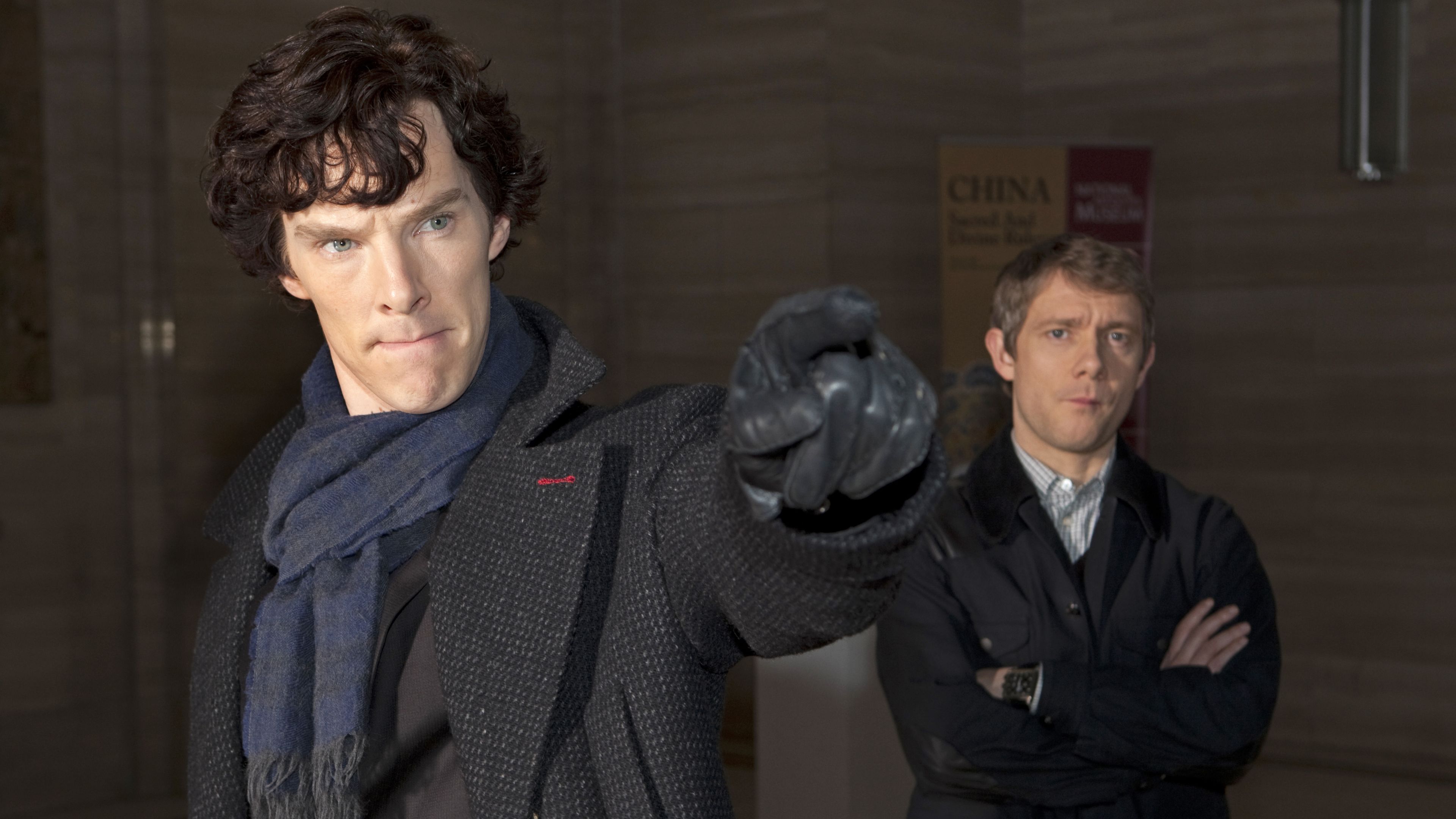
For a certain generation of Sherlock Holmes fans, it is almost impossible to picture the detective without Benedict Cumberbatch's face. BBC's Sherlock took Arthur Conan Doyle's Victorian detective and dropped him into modern-day London, replacing telegrams with smartphones and hansom cabs with taxis without losing Holmes' razor-sharp powers of deduction. Cumberbatch's performance became so closely tied to the character's modern image that it can be easy to forget how many wildly different versions of Holmes existed before Sherlock premiered in 2010.
Long before Cumberbatch was racing around London with Martin Freeman's John Watson, filmmakers had already spent decades trying to figure out what makes Sherlock Holmes work on screen. Some adaptations stick closely to Doyle's mysteries, while others take much bigger liberties with Holmes, Watson and the world around them. That freedom produced some genuinely strange experiments, including a Holmes story that questions his entire public image, a comedy that barely lets Holmes be Holmes at all, and a film that sends the detective to Vienna to confront Sigmund Freud.
That is part of what makes these six movies worth a second look. Each one finds a different way to approach a character who has been adapted so many times that even longtime fans can still stumble across surprises. From Basil Rathbone's iconic take on The Hound of the Baskervilles to the wonderfully odd Without a Clue, these forgotten Holmes movies show just how much room there has always been to reinvent the world's most famous detective.
6 The Hound Of Bakervilles (1939)
Directed by Sidney Lanfield

A giant dog stalking the foggy moors of England is already a pretty good setup for a horror movie, but The Hound of the Baskervilles manages to make that premise work as a Sherlock Holmes mystery too. The 1939 adaptation follows Holmes and Watson as they investigate the strange death of Sir Charles Baskerville, whose family has supposedly been cursed by a monstrous hound for generations.
Basil Rathbone plays Holmes here, years before his performance became one of the most recognizable versions of the character on screen. He brings plenty of confidence to the role, but the setting being so eerie gives him something else to work with. The isolated Baskerville estate, the fog-covered moor and the possibility that a supernatural creature is actually hunting the family give the mystery a darker edge than many Holmes adaptations.
Even viewers who normally skip black-and-white movies have an easy entry point here. The overall setting, mysterious deaths and possible supernatural creature lurking in the background make The Hound of the Baskervilles feel closer to a gothic horror movie than a typical detective story, while Rathbone gives Holmes the sharp, theatrical presence the character demands.
5 The Private Life Of Sherlock Holmes (1970)
Directed by Billy Wilder

The Private Life of Sherlock Holmes is less interested in the legendary detective than the lonely man hidden behind the legend. Billy Wilder's 1970 film imagines what Holmes might be like when he is not solving a case or performing for an audience. Robert Stephens plays him as brilliant and self-contained, but there is a sadness underneath all that confidence. The more famous Holmes becomes, the harder it seems for anyone to actually know him.
That loneliness extends to his relationship with Dr. Watson. Colin Blakely's Watson is more independent than the bumbling sidekick often associated with the character, and the two have a genuine friendship. Holmes still keeps parts of himself at a distance, though, leaving Watson to wonder how much of the real man he actually knows.
The movie also plays with Watson's published stories, suggesting that the Holmes the public knows is partly a creation. The larger-than-life detective exists in those stories, while the real Holmes is a much more isolated figure.
4 Without A Clue (1988)
Directed by Thom Eberhardt

What if Sherlock Holmes was actually a terrible detective? Without a Clue turns the typical Holmes and Watson duo completely upside down. Watson is the real detective, while Holmes is an actor he hires to take credit for his work. Michael Caine plays the fake Holmes, with Ben Kingsley as the increasingly frustrated Watson.
Caine's Holmes is vain, lazy and very good at playing the part of a famous detective. He loves the attention that comes with the name, even when he has no idea what is actually happening.
The fun comes from watching Caine commit to the performance while Kingsley's Watson tries to keep the entire charade from falling apart. Holmes gets to swagger around London pretending to be a genius, while Watson secretly handles the parts that require an actual detective. Michael Caine gets to play Sherlock Holmes as a complete fraud, which is about as far from the usual version of the character as you can get.
3 The Adventures Of Sherlock Holmes (1939)
Directed by Alfred L. Werker

Basil Rathbone's Holmes gets to have a little more fun in The Adventures of Sherlock Holmes. The 1939 movie puts him up against Professor Moriarty, played by George Zucco, and the two spend most of the movie trying to outmaneuver each other. Moriarty is not exactly the quiet, calculating villain that some later versions would make him. He is theatrical, dangerous and more than happy to set elaborate traps for Holmes.
That gives Rathbone plenty to play with. His Holmes can be smug when he knows he has figured something out, but he also has a mischievous side that makes the character much more entertaining than the stuffy image of a classic detective might suggest. Nigel Bruce's Watson helps keep things moving, particularly when Holmes inevitably gets himself into trouble.
There are disguises, attempted murders, escapes and a final confrontation with Moriarty. But some of the best moments are smaller ones, particularly Rathbone needling Bruce's Watson whenever Holmes knows something Watson doesn't.
2 The Seven-Per-Cent Solution (1976)
Directed by Herbert Ross

Sherlock Holmes goes to Sigmund Freud in The Seven-Per-Cent Solution, after Dr. Watson becomes concerned about Holmes' cocaine addiction and obsession with Professor Moriarty.
Watson brings Holmes to Vienna, where Freud attempts to treat the detective's addiction. Instead of relying solely on deductions and disguises, Holmes has to confront the memories and fears behind his fixation with Moriarty. The movie turns one of Holmes' most famous rivalries into something psychological.
Nicol Williamson plays Holmes opposite Alan Arkin's Freud, while Laurence Olivier takes on Moriarty. The movie reimagines Holmes' relationship with his greatest enemy as something rooted in his own troubled psychology, giving the familiar rivalry a very different explanation.
There is still a mystery to solve, but Holmes spends much of the movie being forced to examine himself rather than everyone else around him.
1 Sherlock Holmes And The Leading Lady (1991)
Directed by Peter Sasdy
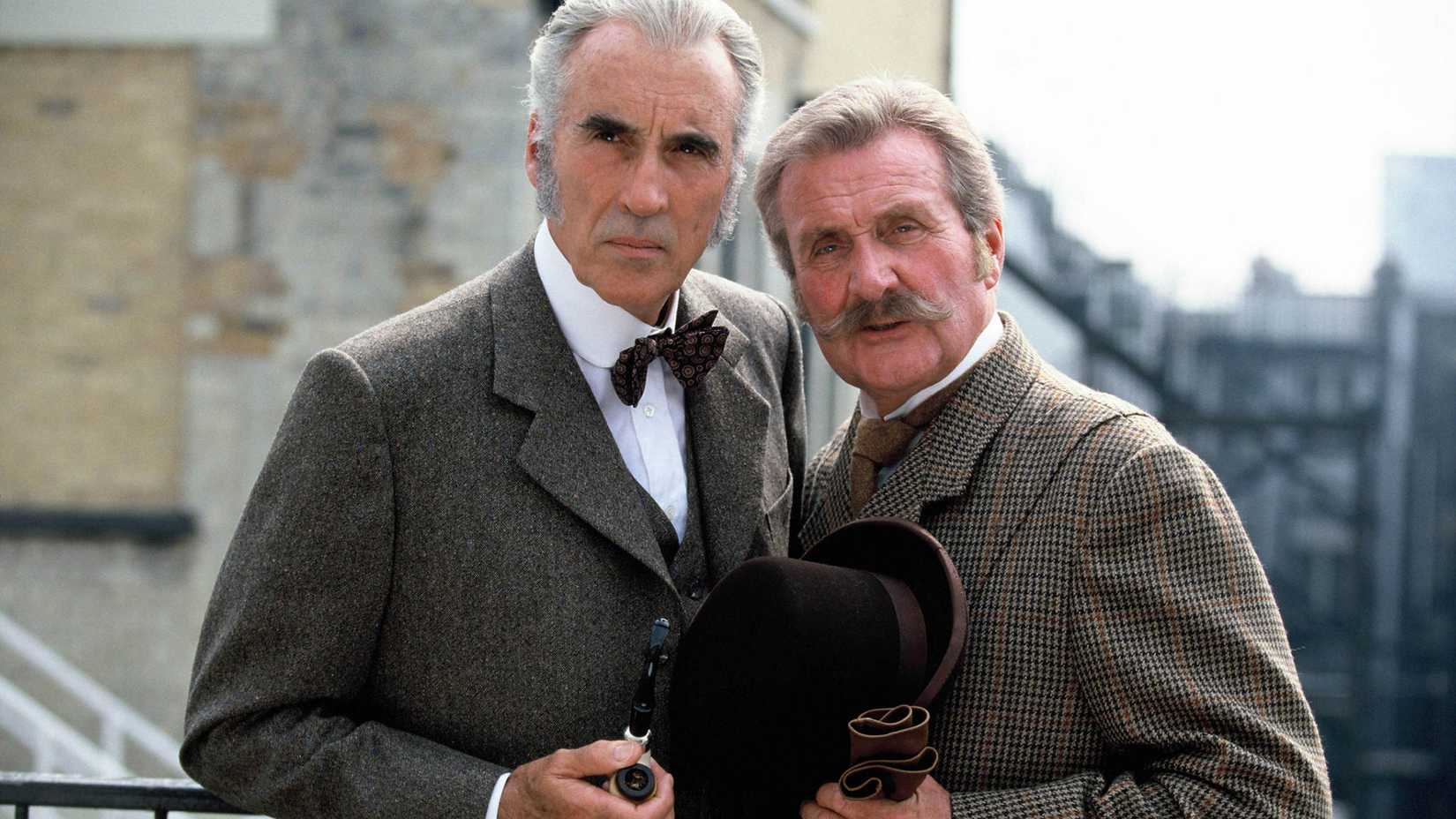
Sherlock Holmes and the Leading Lady feels less like a traditional Holmes mystery and more like a period adventure. Christopher Lee plays Holmes, with Patrick Macnee as Watson, and the two become caught up in a conspiracy involving Mata Hari and the assassination of Archduke Franz Ferdinand.
The movie drops Holmes into the world of European espionage just before World War I, with Mata Hari at the center of the issue and Franz Ferdinand's assassination hanging over the plot. Holmes and Watson are trying to unravel a conspiracy involving spies and political figures while moving through a Europe on the brink of war.
Rather than another case that begins and ends in London, Sherlock Holmes and the Leading Lady sends Sherlock Holmes and Watson across Europe as they try to stop a conspiracy before it reaches Franz Ferdinand.
KioskNews shows a cleaned-up reading view extracted from the publisher’s page — the original always lives on their site, not ours.